

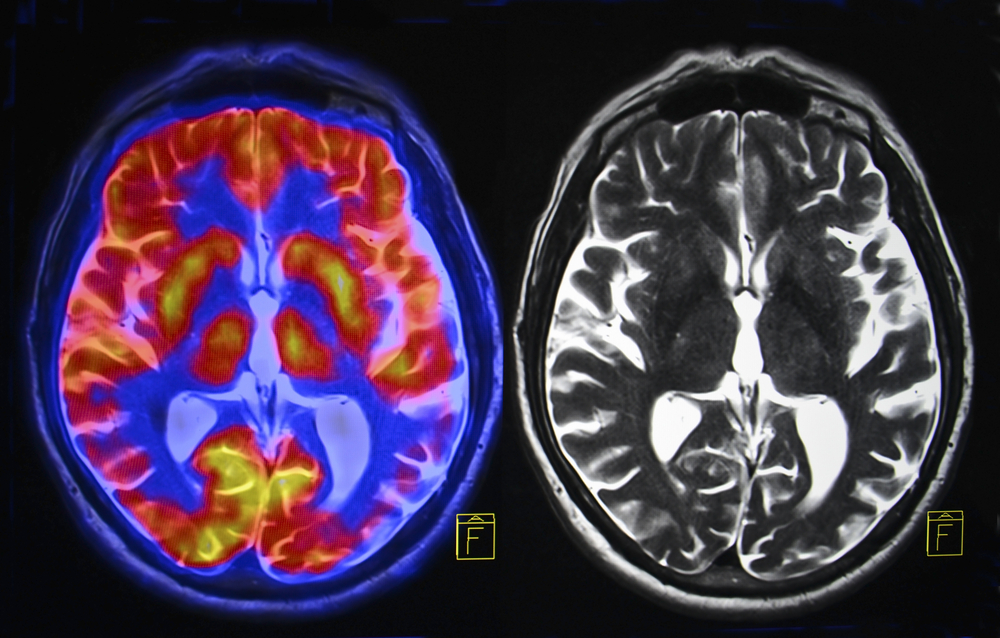
Humans May Have Up To 33 Senses According To Science
For most of our lives, we are taught a simple and reassuring idea about how we experience the world. Humans have five senses. Sight, sound, smell, taste, and touch. It is one of the earliest lessons we learn about the body, repeated so often that it feels unquestionable.
But science has a way of unsettling comfortable truths. According to a growing body of research from neuroscientists and psychologists, the human sensory system is far more complex than that familiar list suggests. Instead of five senses, researchers now believe humans may have anywhere between 22 and 33 distinct senses, all working together every moment of the day.
This shift in understanding does not just add extra items to a list. It changes how we think about perception, movement, emotion, memory, food, and even our sense of self. The world we experience is not delivered to us through separate sensory channels. It is constructed through a dense, overlapping network of signals that constantly shape and reshape our reality.
Where the Five Senses Idea Came From
The idea of five senses dates back more than two thousand years to Aristotle. His framework was elegant and easy to understand. Humans could see light, hear sound, smell odors, taste flavors, and feel touch. That classification became foundational in philosophy, education, and early science.
The problem is that Aristotle’s model was descriptive, not scientific in the modern sense. He was not working with brain imaging, neural pathways, or controlled experiments. His goal was to categorize experience in a way that made sense at the time.
As centuries passed, the model stuck. It was simple enough to teach and broad enough to feel accurate. Even as science advanced, the five senses were rarely questioned because they seemed to cover the basics of human perception.
But convenience is not the same as accuracy. As researchers began studying how the brain actually processes information, they realized that many crucial aspects of experience did not fit neatly into the traditional categories.
Why Modern Science Disagrees
Modern neuroscience approaches perception from the inside out. Instead of asking how experiences feel, researchers ask how information travels through the nervous system. When they do that, the five-sense model begins to fall apart.
Different types of sensory information are processed by distinct neural systems. Pain, temperature, balance, body position, internal bodily states, and movement awareness all have their own pathways and receptors. They operate independently but also interact constantly.
Researchers studying perception now argue that a sense should be defined by a unique sensory system, not by how familiar it feels to us. Under that definition, the human body has far more than five ways of sensing the world and itself.
This is why some scientists estimate that humans have between 22 and 33 senses. The exact number depends on how finely you divide different sensory systems, but the conclusion remains the same. Human perception is vastly richer than we once believed.
The Senses You Use Without Realizing It

One of the reasons this idea feels surprising is that many of our senses operate almost entirely below conscious awareness. They do their work so smoothly that we rarely stop to notice them.
Proprioception is one of the most important examples. It is the sense that tells you where your body parts are in space without needing to look at them. When you close your eyes and touch your nose, proprioception is guiding your hand. When you walk across uneven ground without staring at your feet, proprioception keeps you balanced.
Closely related to this is the vestibular sense, which helps control balance and spatial orientation. This system relies on structures in the inner ear that detect movement, acceleration, and changes in head position. Without it, standing upright would be nearly impossible.
Then there is interoception, the sense that allows you to feel what is happening inside your body. Hunger, thirst, a racing heartbeat, nausea, and the feeling of fullness after eating all come from interoceptive signals. These sensations play a major role in emotion and decision making, even though we rarely label them as senses.
Pain, Temperature, and the Complexity of Touch
Touch is often treated as a single sense, but researchers now view it as a collection of several distinct sensory systems. Pain, temperature, pressure, vibration, and itch each rely on different receptors and neural pathways.
The sensation of pain alone is complex. There are different types of pain receptors that respond to heat, mechanical damage, or chemical signals. This is why a burn feels different from a cut, even though both are painful.
Temperature is another separate sense that we often lump into touch. The ability to detect warmth and cold helps regulate body temperature and avoid injury. It is not simply a byproduct of touch but a distinct sensory system with its own importance.
When scientists break touch down into its components, it becomes clear that what we call a single sense is actually a group of coordinated systems working together.
Taste Is Not What You Think It Is
Taste is one of the clearest examples of how misleading the five-sense model can be. Most people believe taste buds detect all flavors, from strawberry to chocolate to coffee. In reality, the tongue can only detect five basic tastes: sweet, salty, sour, bitter, and umami.
Everything else that we call flavor comes primarily from smell. When you chew food, odor molecules travel from the mouth to the nasal cavity through the back of the throat. This process, known as retronasal olfaction, is responsible for the rich flavors we experience.
Touch also plays a role in taste. The thickness, creaminess, or crunchiness of food influences how we perceive flavor. This is why low-fat foods can be made to feel richer by altering texture and aroma rather than changing ingredients.
What we experience as taste is actually a collaboration between multiple senses. It is not a single channel of information but a carefully constructed sensory illusion.

Smell Can Change How Things Feel
Smell does more than shape flavor. It can also alter how we perceive texture and quality. Studies have shown that adding certain fragrances to products can change how people describe their physical properties.
In one well-known example, participants using shampoo scented with rose reported that their hair felt silkier, even though the formula was identical to an unscented version. The scent altered their perception of texture without changing the physical reality.
This phenomenon reflects a broader concept known in Japan as shitsukan, which roughly translates to material perception. It describes how multiple senses combine to create an overall impression of quality.
Our brains do not evaluate sensory information in isolation. They blend signals together to create a unified experience, often without our awareness.
The Sense of Ownership and Agency
Beyond physical sensations, researchers have identified senses that shape how we experience our own bodies. The sense of ownership is the feeling that your body parts belong to you. The sense of agency is the feeling that you are in control of your movements.
These senses become especially visible when they break down. Some stroke patients experience a loss of ownership over a limb, feeling as though it does not belong to them even though they can still feel touch or pain. Others lose the sense of agency and believe that someone else is moving their arm.
Experiments like the rubber hand illusion demonstrate how flexible these senses can be. When a fake hand is stroked in sync with a hidden real hand, many people begin to feel that the rubber hand is part of their body. This can happen in less than a minute.
These findings suggest that our sense of self is not fixed. It is actively constructed by the brain using sensory information.
Why Multisensory Perception Matters
Understanding that humans have many senses is not just an academic exercise. It has practical implications for design, medicine, education, and mental health.
In healthcare, recognizing interoception can help explain conditions like anxiety, chronic pain, and eating disorders, where internal sensations are misinterpreted or amplified. In rehabilitation, working with proprioception and balance can improve recovery after injury or stroke.
In everyday life, multisensory design influences everything from food packaging to architecture. Lighting, sound, texture, and scent all shape how we feel in a space or about a product.
Even memory is affected by multisensory input. Studies have shown that museum visitors remember artworks better when audio guides engage them in ways that feel personal and immersive.

Why Airplane Food Tastes Different
One of the most relatable examples of multisensory perception comes from air travel. Many people notice that food tastes different on planes, often blander or less satisfying.
Research suggests that aircraft noise dulls our perception of sweet, salty, and sour flavors while leaving umami largely unaffected. This is why tomato juice, which is rich in umami, tends to taste better at altitude.
The effect is not caused by taste buds alone. It is the result of sound, pressure, and smell interacting to alter perception. What you taste is shaped by everything around you, not just what is on your tongue.
Living in a Sensory-Rich World We Ignore
Modern life encourages us to focus on sight and sound, especially through screens. We scroll, watch, and listen while paying little attention to the rest of our sensory world.
Yet the other senses never turn off. We feel the tension in our shoulders, the weight of our bodies, the temperature of the air, and the internal rhythms of hunger and fatigue. These sensations quietly guide our behavior and emotions.
By ignoring them, we miss a deeper understanding of how we experience life. By noticing them, we can become more aware, grounded, and responsive to our environment.
Rethinking What It Means to Sense
The idea that humans may have 33 senses challenges a deeply ingrained belief, but it also opens the door to a richer view of human experience. We are not passive receivers of information through five narrow channels. We are active constructors of reality, constantly blending signals from inside and outside our bodies.
This perspective encourages curiosity rather than certainty. It reminds us that perception is not a simple reflection of the world but a dynamic process shaped by biology, context, and expectation.
The next time you walk outside, eat a meal, or sit quietly with your thoughts, consider how many senses are at work. Balance, movement, internal awareness, texture, sound, smell, and emotion are all contributing to that moment.
We may still teach children about five senses because it is easy and familiar. But science suggests the truth is far more intricate. Humans do not experience the world through five senses alone. We experience it through a complex sensory orchestra that never stops playing.