


New Risks Uncovered: Experts Issue Critical Warning for Weight Loss Drug Users
We all want to believe in magic. We scroll through our feeds and see the transformations, the melted pounds, and the promises of a new life found inside a simple pen. It feels like the answer we have been praying for, a scientific shortcut through the struggle. But before you let hope cloud your judgment, we need to pause and look at the fine print that never makes it into the viral videos. Experts are now sounding the alarm, revealing that this “miracle” comes with hidden costs and risks that could change your health in ways you never expected.
Hacking Your Health: A Dangerous Game
Scroll through your social media feed and you will likely see the transformations. The before and after photos. The promises of a new life found inside a pen. With one in eight Americans now utilizing these weight loss medications, the conversation has shifted from doctor’s offices to comment sections. It feels like a miracle solution is finally within reach, but we must ask: are we listening to science, or are we listening to the algorithm?

A recent study published in PLOS Global Public Health illuminates a troubling trend where medical protocols are being replaced by “hacks” found on TikTok and Reddit. Researchers warned that because of high costs and supply shortages, patients often “adjust dosing schedules, count clicks on injection pens, space out injections, or stop and restart treatment.” These strategies are not born from medical advice but from social media threads.
While online communities can offer emotional support, they also normalize risky behavior. The study notes that while these makeshift methods give patients a “sense of greater control over their health,” they actually amplify the dangers of unsupervised dosing. Do not mistake a viral video for a medical prescription. Your body is a complex biological system, not a trend to be hacked. When we prioritize the speed of the result over the safety of the method, we gamble with the only home we will ever truly own.
What Happens When the Shots Stop?
Many view weight loss as a destination, a place you arrive at, unpack, and stay forever. But biology does not work on a linear path. Experts are now revealing a hard truth: when the injections stop, the body often fights to return to where it started.

A meta-analysis by scientists at Stamford Health tracked over 2,000 participants and discovered a stark reality regarding discontinuation. Suzanne Rose, PhD, the Executive Director of Research, noted that on average, patients “gained about 60 percent of the weight back within a few months to a year,” even when they maintained lifestyle modifications like diet and exercise.
This happens because obesity is not merely a lack of willpower; it is a chronic disease. Dr. Maria Cecilia Asnis, Medical Director of the Center for Weight Management at Stamford Health, explains that “the forces inside the body are so strong” that these medications are often intended for long-term use. Treating obesity is akin to treating high blood pressure; you do not stop the medication just because the numbers look good.
The drop in weight might feel permanent, but without the chemical regulation provided by the drug, the physiological drivers of hunger return. It is a reminder that health is not a sprint with a finish line, but a continuous journey of maintenance.
The Other Half of the Equation
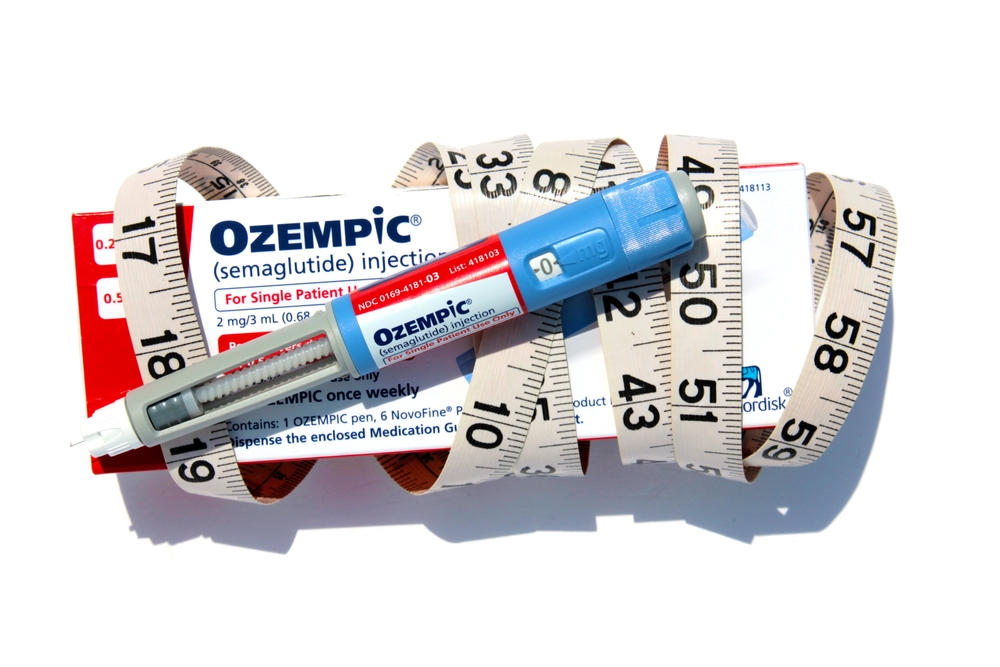
We often mistake a tool for a cure. There is a pervasive belief that these GLP-1 agonists are miracle drugs, effortless solutions that wash away the struggle. But unlike a vaccine that works passively, these medications require an active partner: you.
Shannon Christen, a registered dietitian at UCHealth, explains the mathematics of this new reality. “We encourage them to eat 50% of what they would normally eat without the medication,” she states. When consumption drops by half, the nutritional value of every bite must double. You can no longer afford “empty calories” when the tank is only half full.
The medication succeeds by silencing “food noise,” that relentless mental chatter that demands we eat, but it cannot dictate what we put on the fork. The responsibility remains to prioritize protein to preserve muscle, fiber to maintain gut health, and water to combat the dehydration that often mimics hunger.
Think of the drug as a noise-canceling headphone for your appetite. It quiets the distraction, but it is still up to you to play the right song. It requires deliberate nutrition, not just starvation. If you treat the body like a machine, you must provide the highest grade of fuel, or the engine will eventually stall.
Respecting the Body’s New Rhythm

When we introduce powerful agents into our biology, the internal rhythm changes. These medications function partly by slowing the rate at which the stomach empties, keeping the body fuller for longer. However, this physiological shift requires a behavioral shift. Old habits of consumption can quickly lead to discomfort.
Experts at UCHealth explain that because digestion is slowed, large meals can easily trigger nausea. The traditional approach of three heavy meals a day often becomes incompatible with the body’s new state. Instead, the guidance is to adopt a grazing approach: five or six small, balanced meals throughout the day to keep blood sugar stable and avoid overwhelming the digestive system.
Hydration also becomes a critical, yet easily overlooked, discipline. Just as the drug suppresses the noise of hunger, it also “dials back your sense of thirst,” according to registered dietitians. You may not feel thirsty, but the body remains in desperate need of water. The recommendation is to consciously consume eight to 10 glasses of water daily to prevent dehydration and mitigate side effects like constipation.

Furthermore, the quality of food dictates how the body feels. Greasy, fried foods and ultra-processed sugars are no longer just unhealthy; they become immediate agitators. Erin Cahoon, a registered dietitian, warns that eating greasy food while prone to nausea “is not going to do us any favors.” Baking, grilling, or steaming are not just culinary preferences here; they are necessary adjustments to respect a system under renovation.
You Are the Active Ingredient

We live in an age of instant gratification. We want the result without the process. But the human body is not an app that can be updated with a click. It is an ancient, complex vessel that demands respect.
The warnings from experts are not meant to scare you; they are meant to wake you up. Whether you choose to use these medications or not, realize that true health is never passive. It is an active, breathing commitment. A syringe can balance your hormones, but it cannot balance your life. It cannot cook nutritious meals, it cannot make you walk, and it cannot teach you self-love.
If you embark on this path, do so with your eyes wide open. Listen to doctors, not influencers. Understand that managing obesity is a marathon that may never truly end. Use the silence these drugs provide to build a foundation that lasts. Do not just lose the weight; gain the wisdom. Because at the end of the day, the most powerful medicine is not what you inject into your body, but how you treat it every single day.
Source:
- Jensen, S. D., Gualano, B., Andreassen, P., Scagliusi, F. B., SturtzSreetharan, C., & Brewis, A. (2025b). Beyond the prescription: Global observations on the social implications of GLP-1 receptor agonists for weight loss. PLOS Global Public Health, 5(12), e0005516. https://doi.org/10.1371/journal.pgph.0005516