

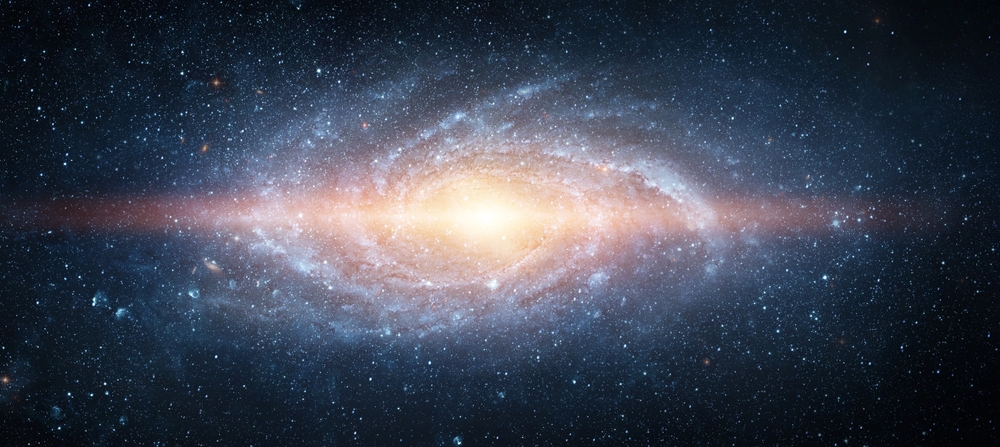
For much of modern history, science and belief in heaven have been treated as opposites. One relies on observation, measurement, and repeatable experiments. The other speaks of meaning, consciousness, eternity, and realities that cannot be touched or photographed. In popular culture, heaven has often been dismissed as a comforting myth created before humanity understood the mechanics of the universe.
This divide has shaped how generations think about faith. As telescopes grew stronger and brain scanners more precise, many assumed that spiritual ideas would eventually fade away, replaced by complete physical explanations. Heaven, in particular, was often portrayed as a relic of pre scientific imagination.
Yet as science has advanced, something unexpected has occurred. Instead of closing the door on spiritual questions, many of the deepest discoveries in cosmology, physics, and neuroscience have reopened them. At the very edges of scientific knowledge, researchers are encountering limits that physical explanations alone cannot fully resolve.
Science has not proven heaven exists. But it has also not ruled it out. When modern discoveries are viewed together, they quietly suggest that reality may be far larger than the physical universe we can observe and that the idea of a non physical realm beyond space and time is no longer as implausible as it once seemed.
The Limits of Science and the Myth of Absolute Proof
Modern culture often treats science as the ultimate referee of truth. If something cannot be proven scientifically, many assume it must be imaginary or merely a matter of opinion. This attitude is sometimes called scientism, the belief that science is the only reliable way of knowing anything at all.
Ironically, science itself does not support this extreme view. There are many truths that science does not test and was never designed to test. Logical laws such as non contradiction, moral claims about right and wrong, historical facts about past events, and aesthetic judgments about beauty all fall outside the scope of scientific experimentation.
Even science relies on assumptions it cannot prove. It assumes that the external world exists, that our senses are generally reliable, and that reason can lead us to truth. None of these assumptions can be demonstrated in a laboratory, yet science collapses without them.
Within science, the idea of proof is also misunderstood. Scientific theories are always provisional. As philosopher Karl Popper famously argued, no scientific theory can ever be proven beyond all doubt. Future observations or better explanations can always revise what we think we know. Science deals in probabilities, not certainties.
This distinction matters when discussing heaven. Expecting science to deliver absolute proof of a non physical realm misunderstands what science is capable of doing. A more appropriate question is whether modern scientific discoveries make the idea of heaven more reasonable or less.
The Beginning of the Universe and the Question of Cause
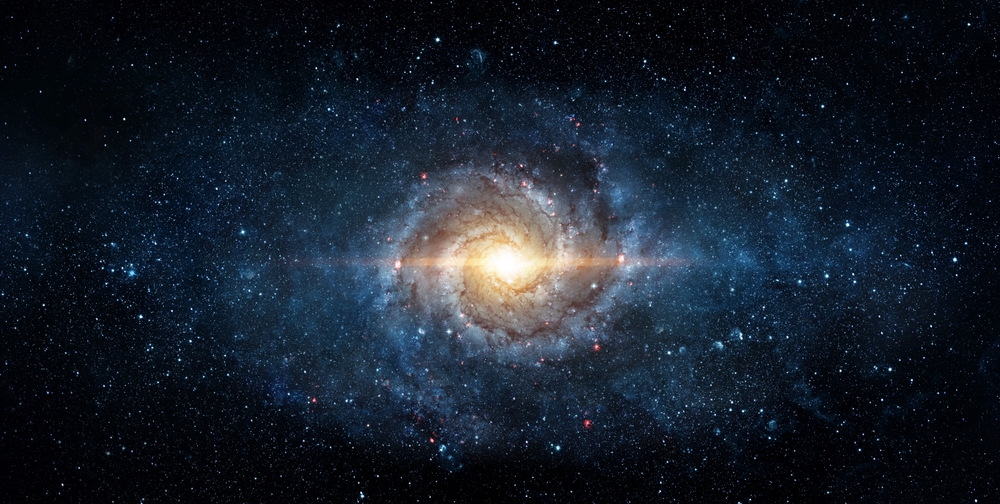
One of the most significant scientific discoveries of the past century is that the universe had a beginning. Observations of cosmic expansion, background radiation, and the large scale distribution of galaxies all support the standard Big Bang model. According to this model, all space, time, matter, and energy came into existence roughly fourteen billion years ago.
This discovery transformed cosmology. For centuries, many scientists assumed the universe was eternal. An eternal universe requires no explanation for its existence. A universe with a beginning does.
If the universe began to exist, what caused it to begin? Because space and time themselves originated with the Big Bang, whatever caused the universe cannot be located within space or time. It cannot be made of matter or energy, since those also came into existence at that moment.
Additionally, if nothing physical existed before the universe, the cause cannot be a mechanical process operating under physical laws. The cause must be non physical and capable of initiating a new state of reality. Many philosophers argue that such a cause would need to be personal, meaning it can choose to act rather than being forced by prior conditions.
These characteristics closely resemble what many religious traditions mean by God. Science does not identify this cause as God, nor does it confirm any specific theology. But it does point beyond the physical universe to something that transcends it.
Some scientists have proposed alternative models designed to avoid an absolute beginning, such as cyclical universes, bouncing cosmologies, or multiverse theories. However, none of these ideas currently have strong empirical support, and many still require an initial starting point. For now, physical reality does not appear to be self explanatory.
Fine Tuning and the Improbability of Life

The existence of the universe is remarkable on its own. An even deeper mystery lies in the precise conditions that allow life to exist at all.
Modern physics has revealed that the universe is governed by a set of fundamental constants and forces. These values must fall within extraordinarily narrow ranges for stars, planets, chemistry, and biology to exist. If they were altered even slightly, the universe would become lifeless.
Gravity must be strong enough to form stars but not so strong that stars burn out too quickly. The cosmological constant must allow the universe to expand at a rate that permits galaxies to form. The strong nuclear force must bind atomic nuclei together without preventing the formation of hydrogen.
Even the conditions on Earth are strikingly precise. Earth’s distance from the Sun places it in a narrow zone where liquid water can exist. Its size allows it to retain an atmosphere without crushing life under extreme gravity. Its magnetic field shields it from lethal radiation.
This phenomenon is known as fine tuning. It is not a fringe idea. Physicists across the belief spectrum acknowledge it. Some suggest that fine tuning can be explained by chance across an enormous multiverse, though this hypothesis remains speculative and currently untestable. Others argue that fine tuning points toward intentional design.
From a philosophical perspective, a universe so delicately balanced to support life and consciousness challenges the idea that everything is the result of blind chance. It raises the possibility that reality is structured with purpose.
The Cosmic Horizon and Unreachable Realms
Modern cosmology has revealed that there are regions of reality that are permanently inaccessible to us.
As the universe expands, there exists a boundary known as the cosmic horizon. Beyond this horizon, space is expanding faster than light can travel toward us. No signal, particle, or spacecraft can ever reach us from beyond that boundary.
This is not a technological limitation that future innovation might overcome. It is a fundamental feature of spacetime itself.
Scientifically, this means that reality extends far beyond what we can ever observe. Entire regions of existence may forever remain hidden from physical investigation. From a philosophical perspective, this challenges the assumption that reality consists only of what we can measure.
Many spiritual traditions describe heaven as a realm beyond human reach during earthly life. Science now confirms that unreachable domains are built into the structure of the universe itself. The idea that reality includes inaccessible realms is no longer purely religious speculation.
Time, Relativity, and Timeless Existence
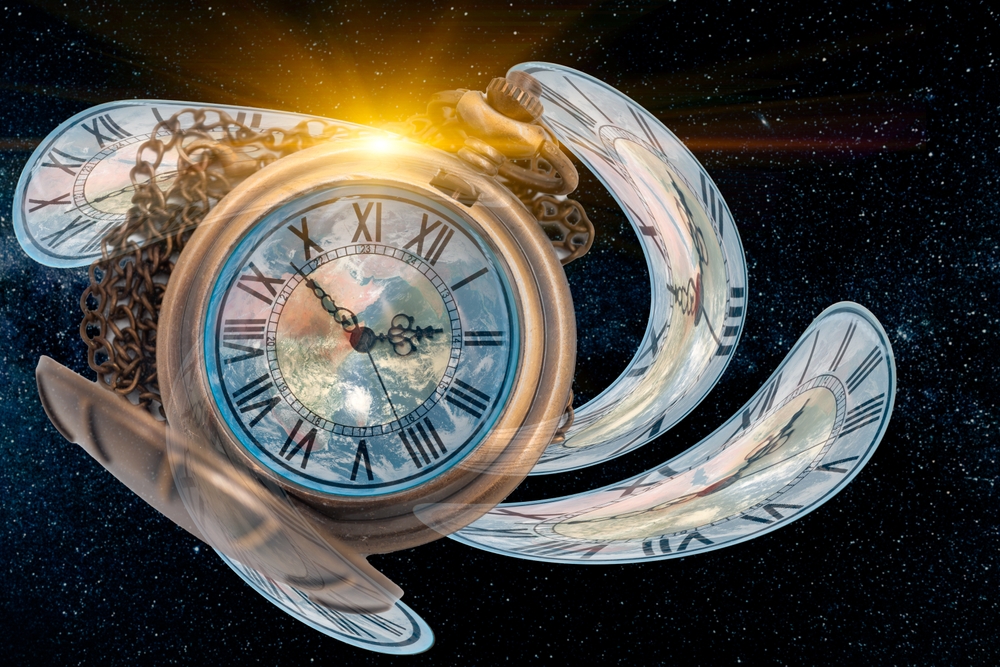
Einstein’s theories of relativity fundamentally altered our understanding of time. Time is not universal or absolute. It slows near massive objects and at high speeds. Space and time are woven together into a single fabric known as spacetime.
At extreme boundaries such as black holes or cosmic horizons, time behaves in ways that defy everyday experience. In some theoretical models, time effectively comes to a halt. Concepts like before and after lose their ordinary meaning.
Light provides a striking example. From the perspective of a photon, no time passes between emission and absorption. For light, the journey across billions of years occurs in an instant.
Many religious descriptions of heaven emphasize eternity not as endless duration, but as existence beyond time. Modern physics unintentionally provides a framework in which such a concept is intelligible rather than incoherent.
Consciousness and the Hard Problem

Despite extraordinary advances in neuroscience, consciousness remains one of science’s greatest mysteries. Researchers can map brain activity, identify neural correlates of perception, and alter experience with chemicals or electrical stimulation. But none of this explains why subjective experience exists at all.
Why does matter give rise to awareness? Why is there something it feels like to be a person rather than nothing at all?
This puzzle is known as the hard problem of consciousness. It has led some researchers to reconsider the assumption that consciousness is produced entirely by the brain. Alternative views suggest that consciousness may be fundamental, or that reality itself is informational rather than purely material.
If consciousness is not fully dependent on the brain, then its survival beyond physical death becomes conceivable. In this context, heaven could be understood as a mode of conscious existence rather than a physical location.
Near Death Experiences and the Question of Survival

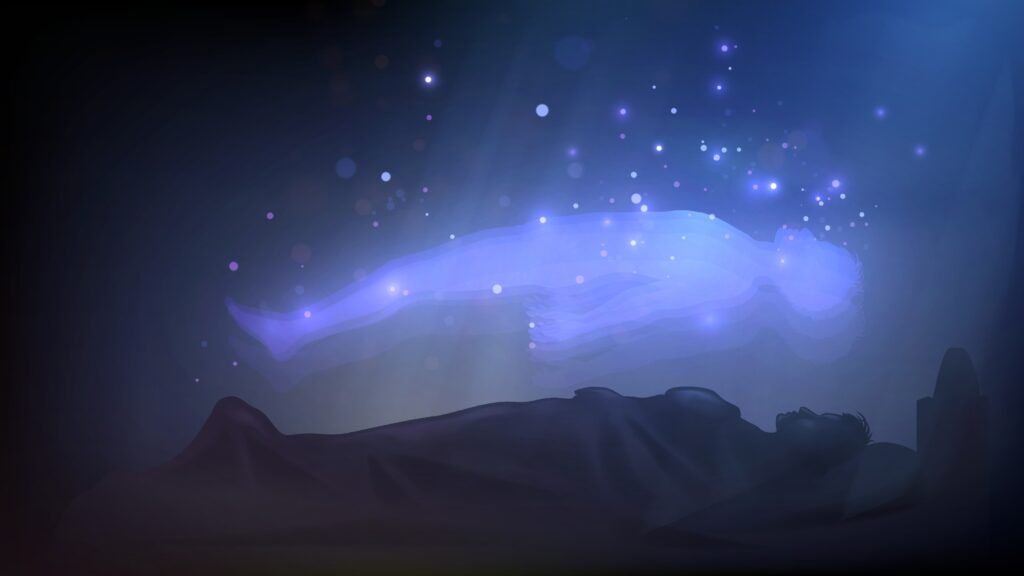
Near death experiences provide some of the most provocative challenges to a purely material view of reality. Millions of people across cultures report remarkably similar experiences after coming close to death.
Common elements include leaving the body, observing events from above, traveling through a tunnel, encountering a realm of light, and experiencing overwhelming peace and clarity. Many report meeting deceased loved ones or a loving presence.
Skeptics argue that these experiences result from brain chemistry, oxygen deprivation, or trauma. While such explanations may account for certain features, they struggle to explain others. Some individuals report accurate details of events that occurred while they were unconscious. Blind individuals have reported visual experiences. Children with no cultural expectations describe similar patterns.
Neuroscientists remain divided. Some view near death experiences as hallucinations. Others argue that they suggest consciousness can persist even when normal brain function is severely impaired.
These accounts do not prove heaven exists. But they raise serious questions about whether consciousness is entirely confined to the brain.
Evolution, Direction, and Meaning
Another striking pattern in modern science is the apparent direction of cosmic evolution. Over time, the universe has moved from simplicity to complexity. Elementary particles formed atoms. Atoms formed stars. Chemistry gave rise to life. Life developed minds capable of reflection, empathy, and moral reasoning.
Some thinkers argue that this pattern suggests an underlying direction toward greater consciousness. While speculative, this idea challenges the view that the universe is entirely random and purposeless.
If the cosmos has a trajectory, heaven could be understood not as an escape from reality, but as its fulfillment.
Heaven as Relationship Rather Than Place

Many contemporary theologians suggest that heaven should not be imagined primarily as a location within space. Instead, it is a relational state. To be in heaven is to be fully aligned with the deepest source of reality.
Modern physics increasingly describes reality as relational. Particles exist through interactions. Space emerges from connections. Time arises from change.
If reality itself is relational at its core, then heaven may be defined not by where it is, but by how existence is experienced.
Skepticism, Humility, and Open Questions
Science does not affirm any specific religious description of heaven. It remains neutral on questions of ultimate meaning. But it no longer supports the claim that reality is purely material and closed.
To dismiss heaven outright today requires an act of faith in materialism that science itself does not demand.
The universe is stranger than we imagined. Consciousness is deeper than we understand. Time behaves in ways that challenge intuition. Vast regions of reality exist beyond observation.
A Universe That Leaves the Door Open
Perhaps the most honest conclusion science offers is this. Reality is not fully known. It is not confined to what we can measure. There are edges we cannot cross and experiences we cannot reduce to equations.
Whether heaven exists as a literal realm, a state of consciousness, or something beyond current language remains unresolved. But modern science no longer insists that the answer must be no.
In returning us to mystery, science has not abandoned reason. It has restored wonder. And wonder has always been the first step toward understanding what lies beyond the physical world.