

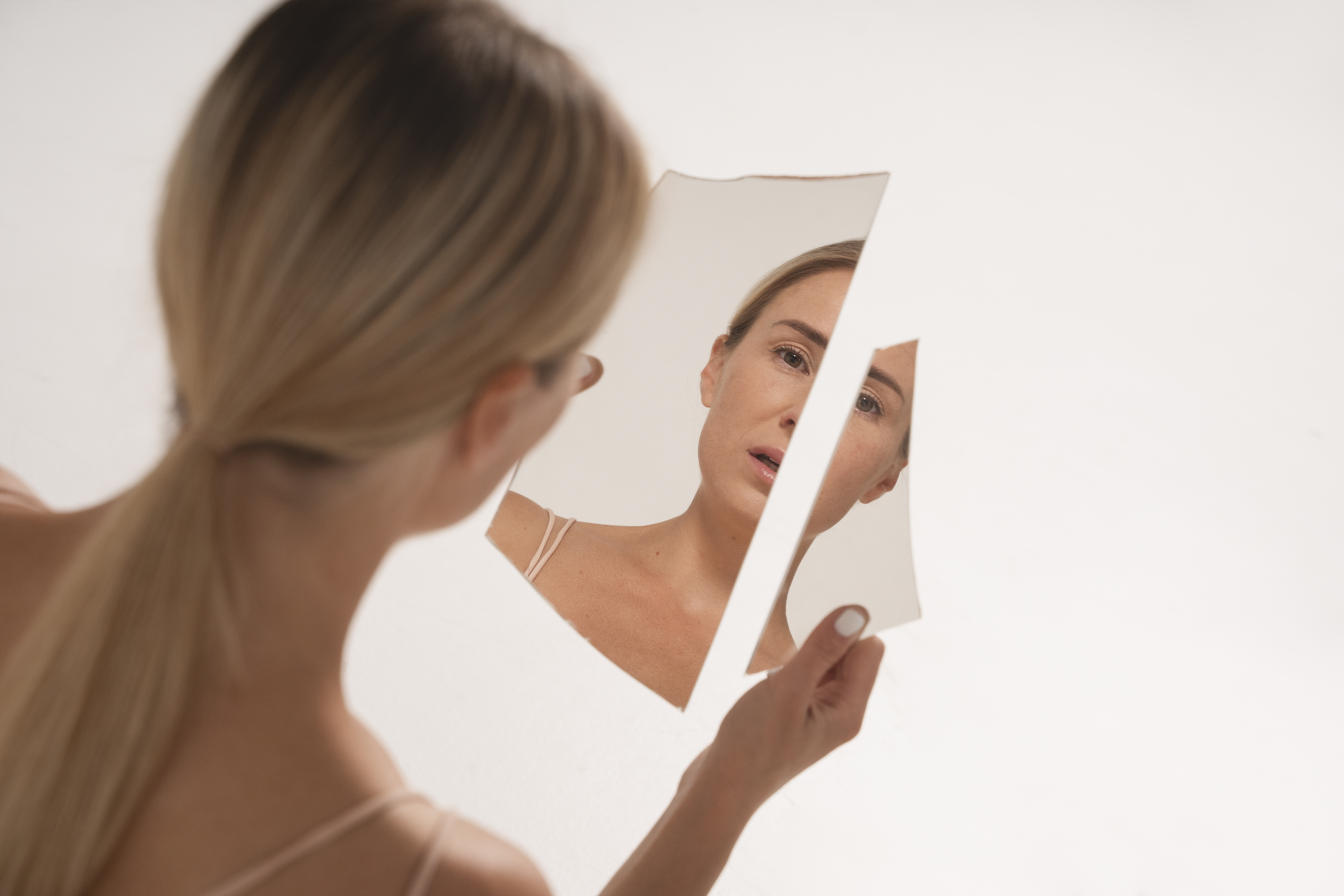
She Is Her Own Twin: The Woman With Two Sets of DNA and Two Different Skin Colors
We walk through life believing that our bodies contain just one single identity. We assume we have one set of DNA that defines exactly who we are. But sometimes, nature tells a different story.
Imagine growing up with a visible mystery on your skin and a secret living in your blood that no doctor could explain for decades. This reality challenges everything we think we know about the human body and proves that we are capable of carrying miracles we cannot even see.
A Secret Written in Skin
We often view our bodies as singular vessels, housing one unique identity. Yet, the story of Taylor Muhl challenges this fundamental assumption in a breathtaking way. Taylor is a singer and model who walks through life with a rare biological secret. She is her own twin.
This condition is known as Chimerism. During the earliest stages of fetal development, Taylor absorbed her fraternal twin in the womb. Two separate eggs fertilized by two separate sperm fused together. Instead of vanishing, the twin’s genetic legacy merged with hers, creating a single human being with two distinct sets of DNA.
The evidence of this fusion is painted across her body. A distinct line runs down the center of her torso, separating two different shades of skin pigmentation. One side belongs to Taylor, and the other reflects the genetic makeup of her twin sister. As Dr. Brocha Tarshish, a clinical geneticist, explains, these zygotes merge to form one human being with two different cell lines.
For years, doctors dismissed this physical trait as a simple birthmark. It was only later discovered that her body is a living mosaic. Taylor Muhl represents a profound biological phenomenon where the boundary between self and other dissolves completely. She carries the genetic blueprint of her sister within her own blood and skin, proving that the human body is capable of mysteries far deeper than we usually imagine.
A Body at War With Itself

While the physical markings of Chimerism are fascinating, the internal reality is far more turbulent. Taylor does not just carry her twin’s skin pigment; she possesses two distinct immune systems and two separate bloodstreams. For most people, the immune system is a unified defense force, but for a Chimera, it can become a battlefield. Her body identifies the twin’s DNA not as part of herself, but as foreign matter.
Consequently, her dominant immune system is perpetually fighting against the cells of her unborn twin. This constant state of biological defense suppresses her immunity, leaving it compromised and lower than that of the average person. It creates a paradox where the body is essentially allergic to a part of itself. This manifests in a wide range of autoimmune issues and severe sensitivities that dictate her daily life.
The duality even extends to how her body reacts to the outside world. The left side of her body, which displays the twin’s pigmentation, behaves differently than the right. She reports having specific sensitivities to insect bites and jewelry that differ depending on which side of her body is touched. A metal that causes a reaction on her ear might be perfectly safe on her navel. These symptoms serve as a reminder that the fusion of two lives is not just a poetic concept, but a complex physiological struggle that requires constant vigilance and care.
The Twin Felt Long Before She Was Known

Long before medical charts confirmed her reality, Taylor Muhl felt a phantom presence. As a young child, she possessed an unexplainable obsession with twins. From the age of six, she repeatedly asked her mother if she had a sibling, despite being raised as an only child. She even insisted on dressing identically to her friends, driven by an intuitive pull toward a bond she could not see but deeply felt.
For decades, the medical community failed to connect these feelings to her physical symptoms. Doctors dismissed the sharp line dividing her torso as a mere birthmark. It took extensive testing and years of unanswered questions before the truth surfaced in 2009. The diagnosis brought a sense of liberation. As Muhl told People magazine, she finally understood why her stomach looked the way it did. The mystery finally made sense.
Diagnosing Chimerism remains notoriously difficult because the signs are often invisible. Most cases go undetected unless a specific medical crisis prompts DNA testing. In 2002, a woman named Karen Keegan only discovered she was a chimera when she needed a kidney transplant. Tests initially suggested she was not the biological mother of her own children, a puzzle solved only when doctors found a different set of DNA in her blood compared to her other tissues. Like Keegan, Muhl’s story highlights how much of our own biology can remain hidden beneath the surface.
Freedom in the Truth
Fear often dictates how we present ourselves to the world. For years, Taylor Muhl kept her condition hidden under clothes and secrecy. Working in the high pressure world of modeling and entertainment, she worried that her physical differences would be labeled as a liability. The industry demands perfection, and she feared that revealing her autoimmune struggles or the unique pigmentation on her stomach would cost her jobs. As she noted, if investors think a model is sick, they often will not take the chance.
But the weight of hiding eventually became heavier than the fear of rejection. She realized that pretending her immune system was perfect or that her body looked like everyone else’s was exhausting. She decided to embrace her truth, regardless of the consequences. As she told The Doctors, she felt a profound sense of freedom after going public. She accepted that if people did not want to work with her because of who she is, then they were simply not the right fit.
This decision transformed her specific condition into a universal message of body positivity. By sharing her story, she connected with countless others who felt different or insecure. Men and women reached out to tell her that her courage made them feel beautiful in their own skin. Of course, public exposure invites judgment, and she has faced negativity. Yet, her response is one of resilience. She understands that people will always judge, but living authentically attracts the right people and repels the wrong ones. Her journey proves that our perceived imperfections can actually be our greatest strengths when we own them.
Your Uniqueness is Your Power
Taylor Muhl teaches us that self-acceptance is a choice we make every single day. She faced harsh judgment and false rumors, but she realized that people who tear others down are often battling their own insecurities. She refused to see her condition as a burden. Instead, she decided to use it as a tool to help others. Her advice is simple but profound: focus on doing your best and being unapologetically you.
We all have things we are afraid to show the world. You might think your differences make you weak, but hiding them is what actually limits your freedom. When you own your story, you do not just heal yourself; you give someone else the courage to stand tall. Do not let the fear of what others think keep you in the shadows. Embrace what makes you different. Your uniqueness is not a flaw. It is your greatest power.