

A Glitch in Time? The 1941 Photo That Has Everyone Convinced Time Travel Is Real
We like to think of history as set in stone, a closed chapter that cannot be rewritten. But every so often, an image surfaces that makes the world pause and question the laws of physics. A viral photograph has ignited a fierce debate across the internet, capturing a detail so out of place that it has convinced thousands of people that time travel is real. It looks like a glitch in reality, a collision of the 1940s and the digital age, challenging us to decide if we are looking at a miracle or just a trick of the mind.
Time Traveler, or Trick of the Eye?
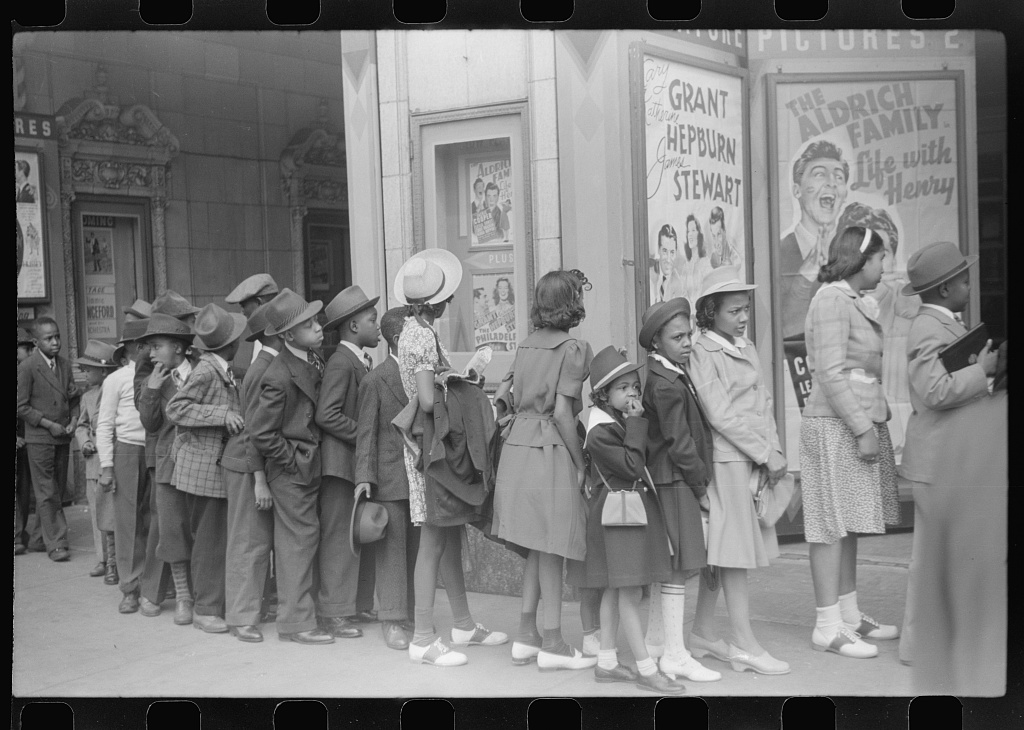
Picture a black-and-white moment frozen in time. It is 1941 on the South Side of Chicago. A group of children, dressed in their absolute Sunday best, stands in line for a movie matinee. Photographer Edwin Rosskam captured this scene to document daily life, yet decades later, this image ignited a firestorm of conspiracy theories across the internet. The focus? A young boy on the far right holding a rectangular object. To the modern eye, conditioned by screens and technology, it looks impossibly like an Apple iPad.
Social media users scrutinized the grain and shadows, convinced this was definitive proof of time travel. How could a device from the 21st century exist in the hands of a child eighty years prior? It is a captivating thought that challenges the laws of physics.
However, the explanation requires no science fiction. Historians and logical observers note that the object is simply a leather-bound book, a Bible, or a notebook. In the early days of cinema, ushers often checked for recording devices like pens and pads to prevent bootlegging, making such items common accessories. While the internet chased a fantasy, the true story of who these children were and the reality they lived in remained waiting to be told.
Frozen in Time, Dressed for Occasion

Beyond the digital delusion lies a more profound reality. Once the eye moves past the “device” in the boy’s hand, it settles on the impeccable presentation of the children in the queue. They are not merely waiting; they are presenting themselves to the world with immense pride.
Viewers who moved past the “time travel” distraction found themselves captivated by the style on display, noting how the group looked “suited and booted” in fedoras, pressed coats, and polished shoes.
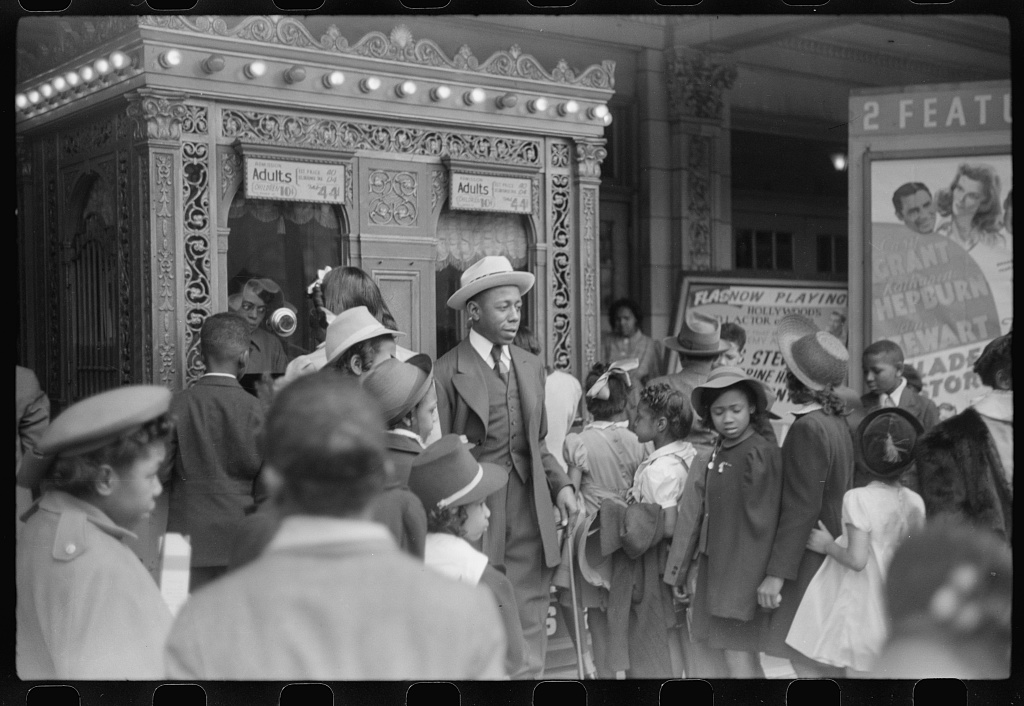
These children were dressed in their “Sunday best” for a simple Easter matinee. As one observer noted, “To wear your Sunday best to see the movies, it must have been a fantastic treat.” It was an era where the act of going out was an event that demanded respect and preparation.
In a modern world where casual attire is the default, this snapshot serves as a gentle reminder of a time when self-presentation was a form of self-respect. Another commenter poignantly admitted, “Part of me wishes we would all dress up like that for the little things.” The “iPad” theory is a fun distraction, but the true captivation comes from the elegance of a community maintaining high standards. It reminds the observer that dignity is not about what you hold in your hands, but how you carry yourself.
The Story Behind the Lens
This viral image is more than a fleeting moment; it is a piece of a vital historical record. In April 1941, photographers Edwin Rosskam and Russell Lee arrived in Chicago with a mission from the Farm Security Administration. Their goal was to document the lives of Americans, focusing specifically on the “Black Belt,” a narrow strip of the South Side where African Americans were forced to live due to segregationist policies.
The collection, which contributed to the book 12 Million Black Voices, captures a striking duality. On one hand, the community faced immense hardship. Residents were restricted to overcrowded neighborhoods where landlords carved apartments into tiny, dangerous “kitchenettes” without proper heating or sanitation. Yet, the camera also captured undeniable resilience.
The photographs show people roller skating, worshipping, and enjoying Easter matinees like the children in the picture. To focus solely on a conspiracy theory is to ignore the profound strength of the subjects. This photo stands as a testament to a people who, despite facing the crushing weight of systemic oppression and poverty, managed to carve out spaces of joy, culture, and community. It is not a puzzle about technology but a portrait of humanity enduring against the odds.
Seeing Ourselves in the Past
This obsession with finding modern tech in vintage frames is not an isolated incident. The internet loves a good mystery, and this Chicago photo fits a growing pattern of digital pareidolia. A similar frenzy previously erupted over a 1943 photo on a Cornwall beach where a man appeared to be checking a mobile phone, though skeptics noted he was likely just rolling a cigarette. Another image from 1940s Reykjavik showed a man seemingly on a call, and even an ancient Greek tombstone was rumored to feature a carved laptop.
Why do these theories persist despite experts finding no evidence to support human time travel? Perhaps it is because the modern mind struggles to disconnect from its current reality. We are so tethered to our devices that we project them onto our ancestors, looking for the familiar in the foreign. While quantum physics explores concepts of non-linear time, there is no scientific proof that tourists are hopping back to the 1940s to catch a movie.
The simplest explanation remains the truth: the boy held a notebook, not a tablet. We are chasing ghosts, desperate for a sci-fi twist, while overlooking the rich, tangible history standing right in front of us.
No Time Machine Needed
It is amusing to see how the modern mind works. We are so tethered to technology that we project it backward, hallucinating iPads in the hands of children from the 1940s. We see a rectangle and immediately assume it has a touchscreen. It shows just how much our devices define our reality today. We struggle to imagine a world where a kid is simply entertained by a book.
But there is a lighter lesson here. We do not need a conspiracy theory to find something valuable in this photo. Just look at the style. Look at the confidence. That boy did not need an app or a newsfeed to be engaged. He had a notebook and a sharp outfit. Perhaps the real “time travel” isn’t about physics at all. It is about taking a brief mental vacation from our digital addiction to appreciate a simpler vibe. Put the phone down. Pick up a book. You might just find that reality is high-definition enough on its own.