


Gen Z Became the First Generation to Score Lower Than Their Parents, According to Senate Testimony
Something quietly shifted in the story of human progress, and most people missed it. For over two centuries, each generation had grown sharper than the one before. Children outscored their parents. Grandchildren outscored their grandparents. A steady upward climb in cognitive ability had become so reliable that scientists treated it almost like a law of nature. And then, without fanfare, that climb stopped.
A neuroscientist recently stood before the US Senate and delivered a finding that should have shaken every parent, teacher, and policymaker in the room. Dr. Jared Cooney Horvath, a former educator who now studies how the brain learns, presented data showing that one generation had broken the pattern. Not by a small margin. Across every major cognitive measure, from basic attention to general IQ, young people born between 1997 and 2010 scored lower than those who came before them.
What went wrong? How did an entire generation fall behind when they spent more time in school than any group before them? Horvath had an answer, and it had nothing to do with bad parenting or lazy students. It had everything to do with a tool that nearly every school in the world had welcomed with open arms.
Half Their Waking Life, Gone to a Screen
Consider how a typical teenager moves through a single day. Wake up, check a phone. Ride to school, scroll through feeds. Sit in class, open a laptop. Come home, switch between a tablet and a TV. Fall asleep with a glowing rectangle inches from the pillow.
Horvath put a number to it when he spoke before the Senate Committee on Commerce, Science, and Transportation in January. “More than half of the time a teenager is awake, half of it is spent staring at a screen,” he said. “Humans are biologically programmed to learn from other humans and from deep study, not flipping through screens for bullet point summaries.”
After school ends for the day, Gen Z does not put down the devices. Young people scroll through TikTok captions, fire off Snapchats, and skim online summaries of classic novels instead of reading actual books. Hours that previous generations would have spent wrestling with a long chapter or debating ideas with friends now evaporate into an endless feed of 30-second clips. Every swipe feels productive. Very little of it sticks.
EdTech Promised Progress but Delivered the Opposite
Schools did not stumble into screen dependency by accident. Over the past 15 years, governments and school boards around the world invested billions in what Horvath called “educational technology,” or EdTech. Tablets replaced textbooks. Smartboards replaced chalkboards. Online quizzes replaced handwritten essays. Politicians celebrated these moves as forward-thinking. Parents assumed their children were getting a better education than they ever had.
Horvath’s data told a different story. Across 80 countries, his research tracked a six-decade pattern. Whenever a country adopted digital devices widely in classrooms, student performance fell. Not slowly. Not slightly. Performance dropped fast and with consistency.
In the United States, National Assessment of Educational Progress (NAEP) data confirmed the same trend. When states rolled out one-to-one device programs, giving every student their own laptop or tablet, scores either flattened or declined within a short window. Students who used computers for as little as five hours a day on schoolwork scored noticeably lower than peers who rarely or never touched a device in class. EdTech had promised a revolution in learning. It delivered the opposite.
Our Brains Never Evolved for Short Clips and Skimming
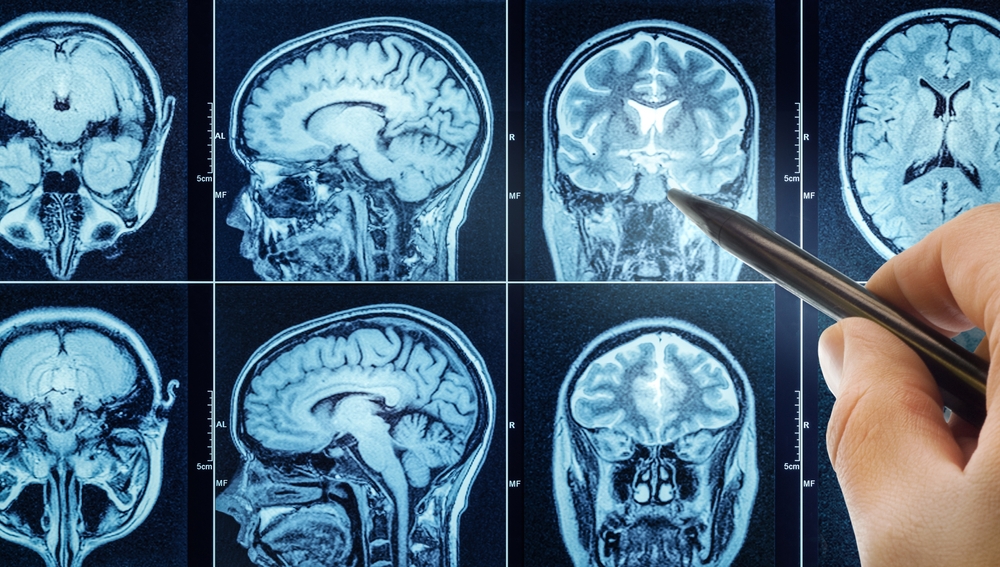
Why does screen-based learning fail so consistently? Horvath grounded his argument in biology, not opinion. Millions of years of evolution shaped the human brain to absorb information in very specific ways. We learn best through sustained, face-to-face interaction with other people. We retain knowledge when we wrestle with complex ideas over long stretches of time. Deep reading, extended conversation, and focused problem-solving built the neural pathways that made human civilization possible. None of those processes map onto a five-minute YouTube video or a paragraph-long AI summary.
Horvath explained to the Senate panel that even the simple act of looking at a screen disrupts how the brain stores new information. Screen exposure weakens our ability to focus, fragments our attention, and short-circuits the biological machinery responsible for converting experience into lasting memory. Our brains did not evolve to digest content in bite-sized pieces. When forced to do so, they lose their grip on depth and meaning.
And here lies a truth that many EdTech advocates have refused to accept. Better apps will not fix the problem. Improved teacher training on how to use tablets will not fix it either. When a tool is fundamentally mismatched with how the human brain grows, learns, and retains information, no amount of software updates can bridge that gap. You cannot optimize your way out of a biological incompatibility.
More Time in School, Less to Show for It

A painful irony runs through every data point Horvath presented. Gen Z spent more hours inside formal educational settings than any previous generation. More years of schooling, more classroom hours per week, more access to information than any group of young people in history. By every traditional measure of educational investment, they should have soared past Millennials. Instead, they fell behind.
Horvath told senators that schools themselves had not undergone any dramatic structural change around 2010. Curricula looked similar. Teacher-to-student ratios had not shifted wildly. Human biology, of course, moves far too slowly to explain a cognitive decline that happened within a single decade. What changed was the primary tool sitting between students and their learning.
Books gave way to browsers. Essays gave way to Google Docs auto-suggestions. Long, difficult reading assignments gave way to video summaries and highlighted key points on a screen. Students stopped doing the hard cognitive work that builds strong minds. And no one noticed because everyone was too busy celebrating the shiny new technology that had replaced it.
Overconfident and Unaware

Perhaps the most unsettling part of Horvath’s testimony was not the decline itself but how invisible it remains to the generation experiencing it. Most Gen Zers, he observed, believe they are quite intelligent. Social media rewards the appearance of knowledge. A quick Google search can make anyone feel like an expert. Summarizing someone else’s argument in a tweet feels the same as understanding it deeply. But feeling smart and being cognitively capable are two very different things.
Horvath noted that many schools have actually made the problem worse by adapting their teaching methods to match the short-form content students consume outside of class. Rather than pushing students toward longer, harder, deeper engagement with ideas, teachers have started presenting material in TikTok-sized chunks because that is what keeps students awake in their seats. Education has bent itself around the weakness instead of building strength.
Surrender Disguised as Progress

Horvath saved his sharpest words for lawmakers, and they landed hard. “What do kids do on computers? They skim. So rather than determining what do we want our children to do and gearing education towards that, we are redefining education to better suit the tool. That’s not progress, that is surrender.” Horvath said.
Sit with that word for a moment. Surrender. Not failure. Not a setback. Surrender implies a conscious choice to stop fighting. And Horvath was not accusing students of giving up. He was pointing his finger at the adults in the room, at the school boards, the tech companies, and the legislators who allowed convenience to replace rigor without questioning whether anything of value was being lost.
A generation of young people did not choose to grow up on screens. Adults handed them the devices. Adults celebrated the technology. Adults redesigned classrooms around it. And now, adults must decide whether to continue down that path or change course before the damage extends to Generation Alpha and beyond.
What Lawmakers and Schools Can Do Now

Education experts who joined Horvath at the January Senate hearing did not simply diagnose the problem. They offered concrete solutions. Delay giving children smartphones. Provide basic flip phones for young kids who need to reach a parent. Set nationwide limits on how much tech belongs inside a classroom. And look to Scandinavian countries that have already enacted bans or severe restrictions on EdTech in schools after seeing the same troubling data.
Horvath framed the issue not as a debate about technology but as a matter of urgency. He and other experts called it a “societal emergency” and urged federal lawmakers to act before an entire generation of Alpha children follows the same cognitive slide.
“Every generation has outperformed their parents,” Horvath told the committee. “Until Gen Z.”
He made clear that his position is not anti-technology. He called himself “pro-rigor.” He wants schools to pull devices out of daily instruction, return to books, deep reading, handwritten work, and face-to-face discussion. Not because old methods are romantic, but because they match how human brains actually build knowledge.
Where Do We Go from Here?
Every generation inherits choices made by the one before it. Gen Z did not ask for a world where screens replaced books and algorithms replaced teachers. Adults built that world, measured its results, and now face an uncomfortable question.
Will we keep handing children tools that weaken their minds because those tools are easy, popular, and profitable? Or will we fight for the kind of education that demands effort, builds depth, and respects how the human brain was designed to grow?
Progress has never been about having more technology. It has always been about developing stronger minds. And if the data tell us anything, it is that we traded one for the other without stopping to count the cost.
What kind of minds do we want to build for the next generation? Because right now, the answer we are living with is not good enough.