


At first glance, a spider’s web looks almost weightless, as if a strong breeze could tear it apart in seconds. The strands shimmer in sunlight, thin and barely visible, stretching between branches or across corners of ceilings. Yet appearances are deceiving. Hidden within those delicate threads is one of the most advanced structural materials found anywhere in nature. For years, researchers have known that spider dragline silk is stronger than steel for its weight and tougher than Kevlar, the synthetic fiber used in bulletproof vests. What they did not fully understand was how such a light biological material could combine resilience, stretch, and durability so effortlessly.
That mystery has now been unraveled at the molecular scale. Scientists have identified the precise chemical forces that allow spider silk proteins to assemble into fibers that are both powerful and flexible. By pinpointing how specific amino acids interact during silk formation, researchers are beginning to map out the fundamental rules nature uses to construct high performance materials. The implications extend well beyond arachnids. From aviation components to biodegradable medical devices and even neurological disease research, this discovery reveals how lessons woven into a spider’s web could reshape multiple fields of science and engineering.

Image Credit: Shutterstock
A Natural Fiber That Rivals Industrial Metals
When experts compare spider silk to steel, they are referring to tensile strength relative to weight. Gram for gram, spider dragline silk can withstand more pulling force than steel before breaking. At the same time, it remains remarkably elastic, able to stretch significantly and absorb energy without snapping. This combination of strength and flexibility is rare in manufactured materials, which often require a compromise between stiffness and stretchability.
In nature, that balance is essential. Spiders rely on dragline silk to build the structural framework of their webs and to anchor themselves while climbing or descending. The silk must endure sudden impacts from trapped prey, shifting winds, and repeated mechanical stress. A brittle fiber would crack under pressure. A weak one would tear apart. Instead, spider silk disperses energy across its structure, bending and recovering in ways that allow it to survive repeated strain.
Despite decades of effort, replicating this performance in laboratories has proven difficult. Researchers have engineered synthetic fibers inspired by silk, but matching the precise combination of properties found in natural dragline silk has remained a challenge. Without a clear understanding of the molecular interactions guiding silk assembly, attempts to recreate its mechanical excellence have been limited.

Image Credit: Shutterstock
From Liquid Protein to Solid Thread
The formation of spider silk begins inside specialized glands in the spider’s abdomen. Within these glands, silk proteins are stored in a thick, concentrated solution known as “silk dope.” In this state, the proteins are densely packed yet not fully organized. They float in a liquid environment, poised for transformation but not yet structured into a solid fiber.
As the spider spins its web, this liquid passes through narrow ducts where subtle shifts in conditions initiate a dramatic change. Scientists have known that silk proteins first cluster into droplet-like assemblies in a process called phase separation. These droplets represent an intermediate step between free floating proteins and fully formed fibers. However, what remained uncertain was how these early clusters reorganized into the highly ordered architecture responsible for silk’s strength.
The transition from fluid to fiber occurs quickly and efficiently within the spider’s body. It does not require extreme temperatures or harsh chemicals. Instead, it relies on precise molecular cues that guide proteins into alignment. Understanding those cues has been central to decoding how spider silk achieves its extraordinary mechanical performance.

Image Credit: Shutterstock
The Molecular “Stickers” Behind Silk’s Strength
In research published in the Proceedings of the National Academy of Sciences by teams from King’s College London and San Diego State University, scientists identified the specific amino acid interactions that drive this transformation. Their work showed that arginine and tyrosine, two amino acids within silk proteins, interact through subtle chemical attractions known as cation–π interactions. These attractions function like temporary molecular “stickers,” bringing protein segments together while still allowing flexibility.
These interactions first encourage the proteins to cluster during the liquid phase. As spinning continues and the material begins to solidify, the same chemical attractions remain active, helping shape the formation of tightly packed β-sheet structures. These β-sheets create nanoscale regions of reinforcement within the fiber, acting as anchors that provide strength while surrounding regions maintain elasticity.
Chris Lorenz, Professor of Computational Materials Science at King’s College London, described the broader impact of the findings. “The potential applications are vast; lightweight protective clothing, airplane components, biodegradable medical implants, and even soft robotics could benefit from fibres engineered using these natural principles,” he said. He also emphasized the depth of understanding achieved, stating, “This study provides an atomistic-level explanation of how disordered proteins assemble into highly ordered, high-performance structures.”

Image Credit: Shutterstock
A Hidden Complexity Within a Simple Thread
One of the most revealing aspects of the study is how chemically intricate spider silk truly is. While it may appear straightforward to the naked eye, its formation depends on highly coordinated molecular behavior. The interactions between arginine and tyrosine must occur at precise moments and in specific arrangements to guide the proteins from disorder into structured fiber.
Gregory Holland, an SDSU professor of physical and analytical chemistry who led the US side of the research, acknowledged how surprising this complexity was. “What surprised us was that silk; something we usually think of as a beautifully simple natural fiber; actually relies on a very sophisticated molecular trick,” Holland said. He continued, “The same kinds of interactions we discovered are used in neurotransmitter receptors and hormone signaling.”
Those remarks highlight a remarkable overlap between materials science and biology. The same types of molecular forces that stabilize spider silk also operate in human physiological systems. This shared chemistry suggests that the principles uncovered in silk may have relevance beyond engineered materials.

Image Credit: Shutterstock
Parallels With Alzheimer’s Disease
Perhaps the most unexpected dimension of the research lies in its connection to neurodegenerative disorders. The way silk proteins cluster and then reorganize into β-sheet rich structures resembles processes observed in diseases such as Alzheimer’s. In these conditions, certain proteins in the brain undergo phase separation and structural rearrangement that lead to harmful aggregates.
Holland addressed this similarity directly. “The way silk proteins undergo phase separation and then form β-sheet–rich structures mirrors mechanisms we see in neurodegenerative diseases such as Alzheimer’s,” he explained. He further noted, “Studying silk gives us a clean, evolutionarily-optimized system to understand how phase separation and β-sheet formation can be controlled.”
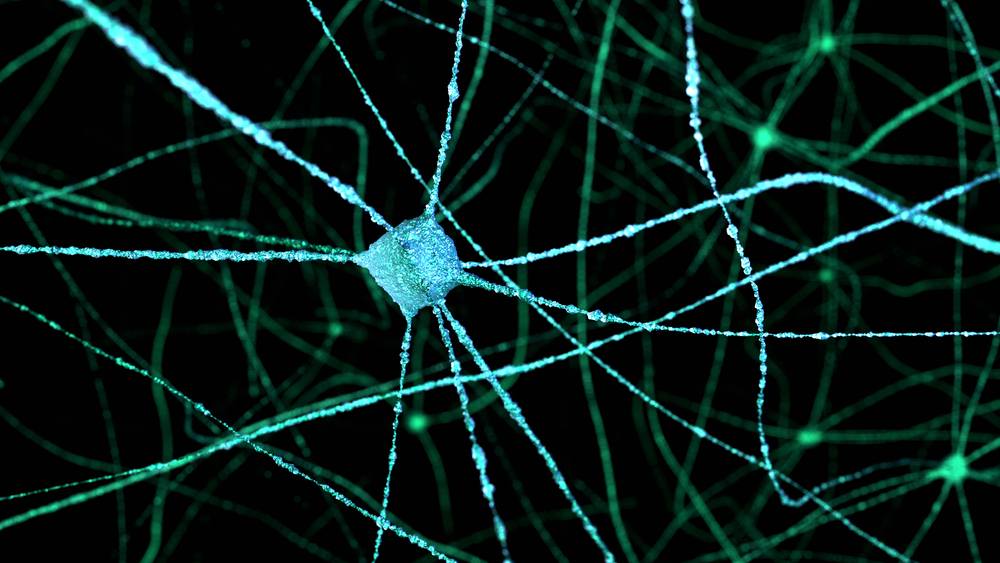
Image Credit: Shutterstock
The distinction is critical. In spider silk, protein assembly is tightly regulated and produces a functional, high strength material. In Alzheimer’s disease, related structural shifts can spiral into damaging accumulation within brain tissue. By examining how spiders precisely control these molecular events, researchers may gain insight into how similar processes might be better understood or regulated in medical contexts.
Building the Next Generation of Materials
Rather than attempting to replicate spider silk exactly as nature makes it, scientists are increasingly focusing on extracting its design principles. By understanding how reversible molecular interactions guide hierarchical assembly, engineers can apply similar concepts to synthetic materials. This approach allows innovation without needing to copy the biological system molecule by molecule.
The potential applications are extensive. Advanced protective fabrics could offer greater comfort while maintaining durability. Aircraft components could become lighter without sacrificing strength, improving efficiency and reducing environmental impact. Biodegradable medical devices could combine toughness with compatibility inside the human body, reducing complications and waste.
Beyond specific products, the discovery underscores a broader lesson about innovation. Nature often achieves performance through precision rather than excess. Spider silk demonstrates how carefully orchestrated molecular interactions can produce materials that outperform many industrial alternatives. What appears to be a fragile strand suspended in air is, in reality, a highly engineered structure refined through millions of years of evolution. By learning from that blueprint, scientists are not only unlocking stronger fibers but also gaining deeper insight into the molecular behaviors that shape both materials and human health.
Featured Image Credit: Shutterstock