


Brazil Develops Breakthrough Drug That May Reverse Spinal Cord Injuries
For decades, paralysis has been one of medicine’s most heartbreaking frontiers — a condition defined not just by physical immobility, but by the sudden interruption of independence, identity, and everyday life. Families are told to focus on rehabilitation, adaptation, and acceptance. Recovery, in the traditional sense, has rarely been part of the conversation.
Now, a breakthrough emerging from Brazil is challenging that narrative.
A drug called polylaminin, developed by researchers at the Federal University of Rio de Janeiro (UFRJ), is showing early signs that spinal cord damage — long considered permanent — may not be as irreversible as once believed. While still in testing phases, recent patient accounts and experimental data are raising a question that once seemed unthinkable: Could paralysis actually be reversible?
A Young Soldier’s Unexpected Response
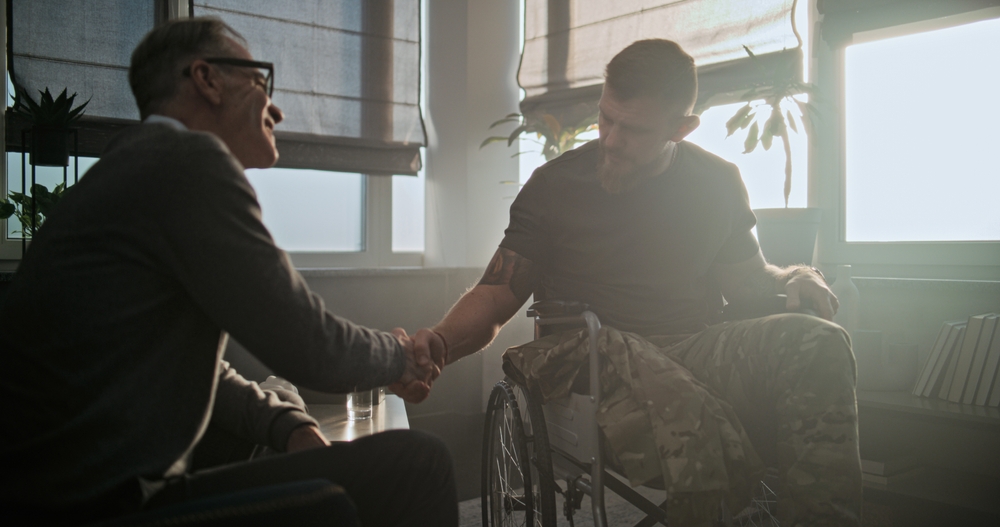
In October 2025, 19-year-old Brazilian Army soldier Luiz Otávio Santos Nunez suffered a firearm accident that left him tetraplegic. The trauma to his spinal cord dramatically altered his life in an instant.
Polylaminin’s clinical research protocol originally required application within 72 hours of injury — a window believed to be critical for maximizing nerve regeneration. However, Luiz received the drug 110 days after his accident, well outside the established guidelines.
The procedure was authorized by court order and performed at a military hospital in Campo Grande. At that point, expectations were cautious at best.
Yet within six days of receiving the injection directly into the injured area, Luiz reported something extraordinary:
- Muscle strength returning in his legs
- A sensation of warmth in his lower limbs
- Feeling his mother’s touch on his foot — something he had not experienced since the accident
His mother, Viviane Goreti, confirmed noticeable improvements.
While these reports remain preliminary and anecdotal, they have electrified the medical community and the public alike. If confirmed through rigorous trials, they could represent a turning point in neurological medicine.
What Exactly Is Polylaminin?
At its core, polylaminin is designed to imitate something nature already perfected.
During embryonic development, the human body produces a protein called laminin. This protein plays a crucial role in helping neurons connect and communicate, essentially guiding the formation of the nervous system.
As we age, laminin production decreases significantly. When a spinal cord injury occurs in adulthood, the body lacks sufficient laminin to rebuild neural pathways. Scar tissue forms instead, blocking communication between nerve cells.
Polylaminin seeks to change that.
Researchers extract proteins from the human placenta and engineer them into a laboratory-produced mesh-like structure that mimics natural laminin. When applied directly to the injury site during surgery, the substance aims to:
- Stimulate nerve cells to grow new pathways
- Reestablish communication between neurons
- Create a supportive environment for regeneration
Lead researcher Tatiana Sampaio has described the approach as “imitating nature.” Rather than replacing tissue with stem cells — a complex and costly strategy — polylaminin focuses on restoring the body’s own regenerative communication system.
Two Decades in the Making
This breakthrough did not appear overnight.
The research has been ongoing for more than 20 years and is supported by the Carlos Chagas Filho Foundation for Research Support of the State of Rio de Janeiro (FAPERJ). Pharmaceutical company Cristália Laboratory has invested approximately R$31 million (around US$5.6 million) into the project.
The long development timeline underscores a critical point: scientific progress in neurological repair is painstaking and slow.
Before human application, polylaminin underwent extensive laboratory testing. One of the most significant studies, published in Frontiers in Veterinary Science, examined six paraplegic dogs who had failed to regain mobility even after surgery and months of physiotherapy.
After receiving polylaminin directly at the injury site:
- Four dogs showed improved balance and took several steps.
- Two dogs experienced more modest but measurable improvement.
- None displayed adverse side effects during six months of monitoring.
For researchers, the absence of severe complications was just as important as the functional improvements.
Early Human Trials Show Promise

Beyond animal studies, polylaminin has already been administered to a small experimental group of Brazilian volunteers under academic protocols.
Eight individuals participated in early-stage testing. Outcomes varied — as expected in neurological injuries — but some results were striking:
- Partial or full recovery of mobility in certain participants
- Improved trunk control
- Ability to walk with assistance
Among them was Bruno Drummond, who suffered a severe cervical injury in 2018 that crushed part of his spinal cord. Initially unable to move his limbs, he reportedly began moving a toe just two weeks after receiving treatment derived from placental cells.
Years later, he has regained significant mobility and much of his independence. In interviews, he has described being able to stand, walk, and even dance — achievements once thought impossible.
Researchers caution that individual cases cannot substitute for large-scale clinical trials. However, repeated patterns of regained movement are fueling cautious optimism.
The Long Road to Approval
Despite the excitement, polylaminin is not yet approved for widespread clinical use.
Brazil’s National Health Surveillance Agency (Anvisa) has not received a formal request for full regulatory approval. Current results stem from non-clinical and early-stage studies. The process ahead is rigorous and necessary.
Before the drug can reach hospitals nationwide, it must pass through several phases:
- Completion of laboratory studies
- Expanded safety testing in animals
- Large-scale human trials for acute injuries
- Separate trials evaluating chronic injuries
- Full regulatory evaluation and approval
Each stage can take years.
That caution exists for good reason. History is filled with promising neurological therapies that showed early hope but failed under broader testing. Safety, consistency, and reproducibility must all be proven.
Hope — With Caution

For people living with spinal cord injuries, even small improvements can transform daily life.
Alexandre Costa, who became paraplegic after being shot in 2018, describes spinal injury as a “package” that includes not only mobility loss but emotional and systemic health challenges. Rehabilitation is often interrupted by complications, limited public healthcare access, and mental health struggles.
Depression, secondary medical issues, and social isolation are common realities.
This context matters.
When individuals like Alexandre follow polylaminin’s development, they do so with both optimism and restraint. Even a modest gain — improved trunk stability, partial sensation, or reduced complications — could dramatically enhance independence and quality of life.
Medical breakthroughs are often portrayed as overnight miracles. In reality, they are incremental. And sometimes, incremental is enough.
If Proven Effective, Here’s What Changes

If future trials confirm polylaminin’s effectiveness, the implications extend far beyond individual patients.
Potential ripple effects include:
- Reduced long-term healthcare costs associated with paralysis-related complications
- Expanded rehabilitation possibilities combining drug therapy with physiotherapy
- New research pathways for treating other neurological conditions
- Greater accessibility compared to stem cell therapies, due to lower production complexity
Unlike stem cell approaches, which involve unpredictable cellular differentiation and higher costs, polylaminin focuses on guiding existing nerve cells to reconnect. Its cost-effectiveness and safety profile could make it more scalable globally — particularly in public healthcare systems.
However, accessibility will depend on regulatory approvals, production capacity, and equitable distribution policies.
The Bigger Reflection
Breakthroughs like polylaminin remind us of something profound: the human body is more adaptable than we often assume.
Science progresses by revisiting assumptions once considered permanent. Paralysis was one of them.
Whether polylaminin ultimately becomes the world’s first approved spinal cord repair drug or simply a stepping stone toward something even more effective, it marks a shift in direction. Researchers are no longer asking only how to manage paralysis. They are asking how to reverse it.
For patients, families, and medical professionals alike, that question alone represents hope.
And sometimes, hope is the first step toward healing.
Featured Image Source: Shutterstock