

Researchers Discover Entire Microbial Ecosystem Hidden Inside Mysterious Ship Residue
Scientists have long assumed that most of Earth’s major ecosystems have already been identified and carefully studied. With modern tools mapping forests, oceans, and microscopic life, it can seem as though the natural world has revealed most of its secrets. Yet every so often, something unexpected appears in a place where no one thought to look.
In this case, the story began with something that looked more like grime than a scientific discovery. A strange black substance was found clinging to surfaces inside a working ship traveling through the Great Lakes. At first, it seemed like the kind of buildup that naturally forms in vessels constantly exposed to mineral-rich water and metal equipment.
But the material behaved differently from ordinary residue. It had an unusual texture and stubbornly returned even after surfaces were cleaned. What initially looked like a routine maintenance problem slowly started attracting the attention of researchers who wondered whether something else was going on.
The Strange Discovery That Started It All
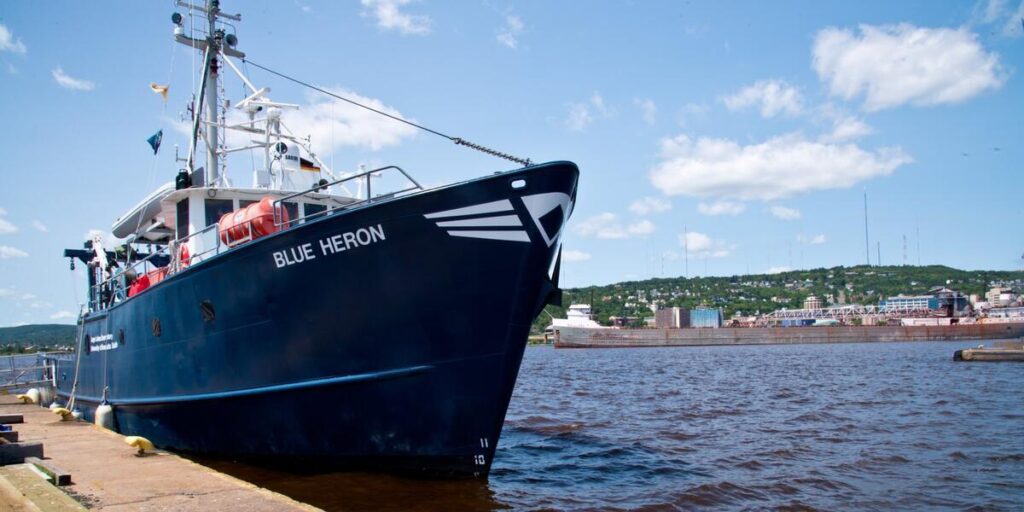
The discovery began aboard a research vessel operating within the Great Lakes region, one of the largest freshwater systems in the world. Crew members noticed an unusual dark residue collecting in parts of the ship that were frequently exposed to water circulation and mechanical activity. At first, the material seemed like typical buildup caused by metal corrosion, organic debris, or sediment accumulation. Such substances are commonly found on ships that spend extended periods in aquatic environments.
Maintenance teams attempted to remove the substance during routine cleaning procedures, but they quickly realized that it behaved differently from normal grime. Instead of washing away easily with standard cleaning techniques, the material appeared thick, sticky, and unusually resilient. Workers reported that it clung stubbornly to metal surfaces and occasionally seemed to spread along narrow crevices where water moved slowly. This unusual persistence raised questions about whether the substance might contain biological components.
This strange behavior prompted further examination by researchers. Samples of the dark material were carefully collected and transported to laboratories for analysis. Initially, scientists expected to identify familiar bacteria or algae commonly found in freshwater ecosystems. However, microscopic investigation revealed something far more unusual. The substance contained dense microbial clusters with structures that did not immediately match known species typically found in the region.
Scientists became increasingly intrigued as they observed the complex biological activity occurring within the material. Rather than behaving as isolated microorganisms, the microbes appeared to function collectively as a coordinated community. The black substance seemed to operate like a living biofilm capable of surviving within the mechanical and chemical environment created by the ship’s infrastructure. This realization transformed what seemed like routine residue into a discovery of potential scientific importance.
A New Microbial Ecosystem Revealed
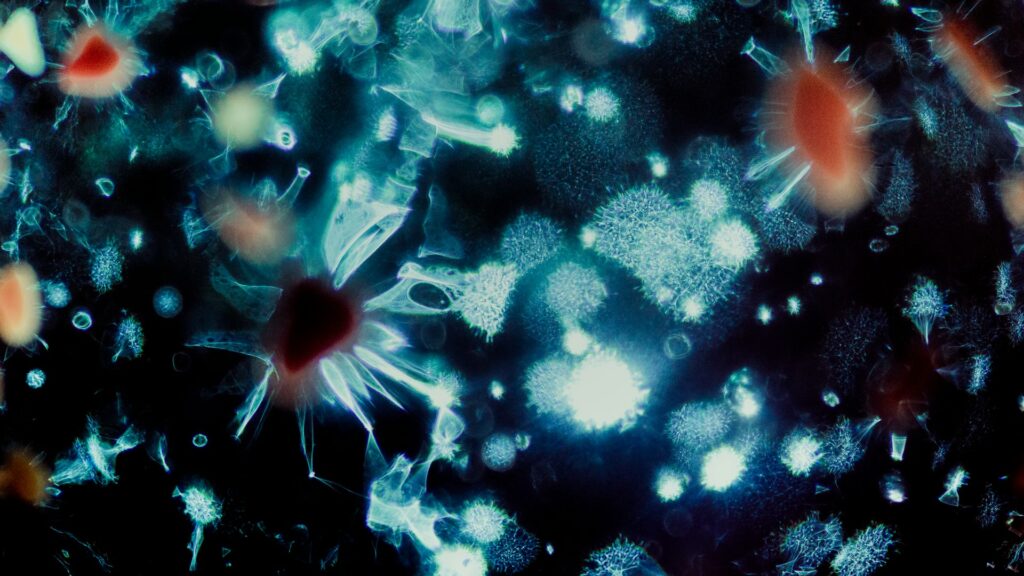
Once researchers began studying the samples in controlled laboratory conditions, they discovered that the black substance hosted a surprisingly complex microbial ecosystem. These microorganisms appeared to cooperate in ways that allowed them to survive in an environment filled with metal surfaces, limited nutrients, and constantly changing temperatures. The discovery suggested that the microbes had developed specialized strategies for survival within a highly unusual habitat.
One of the most fascinating aspects of the discovery involved how the microbes interacted with the ship’s materials. The organisms appeared capable of processing metal compounds and chemical residues that would normally be toxic to many forms of life. This metabolic ability suggested that the microbes had evolved adaptations that allowed them to convert industrial byproducts into usable energy sources. Such biochemical processes are rarely observed in conventional freshwater ecosystems.
Researchers also observed that the microbial community formed layered structures within the substance. These layers allowed different microbial species to occupy distinct ecological niches within the biofilm. Some organisms processed chemical compounds found on metal surfaces, while others relied on the byproducts generated by neighboring microbes. This cooperative structure created a self sustaining ecosystem capable of maintaining stability despite environmental fluctuations.
The discovery highlights an important concept in microbiology. Life often adapts to environments that appear inhospitable or even hostile to complex organisms. By forming cooperative communities, microorganisms can create stable ecosystems in locations where humans might not expect life to exist. This finding reinforces the idea that microbial diversity on Earth remains far greater than previously understood.
Why This Discovery Matters to Science
The discovery of this unusual microbial community carries significant implications for scientific research. For many years, microbiologists have focused on extreme natural environments such as deep sea hydrothermal vents, volcanic regions, and polar ice fields when searching for unusual life forms. However, this discovery demonstrates that similarly complex biological systems may also develop within human made environments.
Ships, pipelines, and other industrial structures often create unique ecological niches that combine metal surfaces, chemical compounds, and fluctuating temperatures. These environments may appear hostile, but they can provide opportunities for specialized microorganisms to evolve. The microbial community discovered on the ship appears to have adapted precisely to these conditions, demonstrating the remarkable flexibility of microbial life.
Researchers believe that studying these organisms could help scientists better understand how microbes adapt to extreme or chemically complex environments. Insights gained from such research may contribute to multiple fields including environmental science, biotechnology, and astrobiology. If life can thrive in unexpected industrial settings on Earth, it raises new questions about where life might exist elsewhere in the universe.
Another important implication involves industrial infrastructure. Certain microbial communities interact with metal surfaces in ways that influence corrosion processes. Understanding how these organisms function could help engineers develop improved strategies to protect ships, pipelines, and other equipment from microbial induced corrosion. As a result, this discovery may have both scientific and practical applications.
How Microorganisms Adapt to Extreme Environments
Microorganisms represent some of the most adaptable forms of life on Earth. Over billions of years, they have evolved strategies that allow them to survive under conditions that would quickly destroy most plants and animals. The black substance discovered on the ship offers a compelling example of how flexible microbial life can be when faced with challenging environmental conditions.
One key adaptation involves metabolic diversity. Many microbes can process unusual chemical compounds as energy sources. Instead of relying solely on sunlight or oxygen, they may utilize metals, sulfur compounds, or industrial chemicals present in their environment. This metabolic flexibility allows microorganisms to survive in places where conventional food sources are scarce or completely absent.
Another important adaptation involves cooperation among microbial species. Microbes frequently form complex communities known as biofilms that attach to surfaces and create protective environments for the organisms within them. Within these communities, different species perform specialized functions that benefit the entire ecosystem. Some microbes break down raw materials, while others convert those materials into nutrients usable by the community.
The black microbial substance discovered on the ship appears to function in a similar way. Its layered structure and coordinated biological activity suggest that multiple microbial species are working together to maintain a stable environment. This cooperative strategy may explain how the community has survived within the unusual industrial conditions present on the vessel.
The Lasting Impact of a Curious Discovery
The mysterious black substance discovered on a ship initially appeared to be nothing more than an inconvenient accumulation of grime. However, careful scientific investigation revealed that it was something far more extraordinary. Hidden within the dark material was an entire microbial ecosystem that had quietly adapted to life within an industrial environment shaped by human activity.
This finding illustrates the remarkable resilience of microbial life. Even in places dominated by machinery, metal surfaces, and chemical residues, living organisms can find ways to survive and cooperate. Their ability to adapt to challenging conditions continues to expand humanity’s understanding of biology and ecological diversity.
The discovery also reinforces the importance of curiosity in scientific exploration. Many major breakthroughs begin with simple questions about seemingly ordinary phenomena. By examining the unexpected and investigating unusual observations, researchers can uncover entirely new forms of life and biological systems.
As scientists continue studying this strange black substance, the insights gained may influence fields ranging from environmental science to biotechnology. What began as a puzzling residue on a ship may ultimately deepen scientific understanding of life itself and the incredible adaptability that allows it to flourish in the most unlikely places.
Featured Image Credit: Photo by Russ Lee | Unsplash
Sources:
- Observatory, C. O. D. O. T. L. L. (2025, June 27). UMD News | University of Minnesota Duluth. Scientists Discover New Life Aboard Great Lakes Research Vessel | UMD News. https://news.d.umn.edu/articles/ship-goo