


Voyager 1 Just Lost a Vital Instrument After 49 Years in Space
More than 15 billion miles from Earth, where sunlight fades into a dim glow and the silence of space stretches endlessly in every direction, Voyager 1 continues its quiet journey through interstellar space. Launched in 1977, the spacecraft has outlived generations of scientists, entire eras of technology, and even the expectations of the people who built it. It has traveled farther than any human-made object in history, carrying with it instruments designed in a completely different age, yet still managing to send back signals that help humanity understand what lies beyond the boundaries of our solar system. Its continued operation feels almost improbable, a testament to both engineering brilliance and a kind of persistence that borders on poetic.
Now, nearly five decades into that journey, Voyager 1 is facing a reality that could never be avoided. Its power is fading, slowly but steadily, forcing engineers to make increasingly difficult decisions about what the spacecraft can continue to do and what it must leave behind. NASA has chosen to shut down one of its longest-running scientific instruments, not because it failed or became obsolete, but because keeping it running would risk the survival of the entire mission. This moment captures something deeper than a technical adjustment, revealing the delicate balance between preserving knowledge and ensuring that the mission itself can continue, even if it means letting go of something that has been part of it since the very beginning.
The moment engineers had to make a difficult call
On April 17, engineers at NASA’s Jet Propulsion Laboratory sent a carefully prepared command across the vast emptiness of space to shut down the Low-energy Charged Particles experiment, known as LECP. The signal itself took around 23 hours to reach Voyager 1, a delay that highlights just how distant the spacecraft has become from Earth and how every interaction with it now requires patience and precision. By the time the command was received and executed, more than a full day had passed since the decision was made, underscoring the slow, deliberate nature of operating something so far beyond immediate reach.
This decision was not made in haste or under sudden pressure, but rather as part of a long-standing plan developed years in advance. Engineers and scientists had already mapped out the order in which instruments would be shut down as power declined, ensuring that each step would preserve the mission for as long as possible. Even with that preparation, the emotional weight of turning off an instrument that had been active for nearly half a century was impossible to ignore, as it represented the end of a continuous stream of observations stretching back to the very beginning of the mission.
As Voyager mission manager Kareem Badaruddin explained, “While shutting down a science instrument is not anybody’s preference, it is the best option available.” His words reflect the reality that the mission has entered a new phase, where survival depends on careful compromise rather than expansion. The focus is no longer just on gathering as much data as possible, but on extending the life of the spacecraft in a way that still allows it to contribute meaningful scientific insights.
A spacecraft slowly running out of power
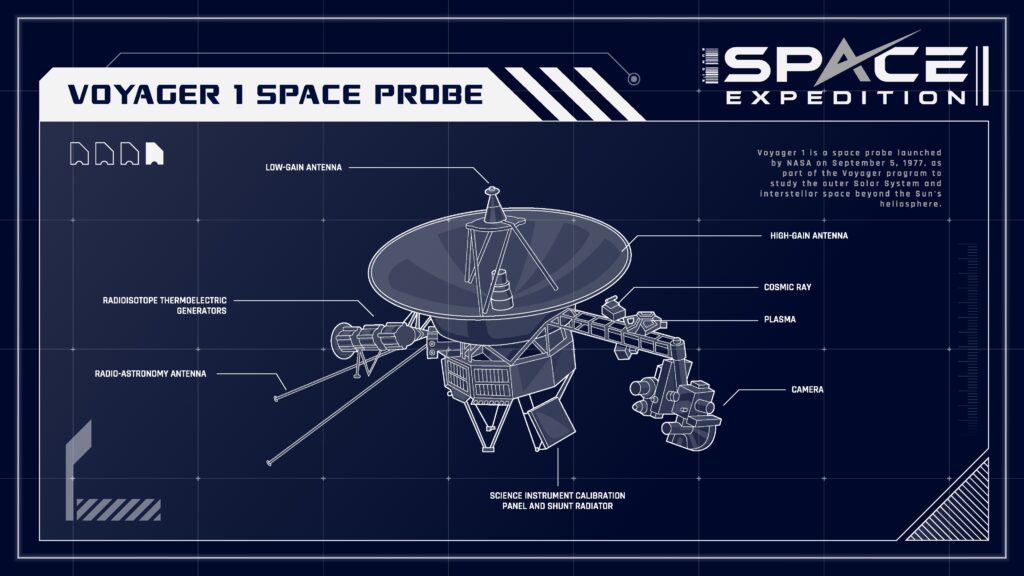
Voyager 1 relies on a radioisotope thermoelectric generator, a system that converts heat from decaying plutonium into electricity, allowing it to function far beyond the reach of solar energy. This power source has enabled the spacecraft to operate in regions where sunlight is too weak to be useful, making its long journey possible in the first place. However, the process of radioactive decay is gradual and irreversible, meaning that the amount of power available to the spacecraft decreases a little more each year.
Over time, that steady decline has become increasingly significant, with Voyager 1 losing about 4 watts of power annually. While that may seem small, the cumulative effect over nearly 50 years has brought the spacecraft to a point where every watt must be carefully allocated. Engineers have already taken steps to conserve energy by shutting down heaters and turning off several instruments, constantly balancing the need to keep critical systems functioning with the risk of losing them entirely.
Earlier in 2026, during what should have been a routine maneuver, Voyager 1 experienced an unexpected drop in power levels. This event raised concerns about triggering its automatic fault protection system, which could shut down components without warning in order to protect the spacecraft. Recovering from such an event would be complex and time-consuming, so the team made the decision to act proactively, reducing power usage in a controlled way rather than risking an uncontrolled shutdown.

What the LECP contributed to science
The Low-energy Charged Particles experiment was one of the most enduring and scientifically valuable instruments aboard Voyager 1, quietly collecting data since the spacecraft first left Earth in 1977. It measured low-energy ions and electrons, as well as cosmic rays originating from both our solar system and the broader Milky Way galaxy, providing a detailed picture of the particle environment in regions that had never been explored before.
Through its observations, the instrument helped scientists understand the structure of the interstellar medium, revealing the presence of pressure fronts and variations in particle density beyond the heliosphere. The heliosphere acts as a protective bubble created by the Sun, and crossing its boundary marked a major milestone in the mission, opening the door to an entirely new realm of scientific discovery that only Voyager could access.
Because Voyager 1 and Voyager 2 are the only spacecraft to have traveled this far, the data collected by the LECP was uniquely valuable and cannot be replicated by any current mission. Turning it off means losing a continuous stream of information that has shaped our understanding of space beyond the solar system for decades, making this decision both scientifically significant and symbolically powerful.
A mission that redefined our understanding of space
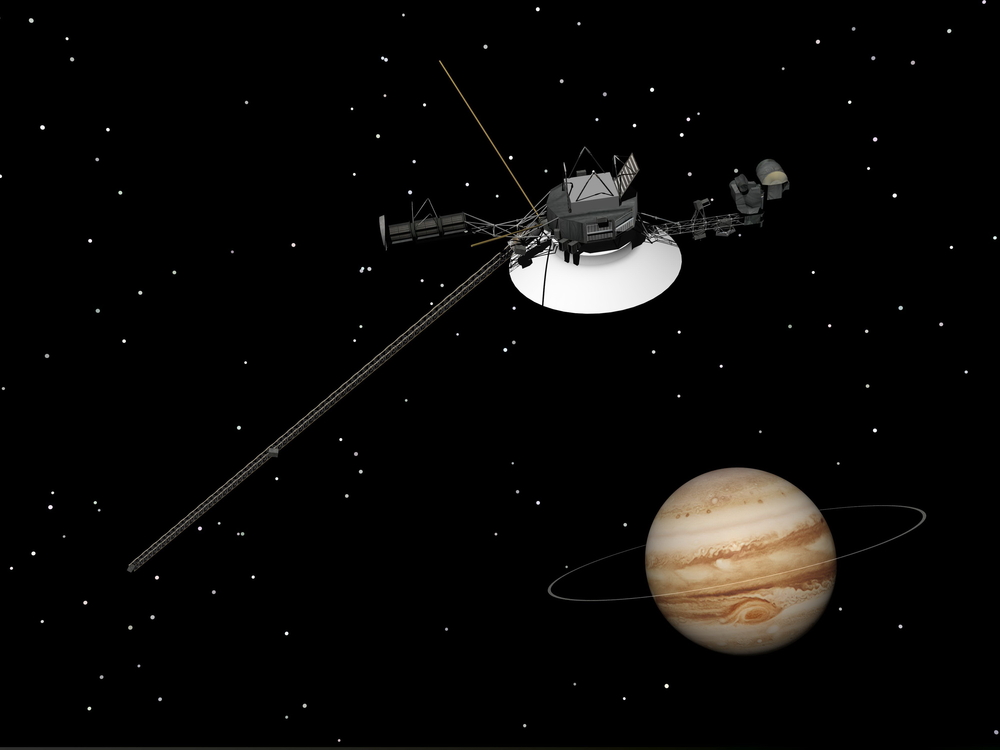
Voyager 1 was launched on September 5, 1977, as part of an ambitious effort to explore the outer planets in a way that had never been attempted before. Alongside its twin, Voyager 2, it embarked on a journey that would take it past Jupiter and Saturn, capturing detailed images and data that transformed how scientists viewed these distant worlds and their complex systems of moons and rings.
The discoveries made during these encounters were groundbreaking, revealing volcanic activity on Jupiter’s moon Io, uncovering new details about planetary atmospheres, and providing insights that reshaped scientific understanding of the solar system. These findings not only expanded knowledge but also demonstrated the potential of robotic exploration to reach places that humans could not yet go.
After completing its primary mission, Voyager 1 continued traveling outward, eventually crossing the boundary into interstellar space in 2012. This achievement marked the first time a human-made object had entered the space between stars, turning Voyager 1 into a pioneer of a completely new frontier that continues to be explored through the data it sends back.
The careful strategy behind every shutdown
The shutdown of the LECP was not an isolated decision but part of a carefully structured plan designed to extend the mission for as long as possible. Each Voyager spacecraft originally carried 10 instruments, and over the years, seven of them have already been turned off in a sequence determined long ago by engineers and scientists working together to prioritize the most valuable remaining capabilities.
Voyager 1 still operates two key scientific instruments, one that measures plasma waves and another that studies magnetic fields, both of which continue to provide important data about interstellar space. These instruments are considered essential for understanding the environment beyond the heliosphere, making their continued operation a top priority as power becomes increasingly limited.
Even within the shutdown of the LECP, there is a level of careful planning that reflects the mission’s long-term mindset. A small motor that rotates the sensor has been left running because it uses very little power, preserving the possibility that the instrument could be reactivated in the future if additional energy becomes available.
The challenge of operating at unimaginable distances
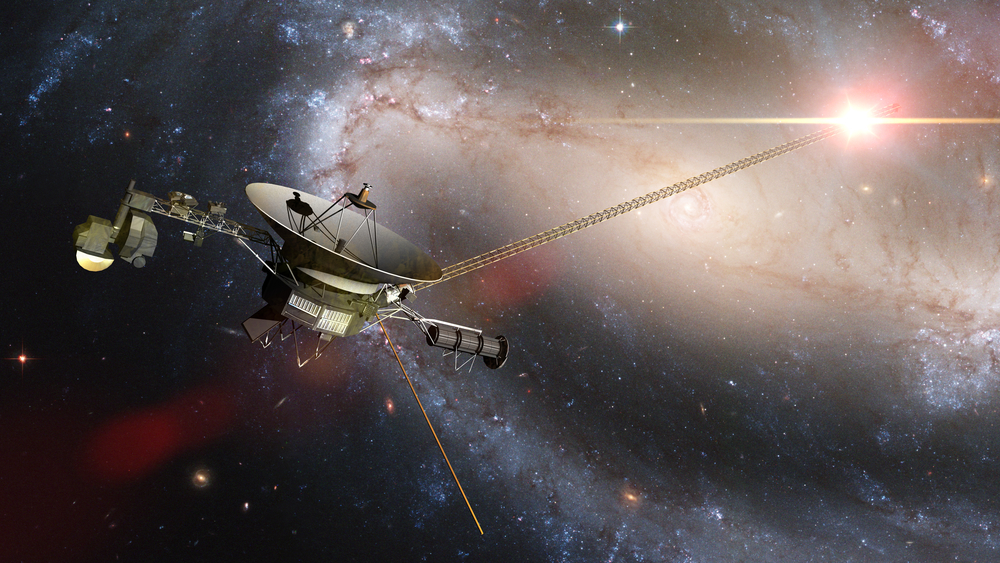
Operating a spacecraft at a distance of more than 15 billion miles presents challenges that are difficult to fully comprehend, especially when it comes to communication and control. Every command sent to Voyager 1 takes about 23 hours to arrive, meaning that engineers must wait nearly a full day to see the results of any action they take.
This delay eliminates the possibility of real-time adjustments, requiring every decision to be carefully planned and thoroughly tested before it is transmitted. The margin for error is extremely small, as even a minor mistake could have consequences that cannot be quickly corrected due to the vast distances involved.
The shutdown of the LECP itself took several hours to complete once the command reached the spacecraft, demonstrating the complexity of even seemingly simple actions at such distances. This process highlights the remarkable level of precision and foresight required to keep Voyager 1 functioning after so many years in space.
What comes next for Voyager 1
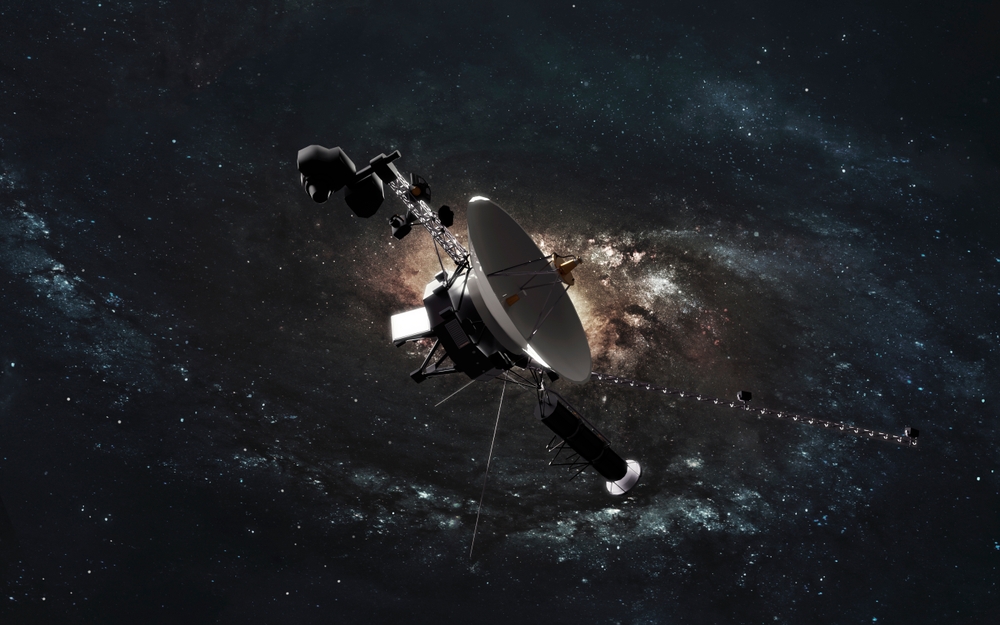
By shutting down the LECP, engineers have gained approximately one more year of operation for Voyager 1, buying valuable time to implement additional strategies aimed at extending the mission even further. One of the most significant of these strategies is known as the Big Bang, a coordinated effort to reconfigure multiple systems at once in order to reduce overall power consumption.
This approach involves turning off certain components while replacing others with lower-power alternatives, allowing the spacecraft to maintain enough heat and functionality to continue operating in the cold environment of interstellar space. The plan represents a more aggressive and complex step compared to previous adjustments, reflecting the increasing urgency of the situation.
Voyager 2 will be the first to undergo this process, as it has slightly more available power and is closer to Earth, making it a safer candidate for testing. If the strategy proves successful, it will then be applied to Voyager 1, potentially extending its mission and even creating the possibility that some previously shut-down instruments could be brought back online.
A quiet lesson from the edge of the universe
The story of Voyager 1 has evolved from one of exploration to one of endurance, highlighting the challenges of sustaining something far beyond its original design limits. Each decision to shut down an instrument represents a careful balance between preserving current capabilities and ensuring that the mission can continue into the future.
Despite the loss of the LECP, Voyager 1 continues to send back data from a region of space that remains largely unexplored, offering insights that cannot be obtained in any other way. Its signals may be faint and delayed, but they carry immense scientific value, connecting Earth to a place that exists far beyond everyday human experience.
There is a deeper meaning in this ongoing effort, as engineers work to extend the life of a spacecraft that has already achieved more than anyone expected. By choosing what to keep and what to let go, they are ensuring that Voyager 1’s journey continues, even as parts of it fall silent, reminding us that progress often depends on difficult choices made with care and purpose.