

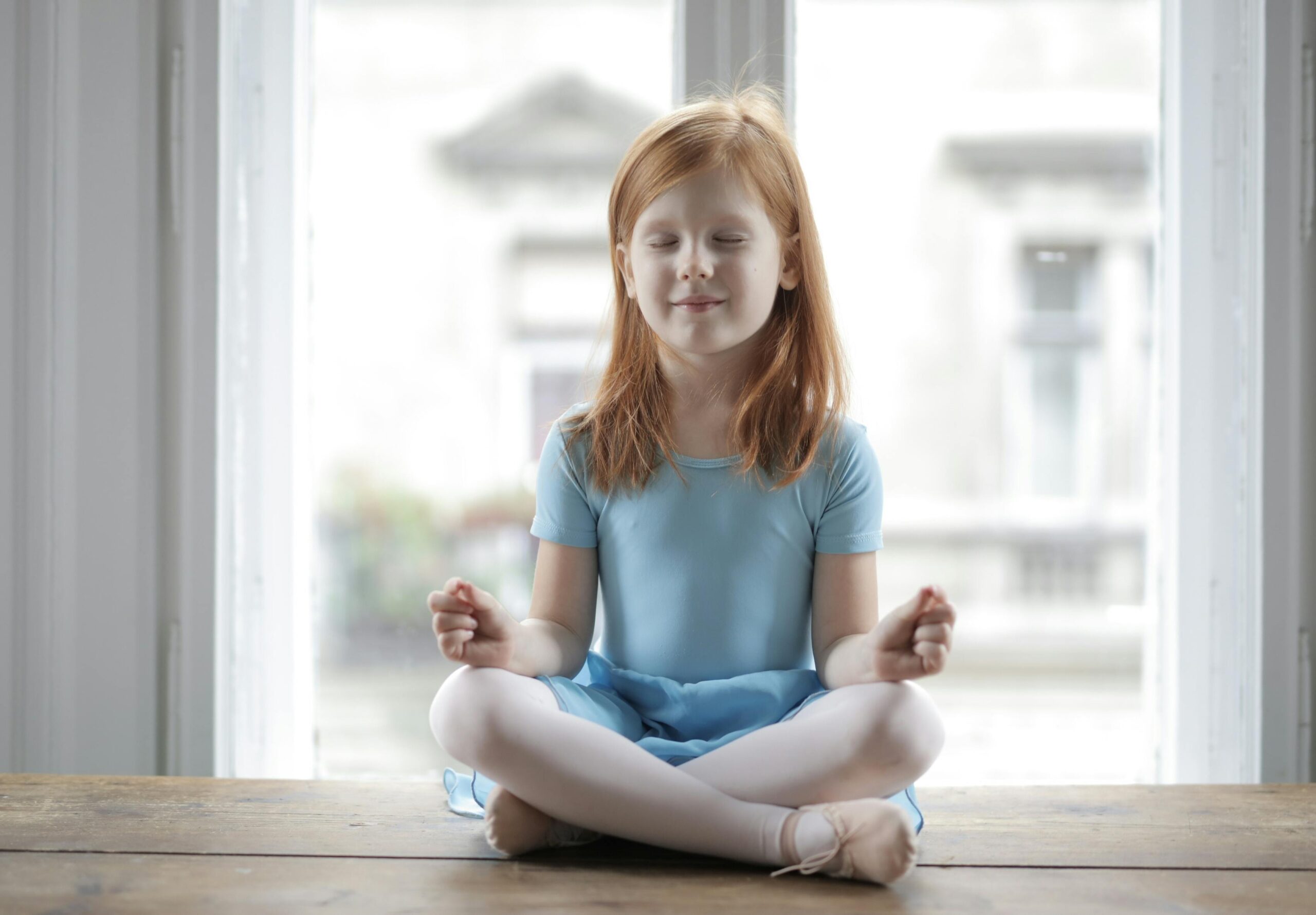
Why Your Inner Child Might Be the Key to a Happier Healthier Life
Somewhere between paying bills, answering emails, and trying to keep up with the endless demands of adult life, many people quietly lose something they didn’t even realize they were giving up: play.
Not toys, cartoons, or recess in the literal sense, but the deeper instinct underneath all of it. The part of us that once found joy in making things up, doing things for no reason at all, laughing too hard, being curious, and letting a moment exist without needing it to be productive.
For a lot of adults, that shift happens so gradually it barely registers. One day, life becomes less about wonder and more about management. Fun gets pushed into the “when I have time” category. Imagination starts to feel childish. Even rest often needs to be earned.
But a growing body of thought suggests that this may not just be emotionally draining. It may also be costing us some of the very things we spend adulthood trying to protect: our health, our happiness, our resilience, and our ability to feel fully alive.
According to recent reflections published in The Conversation by Scott Duncan of Auckland University of Technology and Melody Smith of the University of Auckland, adults benefit from playfulness in ways that are far more significant than many people assume. And perhaps most importantly, this kind of play is not a luxury. It may be one of the quiet essentials of a well-lived life.
The Strange Way Adulthood Trains Joy Out of Us
There is a strange contradiction built into adult life. People spend years dreaming about freedom, only to arrive there and discover that much of adulthood is defined by pressure.
There are deadlines, responsibilities, social expectations, financial stress, emotional labor, and the constant cultural message that being a “serious” person means staying focused, useful, and in control. Somewhere in that process, many adults begin to treat play as something optional, indulgent, or even embarrassing.
That may help explain why so many people feel exhausted in ways that sleep alone cannot fix.

Reference material you shared captures this tension well. Childhood is often remembered not because it was perfect, but because it contained a kind of mental spaciousness. Time felt slower. Imagination was easier to access. Small things mattered. A puddle could become an ocean. A stick could become a spaceship. A random afternoon could become an entire universe.
Adulthood, by contrast, often narrows experience. The imagination that once came naturally gets replaced by routines, obligations, and a kind of emotional self-surveillance. Many people become so accustomed to monitoring their behavior, suppressing silliness, and chasing efficiency that they stop noticing how disconnected they feel from their own joy.
That disconnect matters more than it seems.
What Experts Say Adult Playfulness Actually Does for Us

The idea of “finding your inner child” can sometimes sound vague or overly sentimental, but the research and psychological framing behind it are much more grounded than the phrase might suggest.
As Duncan and Smith note, studies show that adults who regularly engage in playful activities tend to cope better with stress, experience more positive emotions, and report greater life satisfaction. Playfulness has also been linked to resilience and emotional intelligence, both of which are crucial in a world that asks adults to navigate pressure almost constantly.
That is not a small finding.
It suggests that play is not just about entertainment. It may function more like a psychological regulator. It can soften stress responses, improve flexibility in thinking, and create moments of emotional recovery that many adults rarely give themselves.
There is also evidence pointing toward a possible neurobiological link between playfulness and cognitive health in older adults. In simple terms, staying playful may help the brain remain more flexible over time.
That matters in a culture where many people treat rigidity as maturity.
The healthier version of adulthood may not be the one where a person becomes more emotionally shut down, more self-conscious, or more mechanically efficient. It may be the one where they remain mentally flexible, emotionally expressive, and still capable of delight.
In that sense, playfulness is not the opposite of maturity. It may be one of its most overlooked signs.
Your Inner Child is Not Just About Nostalgia

A lot of people hear the phrase “inner child” and immediately think of old cartoons, childhood bedrooms, or sentimental memories from a simpler time. But psychologically, the concept goes much deeper.
As one of your references explains, many of the emotional reactions people experience in adulthood do not actually begin in adulthood. The frustration, shame, fear, abandonment, perfectionism, or panic someone feels today is often tied to emotional patterns that began much earlier.
That is where inner child work becomes more than a social media buzzword.
At its core, the inner child represents the younger parts of ourselves that still carry unmet needs, unprocessed pain, old fears, and old beliefs. Those parts do not disappear simply because a person gets older. They often come forward most strongly in moments of conflict, criticism, rejection, loneliness, or uncertainty.
That is why an adult reaction can sometimes feel larger than the situation in front of them. A difficult email from a boss might not just feel like feedback. It may touch an old wound around not feeling good enough. A delayed text message from a partner might not just feel inconvenient. It may activate old fears of abandonment or emotional neglect.
In those moments, people are not only reacting as adults. They are often reacting from much older emotional terrain.
This is part of what makes reconnecting with your inner child so important. It is not only about becoming more playful. It is also about becoming more aware of the younger self still living inside your nervous system.
Healing Does Not Always Start With Productivity

Modern wellness culture often sells healing in a highly optimized form. Better routines. Better habits. Better boundaries. Better sleep. Better systems.
Some of that can absolutely help. But inner child healing points toward something softer and more uncomfortable: the possibility that what many adults actually need is not more performance, but more compassion.
Psychologist Dr. Susan Albers describes inner child work as the process of acknowledging, understanding, and healing the wounds carried from childhood. That means identifying emotional triggers, understanding where they come from, and gradually replacing old beliefs with healthier, more supportive ones.
This is where a lot of adults get stuck.
They are often very good at functioning and very bad at comforting themselves.
They know how to meet deadlines, keep plans, solve problems, and carry emotional weight for other people. But when something painful gets activated inside them, many still respond the way they learned to long ago: by minimizing, suppressing, distracting, overexplaining, or pretending they are fine.
Inner child healing asks for something different.
It asks adults to recognize when they are emotionally activated and to respond with care instead of shame. It asks them to notice when a reaction feels familiar. It asks them to replace self-criticism with self-support.
That can look surprisingly simple.
It might mean pausing after receiving criticism instead of spiraling into self-loathing. It might mean noticing when conflict makes you shut down. It might mean identifying the exact moments where you feel small, invisible, rejected, or not enough.
And then, instead of bulldozing through those feelings, it means meeting them with the kind of reassurance many people needed years ago.
That is not weakness. That is repair.
Why Play and Healing Are More Connected Than They Seem

One of the most striking ideas in the material you shared is that healing and play are not separate things.
In fact, for many adults, they may be deeply connected.
Play can become one of the safest ways to reintroduce joy, freedom, and self-expression into a nervous system that has spent years bracing for pressure. It can also help people reconnect with parts of themselves that were neglected, shamed, or never fully allowed to exist.
For some people, being “grown up” meant learning to be hyper-responsible very early. Maybe they were praised for being mature, quiet, helpful, high-achieving, or emotionally low-maintenance. On the surface, those traits can look admirable. But underneath them, there is sometimes a child who never got to be messy, spontaneous, loud, curious, or carefree.
That is why playful acts can feel oddly emotional.
Returning to an old hobby, making something badly for fun, dancing in the kitchen, reading fantasy novels, doodling, jumping into a puddle, building something pointless, laughing too hard, or doing something simply because it feels good can stir up more than joy. It can also stir grief for what was missing.
And that grief matters too.
Because in many cases, reclaiming joy is not just about adding fun to life. It is about giving yourself access to something you may have had to abandon in order to survive.
What Adult Play Actually Looks Like in Real Life

One reason many adults resist this whole idea is because they imagine play in a way that feels forced or ridiculous.
But adult play does not have to mean pretending to be a child. It does not require scheduled silliness, fake spontaneity, or some performative version of “healing.”
As your source material notes, adult play is often more about mindset than any one specific activity.
It can be creative, social, physical, or imaginative. It can be as simple as doing something for the uncomplicated joy of it.
In real life, that might look like:
Taking a walk without tracking your steps or trying to make it productive.
Listening to music and letting yourself fully disappear into it.
Making up ridiculous inside jokes with someone you love.
Trying a hobby you are not naturally good at.
Going somewhere unfamiliar just to see what happens.
Rewatching a film or show that reconnects you to a softer part of yourself.
Drawing, painting, writing, singing, or building something without worrying whether it is useful or impressive.
Letting yourself be amused.
That last one is especially important.
A lot of adults are not actually starved for luxury. They are starved for lightness.
And lightness is not shallow. It can be deeply restorative.
Why Relationships Often Get Better When We Loosen Up

There is also a relational side to all of this that deserves more attention.
According to the research highlighted by Duncan and Smith, observational findings suggest that playful adults tend to be more socially connected. That makes intuitive sense. Play often lowers defenses. It creates ease. It invites spontaneity. It gives people a way to connect outside of performance, hierarchy, and routine.
This becomes especially meaningful in families and close relationships.
When adults and children engage in unstructured play together, those usual hierarchies can soften. Shared enjoyment begins to replace constant instruction or correction. In research involving New Zealand families, supporting unstructured play reduced stress and strengthened connection, making play part of everyday life rather than a rare treat.
That has implications far beyond parenting.
In romantic relationships, friendships, and even workplaces, people often connect most deeply not just through vulnerability, but through play. Through teasing, imagination, laughter, experimentation, and those small unguarded moments where no one is trying to be impressive.
It is hard to feel close to people when every interaction is filtered through exhaustion, tension, and adult competence.
Sometimes connection returns not through a grand emotional breakthrough, but through shared silliness.
The Real Reason So Many Adults Struggle to Access Joy

If play and inner child healing are this beneficial, why do so many adults still struggle to embrace them?
Part of the answer is personal history. If someone grew up in an environment where joy was inconsistent, where they had to stay alert, where emotional needs were dismissed, or where play did not feel safe, then pleasure itself can feel unfamiliar or even threatening.
But part of the answer is also cultural.
Many adults have been conditioned to believe that seriousness equals worth. Busyness equals value. Exhaustion equals effort. If something does not produce income, status, progress, or self-improvement, it can start to feel unnecessary.
That is a brutal way to live.
And it quietly teaches people to abandon the very parts of themselves that make life feel meaningful.
The tragedy is that many people do not notice what they have lost until they begin feeling emotionally flat, deeply burned out, or disconnected from themselves in ways they cannot explain.
That is often when the inner child begins knocking.
Not because it is trying to derail adult life, but because it is trying to save it.
Maybe Growing Up Was Never Supposed to Mean Shutting Down
There is something quietly radical about the idea that becoming a healthier adult might involve becoming less defended, less rigid, and less ashamed of joy.
Not less responsible. Not less mature. Just less cut off.
That may be the real lesson running through all four of your references. The “inner child” is not some embarrassing relic that needs to be outgrown. It is a living part of the self that still carries pain, still remembers wonder, and still knows how to reach for life in a more instinctive way.
Healing that part of ourselves does not always begin with a breakthrough. Sometimes it begins with recognition.
With noticing when your reaction feels older than the moment.
With speaking to yourself more kindly.
With understanding that emotional triggers are often invitations, not failures.
With making room for joy that does not need to justify itself.
And sometimes, very simply, with doing something that makes you feel a little more alive.
That may be the real secret hidden inside this conversation around health and happiness.
Not that adults need to become children again.
But that many of them need permission to stop abandoning the child within them.
Because maybe the version of you who once laughed easily, imagined wildly, and found magic in ordinary things was never naïve.
Maybe they were onto something.
And maybe hanging on to that part of yourself is not childish at all.
Maybe it is one of the healthiest things you can do.