

Tiny Airport Beagle Discovers Something Hidden Inside a Traveller’s Luggage That Left Officials Stunned
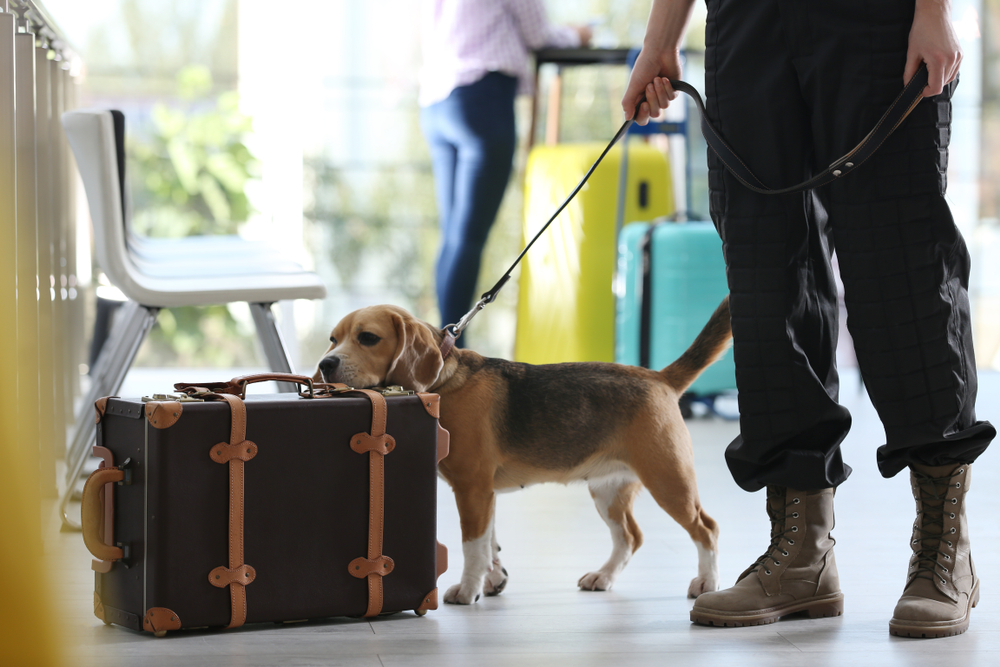
Most travelers passing through an airport never stop to think about the invisible systems quietly operating around them. They move from security lines to baggage claim carrying souvenirs, snacks, gifts for relatives, and small reminders of home without imagining that a single undeclared item could potentially threaten farms, ecosystems, or entire industries thousands of miles away. That is partly why a recent airport discovery involving a small beagle named Merla captured so much attention online. The story sounded funny at first glance. A dog finding more than 100 sandwiches inside someone’s luggage feels almost absurd in the age of advanced scanners and international travel. Yet the image of a calm beagle sitting beside a suspicious suitcase unexpectedly opened a much larger conversation about how deeply interconnected the modern world has become.
The discovery happened after passengers arrived in the United States from Thailand, where agricultural inspection teams were screening incoming luggage for prohibited items. According to U.S. Customs and Border Protection, Merla detected more than 100 pork and chicken sandwiches hidden inside a traveler’s baggage. Officials later shared a photo of the dog online alongside the caption: “Though it might be stale at this point, lettuce remind you that you must declare agriculture items (including meats!) when entering the US.” Authorities confirmed that all of the sandwiches were confiscated and destroyed under existing agricultural regulations. What sounded like an unusual airport moment quickly became a reminder that the smallest overlooked objects can carry consequences far beyond what most people realize.
Merla’s Discovery Was About More Than Sandwiches
The internet reacted to the story with amusement because the situation felt strangely relatable. Many people traveling internationally bring food from home, especially items tied to family traditions or comfort during long journeys. A suitcase packed with sandwiches sounds more like the setup to a comedy sketch than a federal agriculture case. Still, the restrictions surrounding meat products entering the United States exist for serious reasons tied to disease prevention and food safety.
Agricultural authorities have spent decades trying to stop the spread of dangerous animal diseases that can move across borders through contaminated food products. One of the largest concerns involves African swine fever, a highly contagious viral disease that affects pigs and has devastated livestock populations in several parts of the world. Officials warn that even small amounts of contaminated meat could introduce serious threats into domestic agriculture systems if they are not intercepted quickly.
The issue becomes more complicated because travelers often carry prohibited items without harmful intentions. Someone may simply want to bring familiar food home to relatives or avoid wasting leftovers from a long trip. Yet biological threats do not depend on intention. Viruses, invasive species, and agricultural contaminants move silently, often without visible signs, which is why airport screening programs remain so strict despite how harmless certain items may appear on the surface.
The Quiet Work of the “Beagle Brigade”
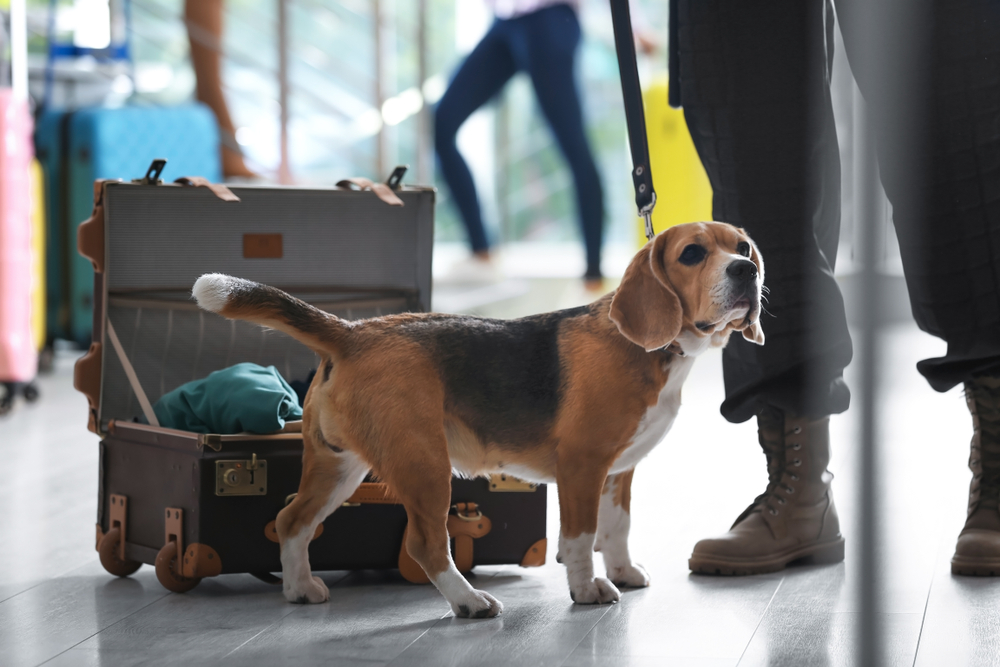
Merla is part of a specialized detection unit known informally as the “Beagle Brigade,” a program operated by the United States Department of Agriculture since the 1980s. These dogs work in major airports across the country and are specifically trained to detect prohibited agricultural products hidden inside luggage, cargo, and personal belongings. Their targets include meat, fruits, vegetables, plants, and seeds that could potentially introduce harmful pests or diseases into the country.
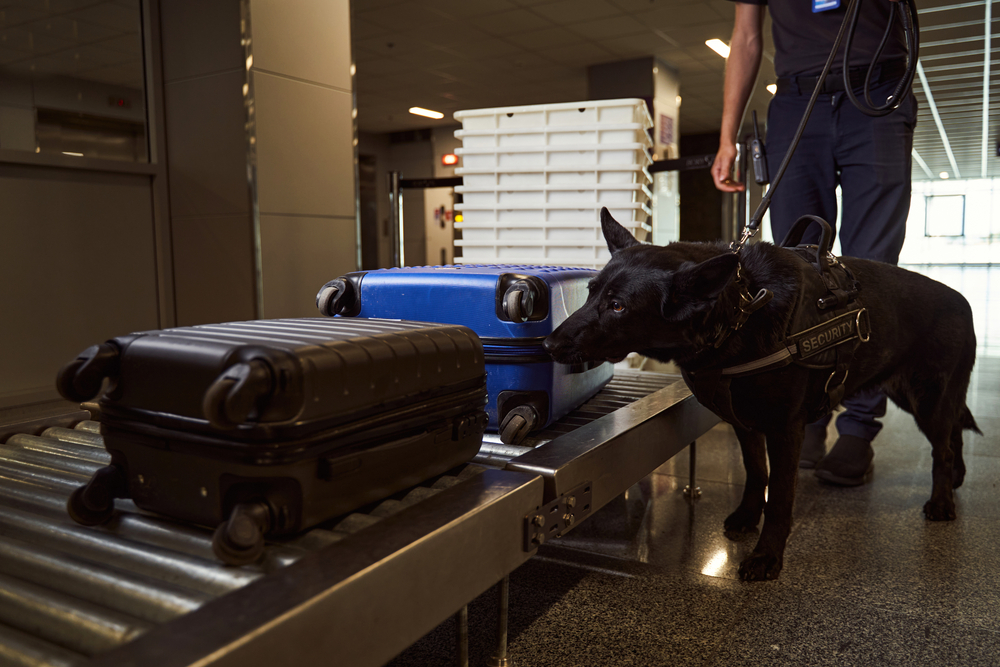
According to reports, the dogs are trained with remarkable discipline and restraint. Instead of barking aggressively or scratching luggage, they alert officers by calmly sitting next to suspicious bags. In Merla’s case, that quiet signal led officers directly to the suitcase containing the undeclared sandwiches. One report described the discovery by stating: “With remarkable composure and professional precision, she uncovered an entire arsenal of sandwiches in the traveller’s luggage.”
There is something unexpectedly fascinating about the role these animals play in modern society. Airports are packed with technology capable of scanning luggage, tracking flights, and monitoring thousands of passengers every hour. Yet some of the most effective detection work still relies on the nose of a small dog calmly walking beside a baggage carousel. Scientists estimate dogs possess hundreds of millions of scent receptors, allowing them to identify substances at levels humans cannot perceive at all.
Airports Have Become Ecosystems of Their Own
International airports now function like crossroads where ecosystems, cultures, and economies briefly intersect every single day. A traveler can leave Southeast Asia in the morning and arrive in North America before sunset carrying food, plants, or organic materials from an entirely different environment. What once required months of travel can now happen in less than 24 hours. That level of movement has transformed the modern world in extraordinary ways, but it has also created new vulnerabilities that previous generations never faced.
Agricultural screening exists because ecosystems are fragile in ways most people rarely notice. A single invasive insect species or agricultural disease can spread rapidly once introduced into a new environment. Farmers, livestock producers, and environmental agencies often spend years trying to contain outbreaks that began with something small entering unnoticed through trade or travel. By the time visible damage appears, the problem may already be widespread.
Stories like Merla’s reveal how much invisible labor supports ordinary daily life. Most passengers passing through customs never think about the teams working behind the scenes to protect agriculture and food systems. Travelers notice airport security when they remove shoes or wait in lines, but agricultural inspection programs often remain largely unseen unless an unusual story suddenly captures public attention.
Another Detection Dog Found More Undeclared Food
Merla’s discovery was not the only recent case involving undeclared food items arriving from Thailand. Another agricultural detection dog named Kokoe alerted officers in Omaha, Nebraska, leading authorities to uncover a variety of prohibited agricultural products inside passenger luggage. According to customs officials, the seized items included mangoes, loquats, mangosteens, planting seeds, chicken bouillon, and unpeeled allium products.
Most of the items were confiscated and destroyed under existing regulations. Authorities stated that one piece of fried chicken and some betel nuts were ultimately allowed after inspection. The range of products highlighted how common it is for travelers to carry agricultural items across borders without fully understanding the rules surrounding them.
Officials later reminded travelers that “All travellers entering the United States are required to declare meats, fruits, vegetables, plants, seeds and related products.” They also warned that undeclared items can result in confiscation or penalties depending on the circumstances. While the message may sound strict, agencies insist these measures exist to protect domestic agriculture from risks capable of affecting food supplies and economies on a massive scale.
Why Stories Like This Stay With People
Part of what made this story resonate online is the contrast between its humor and its deeper meaning. A beagle discovering hundreds of sandwiches inside luggage feels strangely charming in a world usually dominated by stressful headlines and political conflict. The image itself carries a kind of quiet absurdity that people immediately understand. At the same time, the story exposes how many invisible systems quietly protect modern life every day without attracting much public attention.
There is also something comforting about the simplicity of the moment. A small dog doing its job with patience and precision managed to stop a potential agricultural risk before it entered the country. In an era driven by artificial intelligence, automation, and increasingly complex technology, the story became a reminder that nature still possesses abilities humans continue trying to replicate.
Modern life moves quickly enough that people rarely pause to consider how interconnected everything has become. Food, travel, trade, ecosystems, and public health now overlap constantly in ways previous generations could hardly imagine. A sandwich packed into luggage on one side of the planet can suddenly become part of a larger conversation about disease prevention, environmental protection, and global responsibility on the other side of the world.
The Smallest Moments Often Reveal the Biggest Truths
There is something symbolic about a quiet airport beagle becoming the center of an international news story. The incident was never really about sandwiches alone. It reflected the delicate balance modern societies now maintain between openness and protection, freedom of movement and collective responsibility. Every day, millions of people cross borders carrying pieces of their lives with them. Most of those journeys pass unnoticed. Occasionally, though, one small moment pulls back the curtain and reveals how much unseen coordination holds the world together.
Merla probably had no idea her discovery would travel across social media and news outlets worldwide. She simply followed a scent, sat beside a suitcase, and completed the task she had been trained to do. Yet the image stayed with people because it captured something larger than airport security. It showed how deeply connected humanity has become, and how even the most ordinary objects can carry consequences far beyond what we first imagine.