

What Scientists Just Discovered About Trees Will Change How You See Forests
There is something deeply unsettling—yet exhilarating—about realizing that a forest’s silence is actually a facade for a relentless, hidden hive of activity. For centuries, we viewed trees as passive scenery, dismissing the idea of “talking” forests as mere folklore or poetic imagination. However, modern science is proving that the stillness is an illusion; beneath the soil and through the air, trees are active participants in a complex web of chemical signals, electrical impulses, and fungal networks.
The Hidden Network Beneath the Soil
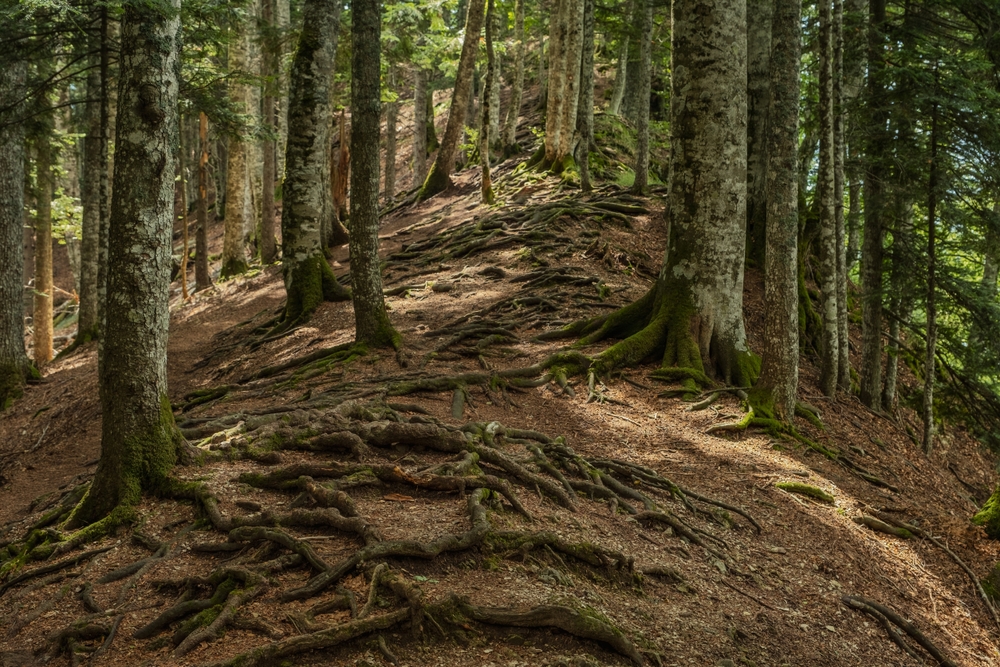
What makes these relationships possible is something that cannot be seen from above ground. Beneath the soil lies an enormous network of fungal filaments that connect the roots of trees across entire forests. This system, often called the “wood-wide web,” acts as both a transport system and a communication network, allowing trees to exchange nutrients and information in ways that were once thought impossible.
The scale of this network is difficult to comprehend. Scientists have found that “one teaspoon of forest soil contains several miles of fungal filaments,” which means that beneath every step in a forest, there exists an intricate web of connections linking countless trees together. These fungal networks form partnerships with tree roots, creating a system where both organisms benefit while contributing to the health of the entire forest.
Through this underground system, trees are able to send signals about environmental conditions, such as drought or disease, and even warn neighboring trees about potential threats. As it has been described, “All the trees here, and in every forest that is not too damaged, are connected to each other through underground fungal networks.” This is not a loose or occasional interaction. It is a constant, dynamic exchange that allows forests to function as unified systems rather than disconnected individuals.
Trees That Communicate Without Words
Communication in forests does not rely on language as humans understand it, but it is no less complex. Trees use a combination of chemical signals, electrical impulses, and possibly even sound to share information and respond to their environment. One of the most well-known forms of this communication involves airborne chemicals. When a tree is attacked by insects or animals, it releases compounds into the air that can be detected by nearby trees, prompting them to activate their own defenses before the threat reaches them.
In addition to chemical signaling, trees also use electrical signals that move through their tissues. These signals carry information about damage or stress and trigger internal responses that help the tree adapt and recover. The existence of these signals suggests that trees have a form of internal awareness, allowing them to respond to changes in their environment in real time, even without a nervous system or brain.
Perhaps the most surprising discovery is that trees may also communicate through sound. Research has shown that plant roots can produce subtle vibrations, including a faint crackling noise at specific frequencies. While these sounds are not audible to humans, they may play a role in how trees interact with their surroundings. There is also evidence that roots can grow toward certain sounds, such as running water, suggesting that trees are not only producing sound but also responding to it in meaningful ways.
Mother Trees and Forest Support Systems
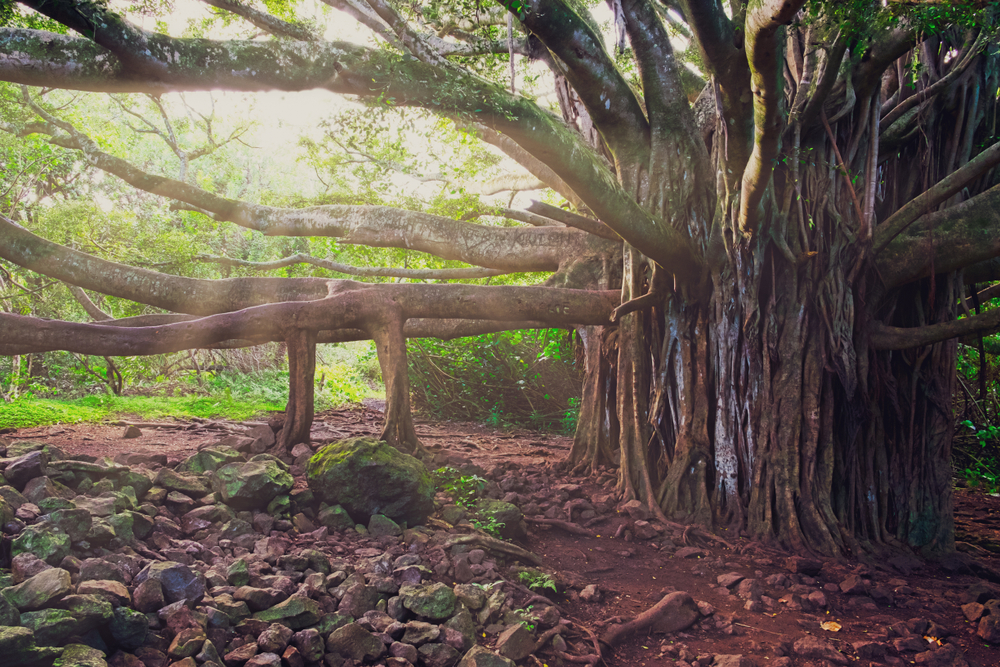
Within these complex networks, certain trees play a more central role than others. Often referred to as mother trees, these larger and older individuals act as hubs within the forest, connecting multiple trees and supporting the overall health of the system. Their extensive root systems and fungal connections allow them to distribute nutrients to younger or weaker trees, helping them survive in conditions where they might otherwise fail.
These trees do more than simply share resources. They respond to the needs of the forest, increasing the flow of nutrients when nearby trees are under stress and even prioritizing their own offspring. Research has shown that they can recognize related seedlings and provide them with additional support, giving them a better chance of survival in competitive environments.
The loss of these central trees can have serious consequences for the entire forest. Without them, the network becomes less stable, and younger trees may struggle to grow. In some cases, entire sections of a forest can weaken or collapse when too many of these key trees are removed. Their role highlights the importance of connection and support within natural systems.
Signals of Danger and Survival Strategies
Trees have developed highly effective ways of responding to danger, often working together to protect themselves and others. When one tree is damaged, it can send out warning signals that trigger defensive responses in nearby trees. These responses can include the production of chemicals that make leaves less appealing or even harmful to herbivores.
In some cases, these signals can travel through the air, while in others, they move through underground networks. This allows trees to prepare for threats before they arrive, increasing their chances of survival. Some animals have even adapted to these systems, changing their behavior to avoid triggering widespread defenses.
Trees also interact with other organisms as part of their survival strategy. When attacked by insects, they can release compounds that attract predators of those insects, effectively calling for help. This level of interaction shows that trees are not passive but are actively engaged in maintaining their own survival within a larger ecosystem.
What This Means for Climate and Conservation

Understanding that forests operate as interconnected systems has major implications for how we approach conservation. When forests are disrupted, it is not just individual trees that are lost but entire networks of communication and support. This can reduce the ability of forests to adapt to environmental changes and make them more vulnerable to threats such as climate change and disease.
Connected forests are stronger and more resilient because they can share resources and respond collectively to stress. Protecting these connections is essential for maintaining healthy ecosystems. This means rethinking practices that damage these networks, such as large-scale deforestation or the removal of older trees that play central roles in the system.
Preserving biodiversity and allowing forests to regenerate naturally are key strategies for maintaining these networks. By protecting entire ecosystems rather than focusing on individual trees, it is possible to support the long-term health and stability of forests in a changing world.
A New Way of Understanding Nature
The idea that trees communicate through sound, signals, and shared networks challenges many of our assumptions about the natural world. Forests are no longer silent or passive but are dynamic systems filled with interaction and cooperation. This perspective encourages a deeper appreciation for the complexity of life and the relationships that sustain it.
As research continues, it is likely that even more forms of communication will be discovered. What we currently understand may only represent a small part of a much larger system that has been evolving for millions of years. Each new discovery adds to a growing recognition that nature is far more interconnected than we once believed.
Sources:
- Home | US Forest Service Research and Development. (n.d.). US Forest Service Research and Development. https://www.fs.usda.gov/research/treesearch/
- Khait, I., Lewin-Epstein, O., Sharon, R., Saban, K., Perelman, R., Boonman, A., Goldshtein, A., Sharabi, S., Dudai, N., & Hadany, L. (2019). Plants emit informative airborne sounds under stress. Cell, 179(3), 1–12. https://www.cell.com/cell/fulltext/S0092-8674(19)30267-3
- Lahmy, S., Pontier, D., Cavel, E., Vega, D., El-Shami, M., Kanno, T., & Lagrange, T. (2009). PolV(PolIVb) function in RNA-directed DNA methylation requires the conserved active site and an additional plant-specific subunit. Proceedings of the National Academy of Sciences, 106(3), 941–946. https://doi.org/10.1073/pnas.0810310106