

A Strange Glowing Orb Floated Over An Alberta Field And It Might Be One Of Nature’s Oldest Mysteries
There are moments when the world stops pretending to be ordinary.
A storm passes. The air is heavy. The ground is still remembering the violence of lightning. And then, just when you think the show is over, something else appears, something that does not fit neatly into the boxes we have prepared for reality.
That is what seems to have happened in Alberta, Canada, when Ed and Melinda Pardy spotted a glowing blue white orb moving slowly across a field behind their property after a storm. It hovered, oscillated, held its shape for several seconds, and then vanished. In a time when nearly everything unusual is quickly dismissed, debunked, or buried under noise, this footage did something rare: it made people pause.
And maybe that is why this story matters. Not just because of what may have been seen, but because it reminds us that mystery still exists. We have satellites in orbit, data centers humming through the night, and algorithms predicting our next move. And still, a ball of light can appear in a field and humble us.
The Moment That Made People Look Twice
The Pardys were outside looking for funnel clouds after a recent storm when they saw the orb behind their property. Ed Pardy said the sphere appeared to hover about 7 meters, or roughly 23 feet, above the ground. He recalled: “Once the lightning bolt kind of disappeared, the ball of light kind of got bigger, intensified, like, really bright.” He added, “Then I was like, ‘Oh, that’ll go away really soon,’ and it didn’t.”
That detail is part of what makes the video so compelling. Lightning, as we know it, is usually abrupt. It flashes. It strikes. It disappears. But this object seemed to linger. It moved with intention, not chaos. It stayed visible long enough for the human mind to shift from surprise to observation.
Global News also quoted Ed describing it as a “bright orb of blue light” and saying, “I’ve never seen anything like that before.” That simple line may be the most honest reaction of all. Not everything strange needs instant certainty. Sometimes the truest response is to admit that what you saw does not yet fit your understanding.
Why People Thought It Might Be Ball Lightning
When people hear the phrase ball lightning, it can sound like folklore wearing a lab coat. But the phenomenon has been reported for centuries. The usual descriptions are remarkably consistent: a glowing spherical object, often appearing during or after thunderstorms, moving in unusual ways, lasting longer than a normal lightning flash, and disappearing either silently or with a pop.

That does not automatically mean the Alberta orb was ball lightning. It does mean the sighting checks enough familiar boxes to make scientists and weather experts take it seriously. A study notes that reports from scientists and observers have accumulated for centuries, even though the phenomenon remains difficult to explain or classify with confidence. Ball lightning is not simply a campfire myth surviving on imagination alone. It is an unresolved atmospheric puzzle with a long observational history.
That long history matters. Long before smartphones, weather radar, or high speed video, people were writing about fiery spheres in the sky. A 2022 paper examined a report from 1195 by Gervase of Canterbury and argued that it may be the earliest credible description of ball lightning in England. Nearly a thousand years apart, separated by language, culture, and technology, people may have been trying to describe the same strange thing.
There is something humbling in that. We often assume that if humanity has seen something for hundreds of years, we must have solved it by now. But reality is not always that cooperative. A thing can be witnessed again and again and still resist easy explanation. Sometimes repetition does not produce certainty. Sometimes it only deepens the mystery.
What Scientists Actually Captured in 2012
For a long time, one of the biggest problems with ball lightning was not just explanation. It was evidence. Eyewitness accounts can be vivid, sincere, and still incomplete. Science works best when it can measure.
That is why a 2014 study in Physical Review Letters became such a significant turning point. It reported an observation of what researchers identified as ball lightning on the Qinghai Plateau in China using video equipment and spectrographic analysis. The spectral analysis indicates that the radiation from soil elements is present for the entire lifetime of the BL. They also wrote that the observed event was generated by a cloud to ground lightning strike.

That finding matters because it supports one possible explanation: that when lightning strikes the ground, it may vaporize material from the soil, including elements such as silicon, iron, and calcium, and that this material may contribute to the glow. In other words, some cases of alleged ball lightning may not be lightning floating freely in the air in the way people imagine, but a more complex interaction between electricity, ground material, heat, plasma, and atmosphere.
This does not solve everything. It does not prove that every reported orb works the same way. But it does move the conversation out of pure speculation and into measurable physics.
And maybe that is part of maturity. It is learning to live in the space between mystery and method. We do not have to choose between wonder and rigor. We can kneel at the edge of the unknown with a camera in one hand and humility in the other.
The Alberta Video Still May Have Another Explanation
Now here is where balance matters.
The fact that the Alberta footage is intriguing does not mean the case is closed. The object appears larger and bluer than many classic descriptions of ball lightning. That has led some observers to suggest a more ordinary, though still dramatic, explanation: an electrical arc related to power infrastructure.
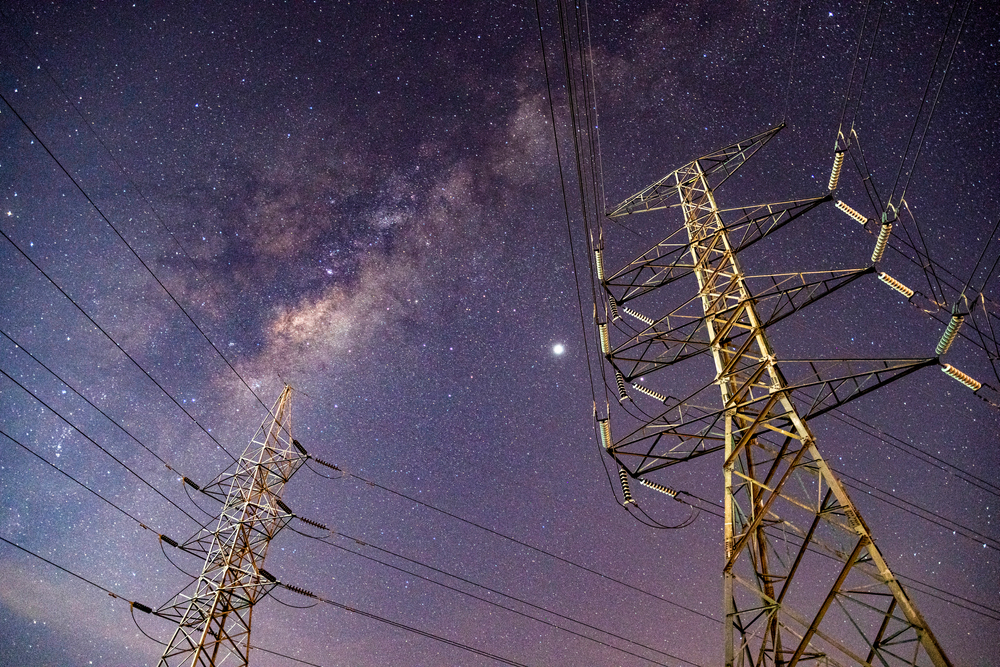
In coverage of the video, storm chaser George Kourounis said, “Sometimes an arc can be formed that travels across those lines, flashing with an orange and blue light, and then at the very end, it typically vanishes in a puff of sparks. And that’s exactly what we’re seeing here,” while also cautioning that he could not be fully certain without seeing the event firsthand. He also added, “If it is ball lightning, then this is one of the best ball lightning videos I’ve ever seen.”
That combination of skepticism and openness is worth paying attention to. It is what intellectual honesty sounds like. Not cynical dismissal. Not blind belief. Just disciplined curiosity.
We need more of that energy, not only in science but in life. Too many people rush to certainty because uncertainty feels uncomfortable. But growth often begins when we stop forcing instant answers. Some truths need patience. Some questions need room.
What A Glowing Orb Can Teach Us About Being Human
Maybe the deepest part of this story has nothing to do with whether the Alberta orb was really ball lightning.
Maybe the deeper question is this: what happens to us when we encounter something we cannot immediately explain?
Some people mock it. Some mythologize it. Some monetize it. But the healthiest response may be quieter than all of those. It may be to observe carefully, verify what can be verified, admit what cannot yet be known, and let wonder do what wonder has always done—stretch the borders of our thinking.
We live in a culture that rewards hot takes more than honest reflection. We are trained to react faster than we can understand. Yet this story invites a different posture.
Here are three practical takeaways worth carrying beyond this headline:
- Stay curious without becoming careless. You do not have to believe every extraordinary claim, but you also do not have to mock every unexplained event.
- Respect evidence. Good questions become better when they are anchored in observation, measurement, and credible reporting.
- Make room for humility. Not knowing is not weakness. It is often the beginning of deeper wisdom.
A blue white orb over a field in Alberta may remain unresolved. But even unresolved things can still be meaningful. Sometimes a mystery does not enter our lives to be solved immediately. Sometimes it arrives to remind us that the world is still alive, still surprising, and still larger than our current explanations.
The Takeaway
A couple walked outside after a storm and saw something they had never seen before. Scientists have spent centuries trying to understand phenomena like it. Modern researchers have captured spectral data that brings us closer to an answer, but not all the way there. The Alberta footage may be ball lightning. It may be a different electrical phenomenon entirely. At this point, the most honest conclusion is that the video is compelling, but not conclusive.
That does not make the story weaker. It makes it more human. We are still living in a world where something can appear in a field, glow against the dark, and remind us that reality is larger than our current explanations. The right response is not blind belief, and it is not reflexive dismissal. It is attention. It is patience. It is humility.
Because the day we stop being amazed is the day we stop growing. And sometimes the unknown is not here to frighten us. Sometimes it is here to remind us to keep looking up.
Featured Image from Shutterstock