

Scientists Discover a Hidden Genetic Link Between Eight Psychiatric Disorders
For decades, mental health has been treated like a collection of separate stories. Depression had its own chapter. ADHD belonged in another. Autism, bipolar disorder, schizophrenia, obsessive-compulsive disorder, anorexia, Tourette syndrome, and major depression were each placed into distinct categories, each with its own diagnosis, treatment plan, and research path.
A growing body of scientific evidence now suggests those stories may have been connected all along. Researchers have discovered that these seemingly different conditions share genetic roots, offering a new way of understanding why they often overlap and why treating them has been so complex.
A Discovery That Challenges Long-Held Assumptions
A team of researchers led by scientists at the University of North Carolina set out to answer a question that has puzzled psychiatrists for years. Why do so many psychiatric disorders appear together in the same individual or within the same family?
Someone diagnosed with ADHD may later develop anxiety or depression. A person living with autism may also meet the criteria for obsessive-compulsive disorder. Bipolar disorder and schizophrenia, despite being classified separately, frequently share similar symptoms and patterns of inheritance.
Scientists have long suspected that genetics plays a major role in these connections. Earlier studies had already identified regions of the human genome associated with multiple psychiatric conditions. What remained unclear was which specific genetic changes were responsible and how they influenced brain development.
Their latest findings provide one of the clearest pictures yet.
Published in the journal Cell, the study identified hundreds of genetic variants capable of influencing how genes are regulated during brain development. More importantly, many of these variants were shared across multiple psychiatric disorders rather than belonging to just one.
Lead researcher Hyejung Won explained the significance of the findings by saying, “Pleiotropy was traditionally viewed as a challenge because it complicates the classification of psychiatric disorders. However, if we can understand the genetic basis of pleiotropy, it might allow us to develop treatments targeting these shared genetic factors, which could then help treat multiple psychiatric disorders with a common therapy.”
Rather than viewing overlap between mental health conditions as an obstacle, researchers are beginning to see it as an opportunity.
Looking Beyond Diagnostic Labels
Modern psychiatry relies heavily on diagnosing disorders through symptoms and observable behaviors. While this approach has helped countless people receive care, it does not always explain why two individuals with the same diagnosis can experience completely different challenges.
It also struggles to explain why one person can meet the criteria for several disorders at once.
The new research suggests that these diagnostic boundaries may not reflect the underlying biology as clearly as once believed.
Instead of imagining psychiatric disorders as separate islands, scientists are beginning to picture them as branches growing from many of the same roots.
Those roots lie within our DNA.
Every human carries small genetic differences that make each person unique. Most of these variations are harmless. Others can subtly influence how the brain develops, how nerve cells communicate, or how proteins are produced inside cells.
None of these changes determine a person’s future on their own. Environment, life experiences, relationships, trauma, nutrition, and countless other factors also shape mental health. Genetics simply provides one important part of a much larger picture.
Understanding those shared biological foundations could eventually make diagnosis more precise while reducing the trial-and-error process that many patients experience today.
What Scientists Actually Found
The research builds upon an influential international study published several years earlier.
In that earlier work, scientists examined eight psychiatric disorders:
- Autism spectrum disorder
- Attention deficit/hyperactivity disorder
- Schizophrenia
- Bipolar disorder
- Major depressive disorder
- Obsessive-compulsive disorder
- Tourette syndrome
- Anorexia nervosa
Researchers identified 136 regions across the human genome that appeared to influence one or more of these conditions.
Remarkably, 109 of those regions were shared by multiple disorders.
Finding those regions was only the beginning.
The latest study took a much deeper look, examining 17,841 individual genetic variants located inside those genomic hotspots.
Using a sophisticated laboratory technique called a massively parallel reporter assay, scientists introduced these variants into developing human neural cells. This allowed them to observe how each variant affected gene regulation, the process that determines when genes are switched on or off.
Gene regulation functions much like an orchestra conductor.
Every instrument may already be present, but without careful timing and coordination, the music quickly falls apart. Likewise, genes require precise regulation to produce the right proteins at the right moment during brain development.
After testing nearly 18,000 variants, researchers found that 683 had measurable effects on gene regulation.
Those 683 variants became the focus of the next stage of the investigation.
The Importance of Pleiotropic Genes
Scientists divided the active variants into two broad categories.
The first group consisted of variants associated with only one psychiatric disorder.
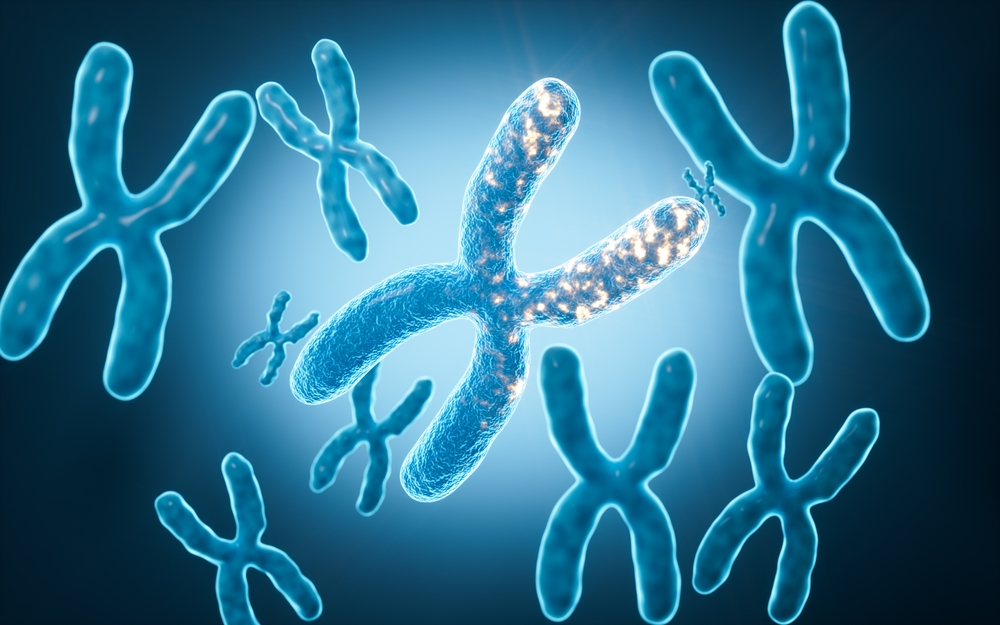
The second group contained what researchers call pleiotropic variants. These are genetic changes capable of influencing multiple conditions at the same time.
The distinction turned out to be surprisingly meaningful.
Pleiotropic variants remained active much longer during brain development than disorder-specific variants. Rather than influencing a single developmental moment, they appeared to participate across multiple stages as the brain matured.
Researchers also discovered that the proteins produced by genes linked to these variants formed highly connected biological networks.
Won described this interconnectedness by saying, “The proteins produced by these genes are also highly connected to other proteins. Changes to these proteins in particular could ripple through the network, potentially causing widespread effects on the brain.”
That image of ripples spreading through water offers an accessible way to understand the discovery.
A small alteration within one highly connected genetic pathway may influence numerous biological systems rather than a single isolated process.
This could explain why one person may experience symptoms that cross traditional diagnostic categories.
It also helps explain why mental health conditions rarely exist in perfect isolation.
A More Human Way of Seeing Mental Health
Scientific discoveries often reshape more than medicine. They also reshape the stories people tell about themselves.
For many individuals, receiving multiple psychiatric diagnoses can feel confusing. Different specialists may focus on different conditions. Treatment plans sometimes address individual symptoms without fully explaining why those symptoms appear together.
Research like this invites a broader perspective.
Instead of asking why someone has several unrelated conditions, scientists are beginning to explore whether those experiences reflect shared developmental pathways that began long before symptoms appeared.
That shift does not erase the uniqueness of each diagnosis.
Autism remains different from schizophrenia. Depression is not the same as anorexia. Every condition carries its own challenges, experiences, and treatments.
Yet beneath those differences, biology may be revealing common patterns that have remained hidden for decades.
For patients and families, that possibility offers something valuable beyond future therapies.
It offers understanding.
Mental illness has too often been surrounded by misunderstanding, blame, or the belief that people simply need to try harder or think differently.
Research continues to tell a different story.
The brain is an extraordinarily complex organ shaped by millions of biological interactions from the earliest stages of development. Learning more about those interactions does not reduce people to their genetics. Instead, it reminds us that mental health deserves the same scientific curiosity and compassion that we bring to every other aspect of human health.
What This Could Mean for Future Treatments
The implications of this research extend far beyond understanding how psychiatric disorders develop. They could also transform how they are treated.
Current treatments are largely designed around individual diagnoses. A person living with depression may receive one medication, while someone diagnosed with OCD or bipolar disorder follows a completely different treatment plan. When multiple conditions occur together, finding the right combination often becomes a lengthy process of adjustment.
This new genetic evidence raises the possibility that future therapies may target biological pathways shared across several disorders instead of addressing each diagnosis separately.
Researchers are careful to emphasize that such treatments remain years away. The study does not introduce a new drug or immediate cure. Instead, it identifies promising targets for future research by revealing which genetic variants appear to have the greatest influence over brain development.
Because pleiotropic variants affect highly connected networks within the brain, treatments aimed at these pathways could potentially improve symptoms that span several psychiatric conditions.
That represents a different philosophy of medicine.
Rather than focusing only on the labels attached to a diagnosis, future care could concentrate on the biological systems those conditions have in common.
Another large international study points in the same direction.
Researchers analyzing DNA from more than one million people diagnosed with psychiatric disorders and five million individuals without diagnoses identified five major genetic groupings that explained much of the inherited risk across 14 different psychiatric conditions.
One of the most striking findings involved schizophrenia and bipolar disorder. Although they have traditionally been treated as separate illnesses, researchers found that roughly 70 percent of the genetic signal associated with schizophrenia was also associated with bipolar disorder.
Andrew Grotzinger, one of the study’s corresponding authors, said, “This work provides the best evidence yet that there may be things that we are currently giving different names to that are actually driven by the same biological processes.”
That does not mean these disorders are identical. Their symptoms, progression, and treatment needs remain different. It does suggest, however, that the biological lines separating them may be less rigid than once believed.
The Brain Is More Connected Than We Once Imagined
One reason these discoveries are attracting so much attention is that they reinforce an idea emerging across many areas of neuroscience.
The brain rarely operates through isolated systems.
Memory influences emotion. Emotion shapes attention. Attention affects learning. Networks communicate with other networks in ways that scientists are still trying to understand.
The new genetic findings reflect this same interconnected design.
Instead of acting like independent switches, many genes appear to participate in broad communication networks that guide brain development over many years.
Researchers found that pleiotropic variants remained active during longer periods of development than disorder-specific variants. Their influence extended across multiple stages as neurons matured and formed increasingly complex connections.
This timing may help explain why psychiatric disorders often emerge gradually.
A child may first display difficulties with attention. During adolescence, anxiety develops. Depression follows later in adulthood.
Rather than viewing these experiences as unrelated events, scientists are beginning to investigate whether they reflect different expressions of overlapping developmental processes.
That perspective does not diminish the importance of life experiences.
Trauma, chronic stress, relationships, education, nutrition, sleep, physical health, and social environments all influence how mental health unfolds across a lifetime.
Genes create possibilities, not certainties.
Even individuals carrying similar genetic variants can experience remarkably different outcomes depending on the environments in which they grow, the support they receive, and the opportunities available to them.
Why These Findings Matter Beyond the Laboratory
Mental illness affects nearly every community.
According to estimates from the World Health Organization, roughly one in eight people worldwide lives with a mental health condition.
Many will experience more than one diagnosis during their lifetime.
Researchers have estimated that more than half of people diagnosed with one psychiatric disorder eventually meet the criteria for a second, while a significant number receive three or more diagnoses over time.
For patients, this often means navigating multiple medications, different specialists, repeated evaluations, and years of uncertainty.
Each diagnosis can bring valuable answers, yet it may also create new questions.
Why did another condition appear?
Why do treatments work well for one symptom but not another?
Why do some disorders seem to overlap so consistently?
Studies like these begin addressing those questions at their biological foundation.
Understanding shared genetic pathways may eventually improve how psychiatric disorders are classified, diagnosed, and treated.
It could also reduce some of the stigma surrounding mental illness.
When research reveals the extraordinary complexity of brain development, simplistic explanations become harder to defend.
Mental health challenges cannot be reduced to personal weakness, lack of discipline, or failure of character.
They emerge through an intricate interaction of biology, environment, and lived experience.
Recognizing that complexity encourages compassion alongside scientific progress.
A Future Built on Understanding
The researchers behind both studies caution against drawing premature conclusions.
No one is suggesting that psychiatrists should immediately merge diagnoses or abandon existing treatments.
The Diagnostic and Statistical Manual of Mental Disorders remains the foundation for clinical practice, and today’s therapies continue to help millions of people around the world.
Science advances through careful accumulation rather than sudden revolutions.
Each discovery becomes another piece of a much larger puzzle.
Still, these findings represent an important shift in how researchers think about psychiatric illness.
Instead of asking where one disorder ends and another begins, scientists are increasingly exploring the biological systems that connect them.
That approach may eventually lead to more personalized treatments based on underlying mechanisms rather than symptoms alone.
For people living with psychiatric conditions, that possibility carries quiet hope.
Not because every answer has been found, but because researchers are asking better questions than ever before.
Every breakthrough in neuroscience reminds us that the human mind is both fragile and remarkably complex.
Its challenges cannot always be placed into neat categories, just as human lives rarely fit inside simple definitions.
Perhaps that is one of the most meaningful lessons emerging from this research.
The boundaries we draw are often useful for understanding the world, but nature does not always recognize those same boundaries.
Sometimes what appears separate on the surface is connected far below, waiting for us to look closely enough to see the thread running through it all.