

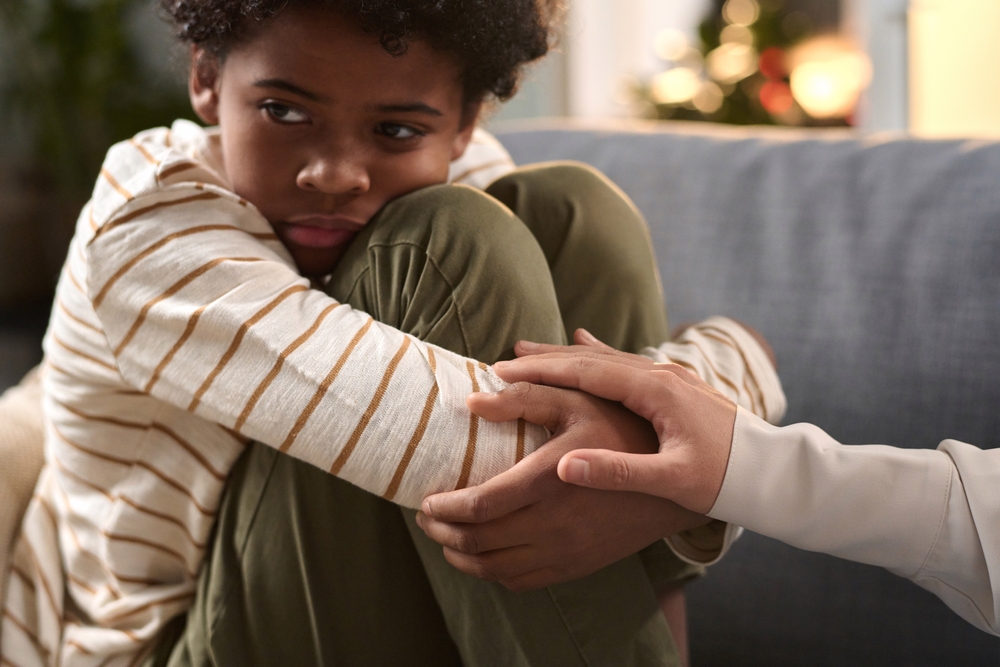
Every parent carries some version of the same quiet fear: that something painful from their own life might somehow find its way into their child. For generations, families have understood this through stories and behavior. A parent who survived war may become unusually alert to danger. Someone who grew up with loss may struggle to feel safe. Children can grow up sensing fears they were never taught to name. But for much of modern history, science had little to say about whether those patterns could reach deeper than family relationships.
Then a man named Joseph gave psychiatrist Rachel Yehuda a question she could not forget. Joseph had never seen a concentration camp. His parents had. Yet he lived as though catastrophe could arrive without warning, keeping cash and jewelry within reach and training in boxing and martial arts. “I’m a casualty of the Holocaust,” he told Yehuda. She believed what he was describing, but she had no way to prove that his parents’ experience had left a biological trace in him. Her mentor, Earl Giller, eventually offered a simple challenge: “That’s a testable hypothesis. Why don’t you study that, instead of conjecturing?”
The Children Started Asking Questions Of Their Own

Yehuda went on to establish a research clinic focused on Holocaust survivors, expecting much of her work to center on people who had directly experienced the atrocities. Instead, another group began contacting her. The callers were often the adult children of survivors, and they wanted to understand why certain feelings and reactions seemed to follow them despite having never lived through the original events.
Some described a persistent sense of danger. Others were trying to understand unusual responses to stress or the emotional atmosphere they had grown up around. Their parents had experienced something extraordinary, but the consequences did not necessarily end when the war ended. For these children, the past could appear in ordinary moments without them fully understanding where it came from.
Yehuda began studying cortisol, a hormone involved in the body’s response to stress. Holocaust survivors with PTSD tended to have unusually low levels of cortisol. When researchers looked at their children, they found that children of survivors with PTSD also tended to have lower cortisol levels, even when those children did not have PTSD themselves.
The finding did not show that children had inherited their parents’ memories. There was no evidence that a concentration camp, a particular day, or a traumatic event had been recorded inside their DNA. What it suggested was subtler: an experience powerful enough to change one generation could be associated with differences in the way the next generation’s stress system functioned.
Pregnancy May Be One Of The Most Important Pathways

The World Trade Center mothers showed what one catastrophic event could do to a small group of pregnancies. A far larger body of research has since asked the same question at scale: does a mother’s trauma during pregnancy leave a measurable mark on her baby, and how often does it happen?
The fetus develops inside the mother’s biological environment, where hormones, nutrition, sleep, inflammation, and stress-related processes all play a role. That doesn’t mean a mother’s emotional suffering determines what happens to her baby. Human development is shaped by many interacting factors, and the same experience can lead to very different outcomes in different people. A population-level association can’t tell one particular mother what her child will experience.
The clearest evidence comes from an analysis published in August 2025 that pooled 40 studies covering 157,708 pregnancies. Of those, 11,750 involved PTSD symptoms. Maternal PTSD was associated with roughly twice the odds of low birth weight and about a quarter higher odds of preterm birth.
The researchers also found reduced infant head circumference in all three studies that measured it. These findings describe statistical differences across large groups, not individual destinies. Most babies born to mothers experiencing PTSD are still born healthy, and the research doesn’t support telling a frightened parent that their trauma has determined their child’s future.
The Clue Was Hidden In How Genes Are Regulated
The next question was perhaps the most difficult one: how could a parent’s experience affect a child without changing the DNA sequence itself? Researchers increasingly turned toward epigenetics, the study of biological mechanisms that influence how genes are expressed without altering the underlying genetic code.
One way to think about it is to imagine DNA as a set of instructions and epigenetic regulation as part of the system that determines how those instructions are read. Chemical tags can attach to DNA and influence whether particular genes are more or less active. These processes are influenced by many factors, including the environment and experiences.
Two genes have repeatedly attracted attention in research on trauma: NR3C1 and FKBP5. NR3C1 helps create the receptor that cortisol binds to, while FKBP5 plays a role in regulating the body’s stress response and helping determine when that response should switch off.
In a 2016 study, Yehuda’s team examined FKBP5 methylation in 32 Holocaust survivors and 22 of their adult children. The survivors showed roughly 10% higher methylation than comparison parents, while their children showed 7.7% lower methylation than comparison offspring. One biological system appeared to show different patterns across two generations.
A 2023 scoping review in Genes found that most published human studies involving trauma-exposed parents reported some difference in their children’s methylation. Yet these findings remain difficult to interpret. A methylation difference is a biological observation, not proof that a child has inherited a parent’s psychological trauma.
The Question Reached A Third Generation

Once researchers began seeing possible biological differences between parents and children, another question became unavoidable. Could anything associated with trauma appear in grandchildren who were never alive when the original event occurred?
A 2025 study involving 48 Syrian families provided an unusual opportunity to investigate that possibility. Researchers led by geneticist Connie Mulligan collected cheek swabs from 131 people across three generations. In some families, a grandmother had been pregnant during the siege of Hama, meaning her daughter was exposed to the violence before birth while her grandchildren had not yet been born.
The researchers identified 14 sites of altered methylation among the grandchildren. Relatives who had directly experienced the violence carried changes at 21 sites. The study also reported accelerated epigenetic aging among people who had been exposed to violence before birth, which the authors described as the first finding of its kind connected to prenatal exposure to violence.
The results are striking, but they do not settle the question of intergenerational inheritance. The sample was small, the researchers used cheek swabs rather than blood, and the study could not establish that the observed changes had been passed through eggs or sperm. A biological difference appearing across generations does not automatically prove germline transmission.
A Child Inherits More Than Biology
There is another explanation that cannot be separated easily from the biological one: children grow up inside the emotional world their parents create. A parent who has survived severe trauma may become highly protective, constantly alert to danger, or deeply uncomfortable with uncertainty. Those reactions can shape a child’s understanding of safety.
A frightened parent may check the locks repeatedly, worry about ordinary risks, or struggle to tolerate situations that others consider harmless. A child can learn from those behaviors without anyone explicitly explaining the reason behind them. Family history can therefore travel through habits, expectations, conversations, silences, and relationships.
This makes human research especially difficult. Scientists cannot simply look at a biological difference and know whether it came from an inherited molecular process, the prenatal environment, childhood experiences, parenting behavior, or some combination of all four.
A 2023 review in the International Journal of Environmental Research and Public Health described the challenge clearly, noting that accounting for behavioral and cultural transmission makes it “near impossible to tease out true germline heritable transmission.” The strongest evidence for direct biological inheritance still comes largely from animal research, where scientists can control conditions in ways that are impossible with human families.
Joseph Was Asking About More Than Biology
Joseph wanted an explanation for why he felt like a casualty of a war that had ended before he was born. Four decades of research have not produced a simple answer, but they have made the question far more tangible.
A parent’s trauma can reach a child through many pathways. It can appear through parenting, family behavior, pregnancy, stress biology, and possibly epigenetic changes. Some of those pathways may extend beyond one generation, although scientists still cannot say exactly how much of the effect is biological inheritance and how much comes from the environment children grow up in.
For families carrying the aftermath of war, violence, or profound loss, that distinction matters. A biological trace is not the same thing as a predetermined future. What one generation survived can influence the next without defining it.
Joseph may have inherited part of the biological legacy of his parents’ suffering. But his story also points toward another possibility: the next generation gets to add new experiences to the family story. Trauma can travel through generations, but so can safety, understanding, and the decision to live differently.