


Baby Born Without A Nose Taught The World A Powerful Lesson About Love
At 4:42 p.m. on March 4, 2015, Brandi McGlathery became a mother. When she looked closely at her newborn son, she realized something nobody had expected: her baby had been born without a nose.
Brandi was 23, and every ultrasound during her pregnancy had appeared normal. Doctors soon confirmed that Eli Thompson had an extraordinarily rare condition called complete congenital arhinia, but what followed became a story about much more than medicine.
The Moment Brandi Realized Something Was Wrong
Brandi remembered looking down at Eli after doctors placed him on her chest. “When I took a closer look at him, I said, ‘He doesn’t have a nose,'” she told ABC News, recalling the moment the medical team took her newborn son from the room.
She noticed the expression on her doctor’s face and understood that something serious had happened. “He had the most apologetic look on his face,” she recalled, and she knew immediately that something was wrong.
Brandi’s first instinct was to search for an explanation. She went back over everything she had done during her pregnancy, looking for something that might have caused her son’s condition, but eventually reached a conclusion that would shape how she raised him.
“I realized it was nothing anyone did,” she said. The realization did not remove her fear, because she was still worried that Eli might not survive.
She also had another fear that had nothing to do with medicine. She worried about how strangers would treat her son as he grew older, particularly whether people would make fun of his appearance or treat him as someone to pity.
Eli Faced More Than A Missing Nose

Complete congenital arhinia is extraordinarily rare, and Eli’s condition involved much more than the absence of an external nose. He also had no nasal passages or sinus cavities, although he did have a nasal bone.
Because Eli could not breathe normally through his nose, he breathed through his mouth from birth. At five days old, doctors performed a tracheotomy, creating an airway that allowed him to breathe and helped him manage feeding.
His other medical challenges were significant as well. His soft palate had not fully formed, his brain sat lower in his head than expected, and his pituitary gland was not functioning properly.
The hospital treating him had encountered fewer than 40 people worldwide with his condition at the time. Despite the uncertainty surrounding his health, Eli was able to leave the hospital and return home with his family on March 30.
His Parents Chose Acceptance Before Surgery
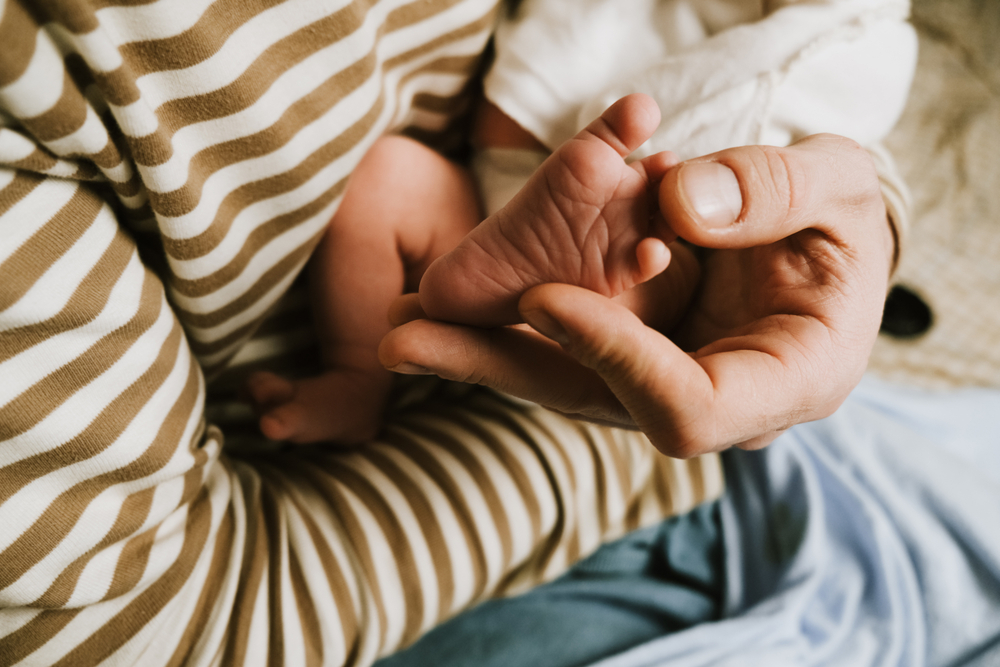
Doctors could potentially construct an external nose for Eli, although creating functional nasal passages presented a more difficult challenge. His parents listened to the options but decided they would not pursue surgery while he was too young to express what he wanted.
“We think he’s perfect the way he is,” Brandi said. “Until the day he wants to have a nose, we don’t want to touch him.”
The decision carried particular weight because Brandi already knew the world might judge her son. She had worried about cruelty from strangers, yet she also wanted Eli to grow up without feeling that his appearance made him an object of pity.
Her husband, Troy Thompson, shared that approach. Brandi described the simplest version of their perspective by saying, “He’s just like any other baby. He just doesn’t have a nose.”
That attitude allowed Eli’s medical needs to remain separate from his identity. He needed treatment and support, but his parents did not believe those needs changed the value of his life.
His Photograph Became A Much Bigger Conversation
The family eventually shared photographs of Eli online, and his unusual appearance quickly attracted widespread attention. Brandi created a fundraiser with a $5,000 goal, and within days it had raised more than $19,500.
Then Facebook removed one of Eli’s photographs. Reports at the time said the image had been considered shocking, prompting Brandi to challenge the decision and defend her right to share pictures of her child.
“I posted the status with a link about it saying no one’s going to keep me from posting photos of my child,” she said. The photograph was subsequently shared around 30,000 times in six hours before Facebook reversed its decision.
For Brandi, the photograph was never simply an unusual image. It was a picture of her son, and she did not want his face treated as something that needed to be hidden from view.
Eli Found His Own Way To Communicate

Life with a tracheotomy made speaking difficult, so Eli learned to communicate through sign language. One of his favorite signs was also one of the most ordinary requests a young child could make: cookie.
That small detail offers a glimpse of Eli beyond the medical descriptions that surrounded his early life. He was a little boy who had favorite things, routines, and ways of communicating with the people who loved him.
“He’s an extremely happy baby and does cute stuff all the time,” Brandi said when Eli was about a month old. She also believed his life had a significance that went beyond his medical condition.
“There’s a reason aside from his health issue and not having a nose as to why we call him our miracle baby,” she said. Her description focused on Eli as a child rather than reducing him to the rare condition that made his story unusual.
Scientists Eventually Found A Genetic Clue

Eli’s birth also became part of a wider scientific effort to understand arhinia. According to research from the National Institutes of Health, fewer than 100 cases had been reported during the previous century.
In 2017, researchers examined genetic information from 40 people with arhinia and related conditions. They found that 84% carried a mutation in the gene SMCHD1, providing researchers with an important clue about the biology behind the condition.
The discovery did not provide a cure or explain every question surrounding the disorder. It did, however, point toward a biological explanation rather than something a mother had done during pregnancy.
For Brandi, that distinction was meaningful because she had spent those first weeks searching her own memory for something she might have done differently. The research offered evidence supporting the conclusion she had already reached herself: Eli’s condition was not her fault.
Two Years Of Life That Reached Far Beyond Alabama
Eli celebrated his second birthday on March 4, 2017. Three months later, on June 3, he died at a hospital in Mobile, and his family announced his death the following day.
“Eli was loved by so many. He touched the entire world,” Brandi said after his death. She also described the unique pain of losing a child, saying, “Nobody feels what I am feeling. I carried him. I birthed him. No bond could compare.”
Those words place the earlier parts of Eli’s story in a different light. The fundraising, the photographs, the medical research, and the attention from strangers could never protect his family from grief, but they became part of the life he lived and the people he reached.
Eli’s story is easy to reduce to a single unusual fact: he was born without a nose. Yet the people who knew him experienced something much larger, seeing a child who learned to communicate differently, enjoyed simple pleasures, and was surrounded by parents determined to give him dignity.
A Child Should Not Have To Look Perfect To Be Loved
Brandi’s decision about surgery was ultimately about giving Eli the chance to have a voice in his own appearance. She could not know what he would want when he became old enough to decide, so she chose to leave that possibility open rather than make the decision for him.
There is something deeply human in that choice. A person’s worth does not begin after an operation changes their appearance, and being visibly different does not make someone less deserving of tenderness, dignity, or a place in the world.
Eli’s life lasted only two years, but his story reached people far beyond his hometown. His mother looked at a face the world might have called imperfect and saw her son, which was enough.