

The Strange 7 Eleven Receipt That Was Too Perfect To Throw Away
A receipt is usually one of the easiest pieces of paper to throw away. This one ended up behind glass.
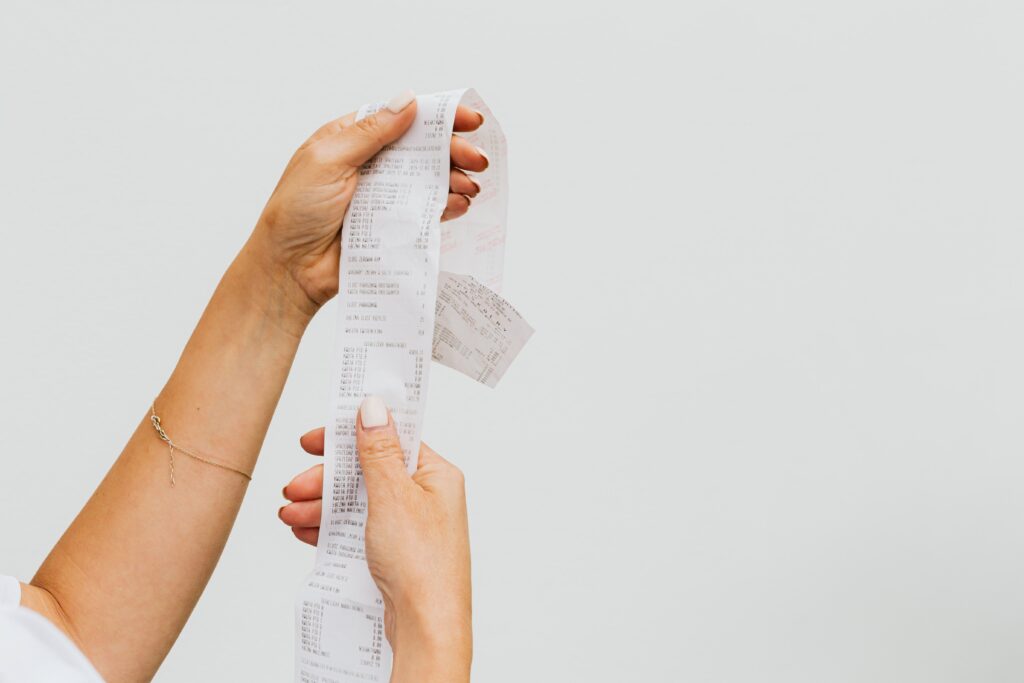
On July 11, at a 7-Eleven in Jacksonville, Florida, a customer reportedly made a purchase totaling $7.11 at exactly 7:11 p.m. The date printed on the receipt was 7/11.
The coincidence was so neat that the customer reportedly framed the receipt. Then the internet did what it often does with a strange alignment of numbers: it tried to decide just how unlikely the moment really was.
One Ordinary Purchase Became Something Worth Keeping
The receipt surfaced online in a photograph, with statistician William M. Briggs later discussing the coincidence on his website. According to Briggs, the unnamed customer had the receipt framed because of its unusual sequence of numbers.
There is a small but important gap in the story. The customer has not been publicly identified, 7-Eleven has not confirmed the transaction, and the available account traces back to the photograph and Briggs’s discussion.
That uncertainty does not erase the charm of the image.
There is something deeply human about deciding that a tiny event deserves to be remembered. Most receipts document something forgettable: a coffee, a snack, a few minutes spent inside a convenience store.
This one seemed to capture a moment when several ordinary details happened to line up.
The Numbers That Made Everyone Look Twice
The pattern was almost too tidy:
- The date: July 11, or 7/11.
- The time: 7:11 p.m.
- The purchase: $7.11.
- The store: 7-Eleven.
The customer could have folded the receipt into a pocket and forgotten about it before reaching the parking lot.
Instead, someone decided it belonged behind glass.
That choice may be more interesting than the numbers themselves.
The Viral Odds Did Not Tell The Whole Story
A claim attached to the photograph suggested that the odds of the coincidence were more than 1 in 525 million.
That number sounds astonishing. It also illustrates how easily probability can become misleading when we look backward at an event that has already happened.
Briggs examined the calculation and reached a very different result.
For a single store on a single day, a transaction totaling exactly $7.11 would already be unusual. Add the possibility of the register showing 7:11 and the coincidence becomes rarer still.
But the calculation changes when the question becomes much larger.
Millions Of Transactions Change The Question

Briggs considered 13,427 7-Eleven stores across the United States, with stores operating on July 11 and making many transactions throughout the day.
Viewed that way, the question is no longer, “What are the odds that this exact receipt happens at this exact store?”
It becomes, “What are the odds that something like this happens somewhere?”
Those are very different questions.
Briggs calculated that across the stores over a single year, the chance rose to slightly more than 1%. Across a decade, he estimated it at roughly 11%.
He summarized that longer-term probability as “Call it one in ten.”
That does not make the receipt less interesting. It changes what makes it interesting.
Why We Notice Coincidences After They Happen

Human beings are exceptionally good at spotting patterns.
That ability is useful. It helps people recognize connections, remember important information, and make sense of a complicated world.
It also means that an ordinary collection of numbers can suddenly feel extraordinary when the right pieces line up.
Imagine the same purchase had totaled $7.12.
Nobody would have saved the receipt.
If the customer had arrived at 7:10 p.m., there would probably be nothing worth discussing. If the purchase had happened on July 10, the photograph might never have existed.
The significance appeared because several details happened to match.
The Missing Near-Misses
There were almost certainly countless transactions that came close to the same pattern.
A customer may have spent $7.10 at 7:11. Another may have spent $7.11 at 7:12. Someone else may have walked into a 7-Eleven at exactly 7:11 and spent $4.38.
Those moments disappear because nobody has a reason to preserve them.
The remarkable receipt survives because its numbers formed a pattern that people recognized.
Briggs put the deeper statistical point plainly, writing, “A probability is not a property of the event. It is a property of the assumptions you made before you counted.”
That distinction can be surprisingly useful beyond this one receipt.
The Story Was Never Really About The Mathematics
The arithmetic explains why the coincidence was possible.
It does not explain why someone wanted to frame it.
That part belongs to a different category of human experience.
People keep all kinds of objects that have little financial value but enormous personal meaning. A concert ticket can become a treasured keepsake. A handwritten note can survive decades. A first dollar earned can end up mounted on a wall.
The object matters because of the moment attached to it.
The 7.11 receipt seems to have acquired that kind of meaning.
A Small Moment Can Become A Personal Landmark
The customer may never have expected anything unusual when walking into the store.
There was no ceremony. No major announcement. No life-changing decision.
There was simply a purchase that happened to produce a peculiar alignment.
Briggs wrote, “Let’s take something silly and turn it into something shiny.”
That description captures something important about keepsakes. People regularly take ordinary experiences and give them a place in their personal history.
The frame turns a disposable receipt into a story.
Another July 11 Coincidence Had A Baby At Its Center
The receipt was not the only 7/11 coincidence that caught attention.
In 2019, Rachel Langford gave birth to a daughter in St. Louis on July 11 at 7:11 p.m. The baby weighed 7 pounds, 11 ounces.
Her parents, Langford and Johntez Brown, named her J’Aime and began calling her Lady Lucky.
Langford had noticed the recurring numbers during her pregnancy, although she said she did not initially know what they might mean.
“I thought it was weird at first, and I didn’t know that (the numbers) meant so much,” Langford said.
The story had something the receipt did not: a family, a child, hospital records, and a life beginning at the exact moment those numbers aligned.

The Coincidence Became A Gift
7-Eleven eventually learned about the baby’s unusual birth details.
The company contributed $7,111 to the child’s college fund, along with baby supplies including onesies and diapers.
The number sequence therefore moved from something noticed on a clock and a scale into something tangible for a family’s future.
There is a lovely difference between the two stories.
The receipt preserves a moment.
The baby’s story turned a moment into a gift.
Why People Wanted To Believe The Receipt
Online reactions added another layer to the story.
Ozzy Man Reviews shared the photograph and wrote, “Incredible effort. I rate it 7/11.”
The joke worked because the coincidence was already so perfectly packaged. The numbers almost seemed to invite a punchline.
But commenters also questioned the date and whether the receipt could have been deliberately created.
One Instagram commenter pointed out that someone could simply wait until the right time on July 11 and buy $7.11 worth of goods.
That is a fair observation.
There is no publicly confirmed evidence establishing exactly how the Jacksonville receipt came to exist. The customer remains unidentified, and 7-Eleven has not confirmed the sale.
That leaves the story in an interesting place.
The coincidence may be genuine. It may have been engineered. From the available evidence, neither possibility can be settled with certainty.
Sometimes The Meaning Comes From What We Choose To Keep
There is a temptation to treat coincidences as puzzles that need solving.
Was it fate? Was it luck? Was it simply mathematics?
The receipt cannot answer those questions.
What it does show is something more ordinary and perhaps more meaningful. People notice moments that feel different from the thousands of moments surrounding them, then decide which ones deserve a place in memory.
The odds can tell us how frequently an event might occur.
They cannot tell us what that event means to the person who experienced it.
A Receipt Can Become A Memory
That may explain why the framed photograph continues to attract attention.
The paper itself has almost no value. Its significance comes from the story attached to it.
Someone saw a sequence of numbers line up at exactly the right moment and decided not to throw it away.
That is a small act, but it says something recognizable about being human. We collect evidence of the moments we want to remember.
A receipt can become that evidence.
The statistics tell us that someone, somewhere, was likely to get a coincidence like this eventually. The frame tells us that one person was happy it happened to them.
And perhaps that is enough.
A few numbers appeared on a strip of thermal paper, and for someone, an ordinary July evening became worth saving.