

Six Months After the Tumbler Ridge Shooting, Maya Gebala Is Finding Her Way Back to Life
Six months ago, Maya Gebala’s family did not know whether she would survive the night. The 12-year-old had been shot during the February 10 attack at Tumbler Ridge Secondary School in British Columbia after trying to secure a library door and protect other children. She was found beneath a table, severely injured, and flown to Vancouver for emergency treatment.
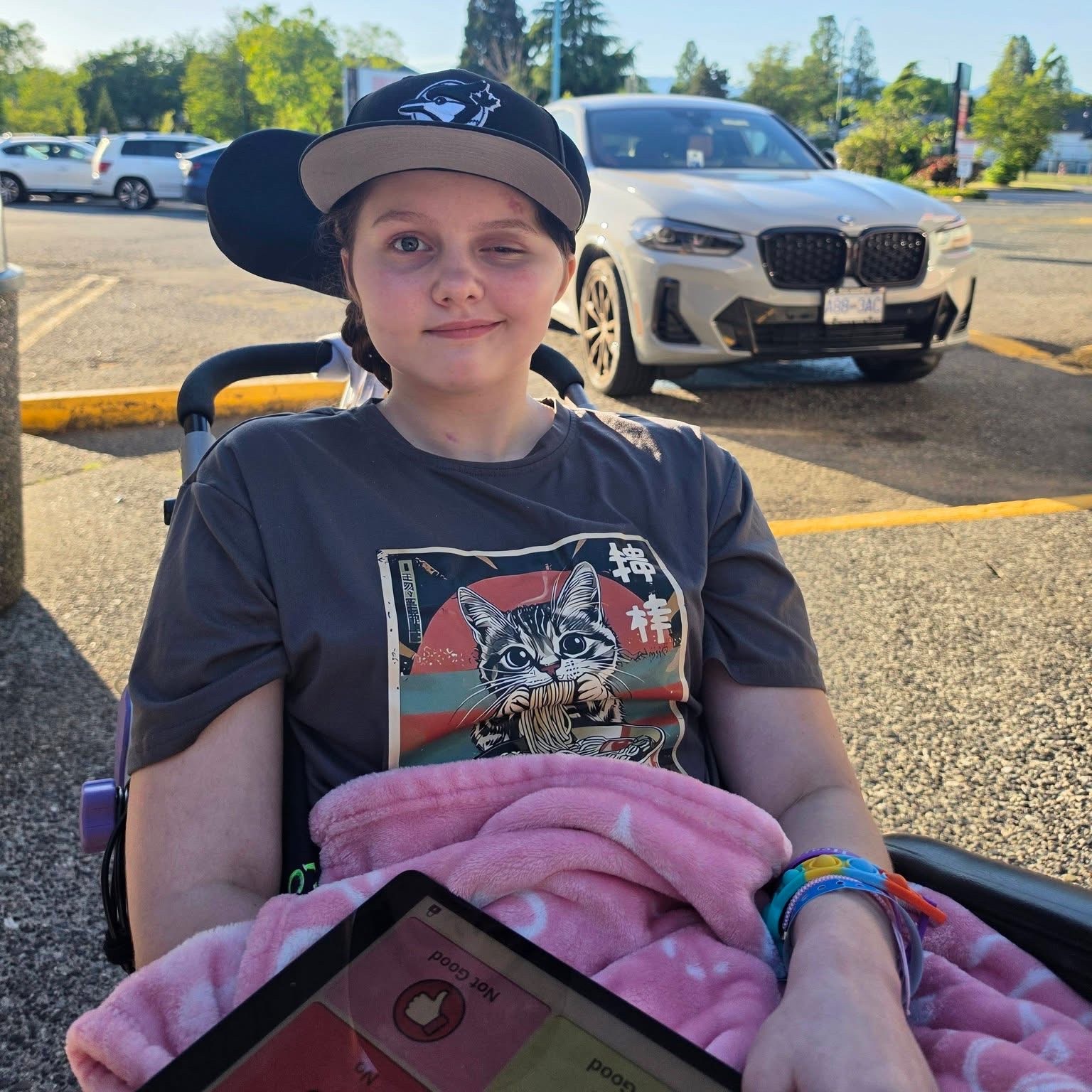
Today, Maya’s life looks very different from the one she knew before that afternoon. She still cannot speak or walk, and a fragment of the bullet remains in her brain. But she can communicate with a wink, make purposeful movements, smile at her family and leave the hospital grounds for an afternoon. For her parents, those moments have become the milestones that mark her return to the world.
Maya Reached For The Library Door

The afternoon of February 10 began like an ordinary school day in Tumbler Ridge, a small community in northeastern British Columbia. Within minutes, students were running for safety as a gunman moved through the school and a nearby home.
Maya was among the students trying to find protection. According to Krysta Hunt, who spoke for the family after the shooting, Maya “tried to lock the door of the library from the shooter to save the other kids.” She could not get the door secured in time.
Maya eventually ran and hid beneath a table. That was where she was found after being shot in the head, cheek and neck. A bullet fragment entered her brain and remained there, creating injuries that would change almost every part of her life.
Eight people were killed that day, including six children, while 27 others were injured. The 18-year-old responsible for the attack also died. Maya was among the survivors, but her family was immediately faced with the possibility that survival itself would be only the beginning of a much longer fight.
Her Family Waited For The Smallest Signs

Maya was airlifted to BC Children’s Hospital in Vancouver, where doctors placed her in a medically induced coma. Her parents could only wait as medical teams treated injuries that had left their daughter in critical condition.
Then her friends gave them something to hold onto. After finding Maya beneath the table, one of them noticed a finger move. The children carried her outside, where help could reach her. That tiny movement became one of the earliest signs that Maya was still fighting.
The weeks that followed brought new medical emergencies. On February 21, Maya needed surgery for hydrocephalus, a dangerous buildup of fluid inside the skull. Her family celebrated when she came through the procedure, knowing there could still be more complications ahead.
In March, doctors discovered an abscess when they prepared to place a prosthetic section of skull. Her mother, Cia Edmonds, watched the infection grow before surgeons removed it. She later wrote, “They say rehabilitation is non linear. I cannot express enough the emotional toll of ‘non linear.'” For Maya’s parents, recovery was becoming a series of advances followed by setbacks.
A Father’s Long-Awaited Hug
By March 30, Maya had reached another important stage. She moved from intensive care into a recovery and rehabilitation unit after her drain had remained out for 26 hours.
Her father, David Gebala, had been watching for changes in her movements. He noticed that they were becoming more intentional, even while Maya remained deeply affected by her injuries.
The next day, she sat on the edge of her hospital bed. It was a simple physical achievement, but it gave her father something much bigger: the chance to hold his daughter again after weeks of uncertainty.
“I was finally able to wrap my arms around my daughter,” David said. “Really wrap my arms around her and hold her tight.” After everything the family had endured, that embrace became one of the clearest signs that their relationship was beginning to exist beyond machines, procedures and hospital rooms.
Five Surgeries Could Not Measure Every Change

Maya’s recovery continued through April and May, with progress arriving in forms that were sometimes difficult to measure.
In April, her feeding tube came out of her nose. She also began making audible noises when she exhaled. To someone unfamiliar with her condition, those details might seem insignificant. To her family, they were signs of a young girl gradually regaining pieces of herself.
Her fifth surgery came in early May, when doctors finally placed a synthetic plate over the portion of her skull that had been damaged. Her father said there were no visible signs of the infection that had delayed the procedure, although Maya remained vulnerable and “not entirely out of the woods yet.”
Before that operation, her mother had written about what she hoped the surgery might accomplish. She wanted the new barrier to help with the fluid and pressure around Maya’s face. She hoped her daughter’s eye might open. And she hoped, perhaps most simply of all, that Maya would smile again.
A Wink Became Maya’s Way Of Saying Yes

By August, Maya still could not speak, but her family had developed new ways to understand her. A shake of the head meant no. A wink meant yes. She was also learning to use buttons and an iPad communication app, creating new possibilities for expressing what she wanted and needed.
For her mother, the most meaningful signs have often been expressions that would be easy to overlook. In June, Edmonds wrote, “That little corner smirk, that’s Maya.” It was a familiar expression from the daughter she knew before the shooting.
Maya’s physical control has also been changing. When she is lifted in her sling, her family has seen her begin to steer herself. Her right arm and right leg remain unresponsive, but those movements offer another indication that rehabilitation is creating possibilities.
Then came a photograph that said more than a medical update could. Maya was pulling a face at the camera with her thumb raised. Her father wrote, “Your giant smile lights up my heart.” The smile her family had waited for had finally returned.
Her World Is Getting Bigger Again

For months, Maya’s world was largely defined by hospital rooms and rehabilitation equipment. Then, in June, her family took her somewhere completely different.
They drove to the Bloedel Conservatory at Queen Elizabeth Park in Vancouver, a tropical garden beneath a large glass dome. It was the first time Maya had left the grounds of BC Children’s Hospital since the shooting.
David described the experience as a welcome break from the environment that had surrounded his daughter for months. “This is the farthest we’ve been from the hospital with Maya in quite some time,” he said. “It feels really good to step away, even if it’s just for a little while.”
Her mother saw the afternoon through an even more personal lens. “Now that we can leave hospital grounds, she gets to experience life again,” Edmonds wrote. That sentence captured something bigger than a hospital milestone. Maya was beginning to encounter ordinary life again.
Since then, her family has shared other pieces of that return. There has been water therapy, standing therapy, time with a puppy and an afternoon at an aquarium. Each experience gives Maya another opportunity to interact with a world that had become distant.
Her Recovery Is Being Measured In Ordinary Moments
Maya’s story does not have a neat ending yet.
She still cannot walk or speak. Her right side remains affected, she has a synthetic section of skull, and the bullet fragment remains lodged in her brain. Her recovery will require more time, more rehabilitation and patience from everyone around her.
But her family is no longer measuring progress only through major medical procedures. They are watching for the smaller things that reveal Maya’s personality and independence returning.
A wink can be a conversation. A smile can become a milestone. A trip to a tropical garden can feel like a doorway back into ordinary life. A father holding his daughter can carry more meaning than any clinical update.
Six months after the shooting, Maya’s future remains uncertain. What is certain is that her life is still unfolding, and her family is meeting that future one small moment at a time.
Featured Image Source: Support For Maya In Her Road To Recovery on GoFundMe