

Five Discoveries That Quietly Changed How Long Humanity Gets To Live
Leonard Thompson weighed 65 pounds. He was 14 years old, lying in Toronto General Hospital and drifting in and out of a diabetic coma. At the time, medicine had almost nothing to offer children like him. Doctors relied on starvation diets so severe that keeping a patient alive could mean slowly weakening them in the process. By early January 1922, Leonard was close to death, and the people treating him were about to attempt something that had never been successfully used to save a human life.
On January 11, two researchers injected him with an experimental extract made from cattle pancreas. The result was disappointing. His blood sugar dropped slightly, but an abscess developed at the injection site. Twelve days later, they tried again with a purer preparation. That second attempt would change Leonard’s life, while opening a chapter in human history shaped by unexpected observations, sleepless nights, personal moments, and the collective work of people whose names are often forgotten.
103 years ago Today, 14-year-old Leonard Thompson became the first person to receive a successful insulin injection as a treatment for diabetes. The treatment was found to be a success, providing a way to treat a previously incurable disease.pic.twitter.com/5GF9q6tXXV
— Massimo (@Rainmaker1973) January 11, 2025
Twenty-Five Words That Helped Change Diabetes
The idea behind Leonard’s treatment had begun 14 months earlier with a note written in the middle of the night. Frederick Banting, a young Canadian surgeon, had been reading about the pancreas and its possible connection to diabetes when he wrote a brief set of instructions in his notebook. The note contained only 25 words, including spelling mistakes, yet it captured an idea for isolating the pancreas’s internal secretion and testing whether it could relieve diabetes.
Turning that idea into a treatment required far more than one person’s insight. Medical student Charles Best worked alongside Banting during the early experiments, while physiology professor John Macleod provided laboratory support and scientific direction. Biochemist James Collip later became essential to the effort by developing methods that helped purify the pancreatic extract. Their work illustrates how discoveries often begin with one idea but become useful only after many people solve different parts of the same problem.
Leonard’s first injection had failed to produce the hoped-for result, but the purified extract used in the second attempt worked. His blood sugar returned toward normal, and the boy who had been wasting away began to recover. He eventually left the hospital and lived another 13 years. For families facing diabetes at the time, insulin transformed a diagnosis that had often carried the expectation of a short life into one that could be managed.
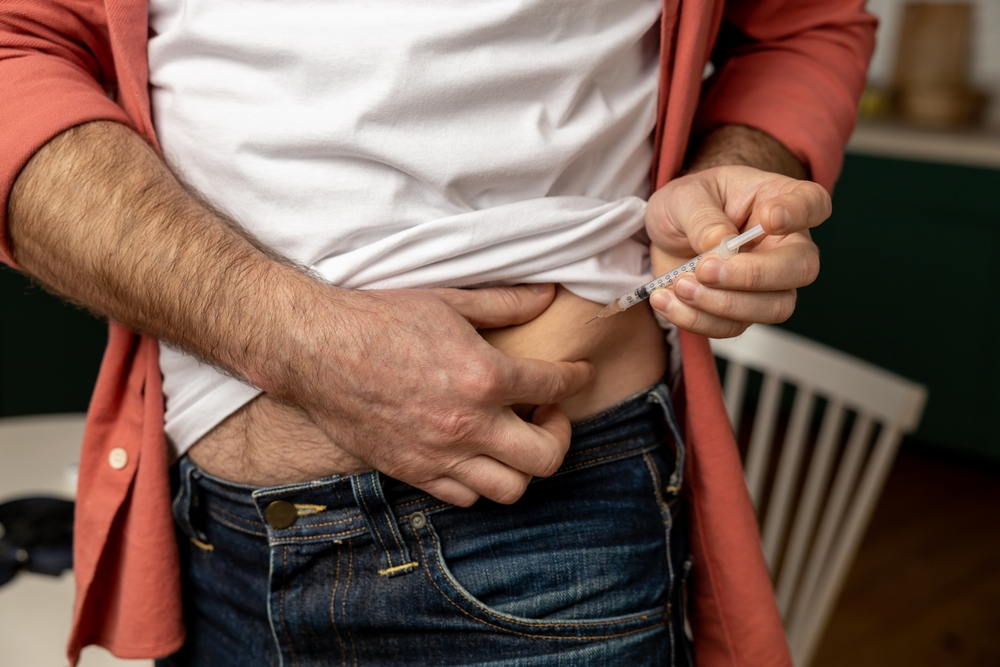
When the insulin patent was granted in 1923, Banting, Best, and Collip transferred their rights to the University of Toronto for $1 each. Banting believed that a discovery intended to save lives should not become a private source of wealth. The story of insulin remains remarkable because of the science behind it, but also because it raises a lasting question about who medical discoveries are ultimately meant to serve.
The Petri Dish That Changed Medicine
Alexander Fleming’s discovery began with something most scientists would probably have considered a ruined experiment. In September 1928, he returned to his laboratory at St Mary’s Hospital in London and found mould growing on a plate containing staphylococcus bacteria. What caught his attention was the clear area surrounding the mould. The bacteria had stopped growing there, suggesting that the mould was producing something capable of destroying them.
Fleming named the substance penicillin and published his findings, but the discovery did not immediately become a medical treatment. The scientific world had identified something extraordinary, yet turning that observation into a usable drug required equipment, funding, chemical expertise, and sustained effort. For more than a decade, penicillin remained largely an intriguing scientific finding rather than a medicine capable of reaching patients.
Sir Alexander Fleming, the Scottish physician and microbiologist best known for his accidental discovery of penicillin in 1928…
— ArchaeoHistories (@histories_arch) August 27, 2026
Imagine a humble Scottish farmer named Fleming toiling away on his farm, when suddenly, piercing screams shatter the tranquility. Without a second… pic.twitter.com/mFsGKV1Kfz
Albert Alexander became the first person to receive penicillin as a treatment in 1941 after developing a severe infection. The drug appeared to work, and his condition improved during the early stages of treatment. Yet the available supply was desperately limited. Doctors even recovered penicillin from his urine so it could be used again, but they could not produce enough to sustain his treatment. Alexander died in March that year at the age of 43, having demonstrated the medicine’s potential before the world had learned how to manufacture it on a meaningful scale.
Researchers including Howard Florey and Ernst Chain later helped transform Fleming’s observation into a practical treatment that could be produced and used more widely. Their role is part of a pattern running through nearly every major medical breakthrough: discovery is often only the beginning. A moment of insight must be followed by years of work before that insight reaches the person whose life depends on it.
A Five-Year-Old Who Became Part Of History
At around one o’clock in the morning on March 21, 1963, Maurice Hilleman’s five-year-old daughter, Jeryl Lynn, woke with a sore throat and a swollen jaw. She had mumps. Hilleman was already an accomplished vaccine researcher, and he understood that her illness presented an opportunity to collect a sample of the virus while it was active. He drove to his laboratory to collect equipment, returned home to swab her throat, and then brought the sample back for preservation.
This is Maurice Hilleman, the biologist who developed over 40 vaccines, among which measles, mumps, hepatitis, chickenpox, meningitis and pneumonia.
— Massimo (@Rainmaker1973) July 21, 2026
An unparalleled record of productivity that saved more lives than any other scientist of the XX century. pic.twitter.com/Vday7BwusS
The virus collected from Jeryl Lynn became the starting point for years of scientific work. Hilleman weakened it through laboratory processes involving hen’s eggs and chick cells until it could stimulate an immune response without causing the full disease. Four years later, the resulting mumps vaccine reached the public, carrying the name “Jeryl Lynn” in recognition of the child whose illness had provided the original viral strain.
The story feels unusually personal because a moment that began inside a family home eventually reached millions of families. Hilleman’s younger daughter, Kirsten, was among the first children to receive the vaccine developed from the strain. His career would go on to include contributions to around 40 vaccines, covering diseases such as measles, chickenpox, and meningitis.
Hilleman’s work also offers a glimpse into how scientific progress can emerge from ordinary life. Major discoveries are sometimes imagined as distant events unfolding behind laboratory doors. Yet this one began with a father being awakened in the middle of the night by his sick child, then recognizing that knowledge and preparation gave him the ability to respond differently to that moment.
- Observation: Important discoveries often begin when someone notices something others might overlook.
- Collaboration: Scientific ideas become useful through the work of many people with different skills.
- Persistence: A promising discovery may take years before it becomes available to the public.
- Access: A treatment can only change lives once people are able to receive it.
The Wheat That Refused To Collapse
Norman Borlaug’s work addressed a problem that was both simple and deeply consequential. Farmers could often increase wheat production by adding nitrogen, but stronger growth created a new difficulty. The plants became taller and heavier, and their stems could collapse beneath the weight of the grain. Once the crop fell into wet soil, much of it could rot before it was harvested.
During the 1950s, Borlaug worked with wheat varieties in Mexico and crossed them with Norin 10, a short Japanese dwarf variety known for its sturdy structure. The goal was to produce plants with shorter, stronger stems capable of carrying heavier heads of grain. The resulting varieties could make better use of fertilizer without suffering from the same level of collapse.
In 1965, hundreds of tons of seed were sent from Mexico to Pakistan and India. The agricultural changes associated with these varieties became part of the broader Green Revolution, which increased food production across several regions of the world. Borlaug received the Nobel Peace Prize in 1970, an unusual recognition for someone whose life’s work centered on wheat rather than diplomacy.
The number of lives associated with Borlaug’s work remains difficult to define. There is no historical ledger recording everyone who avoided famine because crop yields increased. Claims that he saved hundreds of millions or even a billion people are estimates based on models and projected outcomes, and critics have challenged how such numbers are calculated. The uncertainty does not erase the impact of improved food production. It simply asks us to distinguish between measurable history and the vast number of possible lives that exist only in the history that never happened.
The father of the Green Revolution did something greater than feed people: He enabled them to feed themselves. On the 110th anniversary of his birth, Norman Borlaug’s name may be unknown to most of the public. But few Americans achieved so much. https://t.co/Y1g6YOyttQ
— Be the change you want to be (@AgBioWorld) March 27, 2024
Three Letters That Made Blood Safer
Before the beginning of the 20th century, receiving a blood transfusion involved enormous uncertainty. Doctors knew that donated blood could sometimes save a patient, but they did not understand why certain transfusions caused severe reactions. A person could receive blood and recover, while another could experience dangerous clumping of blood cells with potentially fatal consequences.
Karl Landsteiner discovered the pattern that explained much of this mystery. Human blood existed in different types, and incompatible types could react against one another. He originally described the groups as A, B, and C, with C later becoming known as O. The discovery made it possible to understand why some transfusions worked and why others caused devastating reactions.
Blood typing alone did not create the modern transfusion system. Scientists also needed to find ways of preventing donated blood from clotting so it could be stored and transported. Citrate became an important part of that process, and researchers including Albert Hustin helped establish methods that made preservation more practical. Together, these developments created the foundation for blood banks and emergency transfusion systems.
Today, the consequences of those discoveries appear in places that rarely pause to remember their origins. Hospitals prepare for surgery with compatible blood supplies. Trauma teams rely on stored units during emergencies. Blood donation networks connect strangers who will never meet. A pattern discovered in human blood became part of an infrastructure designed around one of humanity’s oldest instincts: giving something of ourselves so another person has a chance to remain here.

Why Counting Saved Lives Is So Difficult
The enormous numbers attached to famous discoveries can create an impression of precision that history cannot always provide. There is no list containing the names of every person who might have died without insulin, antibiotics, safer transfusions, vaccines, or higher-yielding crops. Estimates are built from mortality data, disease prevalence, agricultural production, and models of what conditions may have looked like without a particular breakthrough.
Norman Borlaug’s legacy makes this especially clear. The frequently repeated claim that he saved a billion lives is based on attempts to measure what might have happened if agricultural yields had not increased. Critics have argued that such estimates depend heavily on predictions of famine rather than documented deaths. The same challenge applies, in different ways, to many attempts to rank history’s greatest life-saving discoveries.
There is another problem with placing five names at the center of a story like this. It can hide the number of people whose work made each discovery possible. Collip purified insulin. Best helped perform the early experimental work. Florey and Chain helped turn penicillin into a practical medicine. Researchers improved blood storage, vaccine production, manufacturing, and distribution. The person whose name becomes famous often represents an entire network of effort.
That does not make individual brilliance less meaningful. It changes the shape of our admiration. Human progress can be astonishing precisely because it is rarely the work of one isolated genius. It often depends on people continuing someone else’s unfinished work, sometimes decades after the original discovery, until an idea finally becomes something another human being can use.
Leonard Thompson Received Thirteen More Years
The second insulin injection worked, and Leonard Thompson left Toronto General Hospital with time that medicine had once been unable to promise him. He lived for another 13 years before dying in 1935 from bronchopneumonia. His death contains a striking historical coincidence. Alexander Fleming had already discovered penicillin, but the drug had not yet become widely available as a treatment.
That distance between discovery and access is one of the quiet themes connecting all of these stories. Fleming observed penicillin years before it could be produced at scale. Hilleman’s vaccine required extensive laboratory work after a single sample was collected. Insulin needed purification before it could help Leonard. A scientific discovery can exist long before it becomes part of ordinary life.
When Fleming accepted the Nobel Prize in 1945, he warned that exposing microbes to insufficient quantities of a drug could encourage resistance. His concern has since become one of medicine’s most serious challenges. Antibiotic resistance demonstrates that a discovery can transform human life while still requiring constant care, research, and responsible use to preserve its value.
Leonard Thompson’s survival began with people refusing to accept the limits of what they knew. The same impulse appears in every story here, from a contaminated Petri dish to a child waking her father in the night. These discoveries gave millions of people something medicine and science can never take for granted: more time.
What happens with that time depends on the generations who inherit the knowledge. Discovering a way forward is one achievement. Choosing to protect, improve, and share it is the work that follows.