


A Boeing 737 Went Missing in 2012 and Was Only Just Found 13 Years Later
For most people, losing something important usually means a phone slipping between couch cushions or paperwork buried in a drawer and forgotten until tax season. Losing something the size of a commercial airplane feels almost impossible to comprehend, particularly in aviation, an industry defined by checklists, logs, and an obsession with knowing exactly where everything is at all times. Planes are tracked down to the smallest detail, from maintenance records to their precise location on the ground. And yet, despite all of that structure, a Boeing 737 managed to slip through the cracks in a way that sounds more like fiction than reality.
The story is so strange that even the reference itself acknowledges how unbelievable it sounds. As it puts it, “Yes, it sounds like something straight out of Lost (you know, that series about survivors of a plane crash – which ironically, after its first two legendary seasons became somewhat of a plane crash itself), but unfortunately for the airline, it’s very much real.” What makes this situation especially unsettling is that nothing dramatic happened. There was no crash, no emergency, no investigation launched at the time. The aircraft did not vanish in the traditional sense. Instead, it slowly faded out of existence on paper while remaining physically present for more than a decade, visible to anyone who happened to look in the right direction.
In 2003, Ben Charles Padilla and John Mikel Mutantu stole a Boeing 727 from an Angolan airport, likely motivated by financial gain or an insurance fraud scheme to settle the aircraft's debts. They disappeared by manually turning off the plane's transponder and lights to evade… pic.twitter.com/JIa5FZ0sEz
— ClipMaster (@ClipMasterofc) December 29, 2025
The Boeing 737 That Slipped Through the Cracks
The aircraft at the heart of this story was a Boeing 737-200, a full sized commercial jet that once formed the backbone of short and medium haul flights around the world. According to the reference, the “enormous Indian Airlines plane – that is roughly 100-foot long” vanished from Netaji Subhash Chandra Bose International Airport in Kolkata, India. This happened back in 2012, and there were no passengers onboard at the time. There was no urgency attached to its presence, which may have been the first step toward it being forgotten.
This was not a small aircraft tucked away in a corner or dismantled for parts. The plane stood “37-foot-tall” with a “wingspan of a 93-foot,” dimensions that make it impossible to overlook under normal circumstances. It occupied real estate on an active airfield where every square meter is usually monitored, scheduled, and billed. Its sheer physical presence should have demanded attention, yet it somehow became background noise in a place where precision is supposed to rule.
Over time, the aircraft stopped being something people actively thought about. As records changed and staff rotated, the plane’s identity blurred into the environment around it. What should have been a clearly tracked asset instead became a silent fixture of the airport, present but unacknowledged, like a building no one remembered constructing.
🚨 Imagine losing track of an entire Boeing 737-200 plane for over a decade!
— Fahad Naim (@Fahadnaimb) November 22, 2025
Air India just "rediscovered" VT-EHH, a 43-year-old jet abandoned at Kolkata Airport since 2012. It vanished from records.. no depreciation, insurance, or maintenance logs. Pre-privatization chaos at… pic.twitter.com/RO8mHkcDMq
An Airport That Was Not Exactly Easy to Lose Things In
One of the most baffling aspects of this case is the location itself. Airports are often massive, but scale alone does not explain what happened here. The reference directly addresses this by saying, “If you’re thinking, ‘airport’s are huge it could have been anywhere’… we’re not talking about Illinois’ Chicago O’Hare International (ORD) – which boasts the most runways on the planet with a staggering eight… Kolkata has just two.” That detail removes one of the most common excuses people reach for when trying to make sense of the situation.
Netaji Subhash Chandra Bose International Airport is busy and complex, but it is not endless. There are not dozens of forgotten corners where a commercial jet could realistically hide. Aircraft movements are logged, parking positions are assigned, and long term storage usually comes with paperwork and purpose. The idea that a Boeing 737 could simply sit there year after year without triggering serious questions feels almost surreal.
Despite that, the aircraft remained parked in the same place for thirteen years. Flights taxied past it, crews worked around it, and airport operations continued as normal. Over time, the plane became part of the scenery, an object that was seen but not questioned, which may be the most human explanation of all.

Image Credit: Shutterstock
The Parking Fine That Finally Forced Attention
The aircraft’s rediscovery did not come from an internal audit or a dramatic investigation. It came from something far more ordinary and unavoidable. According to the reference, the Boeing 737 was “abandoned for more than a decade before Air India were issued a parking fine of over $100,000 from the airport.” The accumulated bill reportedly reached around $115,000, a figure large enough to demand immediate attention.
What makes this even more ironic is that airport authorities were apparently never confused about where the aircraft was located. The jet was not missing in a physical sense. It was missing in terms of ownership responsibility and documentation. When airport officials requested that the aircraft be removed from the premises, they were also effectively asking Air India to acknowledge that the plane still existed under its umbrella.
At that moment, the story shifted from an internal oversight to a public embarrassment. A commercial aircraft worth more than $1 million had been left sitting on an airfield long enough to rack up parking fees that could no longer be ignored, all because no one had been clearly assigned responsibility for it.
Image Credit: Shutterstock
How a Merger and a Rental Complicated Everything
The Boeing 737 was originally registered to Indian Airlines, which merged with Air India in 2007. Mergers of that scale involve massive restructuring, with fleets reassigned, leases reviewed, and aircraft retired or repurposed. This particular plane had been rented to the Indian postal service and used as a cargo aircraft, giving it a role far removed from standard passenger operations.
During this process, the aircraft was decommissioned. According to Air India CEO Campbell Wilson, it was then “somehow omitted from official documents.” That single omission proved to be the foundation for everything that followed. Without a clear record, the plane effectively vanished from the systems designed to track it.
As years passed, the omission hardened into routine. New staff had no reason to question a plane that was not listed. Old staff moved on. Budgets were created without accounting for it. What began as a clerical error slowly turned into institutional amnesia.
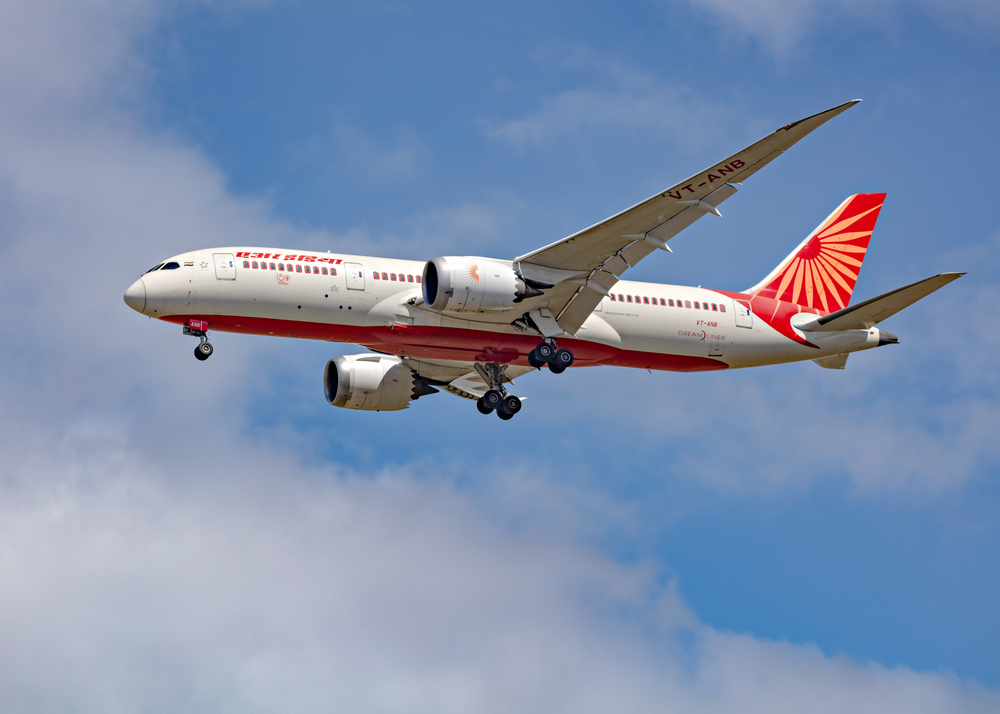
Image Credit: Shutterstock
Thirteen Years Sitting in Plain Sight
For thirteen years, the jet remained parked on the airfield at Netaji Subhash Chandra Bose International Airport. As the reference confirms, “The aircraft had been parked on the airfield at Netaji Subhash Chandra Bose International Airport, in Kolkata, for the last 13 years.” During that time, it was exposed to weather, dust, and gradual decay, all while serving no active purpose.
Photos taken over the years show the aircraft aging quietly as aviation technology and fleets evolved around it. Newer planes arrived, older ones were formally retired, and global air travel expanded rapidly. This jet existed in a strange state of limbo, neither operational nor officially abandoned.
boeing 737, aviation mystery, forgotten airplane, air india, indian airlines, airport oversight, aviation news, strange news, viral story, airline merger, aviation error, lost aircraft, airport operations, commercial aviation, human error
boeing 737, aviation mystery, forgotten airplane, air india, indian airlines, airport oversight, aviation news, strange news, viral story, airline merger, aviation error, lost aircraft, airport operations, commercial aviation, human error.
Public reaction, once the story emerged, ranged from disbelief to humor. The reference itself jokes that unless Air India thought “Santa had borrowed it to give Rudolph and the gang some well-deserved time off,” there was little logical explanation for how something so large could be overlooked for so long.
Image Credit: Shutterstock
A Final Journey on the Ground, Not in the Air
Once the aircraft was officially acknowledged, its future was no longer in doubt. Air India sold the plane, but it was never intended to return to service. Instead, it was given a new purpose far from commercial flight. According to local reports mentioned in the reference, the aircraft was transferred for training use.
Bengaluru Airport completed the sale and transfer, with plans to use the jet to train maintenance, repair, and overhaul engineers. Rather than taking off one last time, the aircraft was loaded onto a tractor trailer and prepared for a long road journey.
That journey covered 1,174 miles, a distance that the reference notes is “roughly the same distance as the crow flies between New York City and Miami.” After spending more than a decade stationary, the plane finally moved again, not through the sky, but across highways.
What This Strange Episode Ultimately Reveals
At first glance, the story of the forgotten Boeing 737 feels like a punchline. But beneath the humor lies a sobering lesson about how large organizations function. Aviation is built on systems designed to prevent exactly this kind of oversight, yet this case shows how easily gaps can form when responsibility becomes blurred.
A single missing entry in official documentation was all it took for a multimillion dollar asset to effectively disappear. There was no intent, no deception, and no dramatic failure. Just silence, assumption, and time passing unchecked.
In the end, the plane was never truly lost. It was always there. What disappeared was accountability. And that may be the most unsettling part of the story, a reminder that even the most tightly controlled industries are still vulnerable to very human mistakes.
Featured Image Credit: Shutterstock