

A Star Was Destroyed Years Ago and We Are Only Now Seeing Its True Impact
What if the most powerful force in the universe was not a weapon built by imagination, but a quiet event unfolding in a distant galaxy long before we ever noticed it? We often look to movies to stretch our sense of scale, to help us picture destruction on a planetary level. Yet far beyond our solar system, something far more immense has been unfolding without special effects, without a script, without an audience.

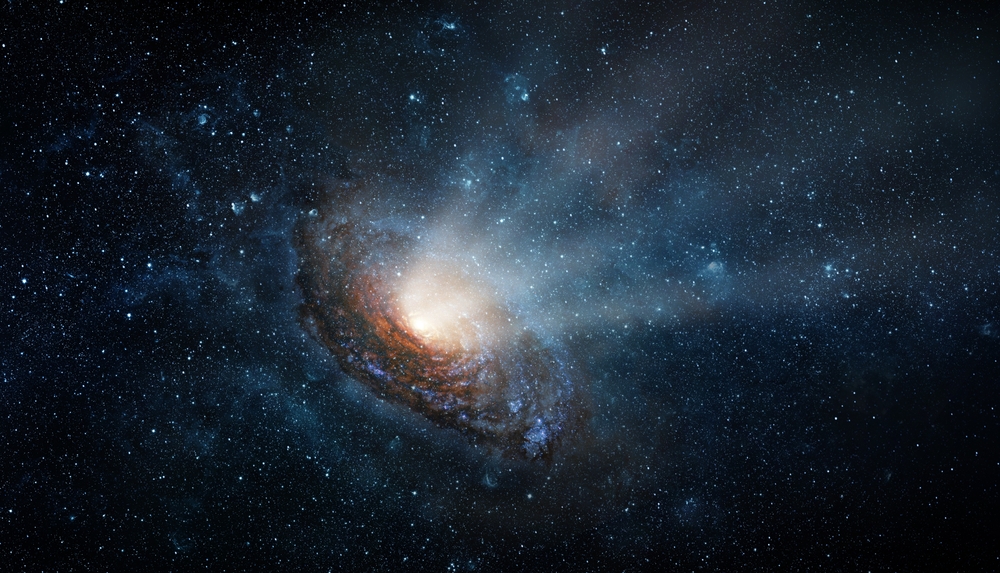
Astronomers studying a galaxy hundreds of millions of light years away have detected a surge of energy so extreme that even our boldest fictional comparisons fall short. A supermassive black hole tore apart a wandering star, and years later it is still releasing a jet of energy that defies expectation. The event, known as AT2018hyz, is forcing scientists to rethink how black holes behave, how long their influence can persist, and how much we still have to learn about the hidden power shaping our universe.
A Quiet Galaxy and an Unnoticed Turning Point
In 2018, telescopes captured a flash of light from a galaxy 665 million light years away, a signal that at first appeared routine within the expanding catalog of cosmic transients. The galaxy itself had shown no sustained signs of violent activity, and the supermassive black hole at its center seemed relatively dormant. When the flare was analyzed, it resembled what astronomers recognize as a tidal disruption event, a phenomenon that occurs when a wandering star is pulled apart by extreme gravitational forces. The light signature rose and faded in a way that matched established models, placing it among just over one hundred confirmed stellar disruptions observed so far. In a universe that regularly surprises us, this one initially did not.
The data reinforced that sense of normalcy. Spectroscopic measurements revealed the temperature and velocity of the glowing debris, confirming that the flare came from a star being torn apart rather than from a supernova or other explosive phenomenon. Some of the stellar material appeared to be falling inward, while other fragments were expelled outward under intense gravitational stress. The event was assigned the name AT2018hyz, following standard astronomical naming conventions tied to its year of detection. It entered the scientific record without fanfare, another entry in a growing list of documented disruptions.
Years later, the retrospective significance of that moment became clear. At the time, nothing in the optical data hinted at extraordinary consequences. As radio astronomer Yvette Cendes reflected, “There was nothing from that initial discovery that made us think something like this was going to happen years later.” The event seemed to validate existing theory rather than challenge it. Only with continued observation did researchers begin to realize that what looked like a predictable cosmic episode was quietly evolving into something far more consequential than anyone had anticipated.
When Silence Turned Into a Signal
For several years after the initial flare, AT2018hyz seemed to follow a familiar script. Then in 2022, radio telescopes picked up something that did not fit the expected pattern. Instead of fading into the background as most tidal disruption events eventually do, the system began broadcasting stronger and stronger radio waves. What had once appeared to be a completed chapter was quietly reopening. The increase was measurable and sustained, not a brief fluctuation but a steady amplification that signaled renewed activity in the aftermath of the star’s destruction. Astronomers realized they were no longer looking at a fading remnant but at a system that was actively accelerating particles and energizing its surroundings.
The radio signature revealed that charged particles were spiraling within magnetic fields at speeds approaching that of light, a process known as synchrotron radiation. This type of emission carries a distinct fingerprint that allows scientists to trace both the intensity of particle acceleration and the structure of the outflow carrying them. Continued monitoring showed that the brightness did not stabilize quickly. It kept climbing over successive observing cycles, pointing to an evolving and possibly expanding structure rather than a one time burst of energy. In the landscape of tidal disruption events, where only about one percent are known to produce relativistic jets, this persistence alone set AT2018hyz apart.
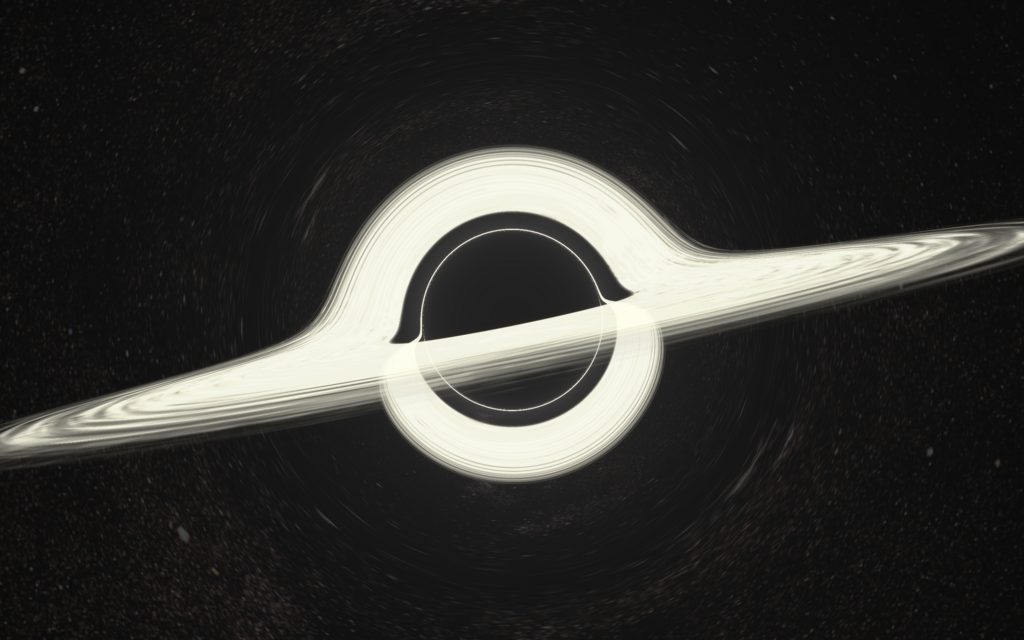

What makes the development even more striking is the scale of the change. The jet is now about 50 times more luminous in radio emissions than when first detected, an extraordinary escalation years after the original disruption. Reflecting on the implications, Yvette Cendes stated, “Planets are going to be destroyed for the first few light-years. I’m just not sure how far out from the jet this would be the case.” The sustained brightening suggests that energy is still being fed into the outflow rather than having been released in a single explosive moment. That ongoing injection transforms AT2018hyz from a fleeting astronomical event into a living laboratory, allowing researchers to observe in real time how a powerful jet interacts with interstellar matter and reshapes its environment long after the initial act of destruction.
Quantifying the Force
Determining the power of AT2018hyz begins with light. Astronomers analyze the brightness detected by telescopes and convert it into physical energy by accounting for distance, geometry, and the mechanisms producing the radiation. These calculations are expressed in ergs, the standard unit used in astrophysics to compare extreme cosmic events. The results depend on the structure of the outflow. If the energy were distributed more uniformly, the total output would be about 2 × 10^50 ergs. If it is concentrated within a relativistic jet, the estimate rises sharply to roughly 5 × 10^55 ergs. Because focused energy appears far brighter along its axis, the jet scenario dramatically increases the inferred scale.
For context, the Sun produces about 10^33 ergs per second at peak luminosity. By comparison, AT2018hyz ranks among the most energetic stellar disruption events ever measured and approaches the upper limits predicted by current models. Researchers have noted that the system is releasing between one trillion and 100 trillion times more energy than fan calculations of the Death Star’s planetary destruction laser, though the scientific significance lies in the physics rather than the comparison.

Even so, the estimate remains provisional. As Yvette Cendes stated, “I am hesitant to give a final energy estimate — there are too many things that it will depend on that will become clear once we actually see the peak.” The jet is still evolving, and factors such as energy conversion efficiency and interaction with surrounding material will influence the final numbers. Current models suggest the luminosity may continue rising until around 2027 before gradually declining, meaning the full scale of the event has yet to be finalized.
When Timing Defies Expectation
The most perplexing element of AT2018hyz is the gap between the original optical flare and the later surge in radio emission. Years separated the visible destruction of the star from the powerful signal that followed, suggesting that energy release near a supermassive black hole may unfold in stages rather than in one continuous outburst. Instead of an immediate jet, the system appears to have required time for internal conditions to evolve before producing the intense radio emission that ultimately drew attention.
One explanation focuses on the behavior of the disrupted stellar material. Debris returning toward the black hole does not instantly organize into a structure capable of launching a relativistic jet. Turbulence, shocks, and shifts in angular momentum can delay that process, while magnetic fields near the event horizon may need time to strengthen and align before channeling energy into a focused stream. In this scenario, the delay reflects the gradual buildup of physical conditions rather than inactivity.
Another possibility is that the jet formed earlier but was not initially visible from Earth. A narrow outflow directed away from our line of sight would appear faint until it slowed and widened. As Cendes explained, “And now it is entering our line of sight as the jet decelerates.” Whether the jet emerged late or simply became observable later remains unresolved, underscoring how geometry and perspective influence what we interpret as cause and effect in the cosmos.
What the Cosmos Teaches About Momentum
AT2018hyz carries a lesson that extends beyond astrophysics and into the psychology of persistence. For years, the event appeared ordinary, offering no obvious sign that it would evolve into something extraordinary. Then, long after attention could have shifted elsewhere, it intensified. The surge in radio emission did not arrive at the beginning of the story. It arrived after delay, after quiet, after what looked like completion. In scientific terms, the system continued reorganizing and building the conditions necessary for a powerful jet. In human terms, it is a reminder that visible impact often follows an unseen period of preparation.

Momentum does not always move in straight lines. Near a black hole, disrupted matter must redistribute, magnetic fields must strengthen, and alignment must occur before energy can be focused into a coherent outflow. Similarly, growth in any discipline frequently unfolds beneath the surface before results become measurable. The most important transformations are not always immediate, and early conclusions can underestimate future potential. AT2018hyz reinforces a disciplined truth: patience is not passive. It can be a phase of alignment before acceleration.
The scientific response to this event also reflects motivation grounded in curiosity rather than spectacle. Researchers continued observing, recalculating, and questioning assumptions long after the initial flare faded from headlines. That persistence made the later discovery possible. In both science and life, sustained attention creates the conditions for breakthrough. The universe does not rush its processes, and neither does meaningful progress.
Power Is Not Always Immediate
AT2018hyz forces us to confront a simple but unsettling truth about both the universe and ourselves. The most powerful transformations do not always announce themselves at the beginning. What seemed like a routine stellar disruption quietly evolved into one of the most energetic jet producing systems ever observed, not because the laws of physics changed, but because time revealed what early observation could not. The cosmos does not operate on our expectations. It unfolds in layers, in stages, in silence before intensity.
In the end, this discovery is not just about staggering energy measured in ergs or comparisons to fictional superweapons. It is about the discipline to keep watching when nothing appears to be happening and the humility to admit that first impressions can be incomplete. The universe rewards patience with revelation. And sometimes, what looks ordinary today is simply power gathering strength for tomorrow.
Image from Shutterstock