

UN Scientists Warn AI Could Become a Major Environmental Burden by 2030
Artificial intelligence has become one of the defining technologies of the modern era. It writes essays, generates artwork, helps diagnose diseases, powers customer service systems, and increasingly influences how businesses, governments, and individuals make decisions.
The technology is often promoted as a tool that could help solve some of humanity’s biggest challenges, including climate change itself. Yet a new report from the United Nations University suggests there is another side to the AI revolution that is receiving far less attention. Behind every chatbot response, image generator, and AI-powered search lies a vast physical infrastructure consuming enormous quantities of electricity, water, land, and raw materials.
According to UN researchers, the rapid expansion of artificial intelligence could push environmental pressures to levels that are difficult to ignore within just a few years. Their findings paint a picture of a technology whose benefits are growing rapidly, but whose hidden environmental costs are growing just as fast.
The Environmental Footprint Few People See
For many users, artificial intelligence feels almost weightless.
A question is typed into a chatbot. An image appears within seconds. A video is generated with a few prompts. The process seems entirely digital, disconnected from the physical world.
The reality is very different.
Every AI request travels through massive networks of servers housed inside data centers. These facilities operate around the clock, processing billions of requests while consuming huge amounts of electricity. Powerful cooling systems are required to prevent equipment from overheating, which means large quantities of water are also needed. The construction and operation of these facilities demand land, energy infrastructure, and a constant supply of electronic hardware.
Scientists from the United Nations University Institute for Water, Environment and Health argue that public discussions about artificial intelligence have largely overlooked these environmental consequences.
The report notes that debates surrounding AI have understandably focused on concerns such as misinformation, privacy, bias, job displacement, and social inequality. Yet the environmental impacts of the technology remain comparatively underexamined despite their growing scale.
Researchers warn that as AI becomes embedded in more products, services, and industries, its demand for resources could increase dramatically over the remainder of the decade.
Electricity Demand Is Rising at an Extraordinary Pace
One of the report’s most striking findings concerns energy consumption.
Scientists estimate that AI-related workloads accounted for approximately 20 percent of total data center electricity use in 2025. By 2030, that figure could rise to 40 percent.
The numbers involved are staggering.
The report projects that global data centers could consume around 945 terawatt-hours of electricity each year by the end of the decade. To put that into perspective, that amount of electricity is nearly three times the combined annual consumption of Pakistan, Bangladesh, and Nigeria, countries that are home to more than 650 million people.
Researchers also calculated that AI’s projected electricity consumption could supply the residential energy needs of all 1.3 billion people living across sub-Saharan Africa for more than two years.
Such figures illustrate how quickly the demands of artificial intelligence are expanding.
Just a few years ago, conversations about AI largely centered on its capabilities. Today, scientists are increasingly asking whether the infrastructure supporting those capabilities can continue growing without creating significant environmental consequences.
The environmental implications of this energy demand extend far beyond electricity grids.
Generating power at this scale inevitably produces carbon emissions unless every source is completely emissions-free. According to the report, AI-linked electricity consumption could generate a carbon footprint approaching 400 million tonnes of carbon dioxide by 2030.
Researchers estimate that offsetting those emissions would require approximately 6.7 billion trees growing for a decade.
Why Everyday AI Use Matters More Than Training Models

Much of the public conversation around AI energy use has focused on training advanced models.
Training systems such as large language models requires enormous computing resources. Earlier studies highlighted the substantial energy demands associated with building these systems, leading many people to assume that training represented the primary environmental concern.
The UN report argues that this perception is increasingly outdated.
Once an AI model is deployed, the process of responding to user requests becomes the dominant source of energy consumption. Researchers estimate that inference, the continuous operation of AI systems answering prompts and generating outputs, now accounts for roughly 80 to 90 percent of total AI energy use.
This shift reflects the extraordinary scale of daily AI activity.
One widely used AI service alone is estimated to process approximately 2.5 billion prompts every day. Every conversation, image request, coding task, summary, translation, and generated response contributes to the overall demand for electricity.
As AI becomes integrated into search engines, office software, social media platforms, smartphones, and business operations, the cumulative impact of billions of daily interactions grows rapidly.
The report suggests that the environmental burden of AI is no longer concentrated in research laboratories or technology companies. It is increasingly distributed across everyday usage by millions of people around the world.
Images and Videos Are Driving Resource Consumption Higher

Not all AI tasks consume the same amount of energy.
The report highlights significant differences between simple text-based activities and more computationally intensive forms of content generation.
Generating a basic text response requires substantially less energy than creating an image. Producing a single AI-generated image can demand more than a thousand times the energy of certain simple text-processing tasks.
Video generation pushes resource requirements even further.
According to the report, a short AI-generated video can consume as much electricity as hundreds of thousands of basic classification tasks. As image and video generation become increasingly popular among consumers, businesses, advertisers, and content creators, researchers expect these activities to become major contributors to AI’s overall environmental footprint.
What makes the issue particularly challenging is that many users never see the environmental costs associated with their choices.
Default settings, output resolutions, model selection, and prompt complexity are often determined behind the scenes. As a result, users may be unaware that seemingly minor differences in how they use AI can produce dramatically different resource demands.
Scientists argue that greater transparency around these environmental impacts could become increasingly important as adoption continues to accelerate.
The Water Problem Could Become Just as Serious

Electricity consumption tends to dominate discussions about AI sustainability, but the report suggests that water use deserves equal attention.
Data centers generate large amounts of heat while operating. Preventing equipment from overheating requires extensive cooling systems, many of which depend heavily on water.
Researchers estimate that AI-related infrastructure could consume approximately 9.3 trillion liters of water annually by 2030.
The scale of that figure is difficult to visualize.
According to the report, it would be enough to satisfy the drinking water needs of the entire global population for roughly one and a half years.
Another calculation presented by researchers suggests that AI’s water footprint could equal the annual domestic water requirements of 1.3 billion people in sub-Saharan Africa by the end of the decade.
Water demand is particularly concerning because many regions hosting large data centers are already facing growing pressure from drought, population growth, and climate-related water shortages.
The report points to examples where expanding computing infrastructure has intensified local concerns about water availability.
In some locations, communities have questioned whether the rapid growth of data centers could place additional stress on already strained water resources.
As climate change continues to affect rainfall patterns and freshwater availability worldwide, balancing technological growth with water security may become an increasingly complex challenge.
The Land Footprint Is Larger Than Many Realize

The environmental impacts of AI are often discussed in terms of electricity and carbon emissions, but the report argues that land use is another critical factor.
Every source of electricity requires physical infrastructure. Solar farms, wind installations, power stations, transmission networks, and supporting facilities all occupy land.
Researchers estimate that AI’s land footprint could exceed 14,500 square kilometers by 2030.
That area is roughly twice the size of the Jakarta metropolitan region, one of the largest urban areas in Southeast Asia.
The report emphasizes that environmental sustainability cannot be measured solely through carbon emissions. A solution that reduces greenhouse gases may still increase demands for land or water.
One example highlighted by researchers involves certain renewable energy sources. While they may reduce carbon emissions substantially, they can also require larger areas of land or greater quantities of water compared with alternative energy systems.
As a result, the report argues that policymakers need to evaluate environmental trade-offs across multiple dimensions rather than focusing exclusively on carbon reductions.
Renewable Energy Is Not a Complete Solution
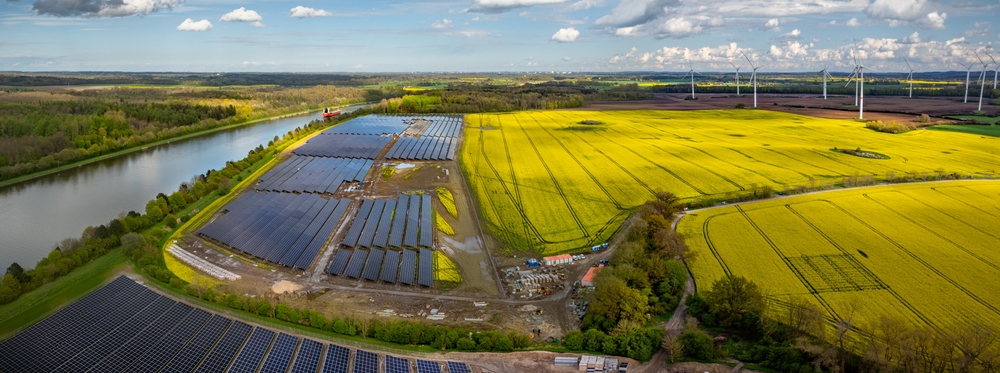
Many technology companies have invested heavily in renewable energy to support their operations.
These efforts have often been presented as evidence that AI can continue expanding without creating major environmental problems.
The UN researchers caution that the situation is more complicated.
A data center powered by low-carbon electricity may still have substantial environmental impacts through water consumption, land use, infrastructure development, and resource extraction.
The report warns against evaluating sustainability through a single metric.
Reducing carbon emissions remains essential, but scientists argue that it should not overshadow other environmental pressures. A project that appears environmentally friendly from a climate perspective could still create significant challenges for local ecosystems or water supplies.
Professor Kaveh Madani, who led the investigation, said one of the team’s biggest surprises was discovering how often solutions that appeared environmentally beneficial from a carbon standpoint created greater pressures elsewhere.
This finding challenges a common assumption that renewable energy alone can solve the environmental concerns associated with AI expansion.
The Growing Mountain of Electronic Waste
Another issue highlighted by the report is electronic waste.
The hardware powering artificial intelligence has a finite lifespan. Servers, processors, storage systems, networking equipment, and specialized chips eventually become obsolete and must be replaced.
Researchers project that AI infrastructure could generate up to 2.5 million tonnes of electronic waste annually by 2030.
Managing this waste presents a major environmental challenge.
Electronic devices often contain hazardous materials alongside valuable minerals that require careful recycling and disposal. Improper handling can lead to pollution, environmental contamination, and health risks.
The report notes that lower-income countries frequently bear a disproportionate share of global electronic waste processing despite having limited resources for safe disposal.
As AI infrastructure expands worldwide, scientists warn that addressing the resulting waste stream must become part of broader sustainability planning.
Without effective recycling systems and lifecycle management strategies, the environmental consequences could continue long after hardware reaches the end of its operational life.

The Hidden Cost of Critical Minerals
Artificial intelligence depends on more than software.
The hardware behind modern AI systems requires significant quantities of critical minerals and rare materials. Extracting these resources often involves environmental disruption, intensive energy use, and social challenges in mining regions.
The report highlights concerns that countries supplying raw materials frequently receive fewer economic benefits than nations controlling AI infrastructure and technological development.
This creates a complex relationship between technological progress and environmental justice.
Communities involved in mineral extraction may experience environmental degradation while receiving only a small share of the advantages generated by the technologies those materials help create.
Researchers argue that responsible AI development must consider the full lifecycle of hardware production, from mineral extraction and manufacturing to operation and eventual disposal.
Ignoring these upstream impacts risks understating the true environmental cost of the technology.
A Growing Divide Between AI Producers and Everyone Else

The report also identifies a widening digital divide.
According to researchers, only 32 countries currently host AI-specialized cloud infrastructure. Even more striking, around 90 percent of global AI computing capacity is concentrated in the United States and China.
Meanwhile, more than 150 countries have little or no sovereign AI computing capability.
Scientists argue that this imbalance raises questions extending beyond economics and technology.
Many nations bear environmental burdens associated with mineral extraction, energy production, and electronic waste while having limited influence over AI development itself.
Professor Tshilidzi Marwala described this as both a technological and governance challenge.
The report suggests that ensuring equitable access to AI benefits while fairly distributing environmental costs will become one of the defining policy issues of the coming decade.
Without coordinated international action, existing inequalities could deepen as AI infrastructure continues expanding.
What the UN Says Needs to Happen Next
Despite its warnings, the report is not an argument against artificial intelligence.
Researchers repeatedly emphasize that AI has enormous potential to improve healthcare, education, scientific research, disaster response, and climate resilience.
Their concern is not the technology itself but the speed of its expansion relative to environmental planning.
The report calls for governments to integrate AI infrastructure into energy planning, water management strategies, and land-use policies. It encourages companies to prioritize efficiency by design, improve transparency around environmental impacts, and consider resource consumption when developing products.
Investors are urged to treat electricity demand, carbon emissions, water use, and land requirements as material business risks rather than secondary sustainability concerns.
The report also argues that communities should be involved early when decisions are made about the location and development of new data centers.
For users, researchers suggest choosing lower-impact applications and avoiding unnecessarily resource-intensive outputs when simpler alternatives can accomplish the same task.
These individual actions may seem small, but the report notes that billions of daily interactions collectively shape the environmental footprint of artificial intelligence.
The findings arrive at a moment when AI adoption is accelerating faster than almost any previous digital technology. The systems being built today will help determine how societies work, communicate, learn, and create for decades to come.
Whether that future remains environmentally sustainable may depend less on what AI can do and more on how the world chooses to power it.