


Scientists Warn AI Data Centers Could Be Making Nearby Residents Sick
A strange humming noise started creeping into Donna Gallant’s home in Bristow, Virginia. It wasn’t traffic. It wasn’t construction. It wasn’t something that disappeared at night.
The sound came from a nearby data center complex, one of hundreds helping power the internet, artificial intelligence systems, cloud computing, and streaming platforms. According to Gallant, the noise became so intrusive that it triggered anxiety attacks and made sleep difficult.
Stories like hers are becoming increasingly common across the United States as communities find themselves living beside one of the fastest-growing industries on Earth. While artificial intelligence promises to transform everything from medicine to education, scientists are warning that the physical infrastructure behind the technology may be creating environmental and public health consequences that many people never see.
The Digital Revolution Has a Physical Footprint
For many people, AI feels invisible.
A user opens an app, asks a question, uploads a photo, or streams a video. The response arrives in seconds. The process appears effortless.
Behind every search result and AI-generated answer, however, sits a vast network of industrial facilities known as data centers. These buildings house thousands of servers that process and store information every second of the day.
The United States now hosts more than 4,000 data centers, more than any other nation in the world. The number continues to grow rapidly as major technology companies race to expand their artificial intelligence capabilities.

Researchers say this growth is unfolding at a scale few communities have experienced before.
Modern hyperscale data centers can occupy hundreds of acres. Some are as large as several hundred football fields combined. Entire clusters of facilities are emerging in states such as Virginia, Texas, Arizona, Ohio, and California.
While the industry often highlights economic benefits and technological progress, researchers are increasingly studying another side of the story: the effects these facilities may have on the people living nearby.
Scientists Say Health Impacts Have Been Largely Overlooked

One reason the issue has remained relatively unknown is that very little research has focused specifically on the health effects of data center expansion.
That is beginning to change.
Researchers examining data center growth in Northern Virginia, one of the world’s largest concentrations of digital infrastructure, argue that health considerations have been largely absent from public discussions.
Neha Gour, a researcher affiliated with George Mason University’s Center for Climate Change Communication, told reporters that “really nobody is talking about the health impacts of data centers.”
The concern is not centered on a single issue.
Instead, scientists point to a combination of factors including air pollution, noise pollution, water consumption, land-use changes, light pollution, and rising energy demand. Together, they create a complex environmental footprint that extends far beyond the walls of the facilities themselves.
The challenge is particularly significant because data centers operate continuously.
Unlike many industrial sites that slow down at night or reduce activity during certain seasons, data centers run 24 hours a day, seven days a week, throughout the entire year.
That constant operation creates environmental pressures that nearby communities experience around the clock.
Air Pollution May Be One of the Biggest Threats

When discussing data centers, most people think about electricity use.
Researchers say that electricity demand is also where some of the most significant health concerns begin.
Data centers require enormous amounts of power. A single advanced AI facility can consume as much electricity as a small city.
The problem is not necessarily the buildings themselves. The larger concern is where all that electricity comes from.
In many regions, fossil fuels still supply a substantial portion of the grid. As data center demand increases, power plants often need to generate more electricity to keep up.
That additional generation can release pollutants linked to respiratory disease, cardiovascular disease, neurological disorders, and other health problems.
According to research examining the national impact of data centers, electricity generation associated with these facilities produced greenhouse gas emissions equal to roughly 2.2 percent of total U.S. emissions in 2023.
Researchers have also linked fossil fuel pollution to increased risks of childhood asthma, lung disease, stroke, and heart-related illnesses.
For communities already living near power plants, the expansion of data centers may intensify existing environmental burdens.
Some experts worry the situation could worsen as artificial intelligence drives even greater electricity demand over the coming years.
The U.S. Department of Energy has projected that data centers could account for up to 12 percent of the nation’s total electricity consumption by 2028.
That would represent a dramatic increase in just a few years.
The Backup Generator Problem
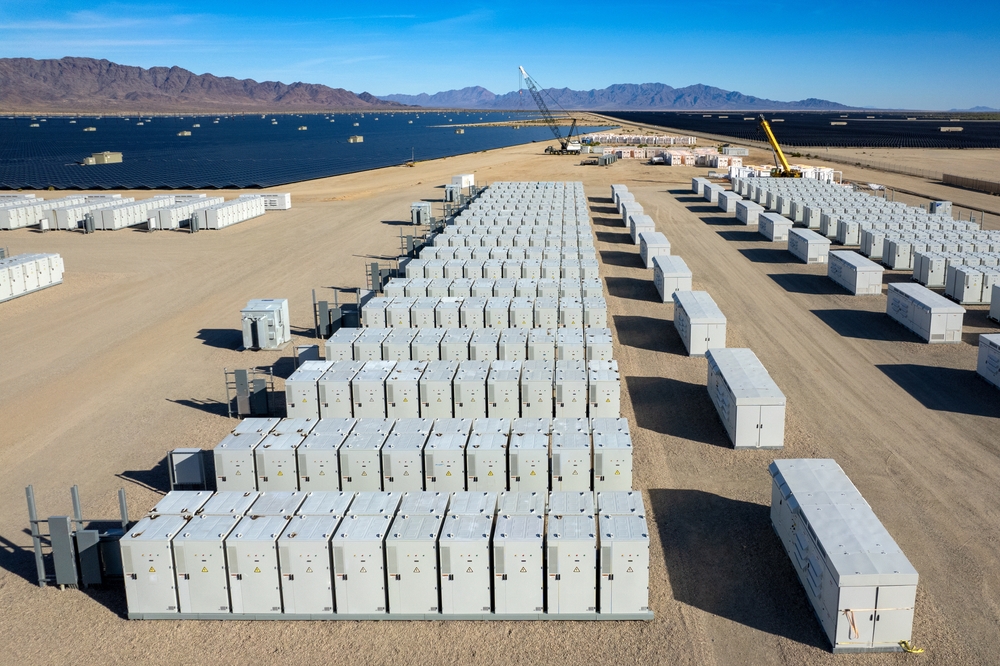
Even when connected to the power grid, data centers cannot afford interruptions.
A few seconds of downtime can disrupt services used by millions of people.
To prevent outages, most facilities rely on backup diesel generators that activate when primary power supplies fail.
These generators are designed for emergencies, but researchers say they create their own set of environmental concerns.
Diesel engines emit fine particulate matter and nitrogen oxides, pollutants associated with asthma, heart disease, respiratory illness, and premature death.
Under normal conditions, generators undergo routine testing to ensure they remain operational.
During major power disruptions, however, they can run for extended periods.
Shaolei Ren, a professor at the University of California, Riverside, warned that if multiple facilities relied heavily on diesel backup systems during a large outage, emissions could spike dramatically over a short period.
He described the possibility as a “health earthquake,” noting that annual pollution levels could be released within days under certain emergency scenarios.
As artificial intelligence expands and electricity demand grows, some experts fear utilities may face greater strain during extreme weather events, increasing reliance on backup power systems.
Residents Describe Life Beside Data Centers as Exhausting

For many communities, noise has become the most immediate and visible issue.
Unlike air pollution, which can be difficult to detect without specialized monitoring equipment, noise pollution is impossible to ignore.
Data centers generate sound from cooling systems, industrial fans, air chillers, generators, and other equipment required to keep servers operating safely.
The result is often a constant low-frequency hum.
Residents living near facilities in Virginia, Arizona, Arkansas, Texas, and other states have reported headaches, sleep disturbances, anxiety, ear pain, difficulty concentrating, and reduced quality of life.
Some compare the sound to a drone that never stops.
Others describe it as a vibration they can feel inside their homes.
In Chandler, Arizona, residents spent years complaining about persistent humming from a nearby data center before local officials adopted stricter zoning requirements.
In Virginia, homeowners have reported hearing data center noise day and night, even inside their houses.
One local resident described the experience as feeling like an “internal organ vibration.”
Another community activist argued that neighborhoods surrounded by data centers were “living in hell.”
Scientists note that noise does not need to reach dangerous levels to affect health.
Research has shown that chronic exposure to environmental noise can interfere with sleep, increase stress levels, elevate blood pressure, and contribute to cardiovascular problems.
Children, older adults, shift workers, and people with existing health conditions may be particularly vulnerable.
Water Consumption Is Raising Alarms

Another growing concern involves water.
The enormous computing power inside data centers generates substantial heat.
Without cooling systems, servers could overheat and fail.
Many facilities therefore consume large quantities of water to maintain safe operating temperatures.
Researchers estimate that global data center water consumption could reach between 4.2 billion and 6.6 billion cubic meters annually by 2027.
In the United States, data centers already rank among the largest industrial water users.
The numbers can be staggering.
Mid-sized facilities may use hundreds of thousands of gallons every day.
Large facilities can consume millions of gallons daily.
In Northern Virginia alone, data centers reportedly used nearly two billion gallons of water in 2023.
The issue becomes especially sensitive in regions facing drought or long-term water stress.
Communities in Arizona, Texas, and parts of the Colorado River Basin have expressed concerns that future developments could place additional pressure on already strained water supplies.
Researchers warn that heavy industrial water use can affect aquifers, rivers, and municipal systems that communities depend on for daily life.
Rural Landscapes Are Being Transformed
The environmental effects extend beyond pollution and resource consumption.
Data centers are also changing the physical character of communities.
Developers frequently seek large tracts of land with access to electricity infrastructure and transportation networks.
As a result, agricultural land, forests, and rural areas increasingly find themselves targeted for development.
In some cases, facilities cover hundreds of acres.
The largest campuses can exceed 1,000 acres.
Residents in several states have pushed back against proposals they believe would permanently alter local landscapes.
In Prince William County, Virginia, proposed data center projects threatened thousands of acres of undeveloped land.
Similar debates have emerged in Ohio, Indiana, Wisconsin, and other regions where residents fear losing farmland and open space.
Environmental researchers point out that green spaces provide benefits extending beyond aesthetics.
Access to natural areas has been linked to improved mental health, opportunities for physical activity, reduced stress, and stronger community well-being.
When those landscapes are replaced by industrial facilities, communities can experience a profound shift in identity and quality of life.
The Economic Benefits Are Real, But So Are the Trade-Offs
Supporters of data center development emphasize the industry’s economic contributions.
Construction projects create jobs for electricians, technicians, engineers, and contractors.
Facilities generate tax revenue that can support schools, roads, and public services.
Technology companies also argue that expanding digital infrastructure is essential for economic competitiveness.
Those benefits are not imaginary.
Data centers have contributed billions of dollars to local and state economies.
The challenge is determining how those benefits should be balanced against environmental and public health concerns.
Critics note that while construction activity creates significant employment, many facilities require relatively few permanent workers once operational.
Some large data centers employ fewer than 150 full-time staff members.
Meanwhile, communities may bear long-term costs associated with infrastructure upgrades, increased electricity demand, environmental impacts, and changes to local land use.
The debate is no longer about whether data centers should exist.
Few people would willingly give up the digital services they rely on every day.
The conversation has shifted toward how these facilities can be developed responsibly.
Communities Are Demanding Stronger Protections
As concerns grow, local governments are beginning to explore new approaches.
Some communities have delayed projects while reviewing zoning regulations and environmental safeguards.
Others have required developers to address noise concerns, improve transparency, and reduce resource consumption.
Researchers and policy experts have proposed several measures that could help reduce impacts:
- Greater use of renewable energy sources
- Reduced reliance on diesel generators
- Advanced cooling technologies that consume less water
- Stronger noise-control requirements
- Larger buffer zones between facilities and homes
- Better disclosure of environmental impacts
- Community benefit agreements tied to development approvals
Several facilities have already begun experimenting with quieter cooling systems, battery storage technologies, recycled water programs, and other solutions.
Whether those efforts will keep pace with the industry’s rapid growth remains uncertain.
The Infrastructure Behind AI Is Becoming Impossible to Ignore
Artificial intelligence is often discussed as a virtual revolution.
The reality is far more physical.
Every AI image, chatbot response, online search, and streamed video depends on buildings filled with machines that consume electricity, water, and land at an unprecedented scale.
For years, much of the public conversation focused on what these technologies could do.
Scientists are now urging communities and policymakers to pay closer attention to what it takes to power them.
The future of artificial intelligence may be written in code, but its environmental footprint is being felt in neighborhoods, rural communities, and landscapes across the country. As the digital economy continues to expand, the question is no longer whether data centers will shape the places around them. The question is whether that growth will happen in a way that protects the people living closest to it.