


Science Confirms Burning Sage Eliminates 94% of Airborne Bacteria—Here Is How to Do It Effectively
We often dismiss ancient rituals as mere superstition, assuming our ancestors were acting on blind faith rather than biological fact. Yet, what if the simple act of burning dried leaves was actually a sophisticated form of sanitation technology lost to time?
Science is finally catching up to history, revealing that the air within our homes holds secrets that affect everything from physical health to mental clarity. Before dismissing the smoke as magic, consider that this age-old practice might hold the key to a cleaner, healthier life in the modern world.
Mysticism Meets Medicine
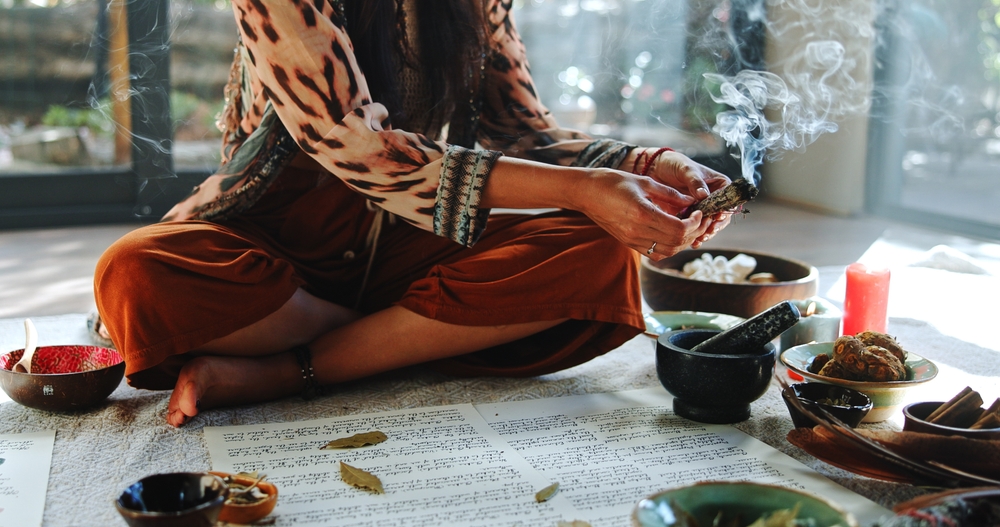
Ancient wisdom often whispers what science eventually shouts. For generations, the ritual of burning sage appeared to be nothing more than folklore or spiritual symbolism. However, a landmark study published in the Journal of Ethnopharmacology has bridged the gap between mysticism and medicine. Researchers observed that treating a confined space with medicinal smoke for just one hour resulted in a staggering 94% reduction of airborne bacterial counts.
This is not merely a fleeting moment of freshness. The study, titled “Medicinal Smokes,” revealed that the sanitizing effects persisted long after the smoke cleared. The treated environment remained largely disinfected for a full 24 hours. Even more impressive, specific pathogenic strains became undetectable for up to 30 days following the initial burn.
The mechanism at work here is a powerful natural antiseptic. While modern HEPA air purifiers rely on trapping particles in filters, medicinal smoke actively engages with the atmosphere to scrub it of harmful microorganisms. It transforms the air quality in a tangible, measurable way. What was once dismissed as superstition is now being recognized as a sophisticated method of environmental sterilization.
The Roots of “Salvere”
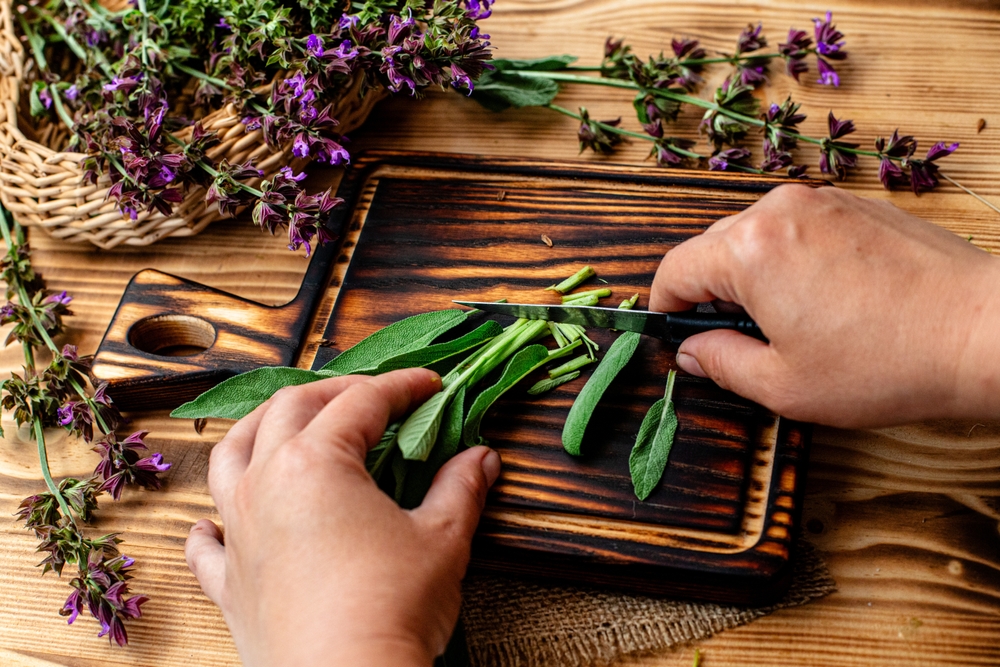
To understand the power of this practice, look no further than the name itself. The botanical label for sage is Salvia, derived from the Latin word salvere, which translates literally “to be saved” or “to heal.” This is not a coincidence. For thousands of years, civilizations did not view this evergreen shrub merely as a culinary spice but as a vehicle for preservation and health.
History paints a vast picture of its usage. Ancient healers in Egypt, Rome, and Greece utilized burning herbs to treat ailments ranging from sore throats to digestive issues. In these traditions, the smoke was often seen as a bridge between the physical world and the divine, a method to clear the spirit while cleansing the body. It was a universal understanding that our environment dictates our internal state.
Modern analysis confirms why these ancient cultures held the plant in such high regard. Beyond the antimicrobial properties mentioned earlier, sage contains potent antioxidants like rosmarinic acid and carnosic acid. These compounds protect against free radical damage and reduce oxidative stress within the body. When the smoke fills a room, it carries a legacy of healing that spans continents and millennia, validating the intuition of ancestors who knew that this plant was meant to do more than just season food.
How to Cleanse Your Space
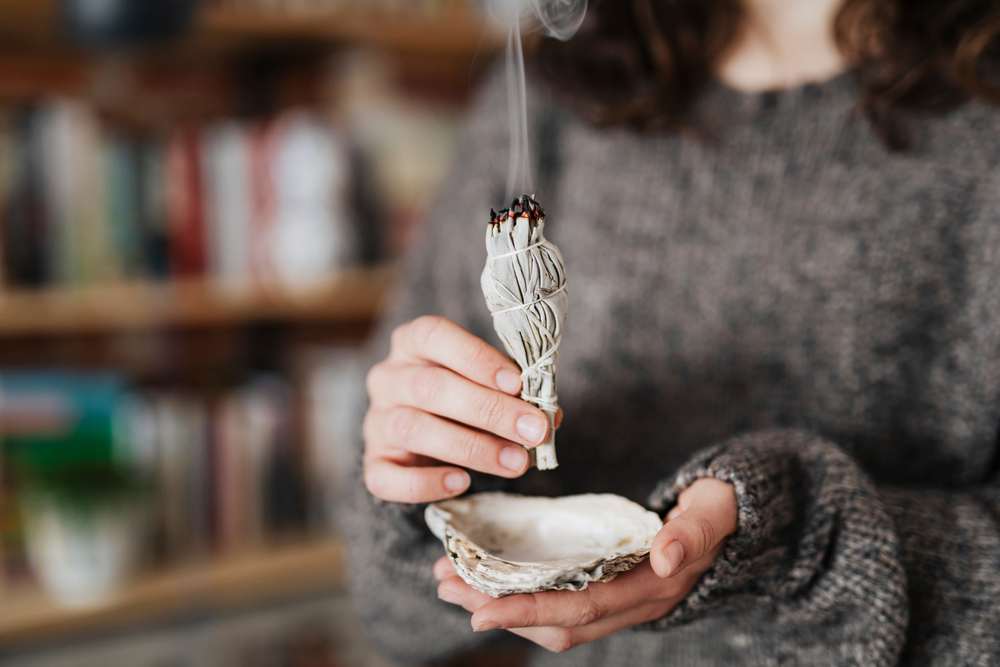
Effective purification requires more than just a lighter and a bundle of dried herbs. It requires preparation and respect for the process. Before striking a match, it is essential to open windows or doors. This simple step creates an exit route for the smoke, carrying with it the airborne impurities and stagnant energy intended for removal. Without an escape path, the particles merely recirculate within the home.
Select a heat-resistant container, such as a ceramic bowl or an abalone shell, often filled with a layer of sand or earth to insulate the vessel from the heat. Hold the sage bundle at a 45-degree angle and ignite the tip. Allow the flame to burn for approximately 20 seconds before gently blowing it out. The goal is not a roaring fire but a steady, fragrant smolder that releases the cleansing smoke.
Move mindfully through the space, guiding the smoke into the corners of each room where air circulation is often poorest. Science indicates these stagnant pockets are where bacteria thrive, while tradition suggests this is where heavy energy lingers. Ensure the smoke reaches high and low, but always keep safety in the foreground. Never leave burning herbs unattended, and when the process is complete, extinguish the bundle thoroughly in sand or a fireproof vessel. This transforms a routine cleaning into a deliberate moment of restoration.
A Breath of Caution

Wisdom is not just knowing how to use a tool, but understanding when it might be harmful. While the antimicrobial data is compelling, smoke remains a physical irritant. Burning any organic matter releases particulate matter and carbon monoxide, which can trigger respiratory distress. Individuals battling asthma, allergies, or pre-existing lung conditions should exercise extreme caution. The lungs are delicate instruments, and what purifies the room should not pollute the body.
Pets also require consideration. Their respiratory systems are often smaller and more sensitive than ours. If a family member or a furry companion struggles with smoke, modern technology offers a safer path. High-quality HEPA air purifiers can scrub the air of contaminants without the combustion. While they may lack the ceremonial weight of an ancient ritual, they provide the same physical benefit of clean air without the associated risks.
Furthermore, mindfulness extends to the source of the plant itself. The popularity of “smudging” has led to the overharvesting of white sage, threatening its survival in the wild. This plant holds deep sacred significance to Indigenous cultures, and its commercialization raises valid concerns regarding cultural appropriation and sustainability. True purification cannot come from destruction. If choosing to burn sage, seek out ethically sourced, cultivated varieties or consider alternatives like garden sage, rosemary, or cedar to honor both the earth and its history.
Clear Air, Clear Mind
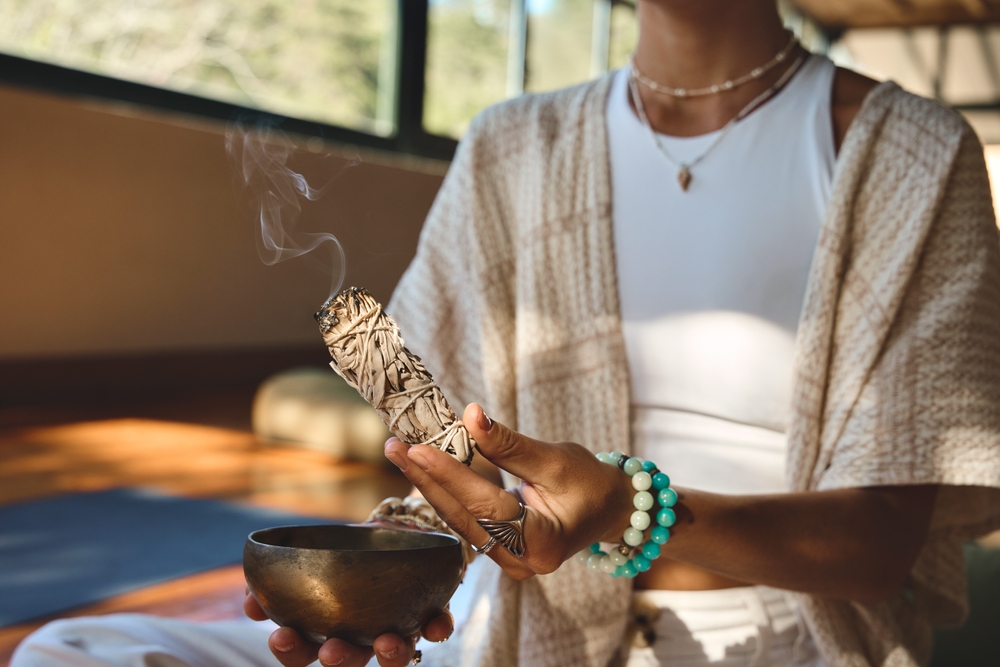
The air in a room is more than just oxygen and nitrogen; it is the invisible atmosphere that holds the weight of the day. While the reduction of 94% of airborne bacteria is a scientific triumph, the true value of this practice extends beyond the microscope. It serves as a powerful reminder that individuals have the agency to change their environment. When the air feels heavy, stagnant, or polluted, the mind often follows suit. Clearing the physical space creates a vacuum for clarity to enter.
Research suggests that the active compounds in sage may help improve mood and reduce stress, hinting at a profound link between what is inhaled and how one feels. This is the essence of holistic health. Whether choosing to light a bundle of ethically sourced herbs or simply opening the windows to let the breeze in, the act itself is a declaration. It states that this space is sacred, and it is worthy of purity.
Take a moment to look at the invisible world. Is it supporting growth or stifling breath? The simple act of purifying the air can be the catalyst for purifying the mind. In a world full of noise and pollution, claiming a pocket of fresh, clean air is a radical act of self-care. Clear the space, and watch the spirit follow.
Source:
- Nautiyal, C. S., Chauhan, P. S., & Nene, Y. L. (2007b). Medicinal smoke reduces airborne bacteria. Journal of Ethnopharmacology, 114(3), 446–451. https://doi.org/10.1016/j.jep.2007.08.038