

There is a particular kind of nostalgia that can make an ordinary memory feel almost physical. You remember leaving the house for hours, fixing something with your own hands, or spending an entire Saturday without documenting a single moment, and suddenly the present feels strangely crowded.
Psychiatrist Jeff Knuppel, who grew up in the 1980s and now speaks to men in the second half of life, thinks that feeling has less to do with the decade itself than we might assume. His argument is that people may be longing for six everyday freedoms that gradually disappeared as technology changed the way we live.
1. The Joy of Being Completely Unreachable

For many people who grew up before smartphones, being unreachable was simply part of ordinary life. You could leave home, spend an afternoon with friends, and return later without anyone expecting a detailed explanation for your absence.
Knuppel believes that freedom has changed dramatically. “If you go a few hours without answering a text, people wonder if something’s wrong,” he said. “Being unreachable has gone from the default state of a normal day to being something you have to actively create and defend.”
That last word is revealing. Silence used to happen naturally. Today, a person may have to turn off notifications, ignore a phone, or explain why they were unavailable before they can experience the same quiet.
The difference is not simply technological. Constant availability can change how people experience their own time. Even when nobody is contacting you, the possibility that someone could can remain in the background.
2. The Morning Used To Belong To You

Knuppel’s second point concerns something even more personal: attention.
A person can now wake up and immediately encounter messages, emails, headlines, notifications, and other people’s opinions. The day can begin with an avalanche of information before there has been much opportunity to decide what deserves attention.
Knuppel described waking up to “notifications from last night, texts, emails, a news app with 15 headlines, and every one of them is engineered to trigger an emotional reaction.”
Research from psychologist Gloria Mark at the University of California, Irvine, provides an interesting backdrop to that experience. Her research has tracked changes in people’s screen attention over many years. The source article notes that average attention periods declined from around two and a half minutes in 2004 to roughly 47 seconds in recent years.
That figure does not establish that shorter attention automatically means worse wellbeing. It does, however, illustrate how different the modern information environment has become.
There was once more empty space between one demand for attention and the next. That empty space could be boring, but it also gave people somewhere to think.
3. Actually Being Able to Fix Our Own Stuff

Knuppel’s third observation is more tangible. He remembers when a broken appliance might have required a screwdriver, a small replacement part, and some patience.
“It used to be a $14 part in 20 minutes with a screwdriver,” he said. “Now it’s a circuit board and the manufacturer doesn’t sell the board separately.”
The frustration goes beyond having to spend more money. Repairing something created a direct relationship between a person and the physical world around them. You could open an object, understand what had failed, replace a part, and make it work again.
Knuppel believes that experience gave people a sense of authority over their surroundings.
The continued growth of the right-to-repair movement suggests that this desire has not disappeared. Several states have enacted laws supporting repair rights, while more legislation was introduced in 2026, according to the source article.
There is something satisfying about knowing that an object is understandable. When everything is sealed, proprietary, and designed to be replaced, that feeling can become harder to find.
4. The Bliss of Not Knowing Everyone’s Opinion
Another part of Knuppel’s argument is difficult to measure because it involves the sheer amount of information people now process.
Modern technology gives people access to more knowledge than any previous generation could have imagined. It also gives them more opportunities to second-guess themselves.
A message arrives and you wonder why the person worded it that way. Someone posts an opinion and you feel compelled to respond. A news story appears and another version arrives moments later. Your phone offers an endless stream of things to judge, compare, understand, or worry about.
People in the 1980s were hardly free from uncertainty. They dealt with political conflict, frightening news, social pressures, and plenty of misinformation. The difference was that those pressures were not continuously delivered into their pockets.
There was also less opportunity to compare an ordinary life with thousands of carefully selected versions of other people’s lives.
That does not make the past better. It simply means the mental environment was different.
5. Having to Wait for the Things We Loved

Knuppel’s fifth observation involves something that modern convenience has largely erased: scarcity.
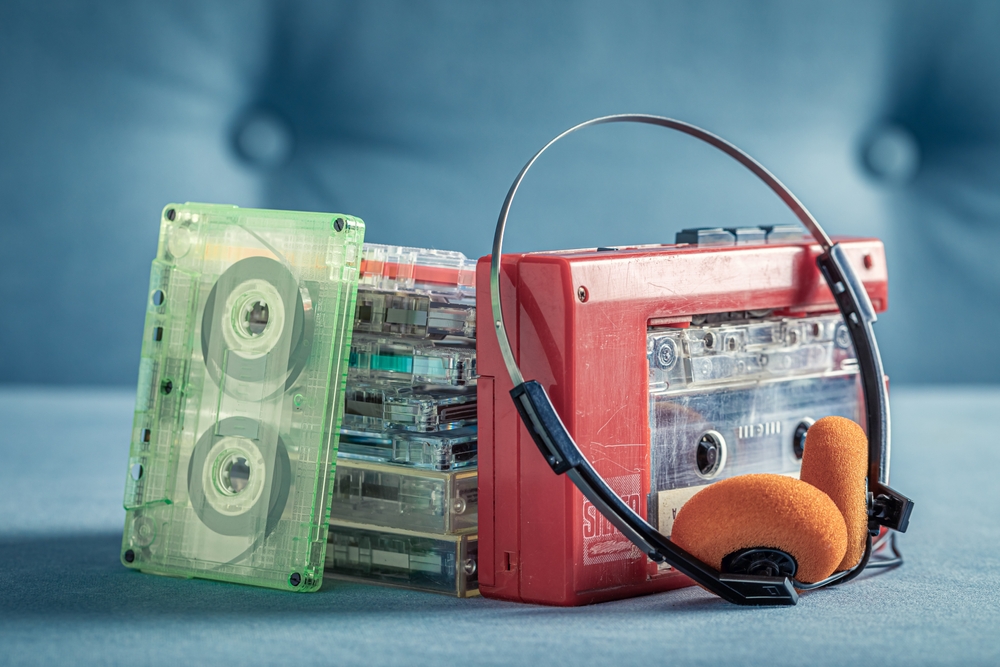
Music offers an obvious example. When people had to buy a record or cassette, choosing what to hear required a decision. Once they brought it home, they had the physical object in front of them and fewer alternatives competing for attention.
Streaming has made music vastly easier to access. Almost anything can be played within seconds. That convenience is extraordinary, but unlimited choice can also make individual experiences feel less distinctive.
The renewed interest in vinyl offers an interesting counterpoint. According to the source article, U.S. vinyl revenue passed $1 billion in 2025, marking the first time it had reached that level since 1983.
A record cannot be played without some involvement. You choose it, put it on, and eventually turn it over. The experience has edges.
Scarcity can create anticipation, and anticipation can make something feel more valuable before it even happens. When almost everything is immediately available, that feeling becomes harder to recreate.
6. Missing Who We Were, Not Just the Decade

There is an important reason not to turn this into another story about how everything was supposedly better decades ago.
The 1980s contained serious hardship and social conflict. The source article points to cuts to mental health funding during the Reagan era, homelessness, the AIDS crisis, the drug war, the Challenger disaster, and the fear of nuclear conflict.
Nostalgia can flatten those realities because memory tends to preserve certain feelings more strongly than others.
One Gen X writer quoted in the source article put the tension sharply: “People say they long for ‘better, simpler times.’ They weren’t simpler; we were.”
That distinction changes the conversation. A person can miss riding a bike around the neighborhood without believing that the entire decade was healthier. Someone can remember the freedom of being unreachable while recognizing that many people faced serious problems that should never be romanticized.
The memory can be real without the historical picture being simple.
There May Be A Seventh Thing

One reader responding to coverage of Knuppel’s video offered another possibility that sits quietly underneath the entire discussion: community.
“We knew all our neighbors by name. Kids could run free, together, in groups on bikes,” the reader wrote. “Human beings need community more than information. I think we’re starved for it.”
That idea connects the other six in a way that makes the nostalgia feel less like a longing for old technology and more like a longing for connection.
A person who is never reachable can still feel lonely. A person surrounded by information can still lack conversation. A person who owns everything may still miss having people nearby who know them.
Community has not vanished, but creating it often requires deliberate effort now.
We Can Keep The Good Parts Without Rebuilding The Past
Nobody needs to recreate the 1980s to recover some of what made those memories meaningful. A person can leave a phone in another room for an afternoon, repair something instead of replacing it, listen to an entire album, or spend time with friends without turning the experience into content.
Those choices will not transport anyone back to childhood. They can, however, create small pockets of the feeling people are actually remembering.
Knuppel’s conclusion is deliberately modest: “Not the whole decade, not all of the parts of it. Just the parts that made life better.”
Maybe that is the useful question nostalgia leaves us with. Not whether the past was better, but which parts of it are still worth making room for now.
Featured Image Source: Shutterstock