

Lost for 250 Years, a Teenage Mozart’s Secret Serenade Has Finally Been Found
Imagine sitting in a library in Leipzig, Germany, sifting through stacks of old manuscripts. You are not searching for anything earth-shattering. Your job is cataloguing music, cross-referencing names, dates, and notations that most people will never read. And then, buried inside a bound collection of handmade paper, you find something that stops you cold.
A string trio. Seven miniature movements. Twelve minutes of music no living person has ever heard. Written, in all likelihood, by a thirteen-year-old Wolfgang Amadeus Mozart.
A Musical Ghost Walks Into a Library
In September 2024, researchers from the International Mozarteum Foundation in Salzburg made an announcement that shook the classical music world. While working on the latest edition of the Köchel catalogue, the definitive record of Mozart’s musical output, they identified a previously unknown composition hidden inside the Carl Ferdinand Becker collection at the Leipzig Municipal Libraries.
Named “Serenata ex C,” or Serenade in C, the piece now carries the title Ganz kleine Nachtmusik, a wry nod to Mozart’s beloved Eine kleine Nachtmusik. Catalogued as KV 648, it consists of seven miniature movements for string trio, lasting about twelve minutes. Quiet, precise, and centuries overdue, it had been sitting on a shelf in plain sight.
Becker (1804–1877) was a composer, musician, and writer who spent his life collecting early printed music and manuscripts. He donated his entire collection to the Leipzig City Library in 1856. For nearly 170 years, Mozart’s composition sat inside it, waiting.
Who Was Mozart at 13?
Born in Salzburg in 1756, Mozart showed signs of musical genius before most children learn to read. By age five, he performed for royals across Europe, guided by his father Leopold, a musician and composer who recognized his son’s rare gift early and made it his mission to share it with the world.
By his early teens, Mozart had already built a name as a composer, spending time in Salzburg and Vienna before making his first trip to Italy in 1769. Leopold kept a careful list of his son’s early chamber works, recording compositions that most assumed had disappeared from history. Many had. Or so everyone thought.
How the Piece Was Found

Researchers were not on a treasure hunt. They were doing what music scholars do, painstaking, unglamorous work on a new edition of the Köchel catalogue, a reference tool that has tracked Mozart’s output since 1862. Every Mozart composition carries a KV number drawn from this catalogue, which researchers update to reflect current scholarship.
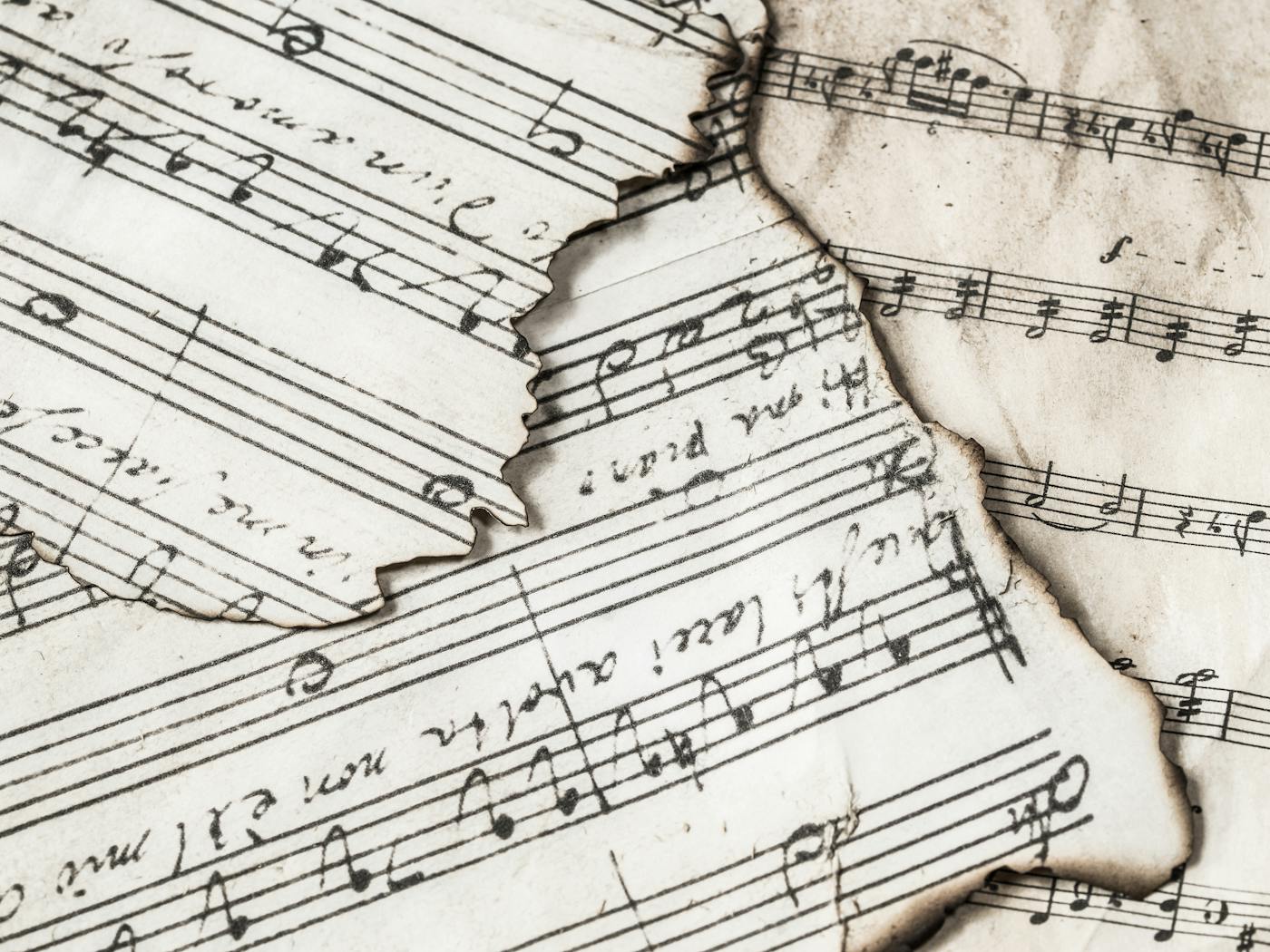
Inside the Becker collection, they found a manuscript that did not match anything already catalogued. Dark brown ink on medium-white handmade paper. Parts for violin 1, violin 2, and bass, each bound individually. No signature. No date. Just a name on the title page: “Wo[l]fgang Mozart.”
Ulrich Leisinger, head of research at the International Mozarteum Foundation and editor of the new Köchel edition, described what they were dealing with in a press statement. “Until now the young Mozart has been familiar to us chiefly as a composer of keyboard music and of arias and sinfonias, but we know from a list drawn up by Leopold Mozart that he wrote many other chamber works in his youth, all of them unfortunately lost.” Leopold’s list had long told researchers that early chamber works existed. Now, for the first time, one had actually survived.
Why Researchers Believe Mozart Wrote It
Attribution in historical musicology is never simple. Researchers do not just find a name on a page and call it confirmed. They look at handwriting, style, historical records, and the internal logic of the music itself.
Several factors pointed toward Mozart. First, the name on the manuscript reads “Wo[l]fgang Mozart,” without his middle name. Mozart began adding “Amadeo,” later “Amadé,” to his name in 1769, when he first traveled to Italy with his father. A composition attributed to “Wolfgang Mozart” alone almost certainly predates that trip.
Second, the musical style matches what Mozart was writing between the ages of ten and thirteen. Leisinger confirmed to Deutsche Presse-Agentur that the young composer was producing nothing that sounded like this piece by the time he reached his late teens. Style is not guesswork. Style carries fingerprints.
Still, Leisinger was measured about the process. “Now we were lucky that my professional duties led me to Mozart,” he told MDR. “We simply have to be careful: there are many pieces that are attributed to Mozart. To then stand up and say: we are convinced that this is a piece by the young Mozart, it takes a lot of work.” That work paid off.
A Sister’s Hidden Gift
One of the most moving parts of this discovery is not the music itself. It is who may have saved it. Evidence points to Mozart’s older sister, Maria Anna Mozart, known as Nannerl. She and her brother were close, and she had been a gifted musician in her own right, performing alongside Wolfgang during their childhood tours of Europe. After Wolfgang left for Italy in 1769, the two grew apart by circumstance, not choice.
Researchers believe Nannerl was the original keeper of this manuscript, holding onto it for personal reasons, as a memory of her younger brother during a period in their lives that neither could get back.
Leisinger put it plainly. “It looks as if — thanks to a series of favorable circumstances — a complete string trio has survived in Leipzig. The source was evidently Mozart’s sister [Nannerl], and so it is tempting to think that she preserved the work as a memento of her brother. Perhaps he wrote the Trio specially for her and for her name day.”
Picture a teenage boy, already famous across Europe, sitting down to write a piece of music not for a king or a concert hall, but for his sister. And picture her keeping it, long after the world stopped looking.
What the Music Actually Is
Ganz kleine Nachtmusik is not a grand revelation. Researchers have been clear about that. Written for two violins and a bass, its seven miniature movements run about twelve minutes, and the piece reflects the musical sensibilities of a boy still learning his craft. But that is precisely what makes it worth hearing.
Great art does not always arrive fully formed. Mozart at thirteen was still building the musical vocabulary that would later produce Requiem in D Minor, Don Giovanni, and The Marriage of Figaro. Hearing Ganz kleine Nachtmusik is like finding an early sketch in a master painter’s notebook. Not the finished canvas, but the first honest gesture toward it.
Every note in this piece belongs to a moment before Mozart became Mozart. Before Italy. Before the operas. Before the legend swallowed the person.
From Archive to Stage
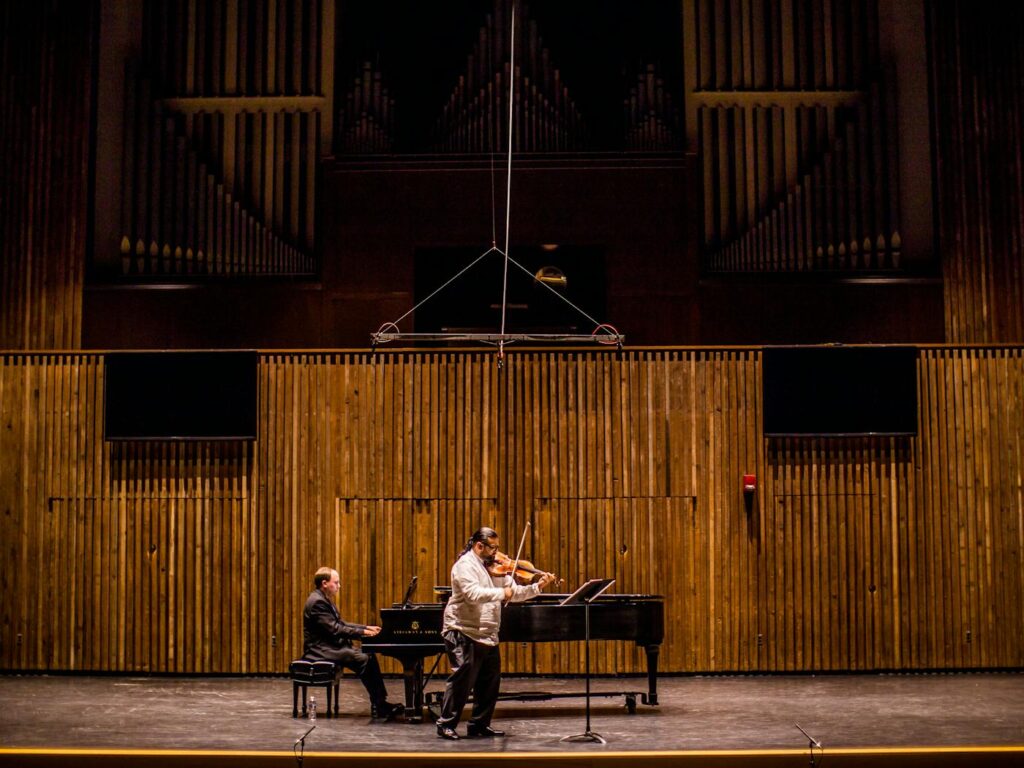
On September 19, 2024, the new Köchel catalogue launched in Salzburg. A string trio played the rediscovered work for attendees as the catalogue was presented to the public. Centuries of silence ended in a room full of people who had spent their careers studying the man who wrote it.
Two days later, on September 21, the piece received its German premiere at the Leipzig Opera. Students from the Johann Sebastian Bach music school, Vincent Geer on violin, David Geer on violin, and Elisabeth Zimmermann on cello, performed it live. When the concert ended, three musicians took the piece outside, where crowds who had not made it inside were still waiting to hear it. They played it in the street.
What This Changes About Young Mozart

Before this discovery, researchers knew early Mozart primarily through his keyboard works, arias, and symphonies. His chamber music from that period was considered lost forever. Leopold’s list had existed as a kind of ghost document, proof of compositions that no one could hear.
Ganz kleine Nachtmusik changes that, even in a small way. It fills in one corner of a story that scholars have been piecing together for over two centuries. It adds depth to who Mozart was before the world decided what he should be.
It also raises a quiet but powerful question. If one piece survived inside a donated collection in Leipzig, what else might be out there? Inside other libraries, other archives, other boxes of handmade paper that nobody has opened in 170 years?
A Reminder That History Still Has Secrets
Music preservation is an act of love and stubbornness against time. Nannerl Mozart may have known that when she kept her brother’s composition, long after his death at age 35 in 1791. Carl Ferdinand Becker may have known it when he donated his life’s collection to Leipzig. And the researchers who sat down to catalogue old manuscripts in 2024 certainly knew it, even if they did not expect to find what they found.
You can listen to the premiere recording of Ganz kleine Nachtmusik right now. Seven movements. Twelve minutes. Composed by a teenager who had no idea he would become one of the most studied figures in human history. Go ahead. Press play. Let the silence end.