

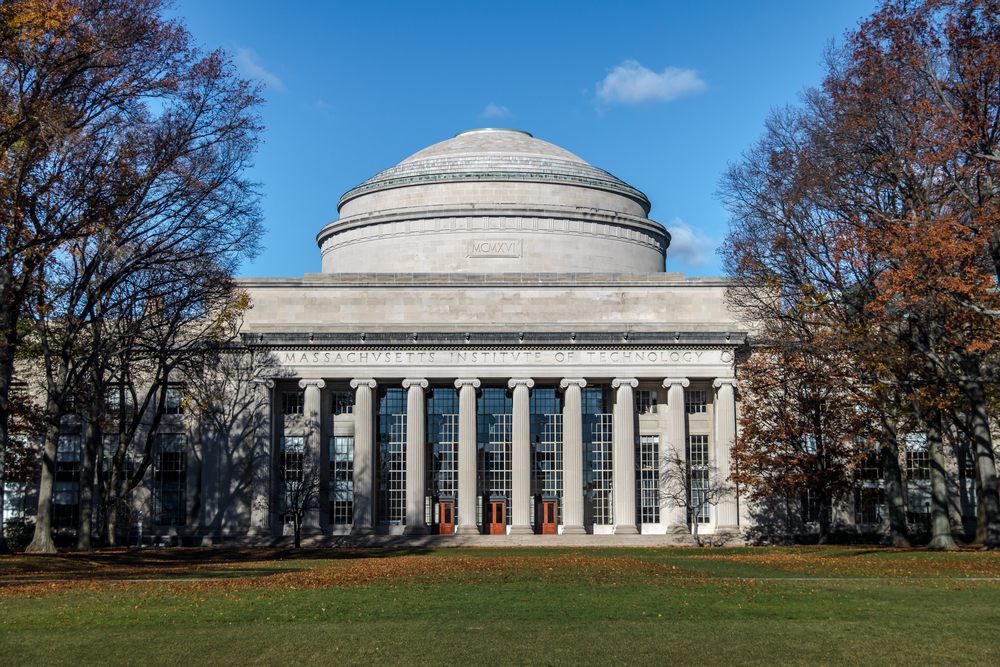
MIT Opened Its Classroom to the World. Half a Billion People Walked In
Some decisions reshape industries. Others quietly reshape lives. Twenty-five years ago, one of the world’s most respected universities made a choice that seemed almost radical at the time. Rather than treating its course materials as something exclusive, reserved only for enrolled students who could afford tuition and gain admission, the Massachusetts Institute of Technology chose to place nearly its entire curriculum online for anyone to access free of charge. What began as an experiment in openness has since become one of the largest educational gifts ever offered to the public, reaching hundreds of millions of learners across continents, cultures, and generations.
The story arrives at a moment when conversations about education often revolve around rising costs, student debt, and unequal access to opportunity. Against that backdrop, MIT’s decision feels remarkably simple. If knowledge has the power to improve lives, solve problems, and expand human potential, why should geography, income, or circumstance determine who gets access to it? That question has guided MIT OpenCourseWare for a quarter of a century, and the answer can now be measured not only in numbers but also in the countless personal journeys that began with a free lecture, a downloaded syllabus, or a late-night curiosity that led someone to learn something new.

A Bold Experiment That Changed Education
When MIT launched OpenCourseWare in 2001, the internet was still finding its place in everyday life. Online education had not yet become a global industry, and few institutions were eager to give away the intellectual resources that helped define their value. Yet MIT chose a different path. Instead of limiting access, the university opened its curriculum to the world and invited anyone interested in learning to step inside.
What started as a planned 10-year initiative evolved into something far larger. Over time, OpenCourseWare expanded into a vast educational library that now includes more than 2,500 courses covering subjects across undergraduate and graduate education. Visitors can explore lecture notes, assignments, exams, syllabi, and video lectures without paying fees or meeting admission requirements.
The scale of its impact has exceeded even the most optimistic expectations. More than 500 million people have used OpenCourseWare resources to develop skills, explore interests, and deepen their understanding of subjects ranging from engineering and mathematics to history and economics. Those learners represent nearly every age group, profession, and corner of the world.
Reflecting on that achievement, Dimitris Bertsimas, vice provost for open learning, said, “Twenty-five years ago, MIT made a bet on openness, generosity, and on the belief that knowledge is a public good. That bet has paid off 500 million times over.”

When Learning Becomes Available To Everyone
Education has often been shaped by barriers. Sometimes those barriers are financial. Sometimes they are geographic. In many cases, they are simply the result of circumstances beyond a person’s control. A brilliant student may never attend a world-class university, not because of a lack of ability, but because the opportunity never arrives.
OpenCourseWare challenged that reality by making learning available regardless of location or background. A student in a small town can access the same course materials as someone living near one of the world’s leading research institutions. A professional looking to change careers can study advanced concepts without returning to school full time.
The platform’s reach extends beyond traditional learners. Community college students, educators, military veterans, entrepreneurs, and lifelong learners have all found value in the resources. Some use the materials to strengthen existing skills. Others use them to explore entirely new fields of knowledge.
This widespread accessibility reflects a larger idea about education itself. Learning does not belong exclusively within classroom walls. Curiosity is not limited by age, profession, or nationality. When knowledge becomes available, people often find ways to use it that no institution could have predicted.

The Human Stories Behind The Numbers
Large numbers can be impressive, but they rarely capture the personal impact of a decision. Behind every statistic is a human story, and many of those stories reveal how access to knowledge can influence the direction of a life.
One of those stories belongs to high school senior Hinata Yamahara. While exploring an interest in urban planning, he discovered OpenCourseWare and began using its resources to pursue subjects that were not easily available elsewhere. His curiosity eventually expanded into aviation studies and helped prepare him for an important milestone.
Speaking about his experience, Yamahara explained, “OpenCourseWare [reduces] the barrier to entry to more specialized topics.” He now credits an MIT workshop with helping him pass the Federal Aviation Administration’s Private Pilot Knowledge Test.
Another learner who shared her experience was Andrea Henshall, a veteran of the United States Air Force. Like countless others, she found in OpenCourseWare an opportunity to continue learning and advancing her goals beyond traditional educational pathways.
Stories like these illustrate something that is easy to overlook. Access to information can become access to possibility. A single course may spark a new passion, open a career path, or provide the confidence needed to pursue a long-held dream.

Openness Creates More Than Access
Providing free educational resources is significant on its own, but MIT’s approach extends beyond simple access. The materials are not only available to view. They can also be downloaded, adapted, modified, reused, and redistributed for educational and non-commercial purposes.
This distinction has allowed educators around the world to incorporate MIT’s learning materials into their own classrooms and communities. Instead of merely consuming knowledge, teachers can build upon it and adapt it to local needs.
Curt Newton, director of OpenCourseWare, described this philosophy clearly when he said, “Access is powerful and absolutely necessary. But openness goes further. It invites participation.”
That invitation has produced meaningful results. Victor Odumuyiwa, an associate professor in computer science at the University of Lagos, drew inspiration from OpenCourseWare when designing courses for his own students. Reflecting on the outcome, he said, “I applied the same approach back home and, sincerely, I’ve gotten a lot of positive feedback from people getting jobs in global companies after taking the course that I designed.”
The impact of open education often moves in ways that cannot be easily measured. Knowledge shared in one place may influence opportunities thousands of miles away. A lesson taught in one classroom may inspire innovation in another. The effects continue long after the original material is published.
A Movement That Reached Far Beyond MIT
The influence of OpenCourseWare extends well beyond the boundaries of a single university. What began as an ambitious experiment helped inspire a broader movement dedicated to open education and knowledge sharing.
Universities across the world began developing similar initiatives, recognizing that educational resources could reach far more people when they were made freely available online. Organizations committed to open learning grew alongside these efforts, creating international communities focused on expanding access to education.
MIT President Sally Kornbluth highlighted the broader significance of this movement when discussing the initiative’s influence on educational systems and development programs around the world. The idea of openness has become part of conversations about how societies can expand opportunity and strengthen learning for future generations.
Chris Bourg, director of libraries at MIT and founding director of the Center for Research on Equitable and Open Scholarship, believes this commitment reflects something fundamental about the institution itself. Speaking about MIT’s philosophy, she said, “It’s written into our values.”
The success of OpenCourseWare demonstrates that educational institutions can extend their impact far beyond enrolled students. By sharing knowledge openly, they become contributors to a global learning community that continues to grow with each passing year.
The Next Chapter Of Open Learning
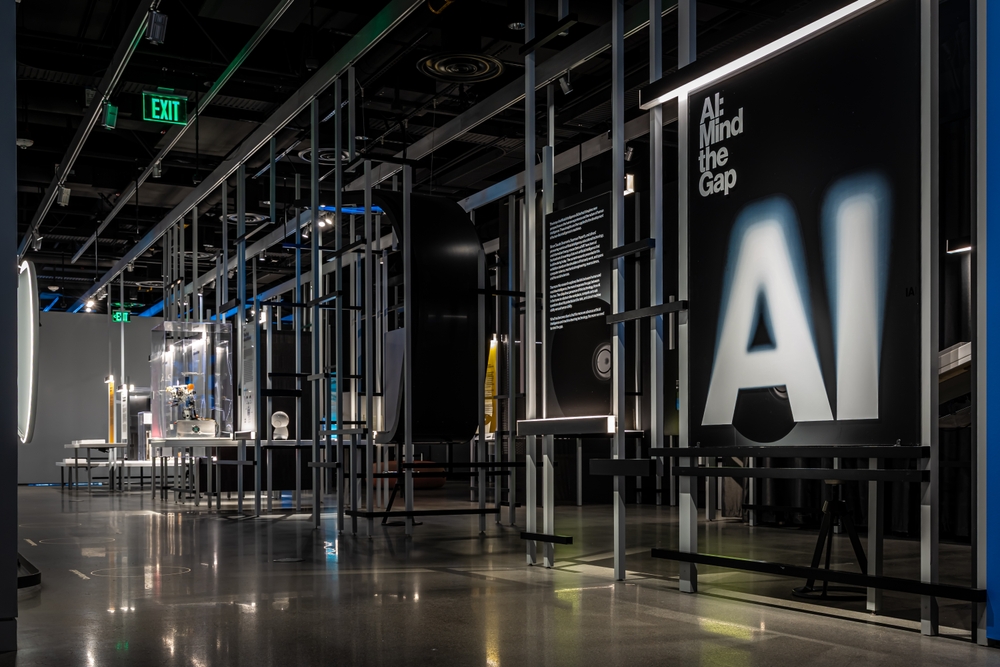
The world that inspired OpenCourseWare in 2001 is very different from the world of today. Advances in technology have transformed how people search for information, communicate with one another, and develop new skills. Artificial intelligence is now creating opportunities that seemed unimaginable when the initiative first began.
MIT is preparing for that future through MIT Learn, an AI-enabled hub designed to connect learners with educational opportunities across the institution. The platform includes tools such as AskTIM, an AI assistant that helps users discover relevant learning experiences and supports understanding through guided interactions.
These developments reflect an ongoing commitment to making education more accessible, flexible, and personalized. New self-paced learning opportunities are being developed to help learners tackle complex challenges, including artificial intelligence and climate-related issues.
Curt Newton believes another pivotal moment may be approaching. Looking ahead, he said, “Sometime in the next five years, I’m looking for a moment that rhymes with what happened in 2001.”
That vision is supported by an ambitious goal. MIT Open Learning hopes to reach one billion learners during the next decade, expanding the reach of educational opportunities on a scale few could have imagined when OpenCourseWare first launched.
The Quiet Power Of Shared Knowledge
Many institutions measure success through exclusivity. Prestige often grows from scarcity. Access is limited, opportunities are competitive, and entry is carefully controlled. MIT’s decision to open its curriculum followed a different philosophy, one rooted in the belief that knowledge becomes more valuable when it is shared.
For hundreds of millions of people, OpenCourseWare has provided far more than educational content. It has offered a chance to explore new interests, strengthen existing skills, and pursue ambitions that might otherwise have remained out of reach. Every downloaded lecture, every completed problem set, and every new discovery represents someone choosing to invest in their own growth.
As MIT looks toward reaching one billion learners, the lasting lesson of OpenCourseWare remains remarkably simple. When knowledge is treated as a public good, its influence extends far beyond any campus. The people who benefit from it carry that knowledge into their families, workplaces, communities, and futures, creating possibilities that continue to unfold long after the lesson ends.