

School Counselor Comforts Crying Student Adjusting To Life In The United States
A young girl sat inside a school counselor’s office trying to hold back tears while everything around her felt unfamiliar. She had recently moved to the United States from a Spanish-speaking country, did not understand English, and suddenly found herself surrounded by new faces, new expectations, and a school system she had never experienced before. The fear became too heavy to hide. Instead of forcing her into class or brushing past the moment, elementary school counselor Korynn Patterson sat beside her, wrapped her in a hug, and gave her the kind of comfort that many children remember for the rest of their lives.
The emotional interaction was later shared on TikTok, where millions of viewers connected with the quiet tenderness unfolding between the counselor, the crying student, and another child helping translate the conversation. Patterson wrote, “Our new student doesn’t speak any English and I paid my translator in fruit snacks.” The moment quickly spread across social media because it captured something people rarely see online anymore: patience, gentleness, and emotional understanding during a vulnerable moment in a child’s life. Many viewers said the interaction reminded them of their own experiences growing up in unfamiliar places, struggling through language barriers, or facing moments in school where a single kind adult made them feel less afraid. Instead of turning the child’s emotions into spectacle, the video focused entirely on helping her regain a sense of comfort and emotional stability. Patterson wrote, “Our new student doesn’t speak any English and I paid my translator in fruit snacks .” What followed was a deeply emotional exchange between adults and children trying to make fear feel smaller, one reassuring sentence at a time. The child cried while speaking about missing her mother, the student translator calmly repeated each sentence in Spanish, and Patterson stayed focused on helping the girl feel emotionally safe before anything else mattered.
A Child Entering A Completely Different World
Korynn Patterson, an elementary school counselor and social worker in Maryland, shared the now-viral video after a new student walked into her office feeling “sad” and “scared.” The child had recently arrived in the United States and could not communicate in English, which made the first days of school especially overwhelming. Another student sat nearby helping translate between Spanish and English while Patterson gently comforted the girl.
At one point in the video, Patterson hugged the student and asked the translator to tell her, “I know you must be very scared, but can you tell her you’re very brave? You’re a very brave girl.” The child explained through tears that she missed her mother and did not want to go to class. Patterson immediately reassured her, saying, “Tell her I am going to sit in class with you for a little bit, okay?”
The interaction continued with small acts of reassurance that made the moment feel even more personal. Patterson handed the girl a fidget toy to help with anxiety and continued speaking calmly while the translator relayed the message. The three of them also talked about Paw Patrol to lighten the mood, and Patterson promised they could spend time together during lunch and recess so the student would not feel alone during the day.
Why The Video Resonated So Deeply
The clip spread quickly online because many people recognized something familiar in the child’s fear. Starting over in a new country can feel emotionally disorienting even for adults, but for children the experience can feel especially frightening. Language barriers often create isolation long before friendships have a chance to form, and the pressure to adapt quickly can leave students feeling emotionally exhausted.
In text overlay included in the video, Patterson explained more about the student’s situation. “At her age, school was optional in her country,” she shared. “She is experiencing HUGE culture shock…I’m always happy to be a safe space for my students. Being that her whole world is changing, she needs to feel some sense of safety. I affirm them just as they affirm me.” Her words added another layer to the story because they revealed how much emotional adjustment the child was carrying before even stepping into a classroom.
Many viewers also connected with the simplicity of Patterson’s response. She did not rush the child, dismiss her fears, or pressure her to calm down immediately. Instead, she acknowledged the fear directly and stayed present with her through it while continuing to reassure her that she would not have to face the school day alone. That kind of emotional patience is often what children remember most during difficult transitions because it gives them permission to feel vulnerable without feeling embarrassed or rejected in the process.
The Student Translator Became Part Of The Story
One of the most touching parts of the interaction involved the young student helping translate the conversation. Sitting beside Patterson and the crying child, she calmly repeated each reassuring sentence while helping both sides understand one another. Patterson later joked that she “paid” her translator in fruit snacks, but viewers quickly focused on the kindness the student displayed throughout the exchange.
Children often absorb empathy from the adults around them, and the interaction showed how naturally compassion can spread inside supportive environments. The translator was not simply helping communicate words. She was helping another child feel emotionally safe in a moment where fear could have easily turned into complete isolation.
Patterson later shared follow-up videos showing the girls spending time together during lunch in her office. The emotional difference was immediately noticeable. The once-terrified student appeared more relaxed, smiling and chatting comfortably while the girls told Patterson they had become “best friends.” The update gave viewers a chance to see what emotional support can look like after the cameras stop recording.

Emotional Safety Matters More Than People Realize
The interaction also sparked wider conversations about the emotional realities many immigrant children face when entering unfamiliar school systems. Parents navigating relocation are often balancing financial stress, cultural adjustment, housing concerns, and language barriers all at once. Children absorb those emotions even when adults try to shield them from the pressure.
For many students, fear appears through crying, silence, withdrawal, or anxiety about being separated from family members. Without support, those emotions can shape how children view school, friendships, and even their sense of belonging in a new country. A single supportive adult can sometimes become the emotional anchor helping a child slowly rebuild confidence.
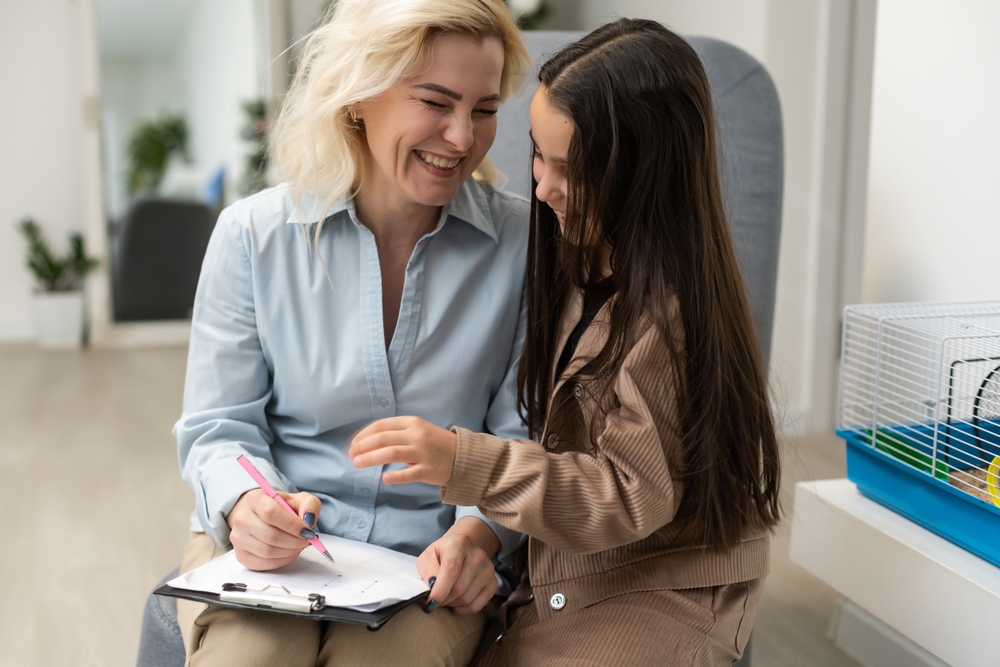
Patterson’s approach reflected several forms of emotional reassurance at the same time. She physically comforted the child through a hug, verbally reminded her that she was brave, offered practical support by sitting in class with her, and created future points of connection through lunch and recess. None of the gestures were complicated, but together they communicated one powerful message: you are not facing this alone.
Patterson Responded To The Viral Attention
After the video spread online, Patterson spoke about the overwhelming response she received from viewers around the world. In an interview with Upworthy, she said, “I am overwhelmed in the best way by all the love and the support that we have gotten from all of you! I am so grateful to be in position to touch so many lives of all ages, races, and walks of life.”
The support extended beyond emotional comments. Many viewers asked how they could help students like the young girl featured in the video, which eventually led Patterson to create an Amazon Wishlist filled with classroom and counseling resources for her students.
Patterson also continued updating viewers on the student’s adjustment to her new environment. She explained that the child had been moved down a grade level to help strengthen her English skills and ease the transition into school life in the United States. The student shared that she was working hard to learn English through her classes, while Patterson explained that she had also been learning Spanish through interactions with her students.

A Reminder Of What Children Need Most
The reason the story stayed with so many people had little to do with social media and everything to do with emotional memory. Most people can still remember moments from childhood when they felt frightened, embarrassed, or completely out of place. They also remember the rare adults who made those moments feel safer.
Inside a small school office in Maryland, a counselor chose compassion over urgency and patience over routine. A frightened child who entered the room crying eventually found herself laughing over lunch with a new friend. Sometimes the moments that shape people most are not loud or dramatic. They begin quietly, with someone willing to sit beside another human being and make them feel safe enough to breathe again.
Sources:
- Research finds social and emotional learning produces significant benefits for students. (2023, July 14). Yale School of Medicine. https://medicine.yale.edu/news-article/new-research-published-in-child-development-confirms-social-and-emotional-learning-significantly-improves-student-academic-performance-well-being-and-perceptions-of-school-safety
- Lester, L., & Cross, D. (2015). The Relationship Between School Climate and Mental and Emotional Wellbeing Over the Transition from Primary to Secondary School. Psychology of Well-Being Theory Research and Practice, 5(1), 9. https://doi.org/10.1186/s13612-015-0037-8
- How to support newcomer immigrant and refugee students in secondary School | IES. (n.d.). https://ies.ed.gov/learn/blog/how-support-newcomer-immigrant-and-refugee-students-secondary-school