


The Surprising Clue to How Well Your Brain Ages May Be Found in Your Legs
In 1999, 324 British women were asked to do something remarkably simple. Each woman sat at a specially designed machine at Nottingham University Medical School and pushed a pedal as hard as she could with one leg. The machine measured the force in watts, producing a number that seemed, at first, to have little connection to anything beyond physical strength. These women were twins, most of them in their fifties, and the test was only one part of a much larger collection of health and lifestyle measurements.
Then the researchers waited. Ten years later, the women returned and completed the same computerized tests designed to measure memory and processing speed. The researchers compared those results with the information collected a decade earlier. One relationship stood out: women who had produced greater leg power in 1999 tended to retain more of their cognitive ability over the following years. A difference of 40 watts in baseline leg power was associated with a cognitive aging difference equivalent to more than three years.
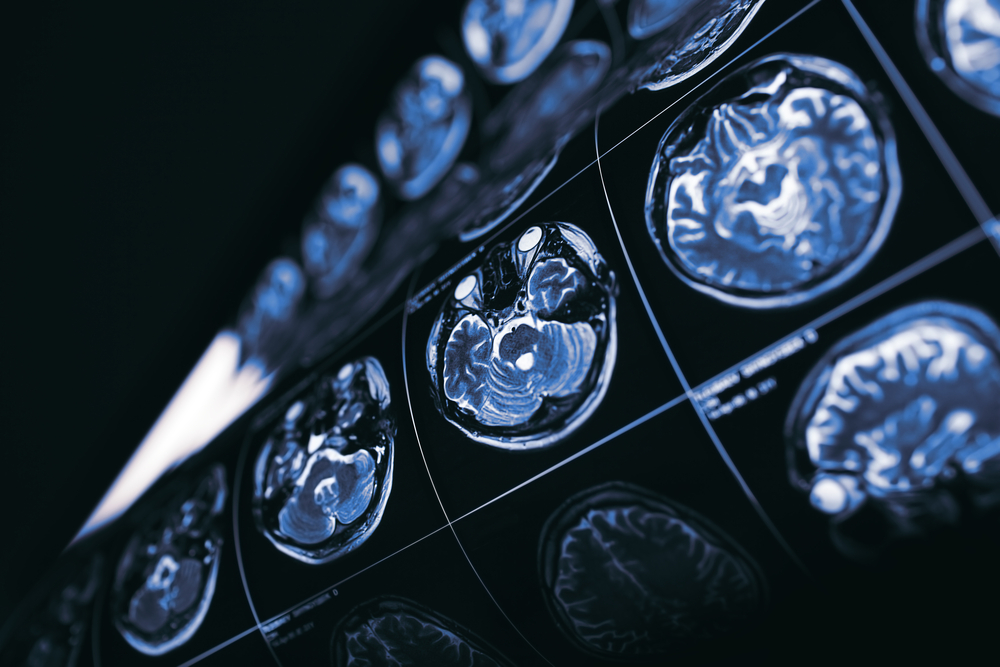
A Simple Pedal Test Produced A Remarkable Clue
The finding becomes more intriguing when the numbers are considered alongside the women’s brain scans. Twenty pairs eventually underwent brain imaging 12 years after the original strength assessment. Greater leg power at the beginning of the study was associated with greater total grey matter more than a decade later. The result suggested that the physical ability to generate force might somehow be connected with the way the brain changes with age.
Nine of those pairs were identical twins whose leg power differed at the beginning of the study. In those pairs, the weaker sister had ventricles that were 26% larger than those of her stronger sister. Ventricles are fluid-filled spaces inside the brain, and they tend to become larger as surrounding brain tissue decreases. The stronger sister’s brain had therefore retained a different structure years after the original test.
Claire Steves, the senior lecturer in twin research at King’s College London who led the study, described the comparison as compelling because the differences appeared between identical twins. Their shared genetics make the observation particularly interesting, although they do not eliminate every possible environmental or lifestyle difference. The study offers a clue about aging rather than a simple explanation for it.

The Strongest Signal Was Not Where Researchers Expected
The researchers had collected a surprisingly broad range of information from the women. Their measurements included diet, smoking, alcohol consumption, blood pressure, fasting glucose, blood lipids, body composition, heart disease, diabetes, lung function, childhood circumstances and birthweight. These are many of the familiar factors that researchers and doctors consider when studying long-term health.
Yet leg power showed the most consistent and largest association among the variables examined. That does not mean leg power caused healthier brain aging. It means the ability to generate force was closely associated with later cognitive and structural measures in this particular group, even after many other factors had been considered.
The identical-twin comparisons make the observation especially thought-provoking. Two people can share virtually all of their genetic material and much of their early environment, yet their bodies can still age differently. Something as ordinary as the strength and power of the legs may reflect part of that difference. The body leaves clues about aging that are sometimes easier to overlook than the numbers we normally associate with health.

Other Research Points Toward The Same Connection
The twin study is not the only research linking physical ability with cognitive aging. A 2021 meta-analysis combined 15 long-term studies involving 27,588 people and found that weaker hand grip was associated with roughly twice the risk of later cognitive decline and about a 50% higher risk of dementia. Those findings support a broader relationship between physical capability and brain health, although they do not prove that improving grip strength itself prevents cognitive decline.
More recent genetic research adds an important complication. A 2024 Mendelian randomisation study examined inherited genetic variants to investigate whether some of these relationships might be causal. It found that low grip strength was not causally associated with cognitive function, while low muscle mass and slower walking pace were. That distinction matters because an association between two things does not necessarily mean that changing one will directly change the other.
Taken together, the evidence leaves a fascinating but unfinished picture. Physical capability appears to travel alongside healthy cognitive aging in several large bodies of research, yet scientists are still working out exactly why. The connection may involve movement, muscle function, circulation, metabolism or biological signals released by active muscle. It may also reflect several processes happening together rather than one hidden switch.

Muscles May Be Talking To The Brain
One possible explanation begins with something that is easy to forget: muscle is more than tissue that helps the body move. Working muscles release signaling molecules known as myokines, which can travel through the bloodstream and influence other parts of the body. Some research suggests that several of these molecules may affect processes involved in brain health.
A 2024 review identified five myokines that have been studied for their potential effects on the brain: BDNF, irisin, cathepsin B, interleukin 6 and IGF-1. These substances have been linked in experimental research with processes such as neuronal growth and communication. That creates a plausible biological pathway through which physical activity could influence the brain.
There is an important limitation, though. Much of the evidence behind these mechanisms comes from animal research, particularly studies involving rodents. Researchers are still debating questions such as whether exercise consistently raises certain molecules in humans and whether those changes produce meaningful effects in the human brain. The biological explanation is promising as an area of investigation, but the strongest evidence in the original twin study remains the association between physical power and later brain health.
Twelve Weeks Of Training Offers A Different Piece Of Evidence
Long-term observational research can show patterns, but controlled trials are needed to test whether changing physical ability can change cognitive outcomes. A 2025 randomized trial involving 70 adults aged 60 to 85 examined what happened after 12 weeks of lower-limb resistance training. The participants included people considered to be at higher risk of mild cognitive impairment.

The training group showed about a 1% increase in cortical thickness and improved performance on a task involving response control. The researchers concluded that 12 weeks of training may improve cognitive performance and slow neuronal loss in parts of the hippocampal complex among older adults at high risk of mild cognitive impairment.
That result is encouraging, but it needs to be kept in proportion. A three-month trial involving 70 people cannot establish what will happen over decades, and it cannot explain the much longer relationship observed in the twin research. What it does offer is another piece of evidence suggesting that physical training and brain function may be connected in ways worth studying further.
What The Pedal Test Can And Cannot Tell Us
The original study has several limitations that make its findings more useful when viewed as a clue rather than a prediction tool. It involved women, and the participants were generally healthier and better educated than the wider population. Only 20 twin pairs underwent brain scanning, and the study was observational. Those details make it impossible to conclude that stronger legs directly caused slower brain aging.
There is also a particularly interesting detail hidden inside the results. In this group, simply having more leg muscle did not predict the same outcomes. Neither did grip strength when it was substituted into the researchers’ model. The factor that stood out was leg power, meaning the ability to generate force quickly and effectively when the body was asked to do so.
That distinction gives the finding a more human dimension. Aging is often discussed through things that feel distant or fixed, such as genes, birthweight or biological markers. Physical power is different. It can change through movement and training, which means it belongs to a category of health factors that people can potentially influence. The research does not promise that stronger legs will prevent cognitive decline. It does suggest that maintaining physical capability may deserve more attention as we think about growing older.
Aging May Be Written Across The Whole Body
The women in the original study were not trying to predict their cognitive future when they pushed that pedal in 1999. They were simply completing another measurement in a long research project. Yet that ordinary test eventually became a window into a much larger question: why do some people’s bodies and brains remain resilient as they age while others change more quickly?
There is no single answer in the evidence. Genetics matter, lifestyle matters, disease matters, and the interaction between all of them is complicated. Physical strength and movement appear to belong somewhere in that picture, even if researchers have not yet established precisely how much they contribute or which forms of exercise are most important.
Perhaps the most useful idea is also the simplest. The brain does not age in isolation from the body carrying it. A stronger step, a steadier walk, or the ability to rise from a chair with confidence may be ordinary physical abilities, but they can also reflect something much larger about how the body is holding up. Sometimes the clues to a healthy mind are found in places we never thought to look.
Sources:
- Cui, M., Zhang, S., Liu, Y., Gang, X., & Wang, G. (2021). Grip Strength and the Risk of Cognitive Decline and Dementia: A Systematic Review and Meta-Analysis of Longitudinal Cohort Studies. Frontiers in Aging Neuroscience, 13, 625551. https://doi.org/10.3389/fnagi.2021.625551
- Liu, H., Fan, Y., Liang, J., Hu, A., Chen, W., Wang, H., Fan, Y., Li, M., Duan, J., & Wang, Q. (2024). A causal relationship between sarcopenia and cognitive impairment: A Mendelian randomization study. PLoS ONE, 19(9), e0309124. https://doi.org/10.1371/journal.pone.0309124