


This Mom Replaced Screens With Silent Reading And Parents Want To Try It Too
In an age where most evenings are dominated by glowing screens, endless scrolling, background television noise, and rushed nighttime routines, one mother’s surprisingly simple family habit is resonating deeply with parents online. Business coach and mom Becca Pike recently opened up about a tradition her household has practiced every single night for the past decade: one full hour of silent reading before bed. What began as a small parenting decision eventually became a defining part of her family culture, helping create calmer evenings, stronger reading habits, and a much healthier relationship with rest and quiet time.
Pike explained that her home follows a strict lights out schedule at 8 p.m., but there is one important exception. Anyone who is reading gets to stay up until 9 p.m. The routine first started with her oldest child when he was just seven years old, and over time it naturally expanded to include all four of her children. Even before the younger kids were old enough to actually read words on a page, they still participated by sitting quietly with picture books. According to Pike, they would “just stare at the pictures,” allowing them to become part of the peaceful nighttime ritual long before they could fully understand the stories.

A Calm Ending To The Day Changed Everything
What makes the routine stand out is not just the reading itself, but the atmosphere it creates inside the home. Instead of chaotic evenings filled with stimulation, the family intentionally slows down together before bedtime. Pike explained that her children grew into calm book lovers who are comfortable sitting quietly and winding down naturally at night. The nightly habit replaced loud distractions and overstimulation with stillness, consistency, and comfort, which she believes had a major impact on their emotional well being and sleep quality over the years.

She described how many families unknowingly end their nights in stressful ways, often with the “TV blaring” or “running errands till passing out.” In contrast, her family chose a slower and quieter approach that encouraged everyone to mentally settle before bed. Pike even called the routine “one of the top nervous system regulators out there,” highlighting how powerful a predictable and peaceful nighttime environment can be for both children and adults. In a world where overstimulation has become the norm, an hour of silence and reading can feel almost radical.
The response from parents online was immediate and emotional because many people recognized what has been missing from modern family life. One parent commented, “Love this! Trying to cultivate better sleep habits…and this is perfect,” while another joked, “Ready to start this with my 5 month old lol.” The idea clearly struck a nerve with families searching for healthier ways to disconnect from screens and reconnect with calmer routines before bed.

Parents Shared Similar Bedtime Traditions
Many parents also revealed that they have developed their own screen free nighttime rituals at home and have seen similarly positive results. One person shared, “We do ‘quiet time’ for an hour before bed – rules are you can do reading, writing or drawing it’s so lovely to do these quiet activities together and a calm end to the day.” Others described how these small nightly habits transformed bedtime from something stressful into something comforting and grounding for the entire household.
Another parent wrote, “What a beautiful scene! We do something similar, and it’s a great transition to bedtime” while someone else added, “Love this – we have a no phones in the bedroom rule and you get an old school alarm clock.” These comments revealed a growing desire among parents to create stronger boundaries around screens and technology, especially during the final hours of the day when the brain and body need a chance to rest.
The beauty of Pike’s approach is that it does not require expensive tools, complicated schedules, or perfectly behaved children. The routine succeeds because it is simple, repeatable, and calming. It gives children structure while also allowing them a sense of independence and choice. Reading becomes something associated with comfort and privilege instead of homework or obligation, which naturally encourages kids to develop a stronger relationship with books over time.
Why Quiet Time Matters More Than Ever
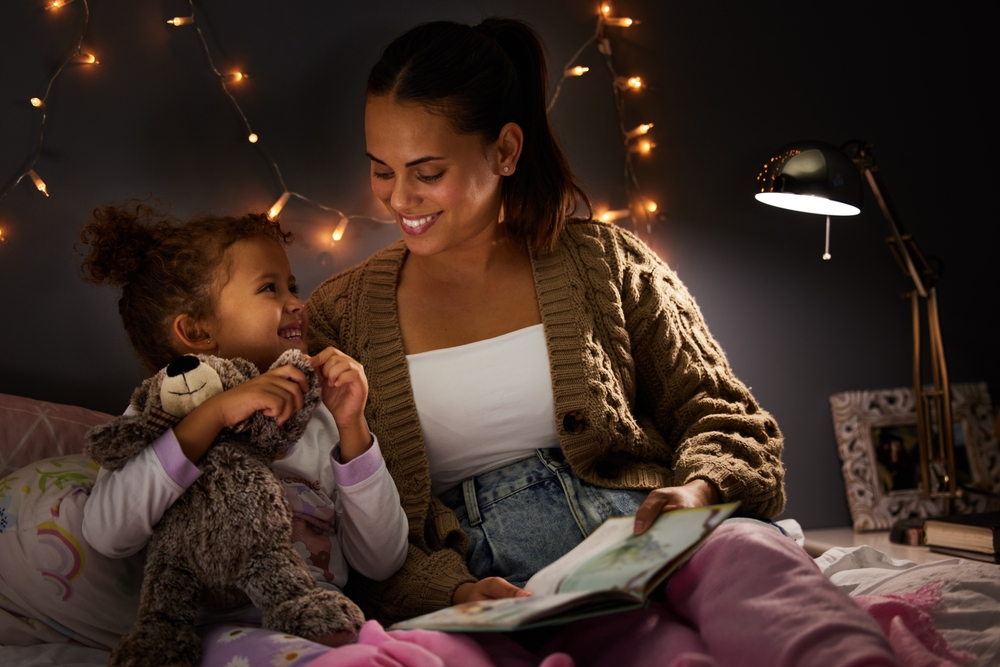
Child development experts have long emphasized the importance of boredom and quiet time for young minds. Unstructured moments help children strengthen creativity, problem solving skills, patience, and emotional resilience. However, modern lifestyles often leave little room for stillness. Between nonstop notifications, packed schedules, streaming platforms, and social media, both kids and adults are constantly absorbing stimulation from the moment they wake up until the moment they fall asleep.
That constant stimulation can make it difficult for the nervous system to properly relax. Pike’s reading tradition works because it intentionally carves out a peaceful transition between daytime activity and nighttime rest. Instead of abruptly shutting everything off at bedtime, the family gradually slows down together through a calming activity that lowers stress and encourages focus. Even children who are not actively reading learn how to sit quietly with themselves, something that has become increasingly rare today.
Another powerful aspect of the routine is that the parents participate too. Children are far more likely to adopt healthy habits when they see adults genuinely practicing them. Rather than telling kids to avoid screens while parents continue scrolling on phones nearby, Pike models the exact behavior she wants her children to embrace. That consistency creates trust and makes the habit feel natural instead of forced.

A Simple Ritual With Lasting Benefits
While silent reading may not work perfectly for every family, the larger message behind the tradition is incredibly valuable. Consistent and screen free nighttime habits can make a noticeable difference in sleep quality, emotional regulation, and family connection. Activities like gentle stretching, warm baths, soft music, journaling, drawing, or quiet conversation can all help create a calmer environment before bed as long as they are practiced consistently.
Still, reading offers something uniquely special because it works both as a personal escape and a shared family experience. Every family member gets to enter their own world while still spending meaningful quiet time together in the same space. Kids feel trusted because they are given autonomy over how they spend that extra hour, while parents maintain healthy boundaries around bedtime and rest.

At a time when modern life feels louder, faster, and more exhausting than ever, a simple hour of collective silence may be one of the healthiest gifts a family can give itself. Pike’s tradition reminds people that meaningful connection and emotional calm do not always come from doing more. Sometimes they come from intentionally doing less together.