


This One Simple Cartoon Swap Changed Her Child’s Behavior Overnight
There is something quietly unsettling about how quickly childhood has transformed in such a short span of time. Not long ago, kids would sit through slower-paced cartoons, wander outside to play, or spend hours building imaginary worlds with toys, but today, many are growing up in an environment filled with constant stimulation, where screens are always within reach and entertainment never really pauses. Bright colors flash rapidly, scenes change in seconds, and content is designed to keep children hooked for as long as possible. For many parents, this shift has sparked a deeper concern that goes beyond simple nostalgia, raising questions about how this fast-paced digital environment might be shaping their children’s behavior, emotions, and ability to focus.
That concern became very real for one mother who began noticing subtle but meaningful changes in her young child. Instead of dismissing those observations or turning to extreme measures like banning screens altogether, she made a small but intentional adjustment that would go on to resonate with millions of parents across the internet. By replacing modern cartoons with the slower, more gentle shows she grew up watching in the 1990s, she discovered two major changes that felt almost immediate, and for many families reading her story, surprisingly relatable.
The Growing Concern Around Screen-Heavy Childhoods
In today’s world, screens have become deeply embedded in everyday family life, and for many parents, they serve a practical purpose as much as an entertainment one. Whether it is during meal prep, long car rides, or moments when a parent simply needs a break, tablets and televisions often step in as helpful tools. This reality has led to the rise of what many now call the “iPad kid,” a term used to describe children who rely heavily on screens and often struggle with attention span, emotional regulation, or transitioning away from digital content once they are engaged.
What makes this concern more complicated is that it is not just about how long children are watching screens, but what they are actually watching during that time. Many modern children’s shows are intentionally designed to capture and hold attention through fast pacing, loud sound effects, and constant visual stimulation. While this may make them highly engaging, it can also overwhelm developing brains that are still learning how to process information and regulate emotions. Over time, this overstimulation can show up in ways that feel familiar to many parents, such as irritability when the screen is turned off, difficulty focusing on slower activities, or resistance when transitioning to something less stimulating.
At the same time, many parents are careful not to demonize screen time entirely, recognizing that it can be a useful and sometimes necessary part of daily life. As one mom honestly shared, “No one is a perfect parent, and my family has to use screens occasionally.” She went on to emphasize an important point that reflects the reality of modern parenting, saying, “So, I want parents to know that screentime isn’t bad in moderation!” This balanced perspective has become increasingly important as families try to navigate what feels like a constantly evolving digital landscape.
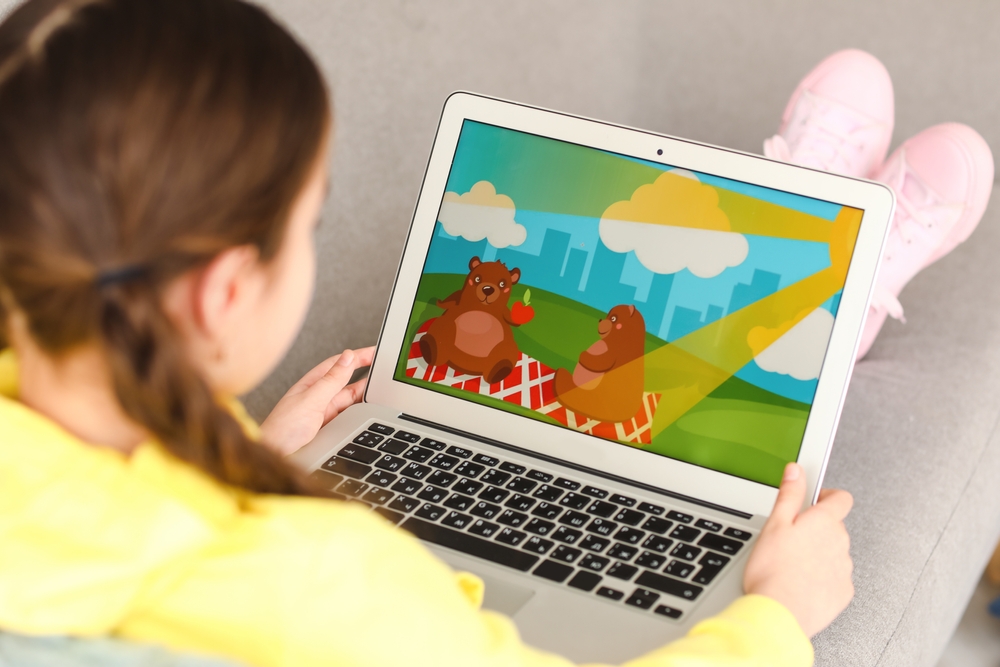
A Simple Experiment That Caught Everyone’s Attention
For Lauren Isler, a stay-at-home mom from Virginia, the decision to make a change did not come from a place of panic or strict ideology, but rather from careful observation of her child’s behavior over time. She began to notice that her 3-year-old was having a particularly hard time when it came to turning off the TV, and what should have been simple transitions between activities were becoming increasingly difficult. Bedtime, in particular, started to feel more like a struggle than a routine, which prompted her to look more closely at what might be contributing to the issue.
She explained her experience clearly, saying, “Before we switched to low-stimulation shows, he mostly had a hard time when the TV was turned off, which was making sleep more difficult.” Rather than removing screens altogether, which she knew might not be realistic for her family, she decided to experiment with something much simpler. She began introducing her children to older cartoons from her own childhood, shows that were slower, calmer, and more focused on storytelling than constant stimulation.
The transition was not instant or effortless, and like many parents might expect, her children initially resisted the change and asked for the shows they were used to watching. However, she approached it with creativity instead of force, explaining, “They kept asking for their usual shows [at first], but I tried to make it fun and tell them we were discovering shows that Mommy grew up with, and they liked the idea of that!” By turning it into a shared experience rather than a restriction, she made the transition feel exciting rather than limiting.
The First Big Change: A Healthier Relationship With Screens
One of the most immediate and noticeable changes came in how her children reacted when screen time came to an end, which had previously been one of the most challenging parts of their daily routine. Before making the switch, turning off the TV often led to frustration, resistance, and emotional pushback, creating tension that carried into the next activity. It was not just about watching a show, but about how difficult it felt for her child to disengage from it once it ended.
After introducing older, lower-stimulation cartoons, that reaction began to shift in a way that felt both subtle and significant. She described the difference by saying that her child would watch but “He didn’t fight me or get upset, he just went back to playing!” This change highlighted an important distinction between being entertained and being overstimulated. Instead of feeling pulled into the screen in a way that made it hard to step away, her child was able to enjoy the content and then naturally move on to something else without distress.
As time went on, she noticed that screen time itself began to decrease without any strict rules or limitations being imposed. She explained, “Turning the TV off became easier, and sometimes, they would even walk away to play before the show was over.” This shift suggested that the content itself played a powerful role in shaping how children interact with screens, and that not all screen time affects them in the same way.

The Second Big Change: Better Sleep and Calmer Evenings
Sleep is one of the most common challenges parents face, especially during the early years when routines are still being established and children are learning how to wind down at the end of the day. For Lauren, bedtime had become increasingly difficult, and she suspected that the fast-paced, highly stimulating nature of modern cartoons might be contributing to her child feeling too energized to settle down properly.
After making the switch to older shows, the improvement in her child’s sleep was both noticeable and consistent, which reinforced her belief that the type of content children consume can have a direct impact on their ability to relax. She shared her experience by saying, “Sleep improved for my 3-year-old, transitions were easier, and screentime has gone way down.” These changes did not happen in isolation, but seemed to reflect a broader shift in her child’s overall mood and ability to regulate emotions throughout the day.
Experts often explain this kind of improvement through the concept of overstimulation, where constant visual and auditory input keeps the brain in an active state even after the screen is turned off. When children are exposed to slower-paced content, their brains are given more space to process what they are seeing, which can help them feel calmer and more prepared for rest. In this way, the change was not just about bedtime, but about creating a more balanced rhythm throughout the entire day.

Why Older Cartoons Feel So Different
For many parents, the idea that older cartoons feel calmer is not just a matter of nostalgia, but something that becomes obvious when comparing them side by side with modern programming. Shows from the 1990s often relied on slower storytelling, softer visuals, and more grounded themes, allowing children to engage with the content in a way that felt less overwhelming and more meaningful.
Lauren reflected on this difference by saying, “I feel like shows from the ’90s were so wholesome and lighthearted. They taught kids how to be good humans, which is my biggest goal as a parent.” This focus on emotional development and life lessons is something that many parents feel is less prominent in today’s fast-paced entertainment landscape, where the priority often seems to be capturing attention rather than nurturing growth.
She also shared what matters most to her as a parent, adding, “More than being smart or athletic, I want my kids to know they are loved, and I think ’90s shows help enforce that.” This perspective shifts the conversation away from entertainment alone and toward the deeper role media can play in shaping how children understand relationships, empathy, and their place in the world.

What Experts Want Parents to Remember
While stories like this can be encouraging, experts are careful to remind parents that there is no single solution that works for every family, and that children’s experiences with media are shaped by many different factors. Content is important, but so is context, including how often children are watching, whether parents are involved, and what other activities fill their day.
One expert explained this balance by saying, “Being mindful of the content our children are exposed to is most certainly important, but thinking we can completely control it may backfire.” This highlights the importance of staying engaged rather than trying to eliminate every potential influence, as children benefit from guidance and conversation more than strict control.
She also emphasized that the issue is not new, noting, “There is no doubt that too much screentime can affect children today as it always has.” What has changed is the accessibility and intensity of modern media, which makes it even more important for parents to be intentional about how screens fit into their children’s lives.

Practical Ways Parents Can Apply This Approach
For parents who feel inspired by this story, the good news is that the changes do not need to be dramatic or overwhelming in order to be effective. Lauren’s experience shows that even small adjustments, when applied consistently, can lead to meaningful improvements over time.
She shared a simple starting point by saying, “Replacing high-stimulation shows was a good first step for us!” This approach allows families to keep the convenience of screen time while reducing the intensity of what children are exposed to, making it easier to transition away from screens without conflict.
She also highlighted the importance of offering alternatives, explaining, “Another thing our family loves doing is that I always have an activity/toys waiting for my sons in the mornings.” By creating opportunities for play and exploration, parents can help children naturally shift their attention away from screens and toward more engaging, hands-on experiences.
The Bigger Takeaway: Small Changes Can Have Meaningful Impact
What makes this story resonate so strongly is not just the results, but how achievable the change feels for everyday families. In a world where parenting advice can sometimes feel overwhelming or unrealistic, this example stands out because it focuses on something simple, accessible, and adaptable to different lifestyles.
It also serves as a reminder that technology itself is not the problem, but how it is used and integrated into daily life. By being more intentional about content and creating space for slower, more meaningful experiences, parents may find that their children become calmer, more independent, and more connected to the world around them.
In the end, the lesson is not just about cartoons, but about balance, awareness, and the willingness to make small changes that support a child’s overall well-being. And sometimes, looking back at what once worked can offer surprisingly valuable insight into what still matters today.