

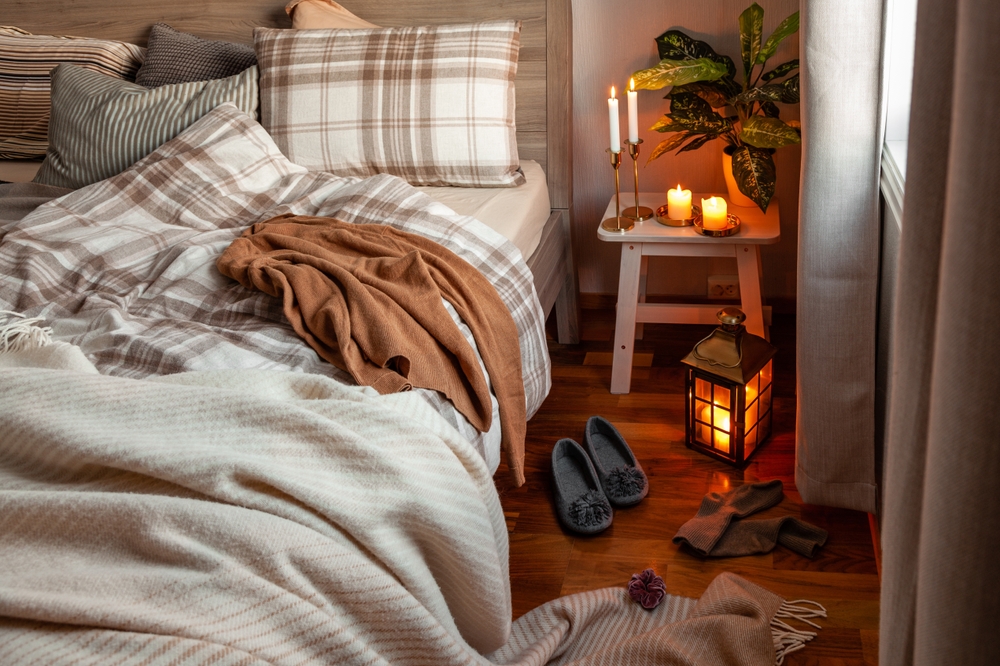
Why Your Messy Home Might Be Doing More Than You Realize
Think of the last time someone knocked on your door without warning. Maybe you were in the middle of cooking, with two pots going and a pile of last night’s dishes still waiting by the sink. Maybe your living room looked like a homework project had spread across every surface, and your dining table held everything that had found no other home that week. Maybe your first instinct was to block the doorway with your own body and apologize before the person even crossed the threshold.
Most of us know that feeling well. We move through our own homes with one eye always trained on what a visitor might see, measuring every unfolded stack of laundry and every stray coffee mug against some invisible standard of what a proper home is supposed to look like. We grow up watching aspirational content, scrolling past interiors that look built for photoshoots, and we carry a low hum of envy toward people who seem to exist inside that kind of order without effort.
But what if that standard has been misleading you? What if the mess you spend years apologizing for is doing something for the people who walk through your door, something no perfectly staged room ever could? Before we get to what that something is, it helps to look clearly at what a real home contains on any ordinary afternoon, and what that evidence says about the people living inside it.
A Longing Most Homeowners Know Too Well
For many people, a wish for an immaculate home runs deep and runs long. It starts early, perhaps with a neighbor’s living room that always seemed to belong in a catalogue, or with an older relative who kept every surface in a state of constant readiness. Social media has sharpened that old wish into something with real edges, feeding us rooms designed for eyes rather than for people, spaces so ordered they have erased any sign of actual living.
Some households do operate in near-constant order. A small number of people keep their spaces in a state that would pass a photoshoot at a moment’s notice, and there is nothing wrong with that way of living. Most of us, however, do not live there and never have. We live inside the gap between aspiration and reality, and we have spent years making peace with it, or at least trying to. Accepting the gap takes some effort. Seeing it clearly for what it is, something closer to honesty than failure, takes longer, and usually requires the kind of witness who steps through your front door before you have had time to tidy.
What A Real Living Room Actually Contains
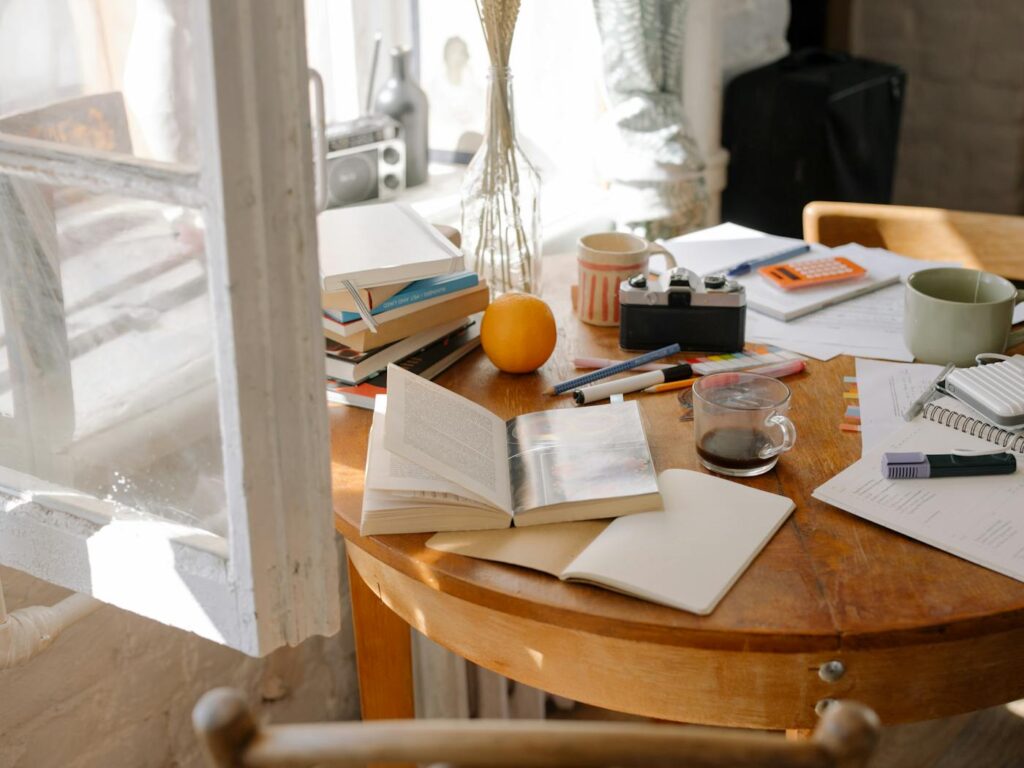
Walk into a real family home on a weekday afternoon and you will find evidence of people who are in the middle of their lives, not paused between them. Boxes saved for a child about to move out. A yoga mat waiting to be carried downstairs. A coffee table scattered with notebooks, reading glasses, and papers that have not yet made it to their proper place. A dining table doubling as a workspace for a home project still in progress. A sweatshirt on a chair because the afternoon warmed up faster than expected.
None of these things points to neglect. None of them speaks to carelessness. What they speak to is a household in motion, full of people building things, switching direction mid-afternoon, creating, resting, and occasionally losing track of where they last put something down. Dishes wait by the sink because the dishwasher cycle has not finished. Laundry sits in a basket because school pickup happened before folding did. A floor needs sweeping because children live there, and children move through the world dropping things as they go. A home like this is not a failure. It is a record of a full life, written across every room in real time.
Messy And Dirty Are Not The Same Thing
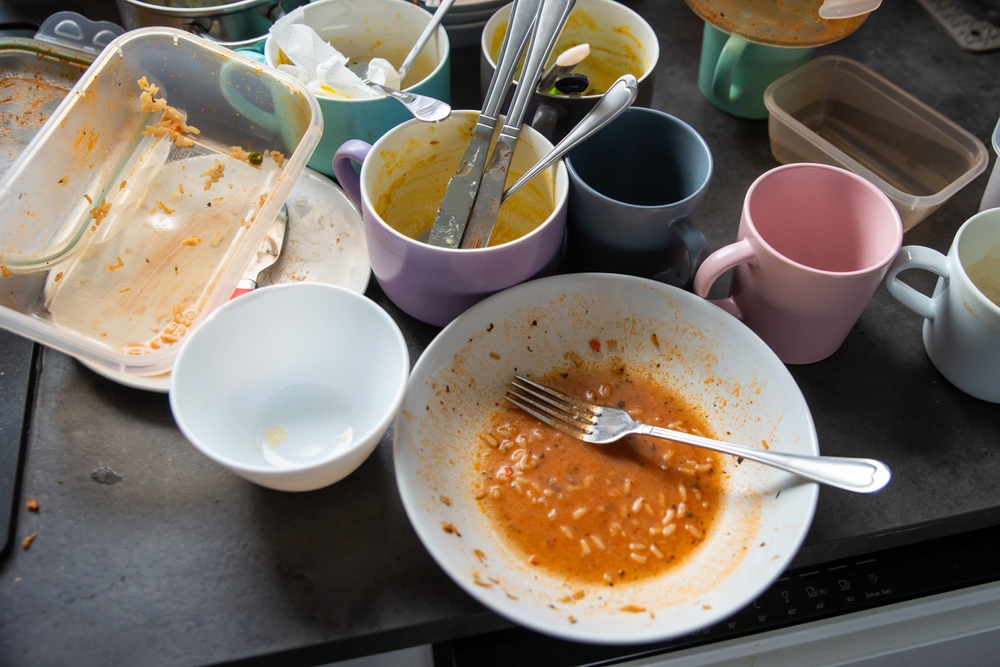
Before going further, one line deserves to be drawn with care. A lived-in home and an unclean home are two different things entirely. One holds the evidence of daily activity, the kind of mess that appears and disappears in natural cycles as life moves through a space. Clean surfaces return after dinner. Order reasserts itself before a planned gathering. Tidiness is possible; it just is not the permanent, default state.
Nobody is making a case for conditions that have grown past anyone’s control. We are talking about the ordinary state of a house where real people sleep, eat, work, laugh, argue, and rest. That kind of mess carries no shame. It only feels that way because years of curated content have trained us to compare our real homes to rooms built for cameras, rooms that no one ever truly lived inside. Letting go of that comparison is where something worth paying attention to begins, and most of us just need permission to make that shift.
What Guests Really Say When You Stop Apologizing

For years, the reflex before any visitor arrived stayed the same. An apology at the door, the automatic phrase “Excuse the mess” dropped like a first line of defense. Most guests waved it off. But something more telling happened with the ones who stepped inside, looked around, let their shoulders drop, and said something unexpected.
“I like it. It makes me feel at home.” Hear that from enough people standing in your living room, and it starts to shift something in how you read your own space. What had felt like a source of embarrassment, other people were reading as an invitation. A home that had never been staged was giving guests something a curated room could not. It was permitting them to relax, to stop performing, to exist inside a space that felt like their own life reflected at them.
Children, who have not yet learned to soften their observations, tend to say it with the most clarity. Kids visiting have described the home as feeling just like their own house on more occasions than anyone could count, and each time it arrived as the finest possible review a home could receive. Kids are truth-tellers, and what they were telling was that a real home feels like one.
Scruffy Hospitality And Why It Struck Such A Nerve

A few years ago, an article about “scruffy hospitality” spread across platforms and started showing up in dinner conversations and group chats. It caught on because it gave a name to something people already felt but had no clean phrase for. At its heart sat a simple idea, connection over perfection. Gathering around a dining table that still needs clearing before anyone can sit down. Opening your door to a drop-in guest without first launching into a panic clean. Treating the actual state of your home as an honest backdrop to real connection rather than a flaw to be managed before anyone arrives.
Scruffy hospitality does not ask visitors to pretend the mess away. It asks them to feel welcomed by it, to read the unwashed mugs and the half-finished project on the counter as proof that real life happens here, and that real life is always welcome.
Few ideas in home culture have landed harder or held up longer. When you stop treating your house as a presentation and start treating it as a place where real connection can happen, the quality of time people spend inside it changes in ways that no amount of tidying could ever produce.
What Curated Perfection Has Been Costing Us

Open any home account on any platform, and you will find rooms that appear to have been visited only by light. Cushions sit at precise angles. Counters hold one artful object placed with intention. Natural light falls across wooden surfaces in a way that looks less like a Tuesday afternoon and more like a deliberate setup.
Those rooms are not bad. But they carry a quiet pressure that moves far beyond any screen. When perfection becomes the expected standard, guests arrive braced for judgment, and hosts turn into anxious performers. A dinner invitation becomes a two-day cleaning event that ends in exhaustion rather than warmth. A spontaneous gathering never happens because the house is not ready enough, and somehow it never quite is.
Real warmth rarely lives inside a spotless room. Warmth lives in the evidence that people are actually using a space, eating and resting, and building and laughing inside it without pausing to arrange it for an audience. Guests pick up on that within minutes of walking through a door, even when they cannot put exact words to what they are noticing. But they feel it, and it stays with them long after the evening ends.
A Mess That Tells People They Belong
When you clear the dining table so friends can sit down for a meal, and everyone watches you move a pile of papers to the counter, and nobody blinks, something quiet passes between all of you. No one had to pretend. No one performed tidiness that they do not have. A real meal happened between real people inside a real home, and that is the only version of hospitality that builds anything lasting.
Planned events still deserve care and preparation. A home brought close to immaculate for a celebration is an act of real effort and affection. But the baseline, the ordinary weekday state of a house where life keeps moving without stopping to be arranged, does not need to be a source of shame or an automatic apology every time someone crosses the threshold.
On a good day, the finest thing a home can offer a guest is permission to stop thinking about their own. “I feel at home here.” That sentence, spoken in the middle of an imperfect living room surrounded by the actual evidence of real life, is the highest score a home can receive. If the mess is earning it, let it stay. Let the dishes wait. Let the sweatshirt keep its chair. Let people walk into the honest version of your life, and watch what happens once you stop apologizing for being real.