

Gen Xers Look Back on That Brief, Bizarre Moment in the ’90s When Swing Music Took Over
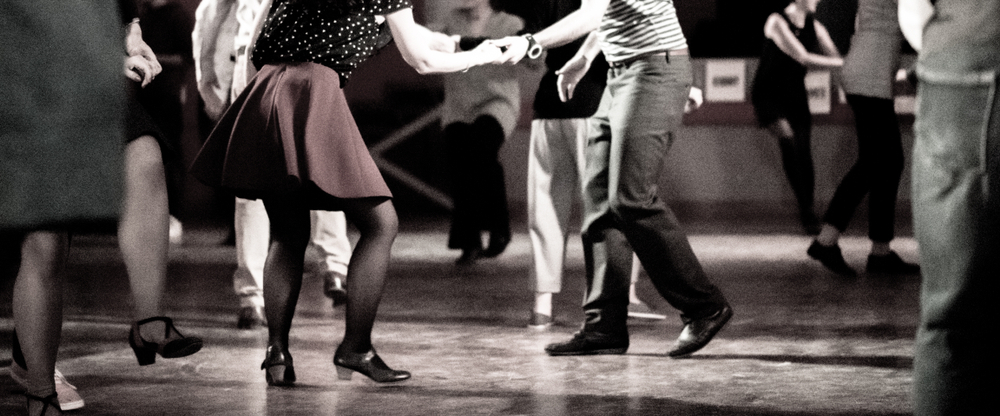
There was a strange and unforgettable stretch in the late 1990s when swing music came roaring back into American culture as if it had never left. For a brief window between roughly 1996 and 1998, big band horns blasted from alternative radio stations that had previously been dominated by grunge and post-punk sounds, twenty-somethings packed into dance studios to learn the Lindy Hop as if it were a newly discovered trend, and thrift stores were completely cleaned out of vintage suits, suspenders, and fedoras. What had once seemed like music reserved for black-and-white films, dusty vinyl collections, or stories from grandparents suddenly became the soundtrack to nights out in cities across America. It was not subtle, and it was not quiet. It was everywhere. And then, almost as quickly as it arrived, it faded back into the cultural background, leaving behind a generation that still remembers those brassy, high-energy nights with a mix of confusion and fondness.
Every Gen Xer seems to remember it vividly because it felt like it happened overnight. One minute swing was nonexistent in mainstream youth culture, rarely mentioned outside of niche circles or retro enthusiasts. The next, MTV was airing swing-inspired videos like “Hell” by Squirrel Nut Zippers, “Jump Jive and Wail” by Brian Setzer Orchestra, and “You and Me (and the Bottle Makes Three)” by Big Bad Voodoo Daddy on regular rotation, treating them as part of the alternative music ecosystem. Film editor Simone Smith even asked Gen X to explain what the hell was going on in the late ’90s that led to swing music making a huge comeback, capturing the bewilderment many people still feel when looking back at that era. The answers reveal that the revival was not random or ironic in the shallow sense. It was the product of underground scenes, well-timed Hollywood exposure, generational identity shifts, and a broader cultural hunger for something that felt joyful, stylish, and defiantly different from what had come before.
Can a Gen X please explain why y’all got really into swing music for like 2 years in the 90’s?
— Simone Smith, CCE (@simonesmithedit) November 13, 2021
The Underground Scene That Started It All
It is always difficult to pinpoint exactly how a cultural wave begins, especially when it later appears so sudden and widespread, but according to Kenneth Partridge from Billboard, the swing revival can be traced back to 1989 when Royal Crown Revue was formed by two members of the L.A. punk band Youth Brigade. That detail matters because it explains why swing’s comeback did not feel like a museum exhibit or a history lesson. It was filtered through a punk sensibility, carrying an edge that resonated with alternative audiences who were already primed to embrace subcultures. The band’s sharp 1940s suits, slicked-back hair, and tough-guy aesthetic created a visual identity that felt rebellious rather than nostalgic, and their sound delivered a danceable energy that contrasted sharply with the moody rock dominating the early part of the decade.
Royal Crown Revue built a loyal following through consistent live performances, including a Wednesday night residency at Los Angeles club The Derby, which became a gathering place for fans who were drawn to the blend of retro style and modern attitude. The atmosphere was not about parodying the past. It was about inhabiting it with confidence and intensity, transforming old-school swing rhythms into something that felt immediate and alive. Eventually, that residency was handed over to Big Bad Voodoo Daddy, another band that would play a crucial role in pushing the revival beyond the club scene and into broader awareness.
At this stage, swing was still niche and rooted in community. It existed in clubs, in dedicated dance circles, and among musicians who genuinely loved the genre’s musicianship and theatrical flair. But scenes rarely stay contained forever, especially when the broader culture begins to crave something different. By the mid-1990s, audiences were ready for a shift, even if they did not yet know what that shift would look like. Swing was waiting in the wings.
Once the Seattle grunge scene was over, we got into anything that wasn't "mainstream" for 15 minutes. Swing, sure. Celtic, give it a listen. Latin, por que no? Mambo, dig it. Scat, sure, why not. The late 90's were a directionless musical genre blender, and it was glorious
— Bill Cassidy (@offstageleft) November 14, 2021
The Movie Moment That Made Swing Cool Again
Many Gen Xers point to one defining cultural flashpoint that helped push swing into the mainstream: the 1996 film “Swingers.” The movie followed a group of friends navigating Los Angeles nightlife with a swagger that echoed the Rat Pack era, and its soundtrack blended classic artists like Dean Martin and Count Basie with contemporary swing revival bands such as Big Bad Voodoo Daddy. The film did not present swing as kitschy or outdated. Instead, it framed it as stylish, confident, and magnetic, showing characters who seemed effortlessly cool while dancing and socializing in dimly lit lounges.
The impact of “Swingers” was significant because it connected the music to identity. Viewers did not just hear swing. They saw how it could shape the way someone dressed, moved, and carried themselves. The film created a template for a certain kind of late 1990s urban cool that felt both nostalgic and modern at the same time. For many young adults, this was their first exposure to contemporary swing bands, and it reframed the genre as something they could claim as their own rather than something inherited from older generations.
Other films earlier in the decade also helped build that foundation. Some attribute swing’s rise in popularity to “A League of Their Own” from 1992, “Swing Kids” from 1993, and “The Mask” from 1994, all of which reintroduced big band sounds or 1940s-inspired aesthetics to younger audiences in different ways. By the time “Swingers” arrived, the cultural seeds had already been planted. The movie simply gave the movement a focal point and a sense of narrative that audiences could latch onto.
A Reaction to the End of Grunge
To truly understand why swing felt so refreshing in the mid to late 1990s, it helps to consider what it was reacting against. The early part of the decade had been dominated by grunge, a genre marked by introspection, angst, and a heavy emotional tone that resonated deeply with a generation navigating uncertainty and disillusionment. By 1996, however, that mood had begun to shift. The intensity that once felt raw and authentic started to feel exhausting to some listeners who were ready for something lighter and more kinetic.
We were basically a generation that was raised by wolves. So, when we hit young adulthood, we looked WAY past the Boomers for models of correct adult behavior: swing dancing, cocktails, more formal clothes, etc. All processed through a punk rock lens.
— DHacker615 🇺🇸 (@dhacker615) November 14, 2021
Swing offered a complete tonal contrast. It was upbeat, rhythmic, and unapologetically built for dancing. Instead of standing still with arms crossed at a concert, people were spinning partners across dance floors, learning intricate steps, and embracing physical movement as part of the musical experience. On a psychological level, the swing craze seemed to be a pivot from the dreariness of grunge rock that began to fade from the public consciousness by around 1996. The change in sound mirrored a change in emotional appetite.
There was also a broader cultural context shaping the moment. The late 1990s were marked by economic optimism in the United States, with many Americans experiencing a sense of stability and prosperity during the Clinton era. Some observers believe the upbeat, fun music was a response to the return to prosperity in that period, reflecting a desire to celebrate rather than brood. At the same time, rave culture was gaining popularity, also centered around dancing and high-energy communal experiences. Swing fit into that larger pattern of movement, rhythm, and collective release.
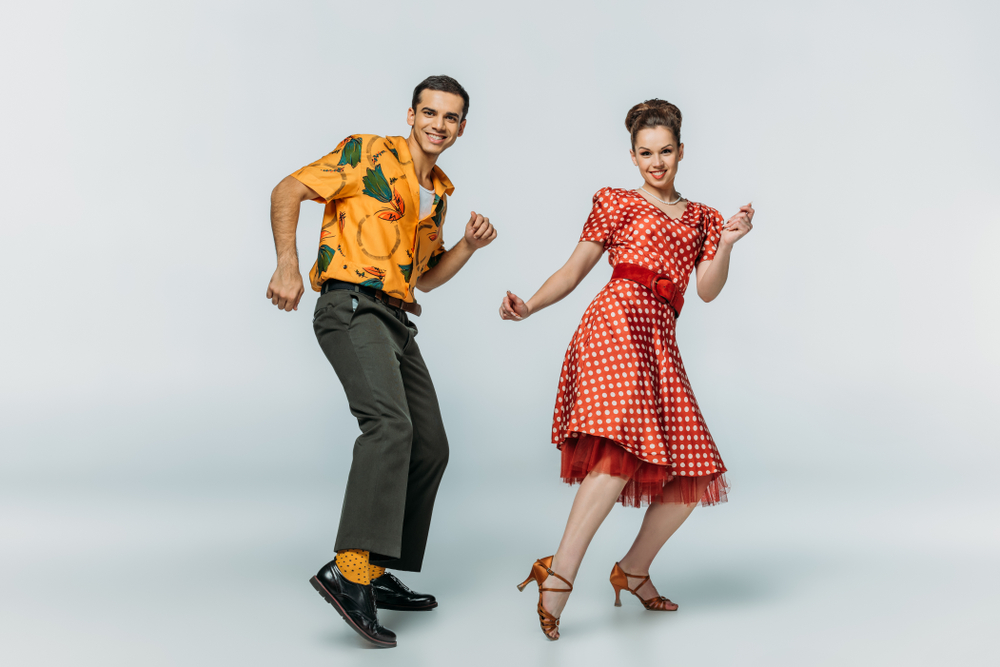
Image Credit: Shutterstock
Fashion, Identity, and Generational Rebellion
Music rarely exists in isolation. It brings fashion, attitude, and social rituals with it, and the swing revival was no exception. During those peak years, young people rushed to dance studios to learn the Lindy Hop, not just as a hobby but as a badge of participation in a cultural moment. They bought old school retro suits, suspenders, and fedoras, carefully assembling outfits that echoed the 1930s and 1940s while still feeling contemporary. Swing clubs started popping up all over the country, offering spaces where this aesthetic could be fully expressed without irony.
For many Gen Xers, the revival carried an undercurrent of pride and defiance. One commenter captured that sentiment bluntly by writing, “Because it’s 150% awesome and Gen Xers have better taste in music/ dance/ culture than any other generation and we dgaf what anybody thinks of us.” That statement reflects more than nostalgia. It highlights a generational confidence that embraced eclectic taste and resisted outside judgment.
Another explanation dug even deeper into generational dynamics: “Two more things: 1. The 90s had a broader affection for 40s/late 30s fashion, kind of like the 80s had for the 50s, and 2. The boomers would never shut up about how the 60s were the one true youth culture, which made it extra appealing to embrace their parents’ music over theirs.” In that sense, swing was not just about sound or style. It was a subtle rejection of inherited narratives about what youth culture was supposed to look like, choosing instead to reinterpret something even older.
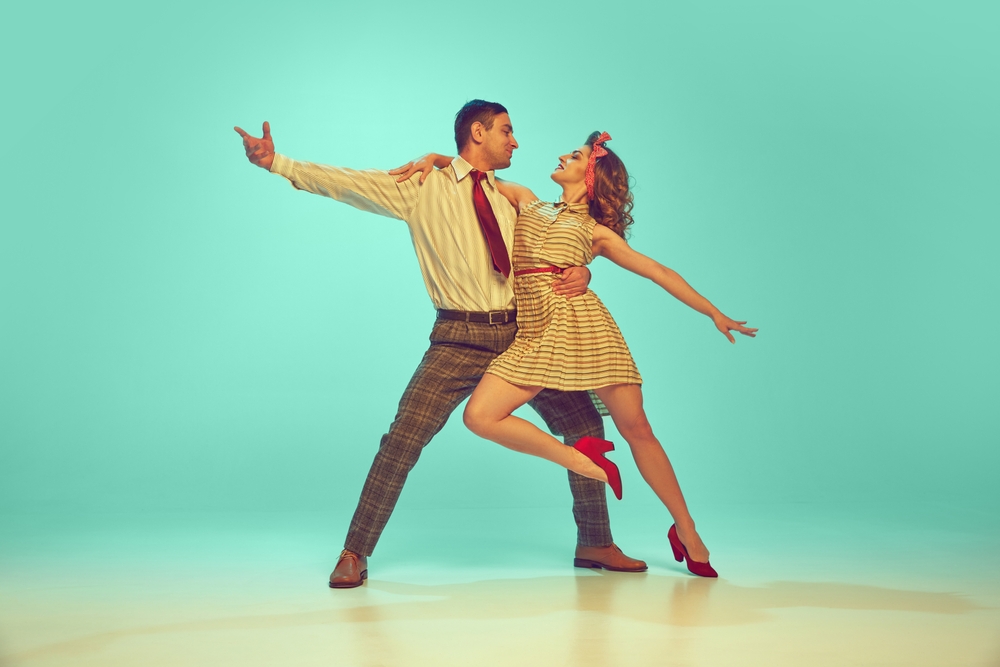
Image Credit: Shutterstock
When Commercials and MTV Took Over
As soon as MTV embraced the movement, it accelerated dramatically. Swing-inspired tracks entered heavy rotation, and what had once felt like an underground discovery became part of mainstream programming. The exposure brought new fans into the fold, expanding the scene far beyond its original club roots. Visibility created momentum, and for a brief period, it felt like swing had fully reentered the national conversation.
In 1998, The Gap propelled the trend even further with its “Khakis Swing” commercial, which featured attractive young dancers Lindy hopping to Louis Prima. The ad was polished, energetic, and widely broadcast, bringing swing imagery into living rooms across America. When a major clothing retailer builds an entire campaign around your dance style, it signals that the movement has reached a level of cultural saturation that few subgenres achieve.
However, mainstream embrace often changes the meaning of a trend. What once felt intimate and subcultural can begin to feel packaged and commercialized. Swing music? it could have been worse. But as brands and mass media leaned into the aesthetic, some of its original edge inevitably softened, setting the stage for the next cultural shift.
Image Credit: Shutterstock
The Other Strange Revival of the 1990s
If the swing comeback feels surprising in retrospect, it becomes even more intriguing when placed alongside another unlikely musical resurgence from the same decade. The 1990s also witnessed a brief but powerful fascination with Gregorian chant, a genre that predates modern pop music by centuries. It sounds improbable now, but at the time it was a genuine commercial phenomenon.
In 1994, the two disc album “Chant” by the Benedictine Monks of Santo Domingo de Silos sold over three million copies in the United States and reached number three on the Billboard pop charts. The recordings, made in a monastery, were minimalist and meditative, offering a stark contrast to the high-energy chaos of contemporary pop and rock. Yet they found a broad audience across different demographics.
Stressed professionals played the album during long commutes home from work, seeking calm after hectic days. Ravers used it to come down after nights filled with pounding beats and flashing lights. Meditation enthusiasts embraced its contemplative tone as a soundtrack for reflection. To put a button on it: if you love “all kinds” of music, the ’90s were for you, especially if you liked old school music. The ’90s were so obsessed with being old-school that people bumped 11th-century chant music.
Why It Disappeared So Quickly
Like many fast-moving cultural waves, the swing revival burned brightly and then receded just as quickly. By 1999, mainstream charts were dominated by teen pop stars, hip hop artists, and emerging nu metal bands, each bringing their own distinct aesthetics and fan bases. Youth culture shifted once again, and the vintage suits and big band horns no longer felt as novel as they had just a year or two earlier.
Overexposure likely played a significant role in the decline. Once commercials, malls, and national campaigns embraced swing imagery, the exclusivity that had made it feel exciting began to fade. Trends that rely heavily on visual style can also become dated quickly when fashion moves on, leaving behind only the most dedicated enthusiasts to carry the torch in smaller communities.
Still, for those who experienced it firsthand, the memory remains vivid and oddly cherished. For a brief period, dance floors were packed, brass sections were blaring, and a generation found joy in rediscovering music that predated even their parents. The swing revival may have been short-lived, but it stands as a reminder of how quickly culture can pivot and how eagerly people will reach into the past when it offers exactly the kind of energy the present seems to be missing.
Featured Image Credit: Shutterstock