

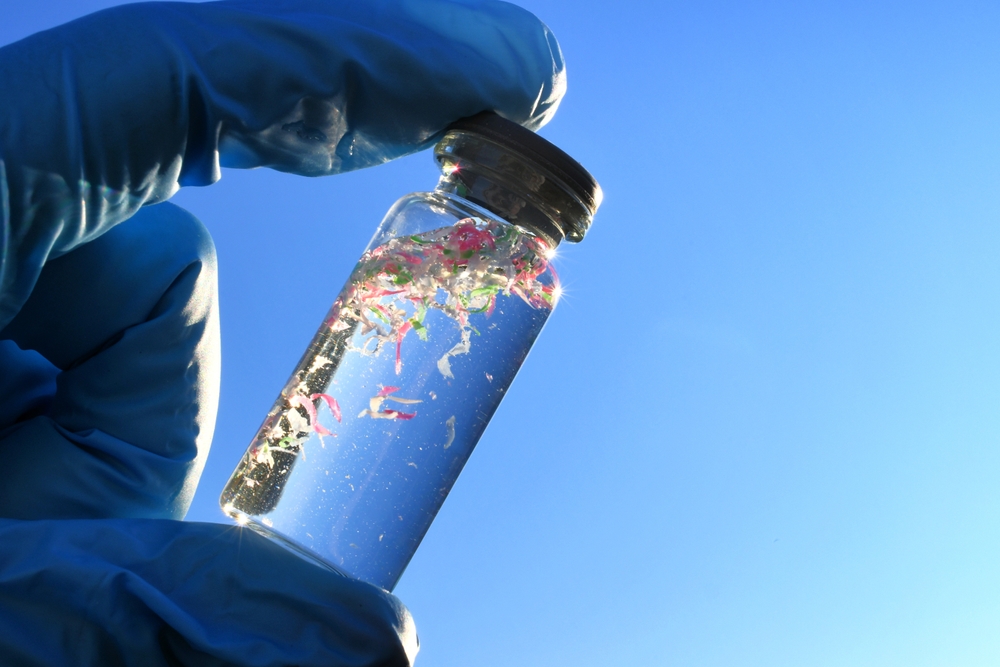
Microplastics Just Showed Up in Places It Has No Business Being
Somewhere beneath three quiet lakes in Latvia, scientists pulled up mud that hadn’t been touched in centuries. What they found inside it stopped them cold.
Before getting to what they discovered, it helps to understand what they were looking for, because the answer they got was nothing like the answer they expected. A team of European researchers set out to settle a scientific debate about how to mark the beginning of a new geological age. What they uncovered instead raised a question far more uncomfortable than the one they started with. How does plastic end up where plastic shouldn’t exist?
Scientists Were Trying to Answer a Different Question
Geologists have long used layers of ash, radioactive particles, and ice cores to date events in Earth’s history. Each layer tells a story. Each marker points to a moment in time. For years, researchers have proposed adding microplastics to that list of markers.
Here’s the logic. Mass plastic production began around 1950. Before that date, plastic barely existed as an industrial material. After that date, production exploded. If scientists could reliably find the first appearance of microplastics in a sediment layer, they could use it as a timestamp, a geological line separating what came before industrial humanity from what came after.
Geologists call that period after 1950 the Anthropocene, an unofficial but widely discussed term for the epoch when human activity began leaving permanent marks on the planet’s physical record. Pinning down exactly when it started matters to scientists in the same way a crime scene timestamp matters to investigators. Precision is everything.
A team of researchers decided to test whether microplastics could serve as that reliable timestamp. They chose three lakes in Latvia: Seksu, Pinku, and Usmas. All three had sediment beds that had already been dated with precision using independent methods, going back to the early 1700s. Controlled conditions, known timelines, layers of mud with ages attached. A clean experiment designed to confirm what everyone expected to find. What they found instead rewrote the question entirely.
Plastic in Layers From 1733
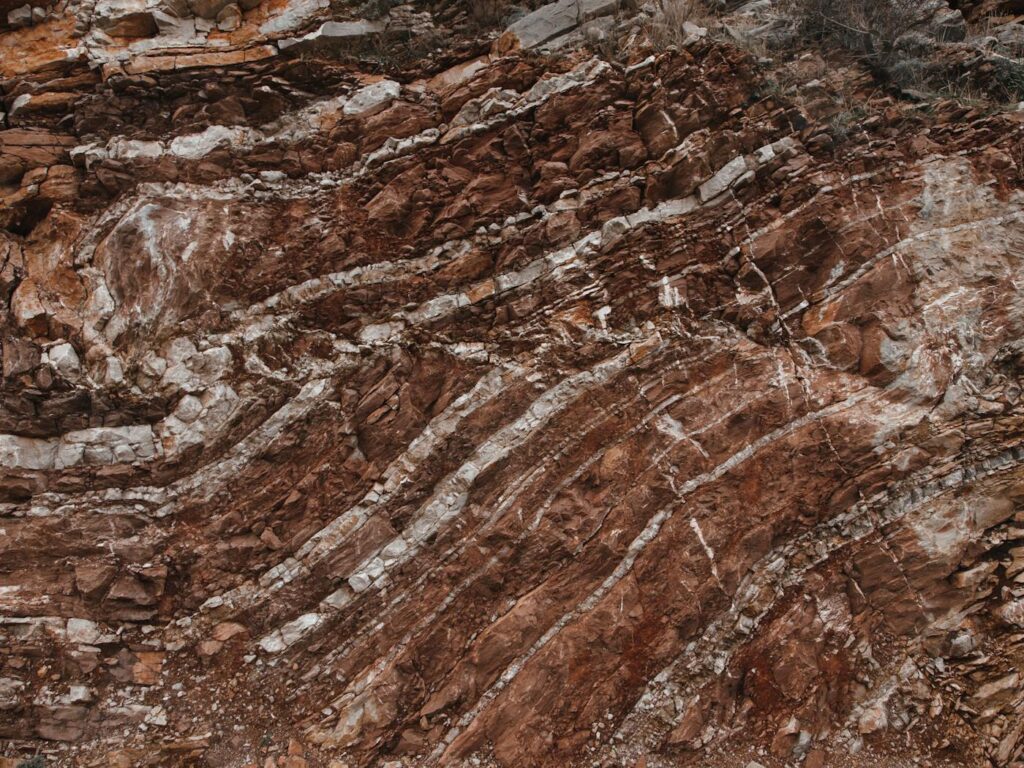
Microplastics turned up in every single sediment layer the researchers examined. Not just in the upper layers representing recent decades. Not clustered around 1950, where the theory predicted they should appear. Everywhere. Including layers dated to 1733, more than two centuries before the first plastic bag ever existed.
Fourteen different types of plastic polymer were identified across the three lakes, including polyamide, the material found in nylon, polyethylene found in packaging, polyurethane used in foams and fibers, and polyvinyl acetate found in adhesives. All of it was sitting in mud, laid down long before anyone had ever manufactured a synthetic polymer.
What made this finding harder to dismiss was the consistency across all three lakes. Lake Pinku sits in a protected nature park with restricted access and high water quality. Lake Usmas is a popular recreational destination. Lake Seksu is part of a city’s drinking water system, fenced off and protected from public access. Different environments, different distances from urban areas, different levels of human activity nearby. Same result everywhere.
“We conclude that interpretation of microplastics distribution in the studied sediment profiles is ambiguous and does not strictly indicate the beginning of the Anthropocene Epoch,” the researchers wrote. In plain terms, the timestamp doesn’t work. And the reason it doesn’t work reveals something about plastic that should alarm everyone who has been assuming it stays where it lands.
Plastic Moves. Nobody Fully Accounted for That.

Here is what the researchers pieced together after ruling out contamination, laboratory error, and equipment interference. Microplastics don’t settle permanently into a sediment layer and stay put. They migrate downward over time, working their way through mud and organic matter into geological layers formed long before the particles existed.
Smaller, more compact particles sink deeper. Elongated particles, like fibers, tend to stay closer to the surface. Rounder particles burrow further down through loose, porous sediment. Several mechanisms likely drive this movement. Pore water moving through soft lake beds can carry particles downward. Plastic particles can attach to iron-organic clusters that then sink through the sediment column. Gas formation in the lower layers of organic-rich mud can pull particles further down as those clusters break apart.
Lake Seksu, despite being fenced off and managed as part of a protected drinking water system, showed the highest microplastic concentrations of all three sites. Conservation status and physical barriers did nothing to stop the plastic from arriving. Proximity to the city of Riga mattered far more than any protection regulation. Wind, runoff, and water movement carried particles into the lake regardless of the fence.
“We suggest that these findings show a true natural phenomenon, unambiguous downward movement of microplastics in sediment profiles,” the researchers wrote.
What that means practically is significant. If plastic migrates downward through sediment over time, its presence in a deep layer tells you nothing reliable about when that layer was formed. Scientists had hoped for a sharp line in the geological record, a clear increase in plastic concentration right around 1950 that would act as a chemical clock. Instead, the particles drift, the boundaries blur, and the marker becomes unreadable.
Scientists had also been using pre-1950 sediment layers as clean control samples in microplastic research, a baseline assumed to be free of contamination. That assumption is now in serious doubt. What looked like a clean starting point may already contain plastic that migrated there from above.
The Numbers Behind Why This Matters

Step back from the lake sediment for a moment and look at the production figures that created this problem. Cumulative global plastic production reached 8,300 million metric tons by 2017. Since then, more than 360 million tons have been produced every single year. Of all the plastic ever made, researchers estimate that only about 9% has been recycled. Another 12% has been incinerated.
“It is estimated that only about 9 percent of all plastic ever produced is recycled and 12 percent is incinerated, leading to the conclusion that over 6,000 million metric tons of waste plastic has the potential to leak into the environment and become incorporated in natural cycles and food chains,” the researchers noted in their study.
Six thousand million metric tons. Most of it has nowhere to go except into soil, water, air, and eventually the sediment layers of lakes that scientists assumed were safely removed from the industrial world.
Microplastics have been confirmed in Arctic deep-sea sediments, in glaciers, in airborne samples collected from remote mountain locations, and in Antarctic snow that arrived there carried only by wind. Scientists have found them in human blood, breast milk, lung tissue, and organs. Even biodegradable plastics, materials specifically designed to break down and marketed on that basis, turned up in the Latvian sediment layers dated to the early 1800s. Long before those materials were manufactured. Which means they migrated there from layers above, down through the mud over time, into an era where they logically couldn’t belong. Protection status, geographic remoteness, and physical barriers have all proved insufficient. Plastic finds a way through.
What Gets Harder From Here

Researchers are careful to note that significant uncertainty remains about the exact mechanics of downward migration. Sediment density matters. Particle shape matters. The chemistry of the surrounding environment matters. Different lakes behave differently. Making generalizations across all sediment types requires more experimental work than currently exists.
But the directional conclusion is clear. Microplastics have already worked their way into geological layers that predate the industrial age. Cleaning up surface pollution is a challenge already beyond current infrastructure. Addressing contamination that has physically embedded itself into the sediment record of lakes, rivers, and ocean floors is a problem of a different order of magnitude entirely.
Novel approaches are being explored. Researchers have looked at biological filtration methods, plant-based interventions for polluted soil, and advanced water treatment technologies. Two teenagers in Texas recently built a pen-sized device that removes up to 94% of microplastics from water in a single pass using ultrasonic sound waves. Progress exists. Solutions are being developed. But the pace of those solutions and the pace of the contamination are not moving in the same direction at the same speed.
A Material That Rewrote the Physical Record of the Planet
Pull back from the science and sit with what this finding actually represents. Plastic was invented less than a century ago. Mass production of synthetic polymers began around 1950. Within decades of its creation, plastic had spread to every corner of the planet, including every corner that had no human presence. It reached the summit of Mount Everest. It reached the floor of the Mariana Trench. It reached Antarctic snow. It reached the inside of human organs. And now, it has reached sediment layers from 1733.
A material that didn’t exist when those layers formed has managed to work its way into them anyway, traveling backward through time in the geological record by migrating physically downward through centuries of accumulated mud. Researchers went looking for a reliable marker of when humans began permanently altering the planet. What they found instead is evidence that the alteration has already gone deeper and reached further back than any model had predicted.
Scientists will continue working to understand exactly how plastic moves through sediment and what can be done to slow or reverse its spread. Regulatory bodies will continue debating when the Anthropocene officially began and what markers should define it. Innovators will continue building devices and developing methods to filter plastic from water, soil, and air.
But in three quiet lakes in Latvia, in mud that hasn’t been touched in centuries, the answer to how far the plastic problem has already gone arrived without any drama. Fourteen types of polymer. Every layer. All the way back to 1733. Plastic doesn’t stay where it lands. It never did.
Source: Dimante-Deimantovica, I., Saarni, S., Barone, M., Buhhalko, N., Stivrins, N., Suhareva, N., Tylmann, W., Vianello, A., & Vollertsen, J. (2024). Downward migrating microplastics in lake sediments are a tricky indicator for the onset of the Anthropocene. Science Advances, 10(8), eadi8136. https://doi.org/10.1126/sciadv.adi8136