


Your Body Produces a Faint Glow That Vanishes When You Die & Scientists Just Captured It on Camera
What if your body has been producing light your entire life, and nobody told you? Not the warm glow of body heat, not a trick of the eye, but real, measurable, visible-spectrum light radiating from your cells at every waking and sleeping moment. Light that flickers at full strength while you are alive, and disappears entirely when you are not. Most people have never heard of this phenomenon. Most scientists, until recently, lacked the tools to study it effectively. A new study published in the Journal of Physical Chemistry Letters by researchers from the University of Calgary and Canada’s National Research Council has now changed that, and what they found raises questions about life, health, and the human body that science is only beginning to answer.
Light You Cannot See
Living things glow. Not in a way that your eyes could ever register without extraordinary help, and not in a way that has anything to do with halos, auras, or spiritual energy fields. Before you let your mind wander toward those associations, it is worth knowing that the researchers themselves were quick to draw a firm line. Dr. Daniel Oblak, a physicist at the University of Calgary and one of the lead authors of the study, made the distinction clear when speaking about the discovery. “I normally point out that UPE is a result of a biochemical process and in that sense is related to what happens in a glow-stick, which no one suspects of having an aura,” he said. What Oblak and his team found belongs entirely to biology and physics, not metaphysics, and that makes it no less extraordinary.
Ultraweak photon emission, or UPE as researchers refer to it, describes light produced spontaneously by living cells in the visible range of the electromagnetic spectrum, anywhere from 200 to 1,000 nanometers. Scientists have known for decades that cells appear to produce some form of faint emission, but detecting it across a whole living organism rather than isolated tissue samples presented a technical problem that most laboratories had no practical way to solve. Light at this intensity falls between one thousand and one million times below the threshold of human perception. Even in a completely dark room, with every curtain drawn and every light source removed, your eyes would receive nothing. What you would need instead are cameras engineered to detect single photons, built for purposes far removed from biology.
The Team That Decided to Look
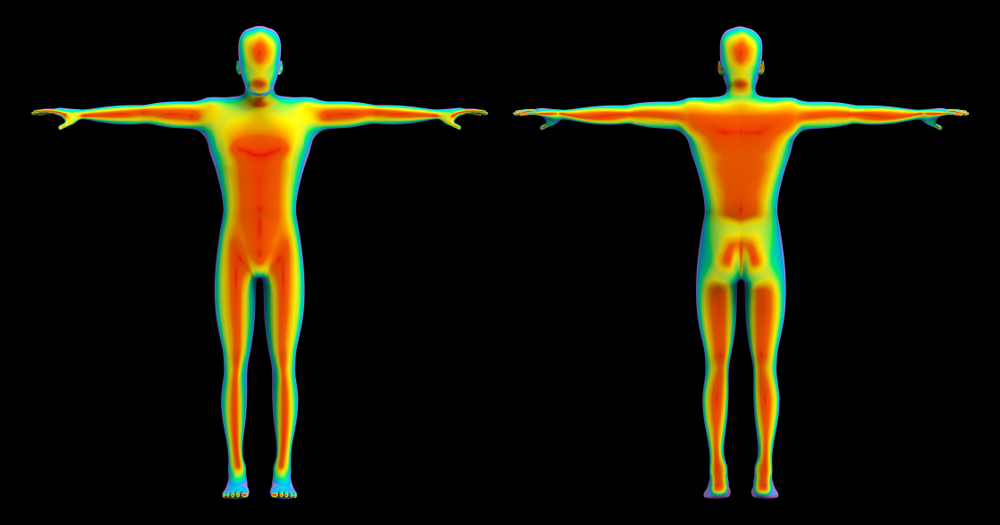
That is precisely where Dr. Oblak and Dr. Christoph Simon, a professor of physics and quantum biology enthusiast at the same university, found their opening. Oblak’s background is in quantum communication and light detection, where capturing individual photons is routine work. Simon brought his interest in quantum biology to the conversation, and together they recognized that the imaging tools available in their field could be turned toward a biological question that had never been properly answered at the whole-organism level. Their team collaborated with the Human Health Therapeutics Research Centre at Canada’s National Research Council to carry out the experiments, running a three-year project that gave them access to state-of-the-art imaging hardware and the scientific support to use it rigorously.
Mice in the Dark
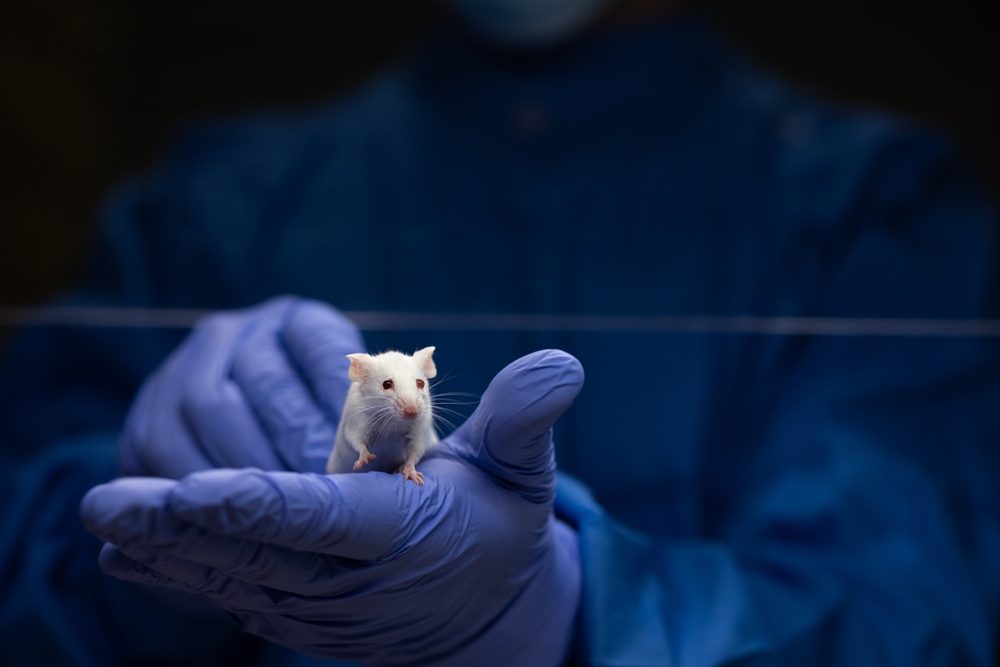
What they designed was deceptively simple. Four mice were brought into a completely darkened chamber and placed under specialist cameras built with electron-multiplying charge-coupled device and charge-coupled device sensors, both capable of detecting single visible-wavelength photons with quantum efficiencies above ninety percent. Each mouse was imaged for a full hour while alive. Then, after being euthanized, each animal was warmed back to its normal body temperature before imaging resumed for a second hour. Warming the bodies was deliberate and important; it removed heat as a potential variable and ensured that any difference in light emission came from biology, not temperature. When the team examined the results, the contrast between the two sets of images left little room for ambiguity. Living mice produced significantly more photons than their dead bodies. Across every animal, the glow dropped after death in a pattern that was consistent and measurable. Life was producing this light, and death was ending it.
What Actually Produces the Glow
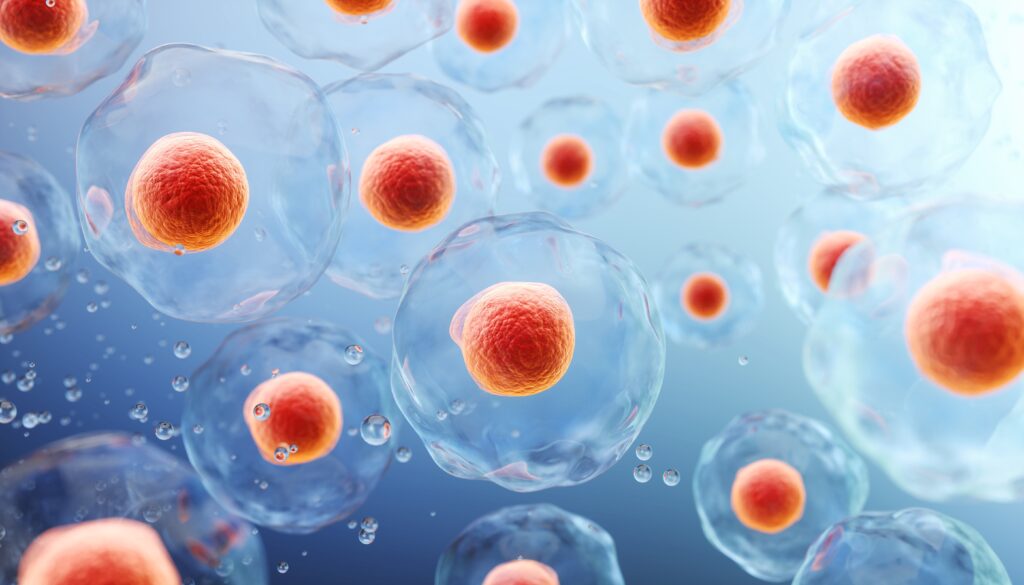
To understand why, you need to spend a moment with what happens inside a living cell during ordinary metabolism. Normal biological activity produces molecules called reactive oxygen species, which are chemically unstable and carry excess energy as a result of that instability. When these molecules encounter fats and proteins within the cell, they trigger a series of molecular interactions that cause electrons to move into excited states. As those electrons drop back down to their resting positions, they release their excess energy in the form of light. Each emission is tiny, measured in individual photons, but across billions of cells doing this simultaneously throughout the body, a faint and continuous glow becomes physically detectable. When an organism dies, metabolism stops. Reactive oxygen species are no longer produced in meaningful quantities. Without that fuel source, the light ends.
Stress Makes You Glow Brighter

What made the study more than an elegant confirmation of something scientists had suspected came from the second set of experiments, conducted not on mice but on leaves from two plant species, thale cress and the dwarf umbrella tree. Researchers stressed the leaves in different ways, scratching them physically and applying various chemical treatments to the injured areas. Among the chemicals tested, a local anesthetic called benzocaine produced the most intense emission of all. But the most telling finding came from the continuous imaging of injured versus uninjured tissue across sixteen hours. “Our results show that the injury parts in all leaves were significantly brighter than the uninjured parts of the leaves during all 16 hours of imaging,” the researchers reported. Damage, stress, and disruption were not suppressing the glow. They were amplifying it. When the body is under pressure, it appears to broadcast that fact in light.
Why This Matters for Medicine
That finding shifts the discovery from a biological curiosity into something with genuine medical weight. If the brightness of a living organism’s glow reflects the degree of oxidative stress happening inside its cells, then light becomes a form of biological communication that carries diagnostic information. Oxidative stress sits at the center of aging, disease, inflammation, and cellular breakdown. Many of the conditions medicine struggles hardest to catch early, organ deterioration, metabolic dysfunction, tissue damage in transplanted organs, show their earliest signs at exactly this cellular level, long before they produce visible symptoms or register on conventional scans. A non-invasive method of reading that stress, one that requires no injections, no dyes, no radioactive tracers, and no surgical access, would represent a meaningful shift in how medicine monitors the human body.
Dr. Oblak described the practical applications he sees ahead with some directness. Tracking the condition of a tissue for use in organ transplants, monitoring the stress levels of organisms in agricultural or environmental contexts, and creating a general diagnostic picture of cellular health through light alone all fall within what he considers plausible futures for this technology. Crops under drought stress, forests contending with disease, or individual organs being assessed before and after surgery could all potentially be monitored through their photon output rather than through intervention.
Questions That Still Hang in the Air
That said, the study sits at the beginning of a much longer scientific road, and Oblak and his colleagues have been open about the gaps that remain. Capturing and confirming the emission is one achievement. Fully understanding what drives it, what it might mean at a systems level, and whether it plays an active role in biology or simply represents a byproduct of metabolism is a different set of questions entirely. Oblak raised the possibility himself with candor that speaks well of where this research stands. “Perhaps UPE is not just a byproduct of metabolic processes, but also serves a purpose,” he said. Nobody knows yet. Scientists are not even certain whether this light plays any functional role in the living systems that produce it, or whether cells respond to each other’s photon emissions in ways that influence biological behavior.
Biophoton research has historically carried some baggage. For decades, the idea of light emanating from living organisms lived too close to spiritual and pseudoscientific claims about human energy fields, and that proximity made serious scientists reluctant to invest in it. What this study does is move the question into the territory of hard measurement and rigorous experimental design, using technology that comes from quantum physics rather than biology and applying it to a problem that biology had not been able to solve on its own. When the paper was published, more than two hundred news outlets covered it within weeks, a response that surprised even the researchers. Dr. Simon observed that the public reaction probably had something to do with the concept of auras, with the way a finding like this touches an older human intuition that living things carry a light that dead things do not. That intuition, it turns out, is not wrong. It is just that the reality is chemical and measurable rather than mystical.
Life is stranger than most people allow themselves to consider regularly. We carry on with our days unaware that our cells are constantly producing and releasing light, that our bodies are broadcasting information about their own condition in a frequency we cannot perceive, and that stressed and damaged tissue shouts louder in photons than healthy tissue at rest. Right now, while you read this, something is glowing in you. It dims a little with age, brightens under stress, fluctuates with the invisible rhythms of your health, and one day it will go out. Researchers are now working to understand what that light has been trying to say all along.
Reference: Salari, V., Seshan, V., Frankle, L., England, D., Simon, C., & Oblak, D. (2025). Imaging Ultraweak Photon Emission from Living and Dead Mice and from Plants under Stress. The Journal of Physical Chemistry Letters, 16(17), 4354–4362. https://doi.org/10.1021/acs.jpclett.4c03546