


A Nobel Prize Winner Thinks We Have the Universe All Wrong — Here’s Why
People assume the smartest scientists have the universe completely figured out. For years, the textbooks said space works a very specific way. But right now, astronomers are looking through their telescopes and realizing the math is totally broken. A Nobel Prize winner recently exposed a massive flaw in how reality is measured.
The cosmos simply refuses to play by the expected rules, acting in ways that make absolutely no sense to the experts. This cosmic crisis is forcing scientists to tear up the old blueprints and start over. And strangely enough, this massive mistake in the sky holds a powerful lesson about handling the unpredictable, messy moments in everyday life.
What if We Have the Entire Universe Wrong?
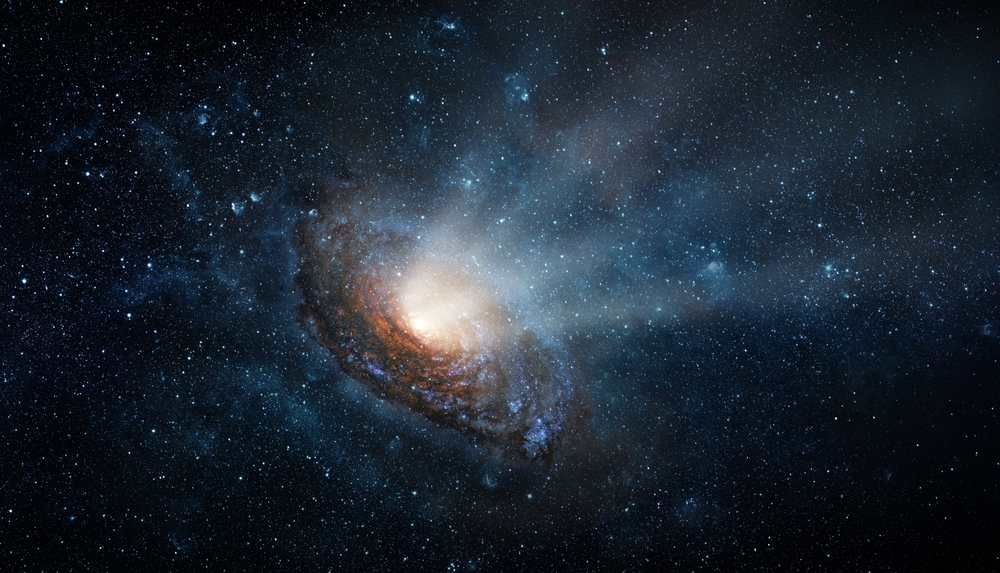
Look up at the night sky. Imagine holding a single grain of sand at arm’s length. That tiny speck blocks out tens of thousands of entire galaxies. Nobel Laureate Adam Riess explained this scale perfectly. He noted, “What you’re seeing are tens of thousands of galaxies, some of which are a trillion times fainter than anything you can see with your naked eye.”
The size alone is hard to process. But the real shock is not how big space is. The real shock is how it behaves.
Space is stretching. Everything is moving apart. Scientists have known this for decades. But right now, a massive problem is shaking the foundation of modern physics.
Think of the universe like a giant moving vehicle. To figure out how fast it is expanding, scientists check the speedometer. But here is the catch. When they look at the oldest light in the cosmos, the speedometer shows one specific speed. When they look at stars closer to Earth, the speedometer shows a completely different, much faster speed.
This mystery is called the Hubble Tension. It is not a typo. It is not a broken telescope. It means the math simply does not add up. Something unseen might be stepping on the gas pedal.
If both measurements are correct, a huge piece of the cosmic puzzle is missing. Science is staring into the dark, facing a deeply humbling truth. The textbooks might need a rewrite. Humanity might have the entire universe wrong.
Ruled by the Unseen
For a long time, scientists assumed the universe worked the exact same way. They believed the collective gravity from all the galaxies would eventually pull everything back together, or at least slow the cosmic expansion down.
But the cosmos had a different plan.
Instead of slowing down, the universe is speeding up. It is as if that baseball was thrown into the sky and suddenly strapped to a rocket. In the late 1990s, scientists studied distant, exploding stars called supernovae to measure cosmic distances. When the data came back, the results defied all expectations.
Nobel Laureate Adam Riess explained the shock of this breakthrough. He stated, “By comparing distant and nearby supernovae, it implied that the expansion was now accelerating and that 70% of the universe is in the form of dark energy that Einstein had hypothesized.”
This brings a profound realization. Everything visible to the human eye, every star, planet, and galaxy, makes up only a tiny fraction of reality. The vast majority of the cosmos is made of something entirely unseen. Scientists call it dark energy. It is an invisible, repulsive force pushing space apart.
A Missing Chapter in Time
To solve this cosmic crisis, researchers are proposing a radical new idea. They suggest looking back to the very beginning, shortly after the dawn of time itself. This new theory introduces a concept known as early dark energy.
Think of it like a hidden booster rocket. Imagine a spacecraft launching with a sudden, intense burst of speed early in its flight. After doing its job, that booster simply shuts off, detaches, and vanishes into the dark.
In this scenario, the infant universe experienced a brief, intense phase of rapid expansion long before stars or planets even existed. This early burst of energy drastically changed the size and cooling rate of the cosmos. Then, just as quickly as it arrived, it faded into the background, leaving almost no trace.
If this hidden chapter of cosmic history actually happened, it perfectly explains why the current math is broken. The universe simply grew much faster in its infancy than anyone realized.
Sometimes Being Stuck Is the First Step Forward

Right now, the greatest minds in astronomy are completely stuck. The pieces of the cosmic puzzle simply do not fit together. The rules of quantum physics clash with the rules of general relativity. The exact speed of the expanding universe remains a stubborn, unsolved mystery. But inside this scientific confusion lies a profound lesson about growth.
Being stuck is not the end of the road. It is the beginning of a breakthrough.
Nobel Laureate Adam Riess fully embraces this uncertainty. Speaking about the current state of cosmology, Riess observed, “We discovered a lot of things. We’re stuck on a few problems, but we have more data coming in, so I think it’s an exciting time to be studying this area.”
This mindset changes everything. The leading experts are not panicking because their old models are broken. Instead, they are building better tools. Right now, massive, advanced facilities like the Vera C. Rubin Observatory are being constructed to peer deeper into the night sky. If the old vision was blurry, the solution is not to surrender. The solution is to build a stronger lens.
This scientific reality mirrors the human experience perfectly. When life stops making sense, the immediate reaction is often frustration. People feel like absolute failures when their personal blueprints fall apart. But a broken blueprint just means a much larger reality is waiting to be understood.
Confusion is never a punishment. It is simply reality asking for deeper observation. When the old rules stop working, it just means an exciting new chapter is about to begin.
Keep Expanding

The universe is stretching into the unknown, and it refuses to follow a script. If the cosmos itself is allowed to break the rules and rewrite the science books, why do people demand such perfect predictability in their own lives? Expecting every single day to make perfect sense is an illusion, because not even the stars do that.
The biggest breakthroughs in space only happen when the old measurements completely fail. The exact same rule applies to human potential. When life does not go according to plan, do not try to force new situations into old boxes. Let go of the need to have every single step perfectly calculated. The unseen forces at work in your life are pushing you toward something much bigger than you can see right now.
Most of the cosmos is completely invisible, yet it is powerful enough to push entire galaxies apart. You possess that exact same kind of unseen power. Step into the confusion. Let uncertainty be the spark for your next major breakthrough. Stop fearing the dark, unknown spaces in life. That is exactly where the real growth happens. The universe is still growing, still surprising, and still accelerating. Now it is your turn. Keep expanding.