

The Universe May Already Know How to Make Life — We’re Just Catching Up
What if life didn’t begin on Earth?
Not in the way we’ve always imagined, not as a rare spark in a lonely corner of the universe, but as something… expected. Something written into the very chemistry of existence itself.
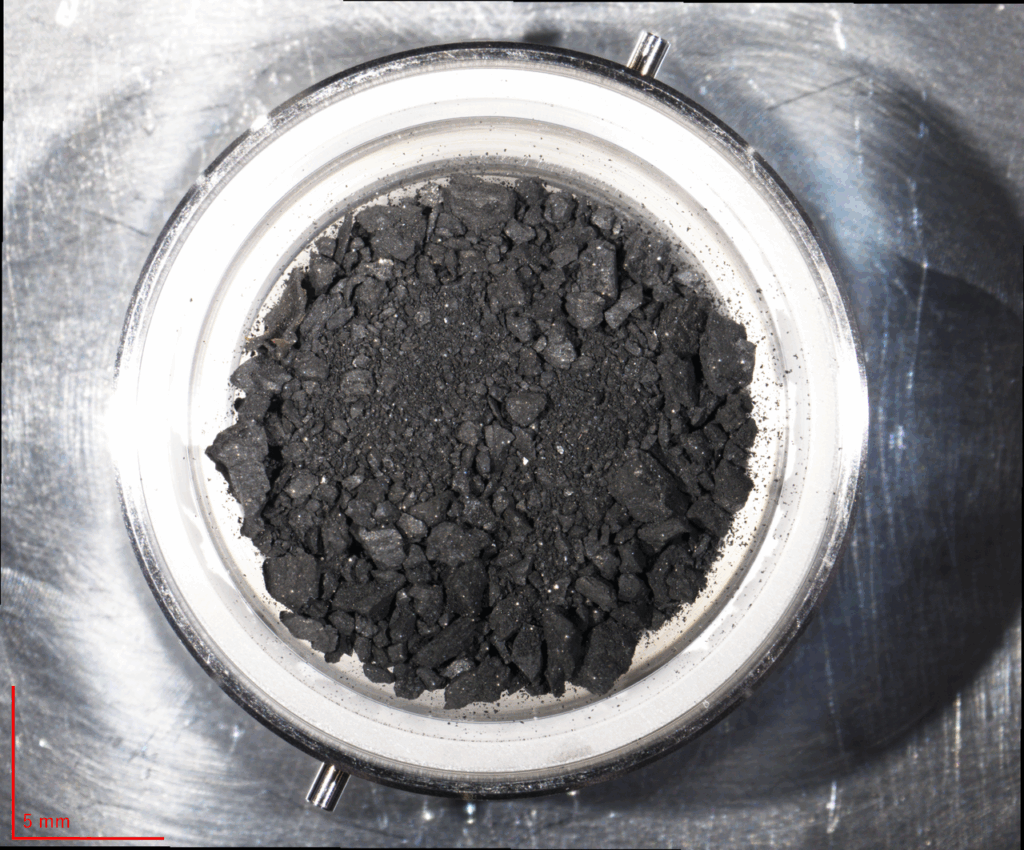
A recent discovery by Japanese scientists studying samples from asteroid Ryugu is quietly shaking that belief to its core. Inside just 5.4 grams of space rock, researchers found something extraordinary: all five nucleobases, the fundamental building blocks of DNA and RNA. Adenine, guanine, cytosine, thymine, and uracil. The full set. Balanced. Present.
Not fragments. Not partial traces. But the complete molecular alphabet of life. And if that doesn’t make you pause for a moment… maybe it should.
A Message Hidden in Stone
What makes this finding stand apart is not just the presence of organic molecules, but the way they were preserved and detected with precision under contamination controlled conditions. The Ryugu samples were collected by the Hayabusa2 mission and sealed in a way that protected them from Earth based interference, giving scientists rare confidence that what they were studying was truly extraterrestrial. Analytical techniques such as high performance liquid chromatography and mass spectrometry allowed researchers to identify these nucleobases at extremely low concentrations, reinforcing the reliability of the results rather than leaving them open to ambiguity. This level of methodological rigor is what elevates the discovery from intriguing to credible within the scientific community.

Equally important is the consistency observed in the molecular distribution. Instead of random traces, the nucleobases appeared in relative proportions that suggest stable chemical pathways rather than chaotic formation. This points toward sustained chemical processes occurring over extended periods within the asteroid’s parent body. Research into carbonaceous asteroids has long suggested that they can host complex organic chemistry, and studies such as this one build on earlier findings that meteorites like the Murchison meteorite also contained organic compounds, though not a complete set.
Taken together, these details shift the conversation from isolated discovery to reproducible science. It is no longer just about what was found, but how confidently it can be verified and how consistently it aligns with prior research. That is where the real weight of this moment lies, not in speculation, but in the quiet accumulation of evidence that continues to reshape how we understand the chemical potential of space.
The Ingredients of Life Are Not Rare
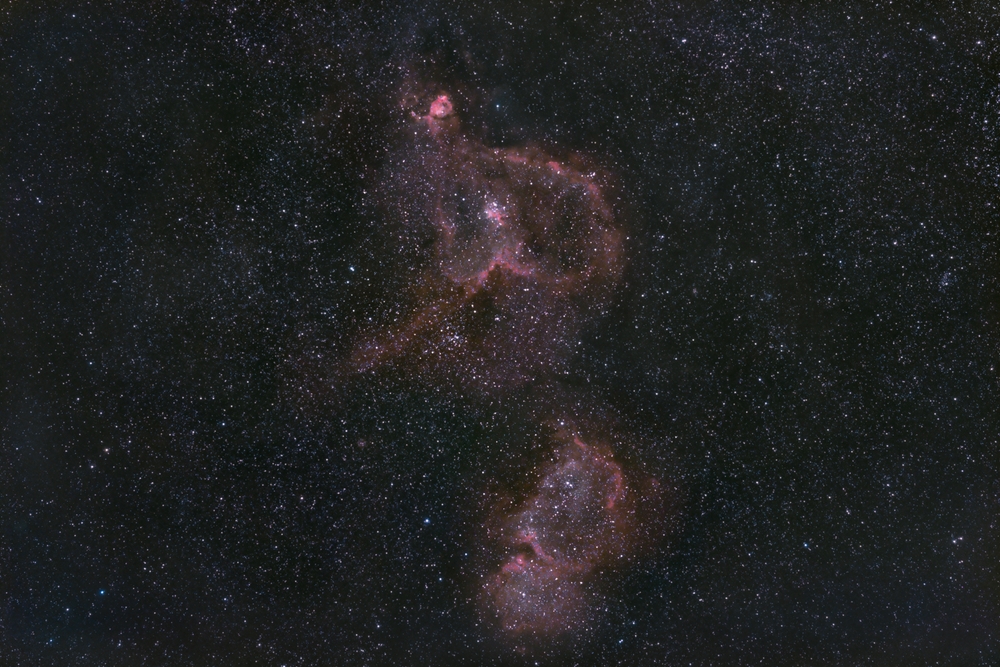
Beyond a single asteroid, a growing body of evidence shows that organic chemistry is widespread across the solar system and even in interstellar space. Observations of molecular clouds have revealed complex carbon based compounds, while missions studying comets and meteorites have repeatedly detected amino acids and nucleobase related molecules. Laboratory simulations that recreate space conditions, including ultraviolet radiation acting on simple ices, have also demonstrated that key organic molecules can form without biological input. This convergence of astronomy, sample return missions, and experimental chemistry suggests that the pathways leading to life’s ingredients are not isolated events but recurring processes.
What strengthens this conclusion is the repeatability of these findings across different environments. Carbonaceous meteorites recovered on Earth, cometary data from missions such as Rosetta, and spectral analyses of distant regions all point to similar chemical outcomes under varying conditions. This consistency indicates that when the right physical parameters align, such as temperature ranges, radiation exposure, and the presence of simple precursor molecules, complex organics tend to emerge. Rather than being rare exceptions, these molecules appear to be natural products of cosmic chemistry, forming wherever the conditions allow and persisting long enough to be transported across space.
Seen through this lens, rarity begins to look less like a defining feature of life’s ingredients and more like a limitation of our observation. As detection methods improve and more pristine samples are returned to Earth, the pattern becomes clearer. The universe does not seem to struggle to produce the components of life. It produces them consistently, across distance and time, suggesting that the question is no longer whether these ingredients exist elsewhere, but how often they assemble into something more complex.
From Space to Earth: A Cosmic Delivery System
The significance of Ryugu extends beyond what was found to how such material could realistically reach a young planet. During the early stages of Earth’s history, particularly in the period known as the Late Heavy Bombardment, the planet experienced frequent impacts from asteroids and cometary bodies. These impacts were not isolated events but sustained influxes of extraterrestrial material over millions of years. The Ryugu samples provide a chemically intact example of what such incoming bodies may have carried, offering a direct link between space based organic reservoirs and planetary surfaces. The study itself reinforces this connection by demonstrating that fragile nucleobases can survive within protected mineral matrices, increasing the likelihood that they could endure the journey through space and atmospheric entry.
What becomes critical here is not just delivery, but accumulation. A single impact would not be sufficient to shape prebiotic chemistry on a planetary scale. However, repeated deposition over vast timescales could gradually enrich the surface environment with organic compounds. The Ryugu findings support the idea that such deliveries were not chemically trivial but carried structurally relevant molecules capable of participating in further reactions once conditions on Earth became stable. Additional analysis from the full dataset highlights how these compounds existed alongside water altered minerals, suggesting compatibility with aqueous environments that would later dominate early Earth.

Seen this way, the idea of a cosmic delivery system is not abstract but cumulative and measurable. It describes a process where planetary chemistry is influenced not only by internal conditions but by external contributions that arrive consistently over time. The Ryugu evidence does not claim that life came fully formed from space, but it strengthens the argument that key molecular inputs were supplied externally, creating a more chemically enriched starting point for whatever processes eventually led to biology.
The Gap Between Chemistry and Life
Even with a complete set of nucleobases identified in Ryugu, one central problem remains untouched: information bearing molecules are not the same as living systems. DNA and RNA are meaningful inside cells because they operate within an organized environment that can copy sequences, correct errors, manage energy, and maintain boundaries between what is inside and outside. A molecule on its own, however important, does not yet possess those capacities. This is why origin of life research does not focus only on which compounds existed, but on how separate chemical components may have become linked into networks capable of persistence, selection, and eventual replication.
Another unresolved challenge is sequence and structure. Life depends not only on the presence of the right ingredients but on the way those ingredients are assembled. Nucleobases must be incorporated into nucleosides and nucleotides, connected into longer chains, and stabilized under conditions that allow useful interactions rather than rapid breakdown. At the same time, some environment must support concentration, cycling, and chemical feedback without destroying what has formed. Researchers can identify plausible steps in isolation, but bridging all of them into one continuous pathway remains extraordinarily difficult. That difficulty is precisely why discoveries like Ryugu matter. They do not solve the origin of life, but they narrow one part of the unknown by showing that biologically relevant molecules were available before biology itself existed.
What remains, then, is not a simple missing step but a layered scientific frontier. The question is no longer limited to whether nature could produce life’s raw materials. It is how chemistry crossed the threshold into organization, function, and inheritance. That threshold is still beyond our full reach, and acknowledging that limit does not weaken the discovery. It makes it more honest, more important, and more intellectually powerful.
What This Means for Us
Now here’s where it becomes personal, not as an abstract idea, but as a shift in how you see yourself in relation to everything around you. This discovery is not only about distant asteroids or scientific progress. It challenges the way we define significance and belonging. If the same fundamental chemistry exists both in deep space and within your own body, then your existence is not separate from the universe but continuous with it. You are not standing outside of this story observing it. You are part of the same unfolding process, shaped by the same physical laws and materials that have been at work long before human history began.

There is also a deeper implication in how we understand growth and potential. The processes that led to these molecular formations did not happen instantly. They unfolded gradually, under specific conditions, across immense stretches of time. That same principle applies to human life. Change is rarely immediate, and meaning is rarely obvious in the moment. Yet just as seemingly lifeless environments can hold the conditions for complexity, your own challenges and uncertainties may contain forms of potential that are not immediately visible. Recognizing this does not simplify life, but it reframes it with a greater sense of patience and perspective.
Seen this way, the discovery becomes less about space and more about awareness. It invites a reconsideration of scale, identity, and connection. You are made of the same elements that exist beyond Earth, shaped by processes that extend far beyond your individual experience. That does not make you insignificant. It places you within a much larger continuity, one where existence itself is not isolated, but shared across time, space, and form.
You Are Not Separate From the Stars
Take a moment to sit with this without rushing past it. The same molecular building blocks found on a distant asteroid exist within you right now. The same universe that formed Ryugu also formed you, not as something separate, but as a continuation of the same process. When you feel small, lost, or disconnected, remember that what you are made of has traveled across time and space, shaped by forces far older than any human story. Life, in all its complexity, may not be a rare exception. It may be a natural expression of the cosmos unfolding.
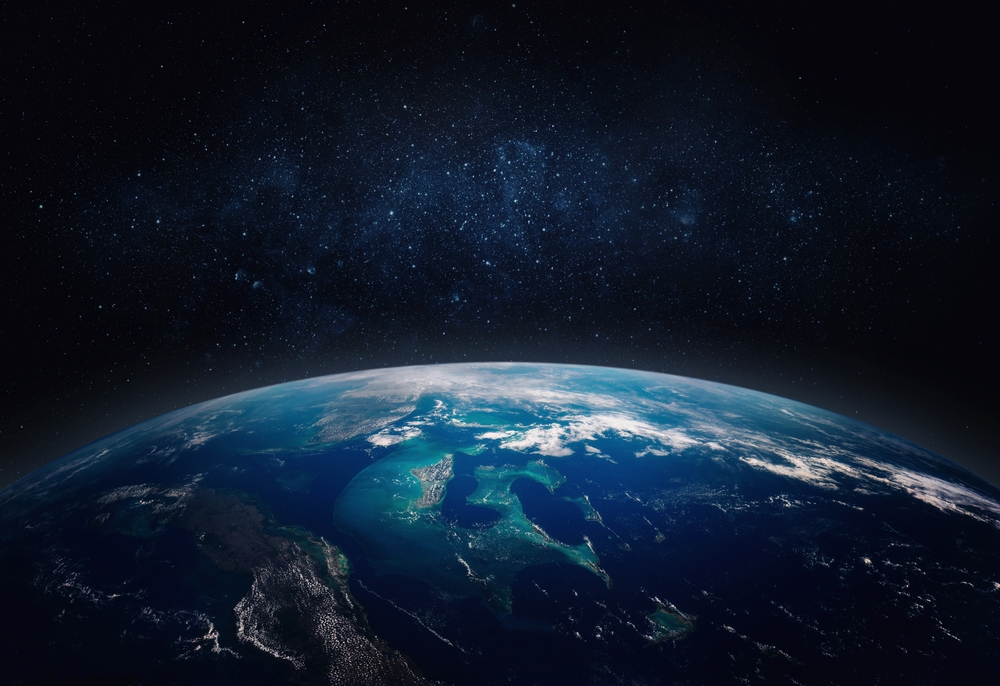
And that means something deeper than inspiration. It means you are evidence. You are proof that the universe does not only exist as matter and motion, but as awareness, reflection, and meaning. Through you, it observes, questions, and understands itself. Not in theory, but in lived experience. So this is not just a discovery about space. It is a reminder about identity. You are not separate from the stars. You are what happens when the universe becomes conscious of its own existence.
Featured Image from Shutterstock