

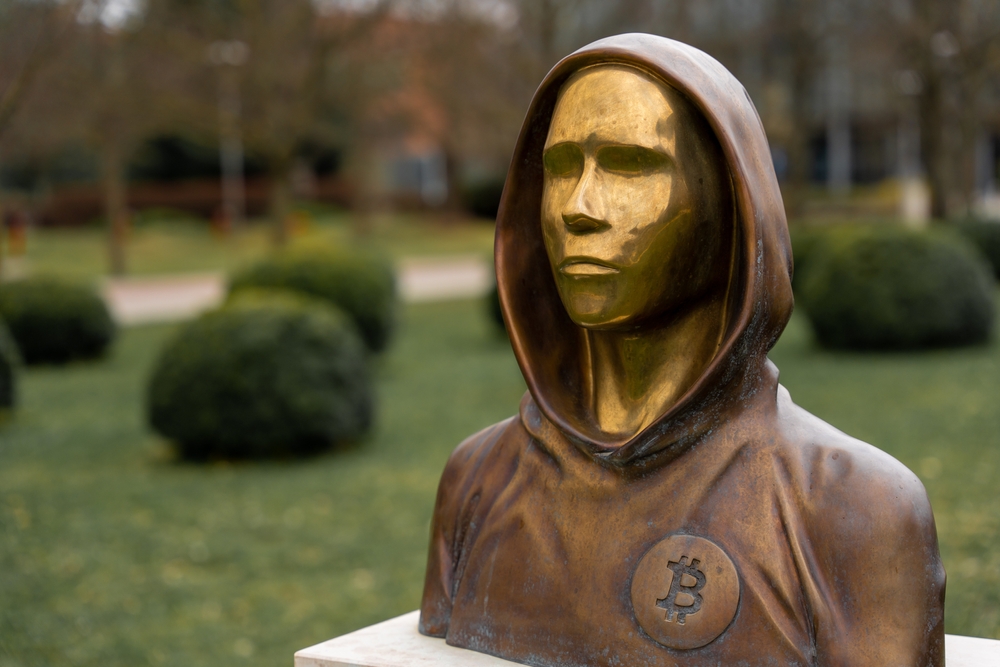
The Hunt for Bitcoin Creator Takes Another Unexpected Turn
The identity of Bitcoin’s creator has remained one of the internet’s most enduring mysteries, a puzzle that has fascinated journalists, technologists, and everyday users for more than a decade. Known only by the pseudonym Satoshi Nakamoto, the person or group behind Bitcoin vanished from public view in 2011, leaving behind a revolutionary financial system and a trail of cryptic clues.
Now, a new investigation by The New York Times has reignited global interest in the mystery, suggesting that British cryptographer Adam Back could be the elusive founder. The claim has sparked widespread debate across the crypto community and beyond. Yet, almost immediately, Back pushed back against the allegations, calling them a case of confirmation bias and insisting he is not the man behind Bitcoin.
The situation has once again thrown the question into the spotlight. Not just who created Bitcoin, but whether the truth can ever truly be uncovered.
A Mystery That Refuses To Fade
Bitcoin was introduced to the world in 2008 through a nine page white paper that outlined a new form of digital money. It promised a decentralized system, free from government control, built on cryptographic principles and maintained by a distributed network of users.
When the first Bitcoin transaction took place in January 2009, few could have predicted how significant the technology would become. Over time, Bitcoin evolved into a global financial phenomenon, spawning an entire industry worth trillions and reshaping conversations around money, privacy, and trust.
Yet from the very beginning, its creator remained hidden. Satoshi Nakamoto communicated through emails and online forums, collaborating with early developers before suddenly disappearing in 2011. Since then, countless theories have emerged, each attempting to identify the individual behind the pseudonym.
Despite years of investigation, no theory has been universally accepted. The mystery has become part of Bitcoin’s identity itself, adding to its allure and philosophical appeal.
The Investigation That Sparked New Debate

The recent New York Times investigation, led by journalist John Carreyrou, attempted to bring new clarity to the mystery. Drawing on linguistic analysis, historical records, and early internet archives, the report argued that Adam Back’s writings and technical work closely align with those attributed to Satoshi.
The investigation highlighted several key points. Back’s early involvement in cryptography and digital cash systems placed him in the right intellectual environment. His invention of Hashcash in the late 1990s introduced a proof of work mechanism that later became central to Bitcoin’s design. His writing style and vocabulary appeared to share similarities with Satoshi’s known texts.
There were also behavioral patterns that raised eyebrows. Back was highly active in discussions about digital money before Bitcoin’s launch, yet appeared to be largely absent during the period when Satoshi was most active. He later reemerged as a prominent figure in the Bitcoin community after Satoshi disappeared.
Taken together, these details formed the basis of the claim that Back could be the man behind the pseudonym.
Adam Back’s Response
Adam Back did not stay silent for long. Responding on social media and in interviews, he firmly rejected the idea that he is Satoshi Nakamoto.
He described the investigation as an example of confirmation bias, where patterns are identified and interpreted in a way that supports a preconceived conclusion. According to Back, his extensive involvement in early cryptographic discussions naturally increases the likelihood that his writings would resemble those of others working on similar ideas.
He explained that he was deeply engaged in research related to privacy, electronic cash, and decentralized systems from the early 1990s onward. This meant he contributed frequently to forums and mailing lists where such ideas were explored. As a result, his digital footprint overlaps significantly with the concepts that eventually shaped Bitcoin.
Back also pointed out that many of the supposed connections rely on coincidences. Shared terminology, similar phrasing, and overlapping interests were common among members of the cypherpunk community. In his view, these similarities are not evidence of identity, but rather reflections of a shared intellectual environment.
Importantly, he stated that he does not know who Satoshi Nakamoto is. He added that the anonymity of Bitcoin’s creator may actually be beneficial, as it reinforces the idea of Bitcoin as a decentralized system not tied to any individual.
The Pattern Of False Revelations

This is far from the first time someone has been identified as Satoshi Nakamoto. Over the years, numerous individuals have been proposed as the mysterious creator, only for the claims to be disputed or debunked.
In 2014, a Newsweek article pointed to Dorian Nakamoto, a Japanese American man living in California. He denied any involvement, and the claim quickly fell apart.
In 2015, Australian computer scientist Craig Wright publicly declared himself to be Satoshi. His claims were widely rejected by the crypto community, and a UK High Court later ruled that he was not the creator of Bitcoin.
More recently, a documentary suggested Canadian developer Peter Todd as a possible candidate. He dismissed the idea as absurd and provided evidence to challenge the theory.
Each new claim generates headlines and speculation, but none have led to a definitive answer. The pattern has made many observers skeptical of any attempt to identify Satoshi.
The Stakes Behind The Identity

The question of who created Bitcoin is not just a matter of curiosity. It carries significant financial and philosophical implications.
Satoshi is believed to have mined more than one million Bitcoins in the early days of the network. At current prices, this fortune would be worth tens of billions of dollars, making Satoshi one of the richest individuals in the world.
If the identity were confirmed, it could have profound effects on the market. The possibility of such a large amount of Bitcoin being moved or sold could influence prices and investor confidence.
Beyond the financial aspect, there is also the question of control and influence. Bitcoin was designed to operate without a central authority. The absence of its creator reinforces this principle, ensuring that no single person can claim ownership over the system.
Many in the community believe that keeping Satoshi anonymous is essential to preserving Bitcoin’s integrity.

The Role Of Technology And Bias
The New York Times investigation also highlights the growing role of technology in uncovering information. Techniques such as linguistic analysis and artificial intelligence are increasingly being used to analyze patterns in writing and behavior.
However, these methods are not without limitations. As Back pointed out, they can be influenced by bias and may produce misleading results. Similarities in language or style do not necessarily indicate authorship, especially in communities where people share common ideas and terminology.
The challenge lies in distinguishing between meaningful connections and coincidental overlaps. In a field as complex as cryptography, where many individuals work on similar problems, this distinction becomes even more difficult.
The Mystery That Endures
Despite years of investigation, the identity of Satoshi Nakamoto remains unknown. Each new theory adds another layer to the story, but none have provided conclusive evidence.
The latest claims involving Adam Back have once again captured public attention, but his firm denial leaves the mystery unresolved. Whether he is telling the truth or simply protecting a secret, the lack of definitive proof means the question remains open.
What is clear is that the search for Satoshi has become a phenomenon in its own right. It reflects a broader fascination with anonymity, innovation, and the idea that a single individual could reshape the global financial system.
A Reflection On What Really Matters
In the end, the identity of Bitcoin’s creator may not be as important as the system they left behind. Bitcoin continues to operate and evolve without its founder, guided by a global community of developers, miners, and users.
The mystery of Satoshi Nakamoto adds intrigue, but it also serves as a reminder of the principles that underpin Bitcoin. Decentralization, transparency, and independence are at the heart of the technology, and these values do not depend on knowing who created it.
Adam Back’s response to the recent investigation reinforces this perspective. By dismissing the claims and emphasizing the broader significance of Bitcoin, he highlights the idea that the system is bigger than any individual.
As the debate continues, one thing remains certain. The story of Satoshi Nakamoto is far from over, and perhaps it is not meant to have a definitive ending at all.