

Divers Save Tiny Octopus From Plastic Trap in Emotional Underwater Moment
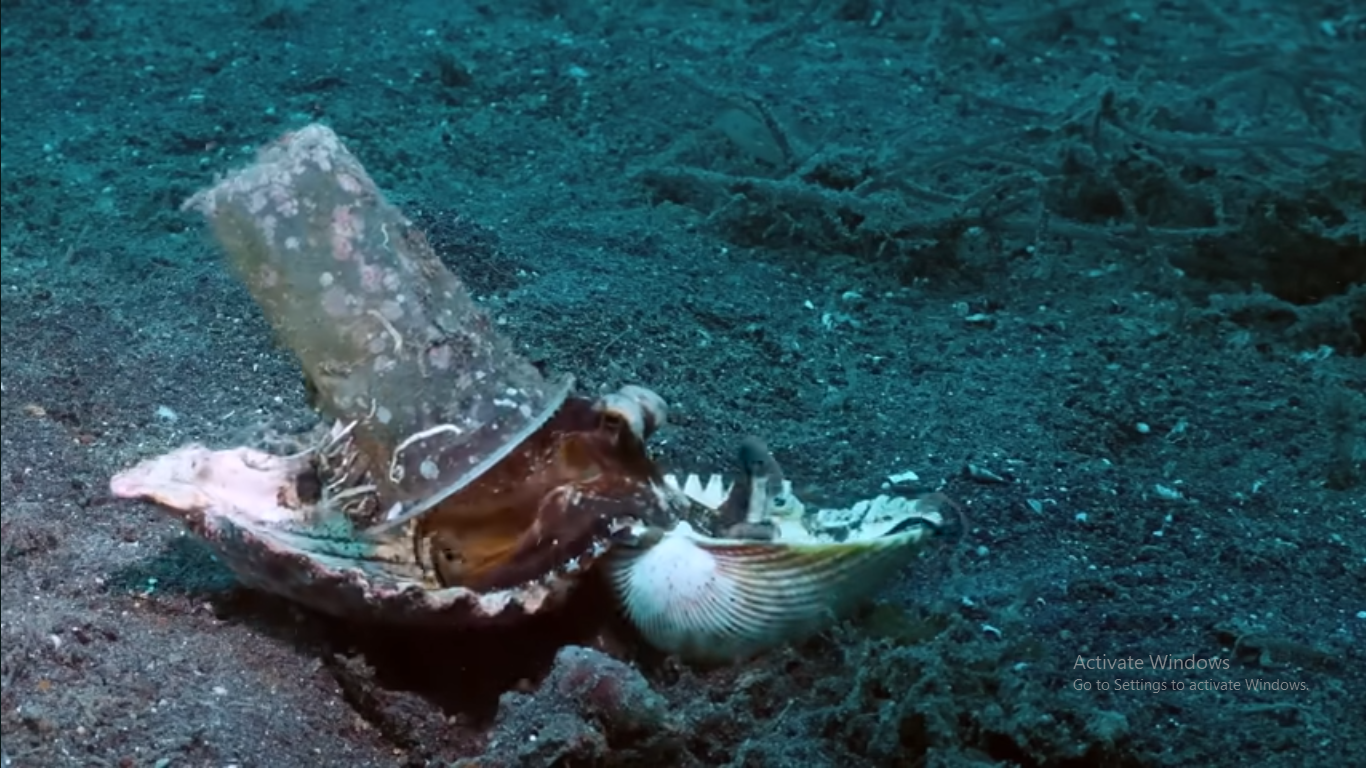
Sometimes, the story of environmental damage does not begin with statistics or policy debates but with a quiet, almost unbelievable moment in the wild, one that unfolds far from headlines yet captures the truth more clearly than any report ever could. Off the coast of Lembeh, Indonesia, a group of divers came across a tiny veined octopus living inside a discarded plastic cup, and while the scene may sound unusual at first, it quickly becomes something much deeper the longer you sit with it. Instead of finding shelter in a shell, as its instincts would normally guide it to do, the octopus had adapted to a piece of human waste that had drifted into its world, turning something artificial into something essential for survival. The moment feels strangely cinematic, almost like a scene carefully written for an animated film, yet nothing about it is fictional. It is real, raw, and quietly unsettling, revealing how deeply human influence has reached into places we rarely think about.
The video, which has now been viewed millions of times online, captures more than just a rescue or a rare animal encounter, because what unfolds is not simply about one creature but about an entire system that has been altered. It shows a clash between natural instinct and a polluted environment where the rules have changed without warning for the animals that depend on them. As one diver explained, “We spent a whole dive and most of our air saving this octopus from what was bound to be a cruel fate,” and that sentence alone carries a weight that is hard to ignore because it reflects both urgency and empathy at the same time. What makes this story stay with people is not just that the octopus was helped, but that it needed help in the first place, and that realization forces a difficult but necessary awareness that plastic is no longer just waste. It has become part of the ocean’s reality.
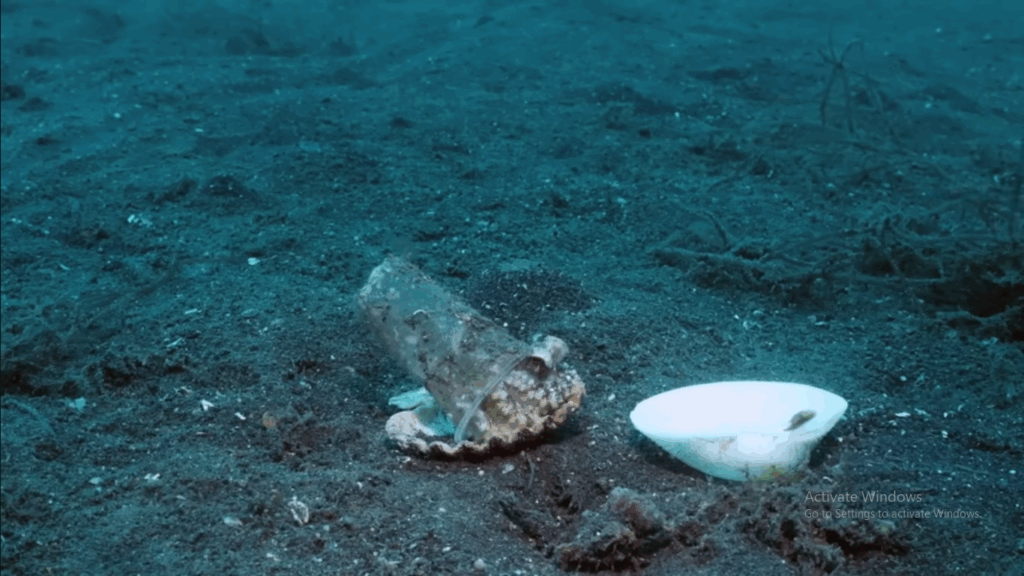
Image credits: Pall Sigurdsson
A Tiny Creature Living in a Human Problem
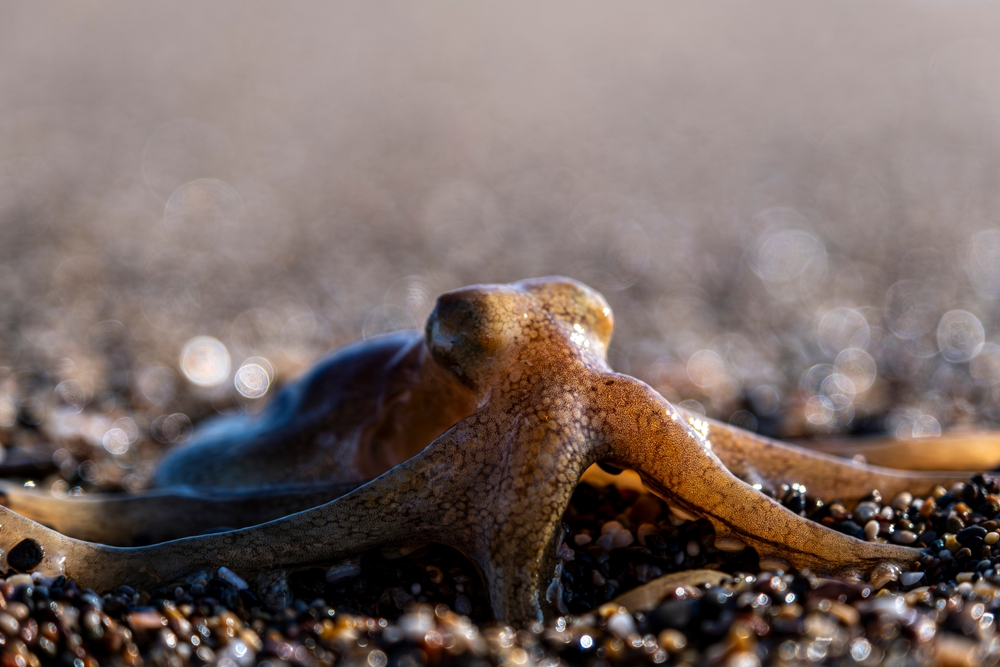
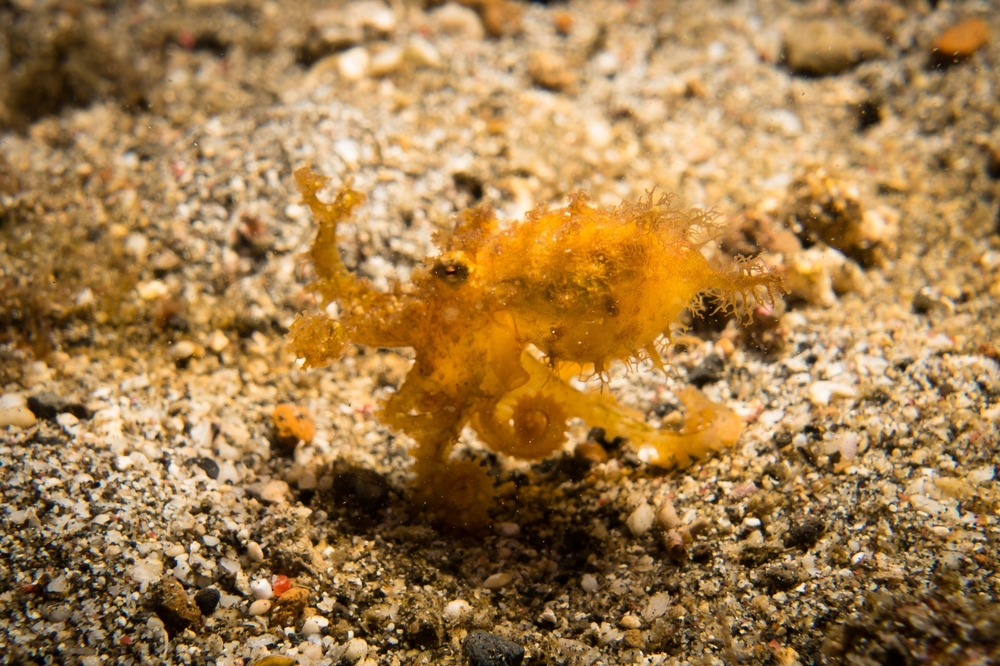
The veined octopus, often called the coconut octopus, is known for its ability to use objects as shelter in a way that feels almost inventive, as though it is constantly adapting and thinking about its surroundings. It typically collects shells or coconut husks and turns them into a mobile home that it can carry with it along the ocean floor, creating both protection and flexibility in a world filled with predators. This behavior is not random but deeply rooted in survival, shaped over time by evolution. However, in this case, that same instinct led the animal toward something entirely unnatural, something that should never have been part of its environment to begin with. As described during the encounter, “The coconut octopus, also known as veined octopus, is born with the instinct to protect itself by creating a mobile home out of coconut or clam shells. This particular individual however has been trapped by their instincts and have made a home out of a plastic cup they found underwater.”
This detail changes everything about how we interpret the moment because it removes the idea that the octopus made a poor choice. It did not choose incorrectly. It responded exactly as it was meant to, but the world around it had changed in a way it could not understand. Plastic has become so widespread in marine environments that it now competes directly with natural materials, sometimes even replacing them entirely in certain areas where shells are scarce but debris is everywhere. That means animals are not just encountering pollution occasionally. They are beginning to live with it, rely on it, and unknowingly put themselves at risk because of it.
The consequences of this shift are far more serious than they might first appear. A plastic cup offers none of the protective qualities that a shell naturally provides. It does not help the octopus blend into its surroundings, and it does not create a strong barrier against predators that rely on sight and speed. Instead, it exposes the animal while giving the illusion of safety. In fact, it introduces new dangers that would not exist otherwise. A predator such as an eel or flounder could easily swallow both the octopus and the cup, leading to harm for both animals in a single moment. As the diver pointed out, “a predator like an eel or a flounder would probably end up swallowing the cup with the octopus in it, likely killing both of them.” What seems like shelter is actually a fragile and dangerous substitute.
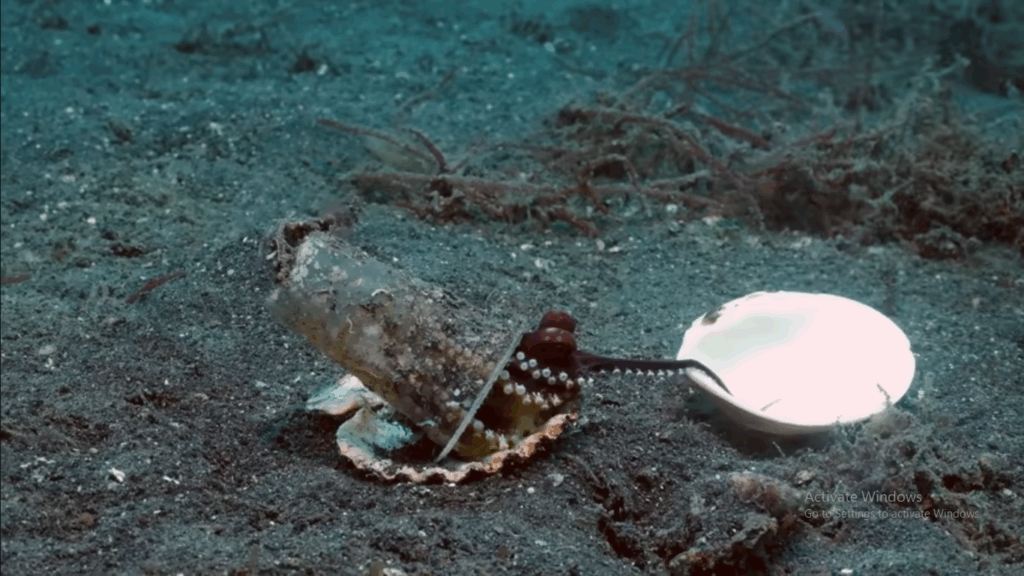
Image credits: Pall Sigurdsson
The Divers Who Chose to Intervene
In many situations like this, people might simply observe and continue on, especially in environments like the ocean where intervention can feel uncertain or even discouraged. Marine ecosystems are complex, and it is often assumed that humans should not interfere. However, this group of divers made a different decision, one that required both awareness and a willingness to act in the moment. They recognized that the octopus was not just interacting with its environment but was at immediate risk because of it, and that realization shifted their role from observers to participants in a small but meaningful way.
Their effort was not quick or simple, and it certainly was not guaranteed to succeed. “We tried for a long time to give it shells hoping that it would trade the shell,” the diver explained, describing a process that required patience and persistence rather than force. The octopus did not immediately accept the new options, and instead approached each shell carefully, extending its tentacles to touch, test, and evaluate what was being offered. There was hesitation, curiosity, and perhaps even caution in its movements, creating a moment that felt far more complex than a simple exchange.
The divers had to continue searching, bringing different shells and presenting them one after another, understanding that the octopus would only accept something that felt right to it. This selectiveness is not unusual for the species. “Coconut octopus are famous for being very picky about which shells they keep so we had to try with many different shells before it found one to be acceptable.” That persistence eventually paid off, and when the octopus finally chose a shell and left the plastic behind, it created a quiet but powerful sense of relief. It was not dramatic or loud, but it was deeply meaningful.
Intelligence Beneath the Surface
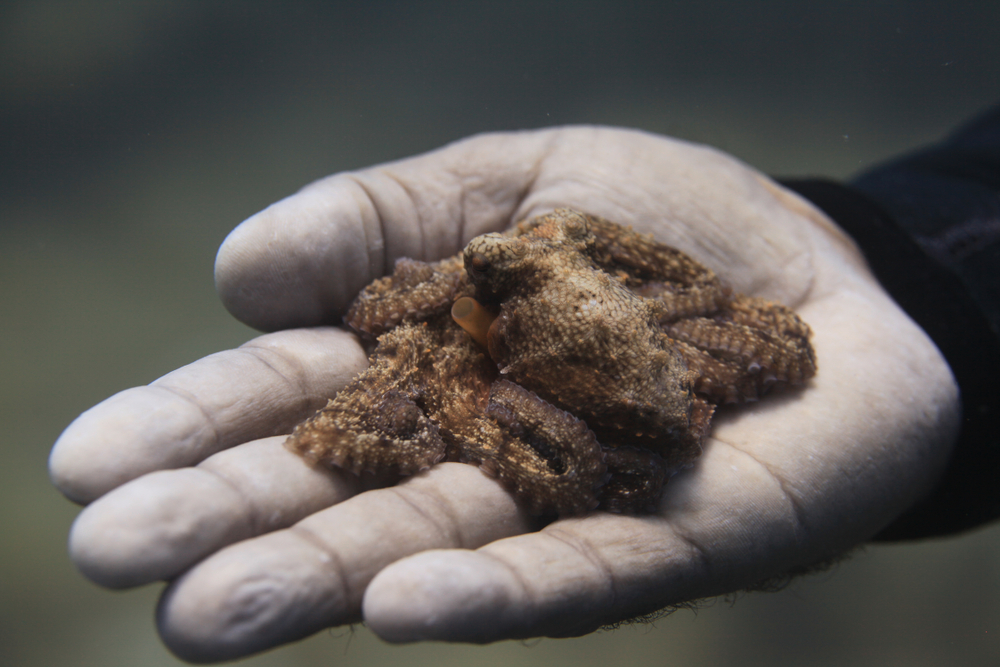
Part of what gives this story its emotional weight is the behavior of the octopus itself, because it does not move or react in a way that feels purely automatic. Instead, there is a noticeable sense of awareness in how it interacts with the objects around it and with the divers offering help. Octopuses have long been recognized for their intelligence, but seeing it in a moment like this makes it feel far more personal and immediate than any scientific description ever could.
In the video, the octopus appears to consider each option carefully, reaching out to explore the shells before pulling back as if processing the information. This back and forth creates a rhythm that feels almost like communication, even though no words are exchanged. It invites viewers to wonder what the animal might be experiencing in that moment, whether it is weighing risk, exploring possibilities, or simply responding to something unfamiliar in its environment.
There have been other encounters that suggest similar levels of awareness, where octopuses reach out toward divers, make brief contact, and then retreat, almost as if they are testing boundaries or expressing curiosity. These moments challenge the way many people think about marine life, shifting it from something distant and instinct-driven to something more complex and connected. Watching this unfold makes it harder to dismiss the impact of pollution as abstract when it clearly affects creatures capable of such behavior.
The Scale of Plastic Pollution
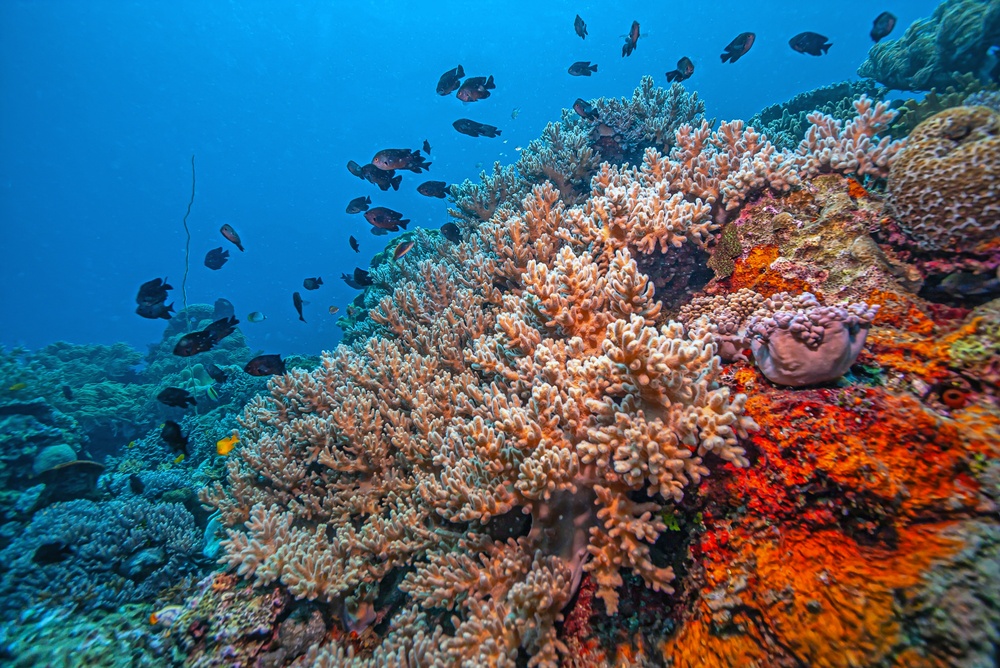
While the video centers on a single octopus, the issue it represents extends far beyond one location or one moment, reaching into every part of the world’s oceans in ways that are both visible and hidden. Ocean pollution has grown into a problem of staggering proportions, with estimates suggesting that trillions of pieces of plastic are currently present in marine environments. More than 260,000 tons of plastic float on the surface alone, and that number only represents a fraction of what is actually there.
What lies beneath the surface is often even more concerning because it is less visible and therefore easier to ignore. Divers frequently encounter scenes that most people never see, where marine life exists alongside debris as if it were a normal part of the environment. As one diver described, “There are good days, and there are bad days depending on ocean currents. Some days, you see so much trash that it is almost impossible to film sea creatures without also including trash.” That reality paints a picture of an ecosystem that has been quietly reshaped over time.
Another observation adds further depth to the issue. “Most trash (including plastic) sinks. Most people only talk about the parts that they can see. The part that floats, but that’s just scratching the surface of the prob”. This highlights a critical gap in public understanding, where the most visible pollution receives attention while the majority remains out of sight, continuing to affect marine life in ways that are harder to measure but no less significant.
When Survival Turns Into Risk
One of the most unsettling aspects of this story is not just what happened, but how common similar situations are becoming across different parts of the ocean. Marine animals are increasingly interacting with human-made objects as part of their daily survival, incorporating debris into behaviors that once relied entirely on natural materials. At first glance, this might appear to be a form of resilience or adaptability, but the reality is far more complicated and often far more dangerous.
Plastic does not function like the materials it replaces. It can break in unpredictable ways, trap animals, or introduce harmful substances into their bodies and the wider food chain. In the case of the octopus, the plastic cup created a false sense of security, allowing the animal to follow its instincts while unknowingly increasing its vulnerability. This is what makes plastic pollution particularly harmful. It does not always act as an obvious threat. Instead, it quietly alters behavior and disrupts the balance that species rely on to survive.
The idea that “trash is a permanent part of their environment now” carries a weight that is difficult to ignore because it suggests a long-term shift rather than a temporary problem. It points toward a future where marine ecosystems are defined not only by natural elements but by human waste, where animals grow up in conditions that are fundamentally different from those that shaped their evolution. That kind of change has consequences that extend far beyond any single species.
A Small Act With a Larger Meaning
It would be easy to view this story as a simple act of kindness and leave it at that, focusing on the positive outcome without considering the broader implications. The octopus was helped, the plastic was abandoned, and the divers made a difference in that moment. However, the power of this story lies in how it connects a small, personal action to a much larger global issue that affects countless creatures across the ocean.
The emotional impact comes from its simplicity, because it strips the problem down to something that is easy to understand. A tiny animal, a harmful object, and a group of people who chose to intervene rather than ignore what they saw. It turns an abstract issue into something immediate and relatable, making it harder to overlook the consequences of everyday actions that contribute to pollution.
At the same time, it raises a question that lingers long after the video ends. If one small act can change the outcome for one creature, what might be possible if similar care and attention were applied on a larger scale. The story does not offer a complete solution, but it opens the door to reflection in a way that statistics alone rarely can.
What This One Moment Says About All of Us
The image of a tiny octopus trading a plastic cup for a shell stays with you because it captures both hope and discomfort in a single moment, showing what is possible while also revealing what should never have happened in the first place. It reflects the reality that human actions have reached into the most unexpected corners of the planet, shaping environments in ways that other species must now navigate whether they are prepared to or not.
This is not just a story about one animal or one group of divers. It is a reflection of a larger relationship between people and the natural world, one where responsibility cannot be separated from consequence. Every piece of plastic that enters the ocean becomes part of that relationship, influencing lives in ways that are often unseen but deeply felt.
The divers in this moment chose to act, and while their effort may seem small in the context of a global crisis, it represents something important. It shows that awareness can lead to action, and that even in a vast and complex system, individual choices still matter. That idea does not solve the problem, but it reminds us that change often begins with noticing what is right in front of us and deciding not to look away.ing to do something about it.
Featured Image credits: Pall Sigurdsson