

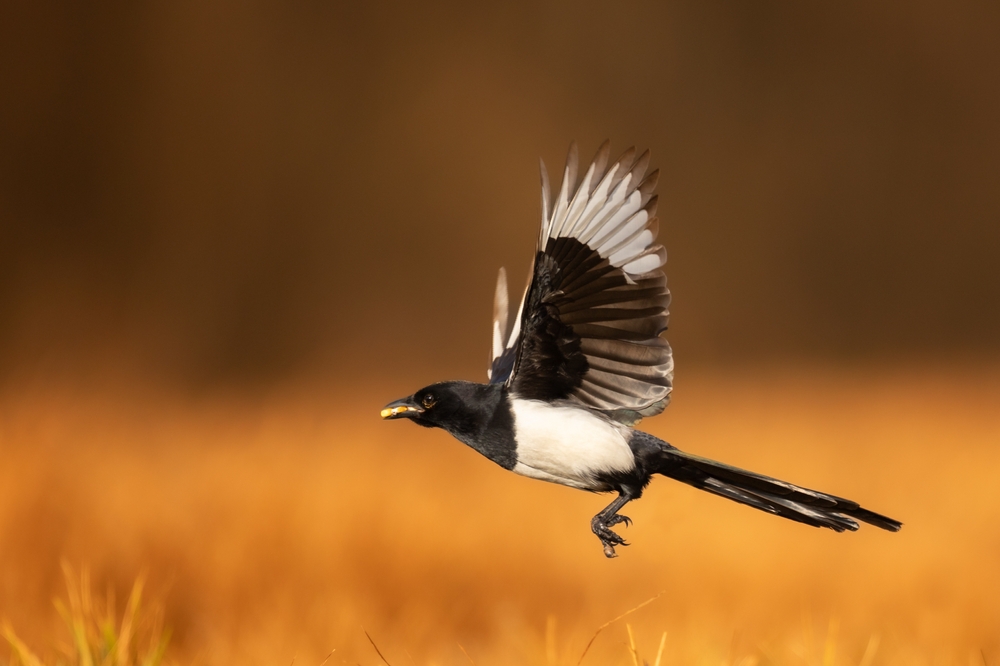
Birds Use Light-Sensitive Proteins To See The Planet’s Magnetic Field
There is something humbling about a bird in flight.
A creature small enough to fit in your hands can cross oceans, mountain ranges, and entire continents with a level of precision that would make most human technology look almost arrogant. We build satellites. We draw maps. We depend on apps to tell us where to turn. Yet for millions of years, birds have been navigating a planet-sized journey with something built into their own bodies.

That is why this idea lands with such force: some migratory birds may not merely sense the Earth’s magnetic field in an abstract way, but perceive magnetic information through a light-linked biological process in their eyes. The claim is extraordinary, and the science behind it is real, fascinating, and still evolving. Researchers have found strong evidence that specialized proteins called cryptochromes, especially Cry4, have the right properties to act as part of a magnetic compass. At the same time, the exact subjective experience of a bird—what it “sees,” if anything like a visual overlay exists—remains an inference rather than something scientists have directly observed.
The Miracle Is Not That Birds Travel, But How
Every migration season, birds do something most of us would call impossible if we did not watch it happen in nature. They leave one world and arrive in another, often returning to the same breeding or wintering grounds with astonishing reliability. Some cross vast seas. Others fly at night, when landmarks disappear and the sky itself becomes part of the puzzle.
Scientists have long known that birds use multiple navigational cues. Depending on the species and circumstances, they may rely on the sun, stars, polarized light, landmarks, smell, and the Earth’s magnetic field. What has kept researchers captivated is not simply whether birds use magnetism, but how that information is detected and translated into action. A compass built into living tissue sounds almost mythical until the evidence begins pointing in that direction.
That distinction matters. Detecting a field is one thing. Integrating magnetic information into the visual system is another. If the current model is correct, then a bird’s journey is not just instinct in the vague sense people often use the word. It is biology, physics, chemistry, and perception working together in one elegant act of survival.
Cry4 May Be One Of Nature’s Smallest Navigators
At the center of this story is cryptochrome 4, or Cry4, a blue-light-sensitive protein found in the retina of birds. In 2021, a study reported that cryptochrome 4 from the European robin showed magnetically sensitive photochemistry in vitro, meaning in a controlled laboratory setting rather than inside a living bird. The researchers found that the protein produced magnetic-field effects through a sequence of radical-pair reactions, which is exactly the kind of mechanism long proposed in theories of avian magnetoreception.
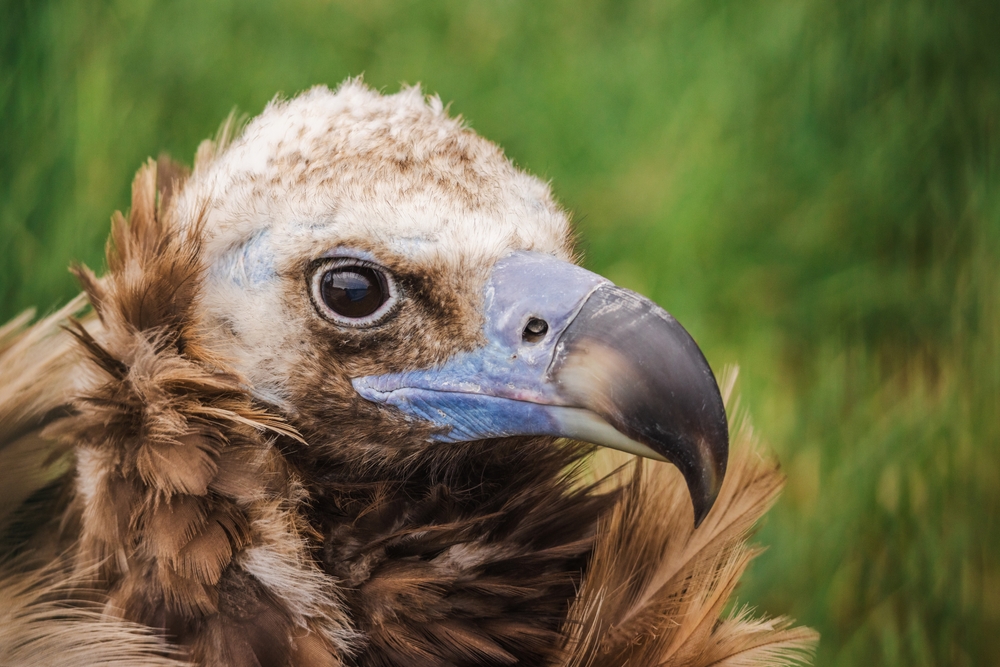
That matters because the hypothesis had been around for decades. This study moved the conversation from elegant theory toward experimentally supported molecular behavior. In plain language, it gave scientists stronger reason to believe that a real protein in a real migratory bird has the physical capacity to respond to the Earth’s magnetic field.
Still, there is an important boundary to respect. The study did not prove, by itself, that birds literally see glowing magnetic lines in the sky. It demonstrated that Cry4 has the right magnetic sensitivity under laboratory conditions. That is a major breakthrough, but it is not the same thing as mapping the full inner experience of the bird.
Blue Light, Quantum Chemistry, And A Compass In The Eye
The mechanism scientists focus on is called the radical pair mechanism. It sounds technical, but the core idea is surprisingly graspable. When blue light activates cryptochrome, electrons can shift into a paired quantum state. Those electron pairs are extraordinarily sensitive to weak magnetic fields, including the Earth’s. If the field changes orientation, the chemistry changes too.
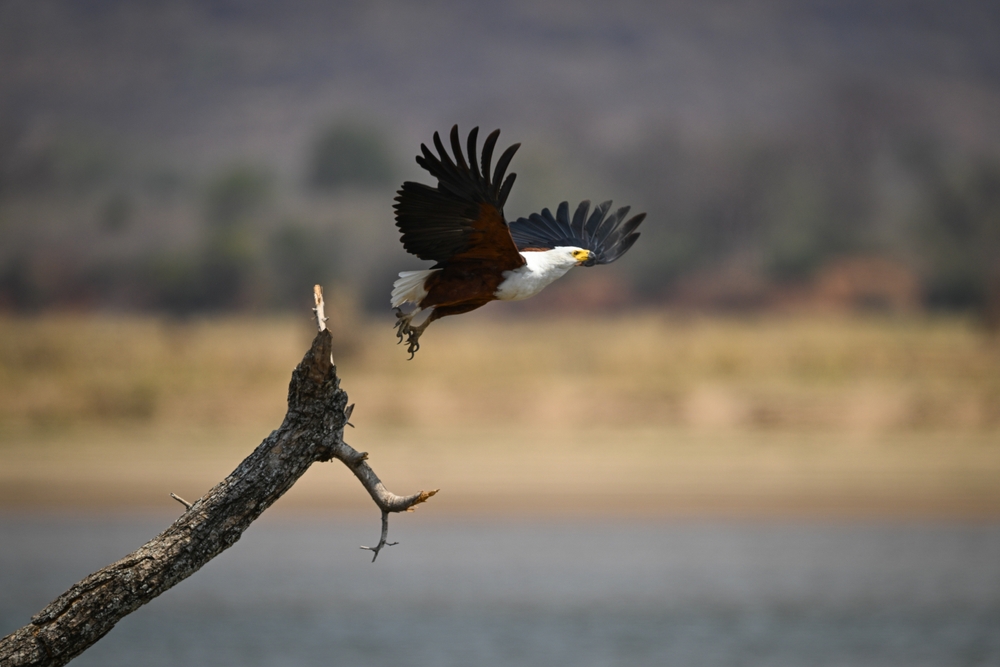
Even then, one study showed that bird cryptochrome 1a is excited by blue light and forms long-lived radical pairs, supporting the idea that cryptochrome proteins can participate in light-dependent magnetoreception.
One reason this theory has remained so persuasive is that it links magnetic orientation to the visual system itself. The idea is not that magnetism is detected by a completely separate device hidden elsewhere in the body and translated later. Rather, the evidence suggests that light sensitivity and retinal biology are deeply involved in how at least some birds orient themselves.
This does not make quantum mechanics a mystical shortcut. It shows that life may be using subtle physical rules with extraordinary efficiency. The suggestion that birds perceive magnetic information as some form of visual cue remains a scientific interpretation, not a confirmed picture of what a bird consciously experiences. But even without overstatement, the mechanism is astonishing: a molecule activated by light, responding to a planet-scale magnetic field, helping guide an animal across continents.
What Scientists Know, And What They Are Still Testing
Good science does not hide uncertainty. It names it clearly.
Researchers have compelling evidence that migratory birds use a light-dependent magnetic compass and that cryptochrome-based radical-pair reactions are serious candidates for the underlying mechanism. A study revisited where cryptochrome proteins are expressed in the avian retina, adding nuance to ongoing debates about which cryptochrome may be acting as the magnetoreceptor and how retinal organization fits into the larger model.

There is also behavioral evidence that weak radiofrequency electromagnetic fields can disrupt birds’ magnetic orientation in ways consistent with radical-pair models. That line of evidence has strengthened the broader case, even while the finer details remain under investigation. Which cryptochrome is the key player? Is Cry4 the main receptor, one part of a larger system, or one member of a broader molecular ensemble? How exactly is the chemical signal translated into neural information? Those questions are still active areas of research.
That does not weaken the story. It makes it more honest. Science advances by refinement, not by pretending every mystery has already been solved.
What Birds Can Teach Us About Attention And Alignment
Here is where the story stops being only about birds.
We live in a time of constant noise. Notifications. Fear. Outrage. Algorithmic storms competing for our attention. And yet migratory birds survive partly because they remain responsive to signals most of us will never perceive. Their success depends on sensitivity, alignment, and the ability to stay oriented in a world full of interference.
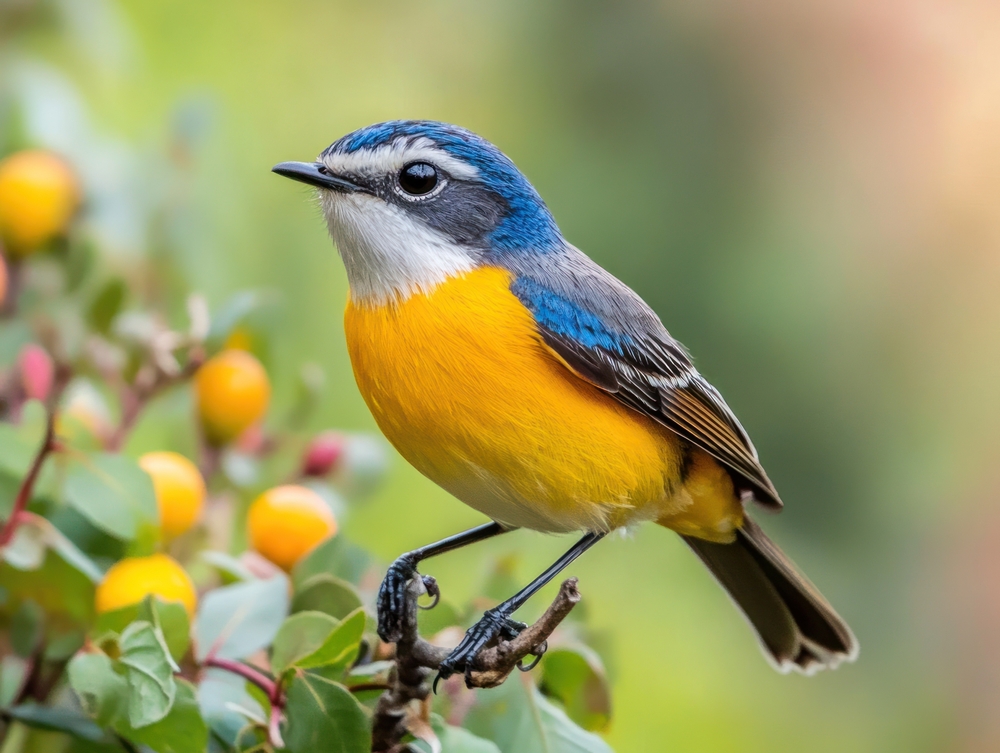
That lesson feels larger than biology. We may not have avian magnetic compasses, but we know what it means to drift. We know what it means to move quickly without direction, to confuse motion with meaning, and to mistake stimulation for wisdom. The bird’s lesson is not that we need wings. It is that we need alignment.
Several reflections rise naturally out of this science. Not every important signal is loud. Sensitivity is not weakness. Clarity depends on conditions. Interference is real. In birds, that truth may play out through light, chemistry, and magnetic fields. In human life, it often appears through environment, attention, and the quality of what we allow to shape us.
The World Is More Alive Than We Think
The reason stories like this spread is not only because they are surprising. It is because they awaken something ancient in us. They remind us that life is not flat. The world is not made only of obvious things. It is written in light, chemistry, migration, memory, and mystery.
The research suggests that birds may use light-sensitive proteins in their eyes to detect magnetic information from the Earth. Cry4 has emerged as one of the most promising molecular candidates in that process, and the quantum-scale reactions involved are real science, not fantasy. But the most honest conclusion is also the most beautiful one: we are still learning how deep the story goes.
The bird in the sky is not just traveling. It is revealing. It is telling us that guidance can come through mechanisms we barely understand, that perception can be richer than our assumptions, and that precision can be born from sensitivity rather than force.
Maybe that is the invitation here for us, too. To become a little less numb. A little more attentive. A little more willing to believe that the truths shaping our path may already be around us, waiting to be perceived.
And maybe wisdom, like migration, begins when we learn to orient ourselves to what is real.
Featured Image from Shutterstock
References
- Liedvogel, M., Maeda, K., Henbest, K., Schleicher, E., Simon, T., Timmel, C. R., Hore, P. J., & Mouritsen, H. (2007). Chemical magnetoreception: Bird cryptochrome 1a is excited by blue light and forms long-lived radical-pairs. PLoS ONE, 2(10), e1106. https://doi.org/10.1371/journal.pone.0001106
- Pinzon-Rodriguez, A., Bensch, S., Muheim, R., & Fusani, L. (2021). Cryptochrome expression in avian UV cones: Revisiting the role of CRY1 as magnetoreceptor. Scientific Reports, 11, 1413. https://doi.org/10.1038/s41598-021-81079-4
- Xu, J., Jarocha, L. E., Zollitsch, T., Konowalczyk, M., Henbest, K. B., Richert, S., Golesworthy, M. J., Schmidt, J., Dejean, V., Sowoidnich, K., Ferrada-Camino, M. B., Hayman, C. R., Gopal, S. D., Giuraniuc, C. V., Mackenzie, A., Hore, P. J., & Mouritsen, H. (2021). Magnetic sensitivity of cryptochrome 4 from a migratory songbird. Nature, 594(7864), 535–540. https://doi.org/10.1038/s41586-021-03618-9