

Panic Turns to Relief After Missing Autistic Child Is Found in Florida Wetlands

In moments of crisis, the difference between fear and relief often comes down to how quickly people act and how effectively systems come together under pressure, and for one family in Florida, that reality unfolded in a way they will likely never forget. What began as a normal day at home quickly shifted into a deeply unsettling situation when their 5-year-old daughter with autism wandered away without warning, leaving behind confusion that rapidly escalated into urgency. The environment surrounding their home made the situation even more serious, as it included dense wooded areas and swampy wetlands where visibility is limited, movement is difficult, and danger can increase in a very short amount of time.
As concern grew into panic, what followed was not just a search effort but a coordinated response that relied on both human instinct and structured emergency procedures designed for high-risk situations. While the family faced the emotional weight of not knowing where their child was or how far she might have gone, deputies began working through a system that required speed, communication, and precision. This situation highlighted how critical those first moments are and how preparation and rapid decision-making can prevent a frightening scenario from turning into something far worse.

Understanding the First Critical Minutes
When a child goes missing, the earliest minutes often carry the most weight, even if they initially seem uncertain or manageable. In this case, the young girl wandered away quietly, without drawing attention, which is something that can happen very quickly during everyday routines, especially in homes where constant supervision may shift momentarily. By the time her absence was noticed, valuable time had already passed, which meant that immediate action was essential to improving the chances of finding her safely.
Her family began searching nearby areas, hoping she had not gone far and might be found within a short distance, which is often the first and most natural response in these situations. They checked familiar places and reached out to neighbors, but those early efforts quickly revealed that she was not where they expected her to be. Sheriff Chad Chronister described that turning point clearly, saying, “They went to the neighbors house, realized ‘no we haven’t seen her,’ now the panic starts to kick in.” That moment marked a shift from uncertainty to urgency, where the situation required more than just a local search.
Once it became clear that she was truly missing, both the family and authorities recognized that time was no longer a passive factor but an active risk. Each passing minute increased the complexity of the search and the potential danger, making it essential to act quickly and decisively.

Why Location Changed Everything
The physical environment surrounding the home played a critical role in shaping both the urgency and the strategy of the search, as it presented challenges that are not typically found in more open or urban areas. The nearby wetlands and wooded terrain created a landscape where visibility was limited, movement was restricted, and a person could easily go unnoticed even within a relatively small distance.
Swampy environments are particularly difficult to navigate because they combine unstable ground, standing water, and dense vegetation, all of which can slow down search efforts and make it harder to locate someone visually. For a young child, these conditions can quickly become overwhelming, increasing the risk of becoming stuck, disoriented, or unable to find a safe path back.
Additionally, children with autism may not respond in expected ways during emergencies, which adds another layer of complexity to the situation. They may not answer when called, may continue moving away from searchers, or may not recognize danger in the same way, all of which require responders to adapt their approach and rely on tools beyond traditional methods.

Coordinating a Multi-Layered Search
The response from the Hillsborough County Sheriff’s Office reflected an understanding of these challenges, as deputies quickly implemented a coordinated approach that combined multiple search strategies to maximize efficiency. Ground teams were deployed to search accessible areas, including neighborhoods and wooded paths, while aviation units prepared to scan the area from above, providing a broader perspective.
This multi-layered approach allowed responders to cover more ground in less time while ensuring that areas hidden from view could still be examined using aerial support. The coordination between teams was essential, as it allowed information to be shared in real time and adjustments to be made quickly based on new developments.
Rather than relying on a single method, the search effort was designed to be adaptable, ensuring that both visible and concealed areas were accounted for in a structured and efficient manner.
The Role of Technology in Modern Rescue
Thermal imaging technology played a central role in the search, providing a way to detect heat signatures that would otherwise be invisible in dense or low-visibility environments. This technology allows responders to identify potential locations of missing individuals even when traditional visual searches are limited by terrain or lighting conditions.
From the air, deputies carefully scanned the landscape, focusing on areas where a person might be located based on movement patterns or environmental factors. The process required concentration and precision, as not every heat signature would lead to a confirmed finding, and distinguishing between different sources of heat was an important part of the task.
Eventually, a moving heat signature appeared, drawing immediate attention and shifting the focus of the operation. This moment demonstrated how technology can provide a critical advantage when time and visibility are working against search efforts.

Communication That Made the Difference
Once the heat signature was identified, effective communication became the most important factor in ensuring that ground teams could reach the location quickly and accurately. Clear and direct updates allowed deputies to adjust their movements in real time, reducing delays and improving coordination.
During the operation, a deputy said, “Hey I think I got her in the woods, she might be able to hear your name if you call her now,” providing both confirmation and actionable guidance. This type of communication allowed ground teams to move with greater confidence and direction as they navigated the terrain.
Another update followed shortly after, “She’s about 80 feet running. I got two deputies moving in that direction,” which helped refine the search and ensured that responders were closing in on the correct location. These real-time exchanges played a crucial role in connecting aerial observations with ground action.
Navigating a Difficult Environment
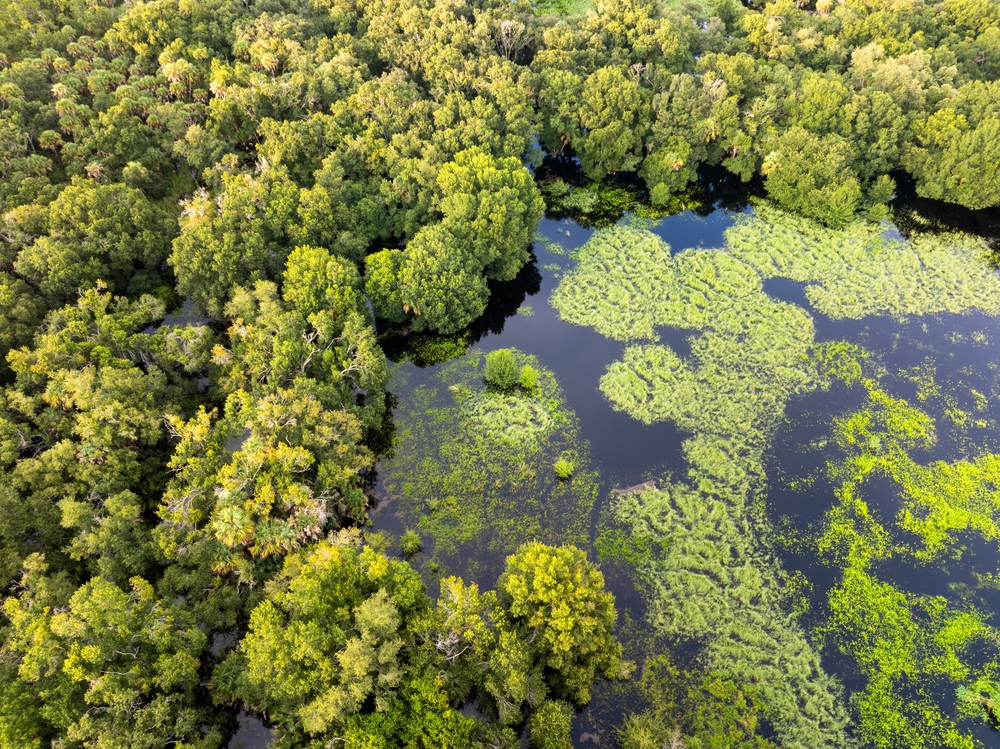
Reaching the child required deputies to move through terrain that was both physically demanding and unpredictable, including thick vegetation and waterlogged ground that slowed their progress and required careful movement. Each step had to be taken with attention to balance and safety, while still maintaining the urgency needed to reach her quickly.
As they moved closer, they eventually spotted the young girl standing in swamp water, confirming that the information from the aerial team had led them to the right location. The conditions surrounding her made it clear that the timing of the search had been critical.
The fact that she was located when she was highlights how important it is to combine rapid response with accurate information, as even a small delay could have changed the outcome significantly.
The Moment of Rescue
Body camera footage shows deputies approaching the child in a calm and controlled manner, ensuring that their presence did not cause distress or confusion. Their approach reflected both training and awareness of how to interact in sensitive situations, particularly when working with children who may respond differently to unfamiliar people.
Once they reached her, they lifted her out of the water and carried her to safety, marking the end of a tense and uncertain search. The moment was simple in action but significant in meaning, representing the successful outcome of a coordinated effort.
Despite the challenging environment, she was not injured, which emphasized how important it had been to locate her quickly and act without delay.

Reflecting on the Outcome
After the rescue, Sheriff Chronister spoke about the importance of timing and response, stating, “In situations like this, every second counts and its always rewarding to see this quick response for our deputies and to see such a positive outcome.” His statement reflects how preparation and coordination can directly influence the result of a situation like this.
The successful outcome was the result of multiple elements working together, including trained personnel, effective communication, and the use of advanced technology. Each component played a role in ensuring that the child was found and brought to safety.
This situation demonstrated how structured systems and quick decision-making can make a meaningful difference when dealing with time-sensitive emergencies.
Preventative Measures and Awareness
In addition to the rescue itself, the incident also highlighted the importance of preventative measures that can reduce risk in similar situations. Programs such as the safety net initiative provide families with tools and support designed to help locate individuals more quickly if they go missing.
These programs often include tracking technology and coordinated response systems, which can significantly reduce search times and improve outcomes. For families, they offer an additional layer of security and reassurance in situations that can otherwise feel unpredictable.
Raising awareness about these resources is an important step in helping communities respond more effectively and prevent situations from escalating.