


He Photographed Strangers In The 1970s. Four Decades Later, He Found Them Again
Most photographs capture a moment that quietly slips into the past. Faces change, friendships drift, neighborhoods transform, and the people frozen inside old pictures continue moving forward with their lives. Years later, those images often become small windows into a version of ourselves that feels both familiar and distant. We recognize the smile, the hairstyle, the clothes, yet the person staring back can seem like someone we once knew rather than someone we still are.
For photographer Chris Porsz, a collection of photographs taken on the streets of Peterborough, England, became something far more meaningful than a record of the past. What began as a hobby during his student years eventually turned into a project that reunited old friends, reconnected strangers, and created a rare opportunity for people to stand beside their younger selves decades later. The resulting images offer a fascinating glimpse into the passage of time and the enduring parts of human identity that remain unchanged even as life unfolds.
A Young Student More Interested In People Than Lectures
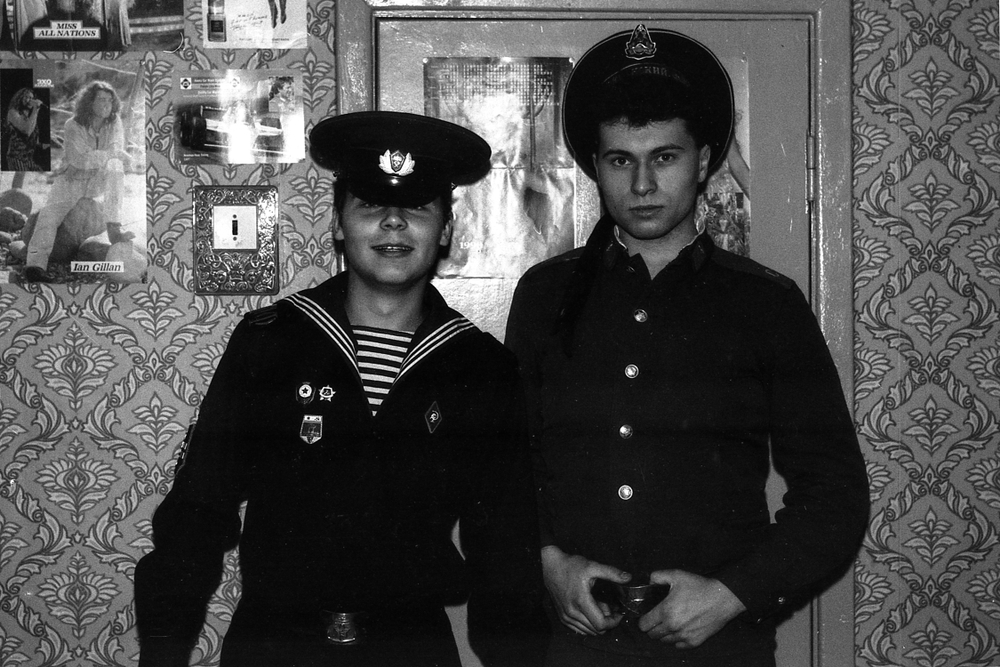
During the 1970s, Porsz was a university student trying to navigate academic life. Economics and statistics were part of his studies, but they failed to hold his attention for very long. He found greater value outside the classroom, wandering through the streets of Peterborough with a camera and an endless curiosity about the people around him.
Rather than photographing famous landmarks or carefully staged scenes, he focused on ordinary individuals. He was drawn toward people who stood out from the crowd. Bright personalities, unusual fashion choices, distinctive hairstyles, and memorable expressions often caught his eye. Every face seemed to hold a story worth discovering.
Sometimes he would take a photograph and continue on his way without exchanging more than a few words. Other encounters developed into long conversations that offered insight into lives very different from his own. Through these interactions, he learned about the world in a way that felt far more personal than anything he encountered in textbooks.
The camera became a bridge between strangers. Without realizing it, Porsz was creating a visual archive of a community during a particular moment in history. The people he photographed likely had no idea that their images would become part of a story stretching across four decades.
The Forgotten Photographs That Refused To Stay Buried
As often happens, life moved forward.
Careers, responsibilities, and changing interests gradually pulled Porsz away from photography. The negatives and prints he had collected over the years were stored away and largely forgotten. What had once been a passion slowly faded into the background as other priorities took its place.
Looking back on that period, Porsz later admitted, “Those pictures collected dust for 25 years.”
Many people would have left the collection untouched forever. Old photographs have a way of disappearing into storage boxes, resurfacing only during a move or a family cleanup. Yet something about these images continued to hold their value despite the passing decades.
When Porsz eventually rediscovered the photographs, he became curious about what had happened to the people inside them. The images captured moments from the late 1970s and early 1980s, but the subjects had lived entire lives since those shutters clicked. Families had grown. Careers had unfolded. Friendships had changed. Some people had moved away, while others remained in the same community.

A Newspaper Sparked An Unexpected Chain Reaction
After finding the old photographs, Porsz decided to share some of them through his local newspaper. It was a simple idea, driven more by curiosity than expectation. He wondered whether anyone might recognize the faces appearing in the decades-old images.
The response arrived sooner than he imagined.
Readers began contacting him after spotting younger versions of themselves in the photographs. Individuals who had not seen those images in decades suddenly found themselves transported back to another chapter of their lives. Familiar memories resurfaced through snapshots they never knew existed.
The first responses revealed an opportunity far greater than simply revisiting old photographs. Porsz described the experience by saying, “There was this lightbulb moment.”
That realization inspired a new goal. Instead of merely sharing the old images, he would try to locate the people he had photographed and recreate the scenes years later. The challenge was considerable. Many of the pictures had been taken between 30 and 40 years earlier. In numerous cases, he did not know the names of the people he had photographed.
Finding them would require patience, persistence, and more than a little luck.
The Search Produced Remarkable Coincidences
Tracking down people after several decades might seem nearly impossible. Addresses change, families relocate, and memories fade. Yet as Porsz began searching, unexpected connections started appearing in the most unlikely places.
Some discoveries came through community networks. Shopkeepers, neighbors, and local residents recognized faces from the photographs and pointed him in the right direction. Each successful identification led to another potential reunion.
Other encounters felt almost unbelievable.
Reflecting on the process, Porsz said, “Some were absolute million-to-one coincidences.”
One of the most memorable moments occurred while he was working as a paramedic. During a call at three o’clock in the morning, the patient recognized him as the photographer who had taken his picture many years earlier. Out of countless possible encounters, their paths crossed again in circumstances neither could have predicted.
As word of the project spread online under the title “Reunions,” the search became easier. Social media and local communities helped bridge gaps that once seemed impossible to overcome. The people in the photographs were no longer anonymous faces from the past. They were becoming part of a living story.
Standing Face To Face With The Past
Once Porsz located his former subjects, he invited them to recreate their original photographs as closely as possible. Many enthusiastically agreed.
One of the most charming examples involved Layla Gordon, whom Porsz had photographed drinking milk in 1983. Decades later, she posed again with a glass of milk, creating a before-and-after image that captured both change and continuity. The years between the photographs were impossible to ignore, yet there was still something unmistakably familiar about her expression.
The recreated images often highlighted details that transcended age. Hairstyles changed. Fashion evolved. Faces matured. Yet many subjects retained the same energy they carried in the original photographs. A playful grin remained playful. A confident posture remained confident.
For viewers, the images offered a rare opportunity to witness time in a single frame. Instead of seeing aging as a gradual process, the before-and-after portraits condensed decades into one powerful visual comparison.
The photographs encouraged people to think about their own lives. Most of us rarely see ourselves from such a long perspective. We experience each day individually, often unaware of how much has changed until confronted with an image from another era.
Reuniting Friends Who Had Lost Touch
Some of the project’s most meaningful moments involved groups rather than individuals.
Among the photographs were images of schoolgirls who had once spent their days together but had gradually drifted apart over the years. Like many childhood friendships, life eventually carried them in different directions.
The reunion photographs offered an opportunity to reconnect.
Former classmates who had not seen one another in years gathered again to recreate scenes from their youth. The experience provided more than a photograph. It created a new memory alongside the old one.
The project repeatedly demonstrated how powerful shared history can be. A single image often triggered conversations, stories, and friendships that had been dormant for decades. People who once occupied the same corner of a community suddenly found themselves laughing together again.
Photographs are often viewed as records of what has already happened. In these cases, the photographs became catalysts for something entirely new.
Strangers Became Lifelong Friends
When Porsz first photographed many of his subjects, they were complete strangers.
Their interactions may have lasted only a few moments before each person continued with their day. At the time, neither side could have imagined that their paths would cross again decades later.
One particularly memorable pair featured a young couple known for their colorful hair and bold punk style. Their original photograph captured the rebellious energy of youth. The recreated version revealed adults who had experienced decades of life while still retaining traces of the personality that first caught Porsz’s attention.
Over time, the relationships between photographer and subject evolved.
People who had once existed only as faces in photographs became friends. Conversations that began with a camera eventually developed into genuine connections built on shared memories and mutual appreciation for the unusual journey they had experienced together.
The project transformed photography from an act of observation into an act of reconnection.
More Than A Photography Project
The collection eventually grew to include more than 130 before-and-after portraits, all gathered within Porsz’s book. Yet the lasting appeal of the project extends beyond photography itself.
The images invite viewers to reflect on the passage of time without becoming sentimental. They acknowledge change while celebrating continuity. Every portrait contains evidence of aging, experience, and personal growth, yet each one also contains clues pointing back to the person who existed decades earlier.
Porsz has heard from people around the world who have been inspired to recreate old family photographs and revisit moments from their own past. The idea resonates because it touches something universal. Everyone has a younger version of themselves stored in a photograph somewhere. Everyone has relationships, memories, and experiences that helped shape who they became.
For Porsz, the goal has always been simple. “It’s important for me for my photography to make people smile,” he said. He added, “Because there is so much sadness in the world.”
The photographs succeed because they offer something increasingly rare: a chance to pause, look back, and appreciate the extraordinary stories hidden inside ordinary lives. Forty years may separate the images, but the humanity within them remains instantly recognizable.