

Schools Put Away the Screens. What Happened Next Surprised Even the Teachers
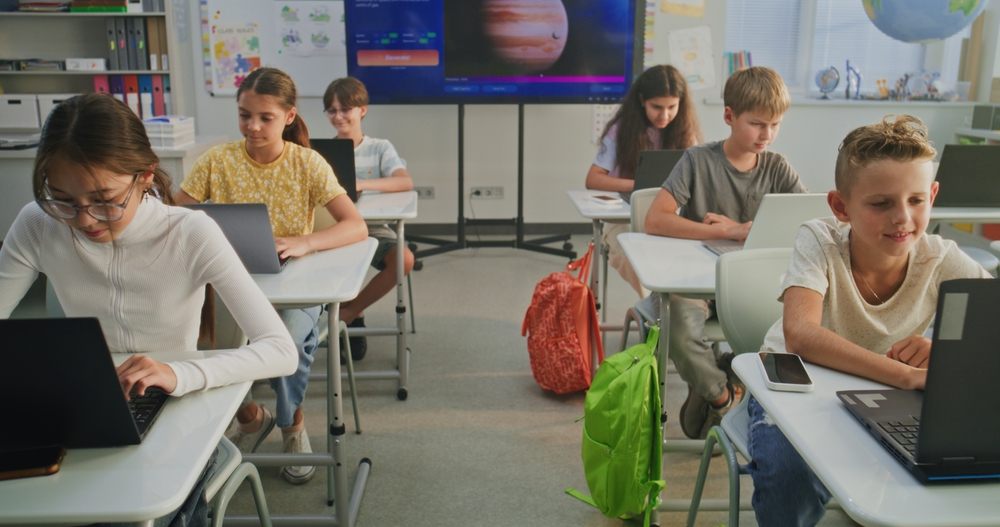
For more than a decade, technology has been sold as the answer to nearly every challenge facing education. Schools invested billions in laptops, tablets, digital textbooks, and online learning platforms, believing that more screens would naturally create better students. Classrooms became increasingly connected, but many teachers began noticing something they hadn’t expected. Students were reading less deeply, struggling to stay focused, and finding it harder to express complex ideas without relying on search engines or AI tools.
Now, a growing number of educators are asking a different question. Instead of wondering which new technology might improve learning, they’re asking whether some of the oldest tools were working better all along. One Minnesota teacher’s decision to replace laptops with notebooks and physical books has become part of a wider movement that suggests meaningful learning may begin not by adding more technology, but by creating space away from it.
A Classroom That Chose Simplicity Over Screens
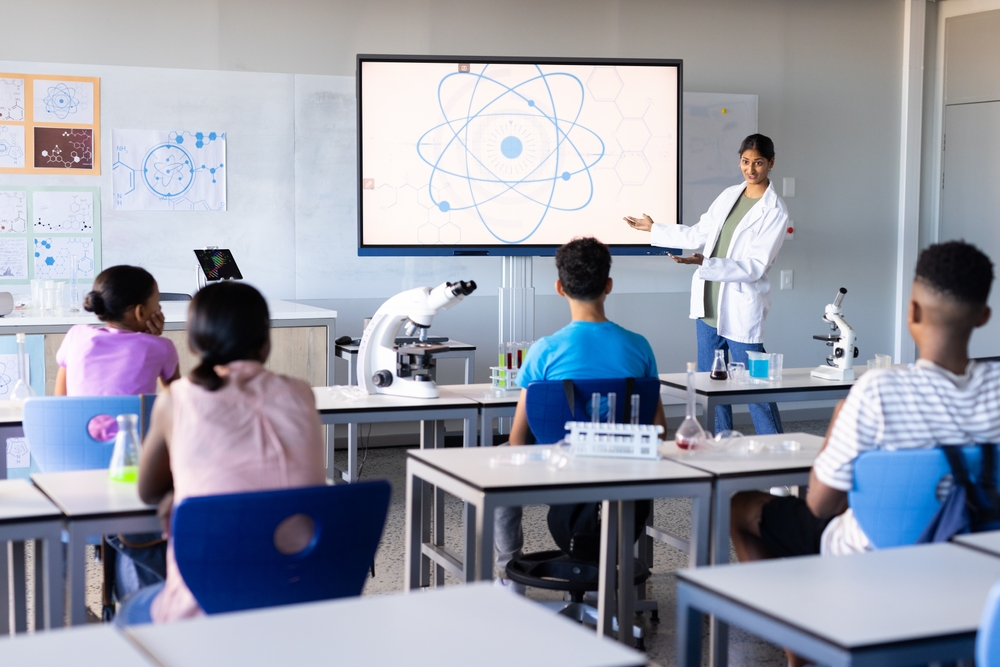
When AP Literature teacher Maureen Mulvaney welcomed students into her classroom at Washburn High School in Minneapolis, she introduced a rule that felt surprisingly radical in today’s educational landscape. Phones were put away. Laptops stayed closed. Reading assignments came from printed books instead of digital files, and essays began with pencil and paper instead of keyboards. To many students, the classroom felt like stepping back into another era. For Mulvaney, however, it wasn’t about nostalgia. It was about removing the constant distractions that had quietly become part of everyday learning.
The transition wasn’t effortless. Many students admitted they initially found handwriting tiring and reading from physical books slower than scrolling through digital documents. Years of typing had made writing by hand feel unfamiliar, while digital habits had conditioned many to jump quickly between tabs, apps, and notifications. Sitting with a single page of text demanded patience that some students hadn’t practiced in years.
Gradually, something remarkable began happening. Students stopped rushing through assignments and spent more time engaging with the material itself. Discussions became more thoughtful because students had carefully annotated passages instead of skimming them. Essays became richer because ideas developed naturally on paper before reaching a final draft. Rather than feeling restricted, many students discovered that fewer digital interruptions actually gave them more freedom to think.
Mulvaney’s classroom didn’t reject technology altogether. Instead, it restored balance by reminding students that some forms of learning benefit from slower, more intentional methods. That simple shift soon produced results few could ignore.

Reading Confidence Grew Alongside Independent Thinking
The improvements weren’t based on vague impressions alone. They appeared clearly in student feedback collected throughout the school year. At the beginning of the semester, only 46 percent of students reported feeling confident in their reading abilities. Just a few months later, that figure had climbed to 95 percent, suggesting that confidence can return surprisingly quickly when students are given the opportunity to rebuild foundational skills.
Writing underwent an equally dramatic transformation. Students who had initially struggled to produce even half a handwritten page gradually found themselves writing six or seven pages during classroom exercises. Nearly 80 percent also said they found it easier to organize their thoughts when writing on paper than when typing on a screen. Instead of feeling overwhelmed by a blank digital document, they were able to develop ideas one sentence at a time, allowing their thinking to unfold more naturally.
Confidence plays a larger role in education than many people realize. Students who believe they are capable readers are more willing to tackle difficult novels. Those who trust their ability to organize thoughts become less dependent on quick online summaries or artificial intelligence to complete assignments. As confidence grows, curiosity often follows, creating a learning environment driven by exploration rather than anxiety.
The classroom experiment suggests that rebuilding academic skills isn’t simply about teaching different content. Sometimes it’s about restoring the conditions that allow those skills to develop in the first place.

Why Writing by Hand Changes the Way the Brain Learns
Modern neuroscience continues to reveal that handwriting is more than an old-fashioned habit. Unlike typing, which often becomes automatic after years of practice, writing by hand requires continuous coordination between the brain, eyes, and muscles. Every letter is physically created, encouraging students to slow down just enough for ideas to become more deliberate and memorable.
Researchers have found that handwriting activates multiple regions of the brain associated with language, memory, and learning. Because students cannot record information as quickly as they can type, they naturally summarize, interpret, and process ideas while writing. This additional mental effort strengthens comprehension rather than simply creating a transcript of what was heard or read.
Reading physical books appears to offer similar advantages. Printed pages provide spatial cues that help readers remember where information appeared, while the absence of hyperlinks, pop-up notifications, and endless scrolling allows attention to remain focused on a single narrative. Many educators argue that this sustained concentration encourages what psychologists describe as “deep reading,” where readers move beyond recognizing words to fully engaging with ideas, themes, and emotional meaning.
None of this suggests that computers have no place in education. Digital tools remain valuable for research, collaboration, accessibility, and creative projects. The growing conversation is instead about understanding which learning experiences benefit most from technology and which may flourish when students occasionally disconnect from it.

The Shift Away From Screens Is Happening Around the World
What makes Mulvaney’s classroom especially compelling is that it isn’t an isolated success story. Across the globe, governments and educators are beginning to question whether the rapid push toward fully digital classrooms came at a cost that wasn’t immediately visible. After years of prioritizing devices, many education systems are now investing once again in printed books, handwritten work, and classrooms where students can learn without the constant pull of smartphones.
Denmark has become one of the clearest examples of this changing mindset. Earlier this year, the country announced plans to ban smartphones in schools while investing millions in physical textbooks and traditional learning materials. Swedish educators have also raised concerns about excessive screen time among younger children, leading policymakers to increase funding for printed books and encourage schools to rely less on digital devices during lessons. Similar conversations are taking place in the Netherlands, Finland, Australia, and parts of Canada, where restrictions on smartphone use during school hours are becoming increasingly common.
Although each country has its own education system and policies, the reasoning behind these changes is remarkably consistent. Teachers have reported that students often struggle to maintain attention, complete longer reading assignments, and engage in meaningful classroom discussion when personal devices remain within easy reach. Rather than viewing technology as the enemy, these schools are recognizing that young minds need periods of uninterrupted focus if they are to develop the habits that support deep learning.
This growing international movement reflects a broader realization that education is about much more than providing information. Children already have access to almost limitless knowledge through the internet. What schools are trying to protect is something far more valuable: the ability to think critically, solve problems independently, and remain fully present with a single idea long enough to understand it.

Technology Expanded Access, But It Also Changed Our Relationship With Attention
Few would argue that technology hasn’t transformed education for the better in many ways. Students today can access digital libraries containing millions of books, collaborate with classmates across the world, attend virtual lectures from leading universities, and find explanations for almost any subject within seconds. These innovations have opened doors that previous generations could hardly imagine.
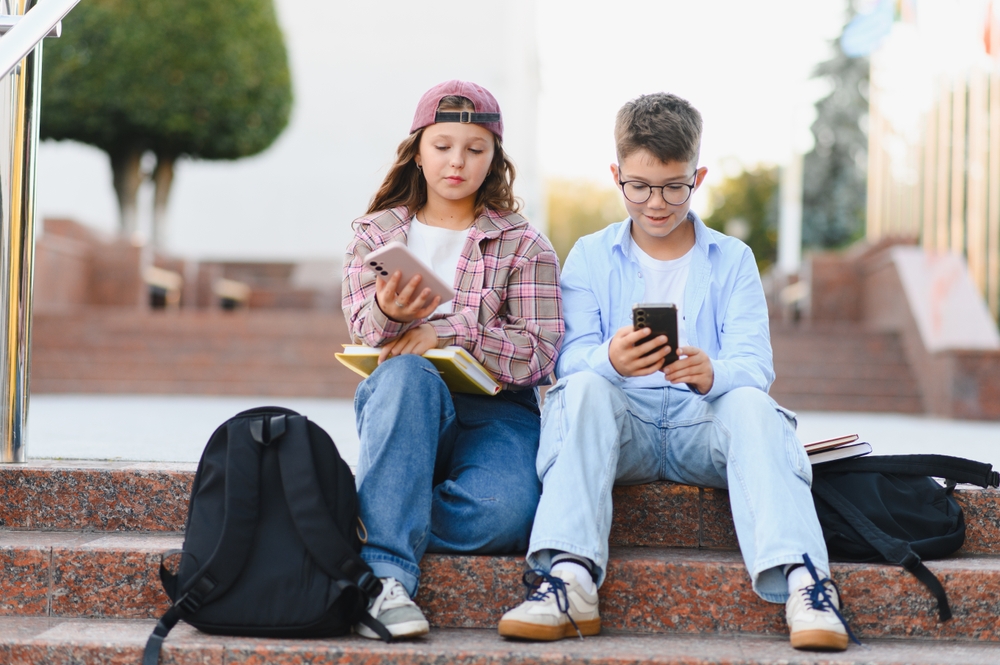
Yet every innovation reshapes human behavior in ways that aren’t always obvious at first. The same laptop that allows a student to research Shakespeare can also deliver social media notifications, instant messages, breaking news alerts, online games, and an endless stream of entertainment, all within a single study session. Even students with the best intentions often find themselves switching between tasks, convinced they are multitasking effectively when research consistently suggests otherwise.
Attention has quietly become one of the most valuable resources of the modern world. Technology companies compete relentlessly for it because attention drives engagement, advertising, and profit. Schools, meanwhile, are trying to cultivate the very opposite: sustained concentration, thoughtful reflection, and the patience required to wrestle with difficult ideas. Those two goals don’t always coexist comfortably on the same device.
Perhaps that explains why so many students in Mulvaney’s classroom described feeling calmer after putting their screens away. They weren’t simply avoiding distractions. They were rediscovering what it feels like to give their full attention to a book, a conversation, or their own thoughts without being interrupted every few minutes. In an age defined by constant stimulation, that kind of focus has become surprisingly rare.
What Parents and Educators Can Learn From This Experiment
One of the most encouraging aspects of this story is that it doesn’t require expensive technology or sweeping policy reforms to replicate. The changes observed in one Minnesota classroom suggest that small, intentional shifts can have a meaningful impact on how young people learn, communicate, and relate to one another. Whether at school or at home, creating moments free from digital distractions may be one of the simplest ways to support healthier learning habits.
Parents and educators looking to strike a better balance don’t necessarily need to eliminate technology altogether. Instead, they can focus on creating environments where children experience both the benefits of digital tools and the cognitive advantages of slower, more intentional learning. Some practical approaches include:
- Encourage handwritten note-taking: Writing by hand can improve memory, comprehension, and idea organization compared to typing everything on a keyboard.
- Keep printed books in regular rotation: Reading physical books encourages sustained attention and reduces the temptation to switch between multiple digital tasks.
- Create phone-free learning periods: Even short periods without notifications can help students develop stronger focus and deeper engagement with their work.
- Prioritize discussion over quick answers: Asking students to explain their thinking instead of immediately searching online strengthens critical thinking and confidence.
- Model healthy technology habits: Children often mirror adult behavior, making mindful screen use at home just as important as policies in the classroom.
These practices aren’t about rejecting innovation. They’re about ensuring that technology remains a tool rather than becoming the center of every learning experience. Education has always been most effective when it balances new possibilities with timeless principles, and this growing movement suggests many schools are beginning to rediscover that balance.
Sometimes the Best Way Forward Is to Remember What Already Worked
For years, conversations about improving education have centered on finding the next breakthrough. New software, smarter devices, artificial intelligence, and increasingly sophisticated learning platforms have all promised to solve the challenges facing modern classrooms. Yet one Minnesota teacher demonstrated that meaningful change doesn’t always begin with a new invention. Sometimes it begins with a notebook, a pencil, and the willingness to remove the distractions that slowly crept into everyday learning.
The results are encouraging not because they prove technology has failed, but because they remind us that the human mind still learns best through attention, curiosity, and meaningful engagement. Students who once doubted their reading abilities began trusting themselves again. They wrote more, thought more deeply, and connected more naturally with the people around them. Those are skills that extend far beyond the classroom, shaping how young people communicate, solve problems, and understand the world long after graduation.
As schools continue searching for the right balance between innovation and tradition, this experiment offers a hopeful perspective. The tools that help children flourish may not always be the newest ones. Sometimes the quiet turning of a page creates exactly the kind of space where confidence, creativity, and genuine learning can grow again.