

The Surprising Reason So Many Older Adults Are Returning to Band Camp
There comes a point in many people’s lives when the calendar finally begins to slow down. The children have grown up, careers are winding down, and the constant rush that once defined everyday life gradually gives way to quieter mornings and longer afternoons. It sounds like the reward people spend decades working toward, yet many retirees discover an unexpected reality. Free time is easy to find, but genuine connection is much harder. The routines that once brought daily conversations, shared goals, and a sense of belonging often disappear almost overnight, leaving many older adults searching for meaningful ways to reconnect with both others and themselves.
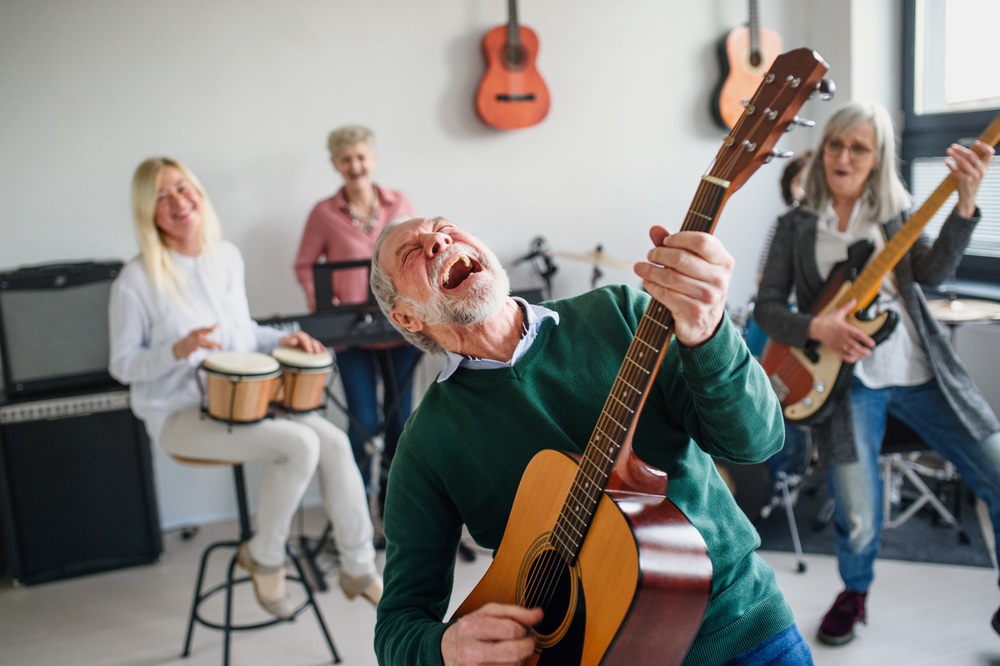
Across the United States, an unlikely answer is emerging from rehearsal halls instead of retirement clubs. Adults in their 50s, 60s, and even 70s are dusting off instruments that have spent years tucked away in closets and attics, enrolling in band camps once associated almost exclusively with teenagers. What brings them back is rarely the desire to perfect a trumpet solo or master a difficult piece of music. Instead, they are rediscovering something that has become surprisingly rare in modern life: a community built around shared purpose, creativity, and the simple joy of making something beautiful together.
A Childhood Tradition Returns With New Meaning
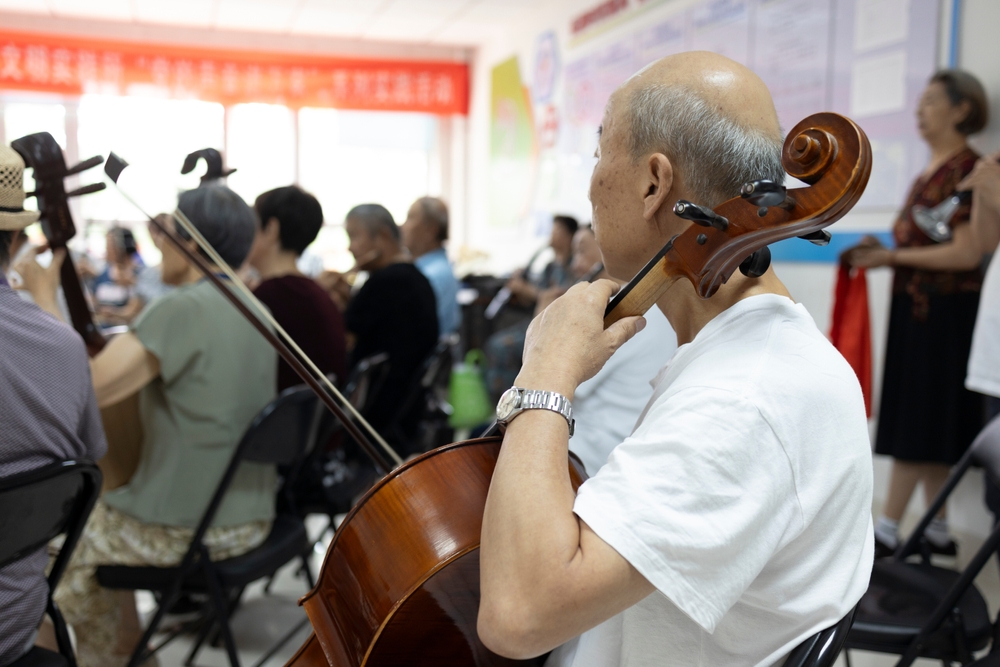
For many participants, walking into an adult band camp feels strangely familiar. Music stands line the room, instruments are carefully unpacked, and the first warm-up notes fill the air just as they did decades earlier. The difference is that no one is there because a teacher assigned them to be. Every person in the room has made a conscious decision to return, often after years or even decades away from their instrument. That choice gives the experience a very different emotional weight.
Band camps have quietly expanded across states including Maine, Michigan, Pennsylvania, and Washington, welcoming adults with a wide range of musical backgrounds. Some camps cater to former professional or university musicians eager to challenge themselves with complex orchestral works. Others are designed for people who have not played since high school and simply want the confidence to begin again. Regardless of skill level, the atmosphere is remarkably similar. Encouragement matters more than perfection, and every rehearsal becomes an opportunity to learn alongside people sharing the same journey.
Many participants admit they once believed that chapter of their lives had closed forever. Careers demanded attention, children needed raising, mortgages had to be paid, and hobbies gradually slipped down the priority list. Musical instruments were packed away with every intention of being used again someday. For many, that “someday” quietly stretched into 20 or 30 years. Adult band camps offer something many never expected to find: permission to reopen a part of themselves they thought had been left behind.
Why Music Still Brings People Together
One of the most remarkable things about making music in a group is that success depends on listening just as much as performing. Every musician must remain aware of everyone around them, adjusting rhythm, volume, and timing until dozens of individual sounds become one unified performance. It is a rare activity in modern life that encourages cooperation without competition. No single player can carry an orchestra, and every contribution matters, regardless of experience.
That spirit of collaboration often creates friendships far more quickly than ordinary social gatherings. Conversations begin naturally during rehearsals, coffee breaks, and shared meals, but much of the connection happens without words. Participants gradually learn to trust one another through the music itself. They celebrate improvements together, laugh through mistakes, and encourage each other when difficult passages refuse to come together on the first attempt.
Among those embracing the experience is 71-year-old retired Department of Defense lawyer Lori Guess from Baltimore. Reflecting on what playing alongside others has meant, Guess told the Associated Press, “When you’re playing music together, you rise above all the pettiness of life… And it’s just the most spiritual thing I can think of.”
Those words resonate because they point toward something larger than music. They describe what happens when people become fully present with one another, setting aside the distractions and divisions that so often dominate everyday life.
A Quiet Response To A Growing Loneliness Epidemic
Over the past several years, researchers and public health experts have increasingly warned about rising levels of loneliness affecting millions of people. Retirement, changing family structures, and the gradual loss of long-established routines have left many older adults feeling disconnected from the communities that once surrounded them. While technology allows people to stay in touch across great distances, digital interaction often struggles to replace the warmth of spending meaningful time together in person.
Adult band camps offer an answer that feels refreshingly uncomplicated. Participants gather not to network professionally or build an online following, but simply to create music together. There is no expectation that rehearsals will become social media content or personal branding opportunities. Success is measured by showing up, contributing to the group, and enjoying the process rather than chasing outside recognition.
This reflects something many people quietly crave. Shared purpose has become increasingly difficult to find in adulthood. Childhood naturally provided sports teams, school clubs, neighborhood friendships, and music programs where relationships developed almost effortlessly. Adults often have to work much harder to create those same opportunities. Music camps recreate that environment in a way that feels welcoming rather than forced.
Perhaps that explains why so many participants describe leaving camp with far more than improved musical skills. They return home carrying new friendships, renewed confidence, and a reminder that meaningful community can still be found at any stage of life.

Music Keeps Both The Mind And Spirit Active
Researchers have spent decades exploring the relationship between music and healthy aging. Although scientists continue studying the full extent of its benefits, a growing body of evidence suggests that actively playing music engages multiple regions of the brain simultaneously. Reading notes, coordinating movement, listening carefully, remembering rhythms, and responding to fellow musicians all happen at once, creating a uniquely stimulating mental exercise.
Beyond the cognitive benefits, music also provides emotional rewards that are difficult to measure in scientific terms. Many participants describe feeling calmer after rehearsals, while others say they experience a renewed sense of purpose that had gradually faded after retirement. Performing as part of a larger group creates moments of achievement that feel deeply personal because they are shared rather than individual.
Some of the reasons adult music camps continue to grow include:
- A welcoming community built around shared interests rather than competition.
- Opportunities to challenge memory, concentration, and coordination.
- Reduced feelings of loneliness through regular face-to-face interaction.
- A creative outlet that encourages lifelong learning.
- The simple satisfaction of contributing to something larger than yourself.
These benefits extend far beyond the rehearsal room. They influence how people see themselves, reminding participants that growth and discovery do not have an expiration date.
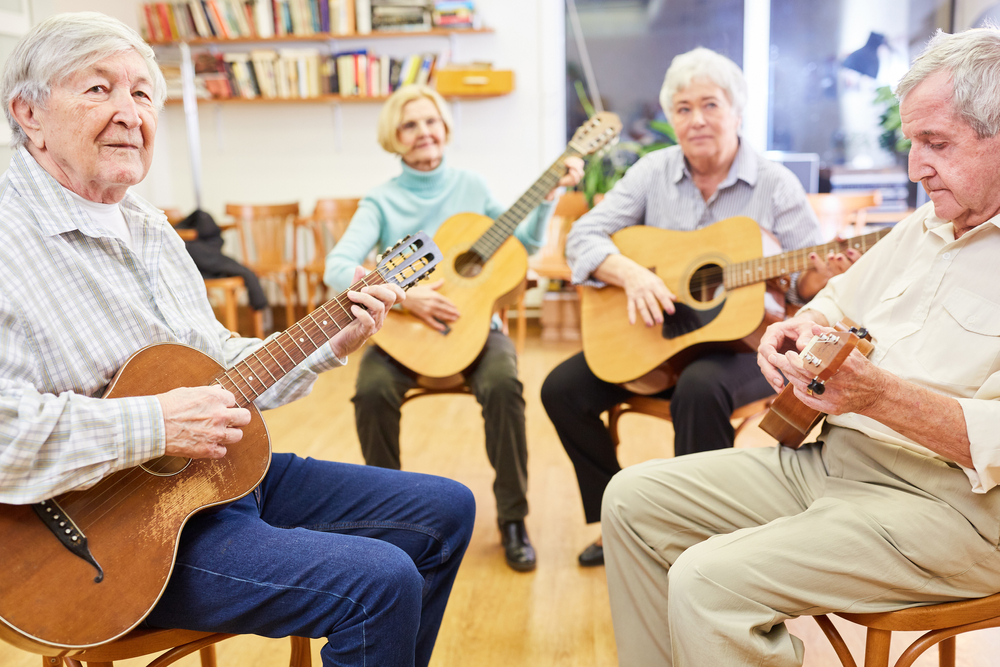
Rediscovering A Part Of Yourself That Never Really Left
At first glance, it would be easy to dismiss the popularity of adult band camps as another example of nostalgia. After all, people often look back on their teenage years through a softer lens, remembering the friendships while forgetting the awkward rehearsals, early mornings, or long hours spent practicing scales. Nostalgia certainly plays a role, but it doesn’t fully explain why someone would commit several days to rehearsing demanding pieces of music after decades away from an instrument. There has to be something more powerful drawing people back.
That deeper motivation becomes clear when participants describe how it feels to play again. Many aren’t trying to recreate who they were at 16 years old. Instead, they are reconnecting with qualities that adulthood often pushed into the background. Curiosity, creativity, patience, and the willingness to learn for the sheer joy of learning can easily become overshadowed by deadlines, financial responsibilities, and daily obligations. Returning to music gives those qualities room to breathe again.
The experience also reminds people that identity isn’t fixed. Society often encourages adults to define themselves through careers or family roles, yet those chapters eventually change. Retirement can leave people wondering who they are without a job title attached to their name. Sitting in an orchestra offers a surprisingly comforting answer. You are still someone capable of learning, contributing, improving, and creating. Those parts of your identity never disappeared. They simply waited for the opportunity to return.
Perhaps that is why many musicians describe feeling younger after camp, not because they have turned back time, but because they have recovered a sense of possibility that had slowly faded. Growing older does not require giving up the parts of ourselves that once brought genuine happiness.
The Healing Power Of Creating Together
Modern life offers endless ways to consume entertainment. Within seconds, anyone can stream a concert, watch an orchestra perform online, or listen to virtually any piece of music ever recorded. Yet there is a profound difference between observing creativity and participating in it. One makes you a spectator. The other makes you part of the story.
Adult band camps invite people back into the creative process. Every rehearsal asks participants to contribute something uniquely their own while supporting everyone around them. Success belongs to the entire ensemble, not the loudest performer. In a culture that often rewards individual achievement above collective effort, that lesson feels refreshing.
There is also something deeply human about making music in the same physical space. Every breath, every pause, and every carefully timed entrance depends on paying close attention to others. Musicians begin anticipating one another’s movements without speaking. Trust develops naturally because everyone shares responsibility for the final performance.
Many participants arrive knowing almost no one. By the end of camp, they leave exchanging phone numbers, planning reunions, and promising to return the following year. Those friendships are built on shared experiences rather than carefully curated online profiles. They grow through laughter over missed notes, encouragement during difficult rehearsals, and the quiet satisfaction of accomplishing something together.
What Older Adults Can Teach The Rest Of Us
There is an interesting lesson hidden inside the growing popularity of these camps. While younger generations often search for new productivity hacks, networking opportunities, or digital communities, many older adults are finding fulfillment by returning to something beautifully uncomplicated. They are choosing to spend their time mastering music that may never earn them money, attract followers, or advance a career.
That choice challenges one of modern culture’s strongest assumptions: the belief that every hobby should eventually become profitable or publicly visible. Somewhere along the way, many people began feeling that creative pursuits needed to produce measurable success to justify the time invested. Adult band camps quietly reject that idea.
Instead, they celebrate activities that exist simply because they enrich life. Participants show up because playing music makes them feel more alive. They rehearse because they enjoy improving alongside others. They perform concerts not for fame, but for the satisfaction of creating something meaningful together.
There is wisdom in that approach. It suggests fulfillment isn’t always found by adding more achievements to our lives. Sometimes it comes from returning to experiences that remind us why we loved creating in the first place.
The Music Doesn’t End When The Camp Does
Although the concerts eventually conclude and participants pack their instruments away once more, the experience rarely ends there. Many return home inspired to practice regularly, join local community orchestras, or simply keep music as a permanent part of their weekly routine. Others maintain friendships formed during camp, planning reunions or meeting again the following summer.
The impact often reaches beyond music itself. People who rediscover one forgotten passion frequently become more willing to revisit others they had quietly abandoned over the years. Whether painting, writing, gardening, or volunteering, they begin seeing retirement not as a period of slowing down, but as an opportunity to reconnect with parts of themselves that life had temporarily placed on hold.
That shift in perspective may be one of the most valuable outcomes of all. Aging is often portrayed as a gradual process of giving things up. Yet these musicians demonstrate that growing older can also be a season of rediscovery, where experience meets curiosity instead of replacing it.
The instruments may have gathered dust for decades, but the desire to create never truly disappeared. Sometimes all it takes is one invitation, one rehearsal, and one familiar melody to remind someone that they still have songs left to play.