


Scientists Discover That Human Brains Can Synchronize During Meaningful Conversations
Have you ever met someone who seemed to understand what you were thinking before you even spoke? Maybe you were working on a creative project together, finishing each other’s sentences, or sharing ideas that appeared almost simultaneously. Those moments often feel mysterious, as though an invisible connection has formed between two minds. For generations, people have described this experience as having chemistry, sharing good vibes, or simply being “on the same wavelength.” New neuroscience suggests those familiar expressions may reflect something far more measurable than we once imagined.
Researchers are now finding evidence that our brains can actually synchronize during meaningful social interactions. Rather than functioning as isolated organs, they appear capable of aligning their activity when people communicate, collaborate, or share a common goal. The discovery offers a fascinating glimpse into how deeply humans are wired for connection, and it may help explain why some conversations, friendships, and partnerships feel so effortless while others never quite find the same rhythm.
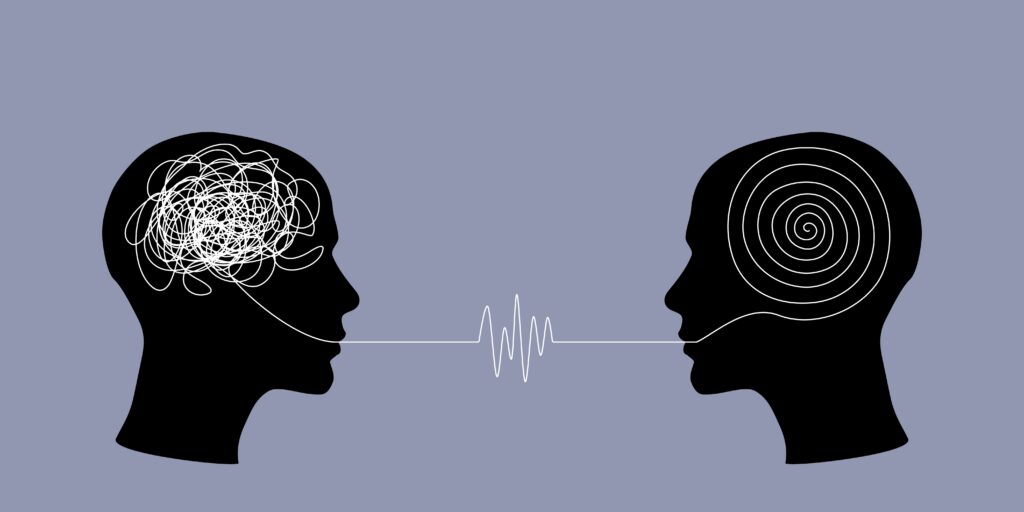
Scientists Found That Brainwaves Can Align
A recent review published in Trends in Cognitive Sciences examined more than a decade of research involving thousands of participants, including students, teachers, therapists, musicians, and creative professionals. Using portable electroencephalography (EEG) headsets, researchers observed that people who became genuinely engaged with one another gradually showed similar patterns of brainwave activity. This synchronization appeared across a wide variety of environments, from classrooms and therapy sessions to artistic collaborations and musical performances. Instead of being a rare occurrence, brain synchrony emerged as a surprisingly common feature of meaningful human interaction.
One of the most intriguing discoveries was that synchronization could become even stronger when participants received real-time feedback about how closely their brain activity matched someone else’s. In other words, people were not only capable of entering these shared neural states naturally, but they also appeared able to strengthen them once they became aware of the connection. The researchers believe this finding opens exciting possibilities for education, healthcare, and teamwork, where stronger communication and deeper understanding can dramatically improve outcomes.

What Brain Synchrony Actually Means
The idea of synchronized brains can sound almost like science fiction, but researchers emphasize that it has nothing to do with mind reading or telepathy. Brain synchrony does not mean two people suddenly share identical thoughts or memories. Instead, it describes moments when separate brains begin processing information with similar timing and rhythms because both individuals are paying close attention to one another, sharing emotions, or working toward the same objective. Think of two musicians performing a duet. Each plays a different instrument with different notes, yet both follow the same rhythm to create something neither could achieve alone.
Why It Happens
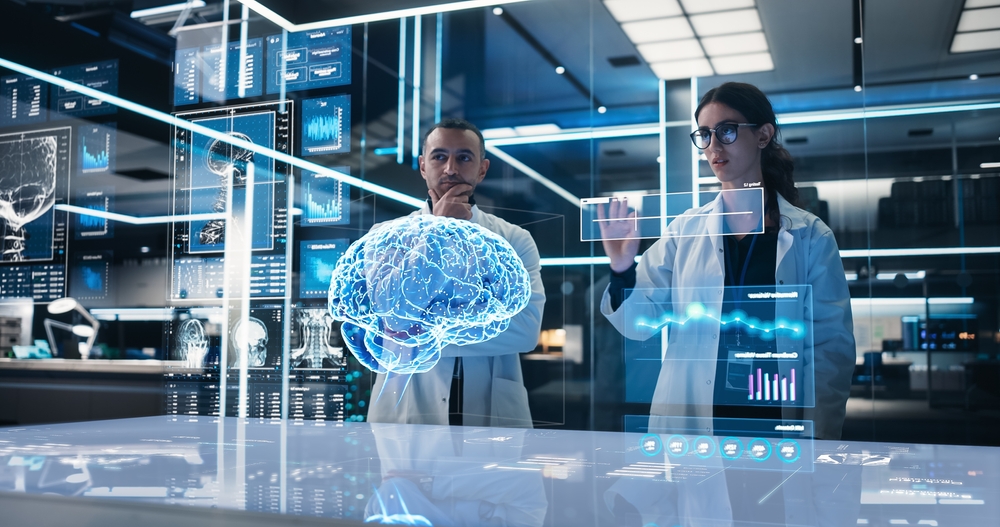
Scientists believe synchrony develops when people become deeply engaged in a shared experience. Holding an attentive conversation, solving a difficult problem together, creating music, or simply listening with genuine curiosity all encourage the brain to align its patterns with another person’s. Shared attention appears to be one of the strongest ingredients, because both individuals are directing their mental resources toward the same experience at the same time. Rather than replacing individual thinking, synchrony allows two minds to coordinate more effectively, making communication feel smoother, creativity flow more naturally, and mutual understanding grow stronger.

Real-World Moments When Our Minds Move Together
The evidence for brain synchrony does not stop inside research laboratories. Scientists have observed it unfolding in classrooms, music studios, and other everyday environments where people naturally collaborate. These real-world examples suggest that synchronized brain activity is not an unusual occurrence reserved for controlled experiments. Instead, it appears to emerge whenever people become deeply engaged with one another, offering a glimpse into the hidden neurological processes that support learning, creativity, and meaningful relationships.
The Classroom Connection
One of the most compelling examples comes from education. Researchers found that students whose brain activity became more synchronized during lessons consistently reported enjoying their classes more than those whose brainwaves remained less aligned. They also felt a stronger connection with their classmates and teachers, suggesting that effective learning depends on far more than simply absorbing information. When students are emotionally engaged and mentally connected with the people around them, their brains appear to process experiences in similar ways, creating an environment where understanding becomes easier and collaboration feels more natural.
This discovery challenges the traditional view that education is purely an individual activity. It suggests that learning may also be deeply social, shaped by the invisible ways our minds respond to shared attention and collective focus. A classroom, then, becomes more than a place where knowledge is transferred. It becomes a space where human connection can influence how effectively that knowledge is received.
Creativity Finds Its Rhythm
Scientists have witnessed similar patterns among professional artists, where collaboration often depends on an almost instinctive understanding between creative partners. One widely discussed study followed Puerto Rican musicians Bad Bunny and Residente as they worked together in the recording studio. While they developed a song, researchers observed their brain activity becoming increasingly synchronized in real time, reflecting the deep level of coordination required during the creative process.
The findings offer a scientific explanation for something many artists have described for years. Musicians often talk about reaching a point where ideas seem to flow effortlessly between collaborators, with each person instinctively knowing where the music should go next. Rather than being purely poetic language, neuroscience suggests these moments may involve measurable changes in how their brains process information together. Creativity, it seems, is not always the work of isolated minds. Sometimes it emerges through connection.

Why Synchrony Makes Us Kinder
Perhaps the most remarkable aspect of brain synchrony is not simply that it exists, but that it appears to influence how people treat one another afterward. Earlier research examining interpersonal coordination found that pairs who completed synchronized activities were significantly more willing to cooperate and help each other once the task had ended. The shared experience seemed to strengthen not only their performance but also their willingness to act in each other’s interests.
Using functional near-infrared spectroscopy (fNIRS), researchers measured synchronized activity between participants as they performed coordinated tasks together. They discovered increased interbrain synchronization in the left middle frontal region, an area associated with higher cognitive functions and social interaction. Participants who displayed stronger synchronization also reported greater shared intentionality, the feeling that both people were working toward the same goal. That sense of common purpose closely predicted how willing they were to trust, support, and assist one another afterward.
These findings suggest that human cooperation may begin long before any act of kindness becomes visible. Before someone offers help, extends compassion, or builds trust, their brain may already be aligning with another person’s through shared attention and mutual understanding. It is a reminder that meaningful relationships are built not only through words but also through subtle biological processes that quietly unfold every time we truly connect with someone.
Could Brain Synchrony Transform Therapy And Education?
Researchers believe brain synchrony may eventually become more than an interesting scientific observation. Because it can now be measured in real time, scientists are exploring whether strengthening this neural alignment could improve outcomes in settings where trust, communication, and understanding are essential. Rather than replacing traditional methods, synchrony could become an additional tool that helps people build stronger relationships and communicate more effectively.
One promising area is mental health care. According to Discover Magazine, a larger federally funded study is now investigating whether increasing synchrony between therapists and patients can improve treatment outcomes. Therapy depends heavily on empathy, active listening, and emotional connection. If researchers can better understand how those moments are reflected in synchronized brain activity, they may uncover new ways to strengthen the therapeutic relationship and support recovery.
Education represents another exciting possibility. Teachers have long known that students learn best when they feel engaged and connected to both the lesson and the classroom community. Brain synchrony offers a biological explanation for those observations. Future research may help educators identify teaching approaches that naturally encourage stronger engagement, allowing classrooms to become places where collaboration enhances not only social relationships but also learning itself.
Beyond schools and clinics, the findings could also influence workplaces, athletic teams, and creative industries. Any environment where people depend on cooperation, shared goals, and effective communication may benefit from a deeper understanding of how human brains naturally coordinate with one another.
What Loneliness May Reveal About Human Connection
Not every participant in these studies experienced the same level of synchrony. Researchers found that individuals who described themselves as feeling lonely generally showed less natural alignment with others during social interactions. While the finding does not suggest that loneliness permanently changes the brain, it raises important questions about how social isolation may affect our ability to connect with the people around us.
The relationship between loneliness and brain synchrony is likely complex. People who spend less time forming close relationships may have fewer opportunities to develop the patterns of attention and emotional engagement that encourage synchronization. At the same time, reduced synchrony could make conversations feel less rewarding, creating a cycle that becomes difficult to break. Scientists are continuing to investigate this relationship, but the research reinforces something psychologists have emphasized for years: meaningful human connection plays a vital role in emotional well-being.
Perhaps the encouraging message is that synchrony is not a fixed trait. The evidence suggests it can strengthen when people actively engage with one another, whether through conversation, shared creativity, learning, or cooperation. Human connection, in many ways, appears to function like a skill that grows stronger with practice.
The Science Behind “Good Vibes”
Expressions like “we just clicked” or “we were on the same wavelength” have existed for generations because they capture experiences that feel deeply familiar. Until recently, those phrases belonged almost entirely to poetry, storytelling, and everyday conversation. Neuroscience is beginning to reveal that they may also describe something happening inside the brain.
That does not mean every strong relationship can be explained by synchronized brainwaves alone. Human connection remains wonderfully complex, shaped by personality, experience, emotion, culture, and countless other factors. Yet brain synchrony offers a fascinating glimpse into one of the hidden mechanisms that may help people understand each other, cooperate more effectively, and create together.
As researchers continue exploring how our brains interact, one idea becomes increasingly clear: connection is not simply something we feel. It is something our brains actively build together, moment by moment, through shared attention, trust, and intention. Science is finally giving us a way to observe what people have sensed all along. Sometimes, when two people truly connect, their minds really do begin moving in harmony.
Sources:
- Hu, Y., Hu, Y., Li, X., Pan, Y., & Cheng, X. (2017b). Brain-to-brain synchronization across two persons predicts mutual prosociality. Social Cognitive and Affective Neuroscience, 12(12), 1835–1844. https://doi.org/10.1093/scan/nsx118
- Czeszumski, A., Liang, S. H., Dikker, S., König, P., Lee, C., Koole, S. L., & Kelsen, B. (2022). Cooperative behavior evokes interbrain synchrony in the prefrontal and temporoparietal cortex: A Systematic Review and Meta-Analysis of FNIRS hyperscanning studies. eNeuro, 9(2), ENEURO.0268-21.2022. https://doi.org/10.1523/eneuro.0268-21.2022