
The Teenager Who Found Clues to Autism Hidden in the Human Eye
Sometimes, a breakthrough begins with a simple question that refuses to leave someone’s mind. For Edward Kang, that question emerged while reading scientific papers for a high school project. What started as curiosity eventually became an artificial intelligence system that could help change how autism and ADHD are detected.
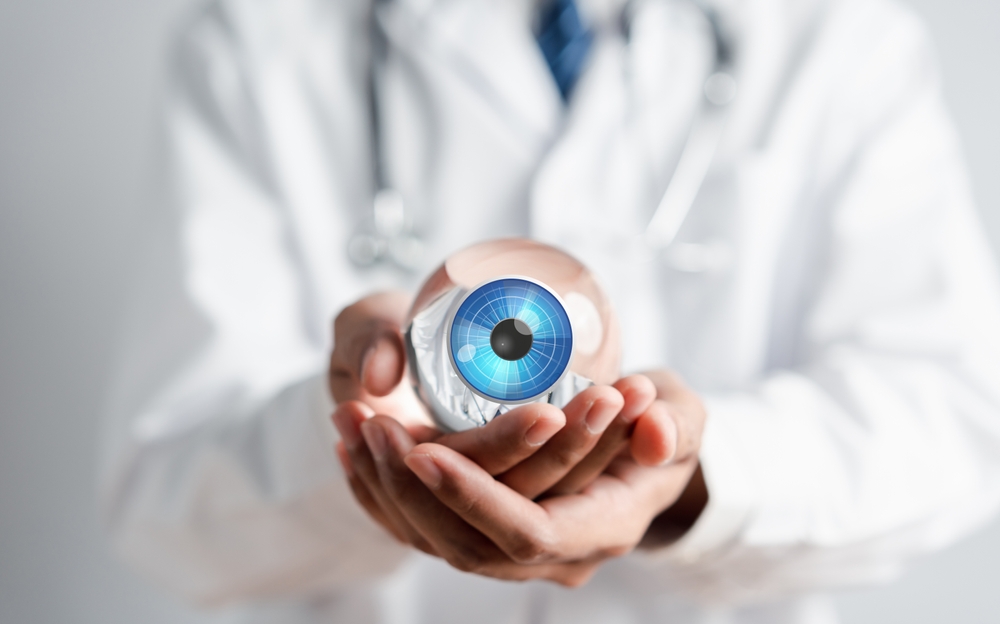
At just 17 years old, the New Jersey high school senior developed RetinaMind, an AI-powered tool that analyzes images of the retina to identify signs of autism spectrum disorder (ASD) and attention deficit hyperactivity disorder (ADHD). The technology has demonstrated an accuracy rate of about 89 percent in distinguishing between neurotypical individuals and those with either condition. More importantly, it points toward a future where diagnosing neurodevelopmental disorders could become faster, less invasive, and more accessible for families around the world.
A School Project That Became Something Much Bigger
Many scientific discoveries begin in research laboratories filled with experienced investigators. Kang’s journey started somewhere far more ordinary.
Three years before earning national recognition, he was simply searching through scientific literature for ideas that could become a meaningful school project. During that search, he came across research from the Chinese University of Hong Kong showing that retinal images could reveal patterns associated with autism.
“I thought it was fascinating and really unintuitive that you can use something like the eye to understand what’s happening in the brain,” Kang explained.
That observation challenged a common assumption. Most people think of the eyes as organs responsible only for vision. Kang began wondering whether they might also contain subtle biological clues about how the brain develops.
Instead of treating the research as an interesting curiosity, he decided to build on it.
Although he had little programming experience, Kang immersed himself in online tutorials and machine learning courses. He taught himself how convolutional neural networks work and gradually recreated the original research model before beginning to improve it.
“I don’t really come from a programming background,” he admitted. “I looked at a lot of different tutorials online.”
That willingness to learn became the foundation for RetinaMind.
Why Earlier Diagnosis Matters So Much
Autism and ADHD are among the most common neurodevelopmental conditions affecting children, yet diagnosing them remains a complicated process.
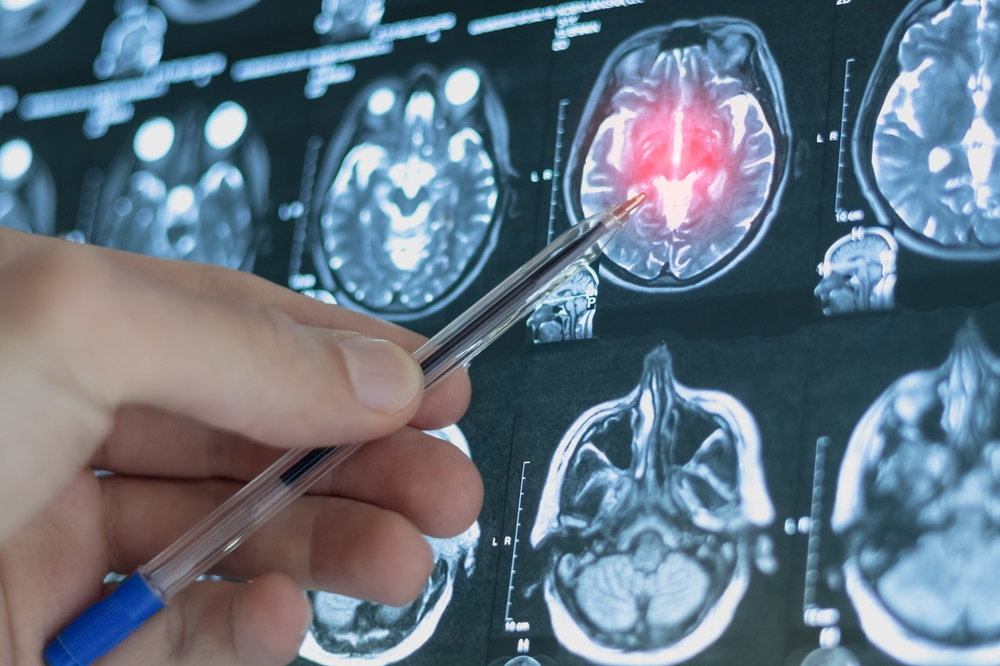
Autism spectrum disorder affects approximately 3 percent of children in the United States, while nearly seven million children are living with ADHD. Despite their prevalence, neither condition has a simple laboratory test or physical marker that doctors can rely on.
Instead, clinicians spend months, and sometimes years, evaluating developmental milestones, behavioral patterns, communication skills, and social interactions.
Parents often begin noticing differences long before a formal diagnosis arrives.
For many families, the waiting period can feel endless.
Doctors typically rely on behavioral assessments such as the Diagnostic and Statistical Manual of Mental Disorders (DSM), the Autism Diagnostic Observation Schedule, and Conners Rating Scales to determine whether a child meets diagnostic criteria. While these evaluations are well established, they require trained specialists, repeated observations, and considerable time.
Paul Lipkin, a neurodevelopmental pediatrician at the Kennedy Krieger Institute and professor of pediatrics at Johns Hopkins Medicine, explained that both autism and ADHD are neurologically based conditions characterized by differences in development and behavior.
“Those affected by autism and/or ADHD frequently have intellectual or learning as well as language disabilities and motor coordination problems,” Lipkin said.
Research has consistently shown that earlier intervention can improve developmental outcomes, particularly for children with autism. The challenge has always been identifying those children sooner.
That is where Kang believed artificial intelligence might contribute something valuable.
Looking at the Retina Instead of Behavior
At first glance, the retina seems like an unusual place to search for evidence of autism or ADHD.
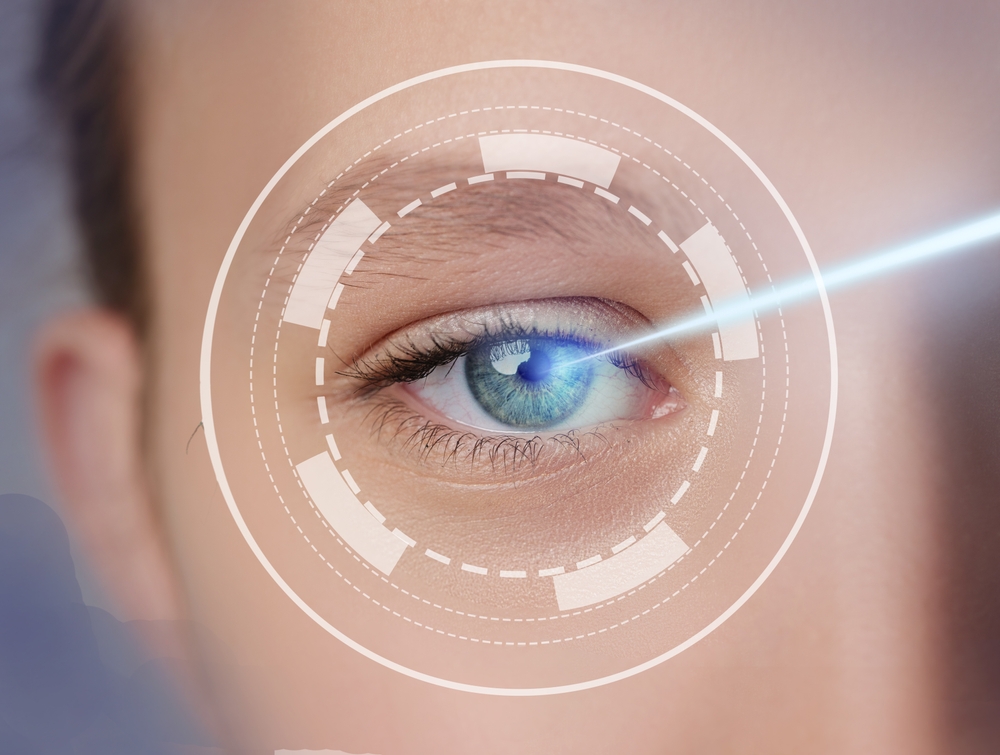
Yet the retina is not simply part of the eye. It is closely connected to the central nervous system and develops alongside the brain during early fetal growth. Scientists have long suspected that subtle changes in retinal structure may reflect neurological development.
The problem has never been finding differences.
The problem has been seeing them.
Advanced imaging techniques such as optical coherence tomography can measure tiny variations in the thickness, depth, and structure of different retinal layers. Researchers have found that people with autism and ADHD often show average differences in areas such as the macula and retinal nerve fiber layer.
Those differences, however, are extraordinarily small.
Many overlap with the normal range found in neurotypical individuals, making them almost impossible for clinicians to recognize simply by examining retinal scans.
Artificial intelligence approaches the problem differently.
Instead of searching for one obvious marker, AI can analyze thousands of microscopic features simultaneously, discovering relationships that human observers cannot easily detect.
That ability formed the core idea behind RetinaMind.
Building an AI That Learns From Images
The first version of RetinaMind was intentionally simple.
Kang recreated the convolutional neural network used in the original Hong Kong research to establish a baseline. From there, he began experimenting with new ways to improve performance.
One of his first decisions was expanding the model beyond autism.
Rather than simply separating autistic individuals from neurotypical patients, he wanted the system to distinguish between autism, ADHD, and individuals without either diagnosis.
That presented a much harder computational challenge.
“Distinguishing between neurotypical individuals and those with autism is not very difficult, and existing studies have already achieved close to 100 percent accuracy,” Kang explained. “Identifying distinct disorders is a much harder task and one that is clinically important.”
To improve reliability, he adopted a machine learning strategy known as ensemble learning.
Instead of depending on one AI model, RetinaMind asks several different models to analyze the same retinal image independently.
Each model generates its own prediction.
Those predictions are then combined into a final result.
“You feed them the same retinal image and ask them to predict autism or ADHD, and then you take their predictions and combine them,” Kang said.
Using multiple models together, he explained, generally improves performance because individual weaknesses are balanced by the strengths of other models.
The finished system ultimately reached an overall diagnostic accuracy of about 89 percent.
While no researcher suggests this is ready to replace clinical evaluations, the results demonstrated that retinal imaging combined with artificial intelligence could become a powerful screening tool.
Looking Beyond Artificial Intelligence
Developing an accurate computer model was only part of Kang’s work.
He also wanted to understand why these retinal differences exist in the first place.
Since late 2024, he has been studying the biology behind retinal development, creating laboratory cell models to investigate genes that may contribute to the structural differences his AI detects.
Among the most intriguing discoveries was a gene known as ABCA4.
According to Kang, this gene produces a protein involved in detoxifying retinal cells. His research suggested that autism cell models showed reduced expression of ABCA4 compared with control cells.
“My retinal cell autism model showed less ABCA4 expression compared to the control,” Kang explained. “This suggests that autistic patients may have less of this detoxifying protein, potentially leading to increased retinal toxicity and degradation, which could explain some of the observed retinal differences.”
To better understand how the AI reached its decisions, Kang also employed a technique called GradCAM, an explainable AI method that highlights the regions of an image most responsible for a prediction.
Instead of functioning as a mysterious “black box,” RetinaMind produces heat maps showing which parts of the retina influenced its diagnosis. That transparency offers researchers valuable insight into what the system is actually learning.
More importantly, it helps bridge the gap between computer science and biology.
Rather than accepting that artificial intelligence works without explanation, Kang sought evidence connecting its predictions to measurable biological processes.
That combination of computational innovation and laboratory research would soon attract attention far beyond his classroom.
National Recognition for an Unconventional Idea
RetinaMind did more than impress teachers or classmates. It caught the attention of one of the most respected scientific competitions in the United States.
Kang presented his work at the 2026 Regeneron Science Talent Search, a competition that has recognized promising young scientists for decades. His project earned second place along with a prize of $175,000, placing him among the country’s top student researchers.
The recognition reflected more than the AI model’s performance. Judges also appreciated that Kang combined computational science with laboratory biology, attempting to understand not only how the technology worked but why it worked.
Maya Ajmera, president and CEO of Society for Science, said the project stood out because of its breadth.
“Edward’s project stood out for combining A.I. with lab-based biology, which gave it both computational sophistication and biological depth,” she said. “He focused on real-world challenges, on autism and ADHD.”
Ajmera also emphasized why the work could matter beyond the competition itself.
Families often spend months, and in some cases years, seeking answers about their child’s development. If reliable screening tools can identify concerns earlier, children may receive support sooner during some of the most important stages of brain development.
The value of RetinaMind lies as much in that possibility as in its technical achievement.
A Tool That Supports Doctors, Not Replaces Them
Artificial intelligence often sparks conversations about replacing human expertise. In medicine, those discussions tend to become even more sensitive because every diagnosis carries significant consequences.
RetinaMind was never designed to replace physicians.
Instead, Kang envisions it as a screening tool that helps doctors identify children who may benefit from further evaluation.
That distinction matters.
Behavioral conditions such as autism and ADHD involve far more than what can be seen in a retinal image. They affect communication, learning, emotional regulation, relationships, and many aspects of daily life. Clinical expertise remains essential for understanding each person’s unique strengths and challenges.
Paul Lipkin welcomed the project’s potential while also urging caution.
“Any retinal differences identified may not be specific for these conditions, but instead of some brain-based neurologic condition generally,” he said.
His concern highlights an important principle in medical research.
A promising proof of concept is only the beginning.
Before any AI system becomes part of routine healthcare, researchers must validate it across larger and more diverse populations. They must determine whether the patterns it identifies remain accurate across different ages, ethnic backgrounds, medical histories, and coexisting neurological conditions.
Those studies take time.
They also require collaboration between computer scientists, physicians, neuroscientists, and healthcare systems.
Kang has acknowledged these limitations from the beginning.
Rather than presenting RetinaMind as a finished solution, he describes it as a foundation that can continue evolving through further research.
The Next Challenge Is Understanding the Spectrum
One of the first improvements Kang hopes to make involves recognizing the diversity that exists within autism itself.
Neither autism nor ADHD is a single, uniform condition.
People experience different combinations of strengths, challenges, communication styles, sensory sensitivities, attention patterns, and support needs. Two individuals with the same diagnosis can have remarkably different experiences.
Current versions of RetinaMind classify patients into broad diagnostic categories.
Kang believes future versions should become much more specific.
“Right now, my model just makes a blanket diagnosis of either autism spectrum disorder or attention deficit hyperactivity disorder,” he explained. “But within these kinds of disorders, it’s a very wide spectrum of different kinds of conditions.”
His long-term goal is to train the system to recognize varying levels of autism and provide information that could help clinicians tailor interventions more effectively.
“The more specific information we can get out of the model,” Kang said, “the more effective it is in terms of guiding treatment and making sure that the child is getting the right amount of support that they need.”
That perspective reflects an important shift in how artificial intelligence is increasingly viewed in healthcare.
The objective is not simply to produce faster answers.
It is to generate more useful information that helps clinicians make better decisions while preserving the human judgment that medicine depends upon.
What the Eye Can Reveal About the Brain
RetinaMind also contributes to a broader scientific question that has fascinated researchers for years.
The retina is often described as a window into the brain because it develops from the same embryonic tissue as the central nervous system. Unlike the brain itself, however, it can be photographed quickly and noninvasively.
That makes retinal imaging an attractive area of study for conditions that involve neurological changes.
Researchers have already explored retinal biomarkers for Alzheimer’s disease, Parkinson’s disease, multiple sclerosis, schizophrenia, and other neurological disorders. While many of these investigations remain experimental, they point toward a future in which routine eye examinations could reveal information extending well beyond vision.
Artificial intelligence is accelerating that possibility.
Modern machine learning systems excel at recognizing subtle image patterns that escape even experienced specialists. Instead of relying on one visible abnormality, they analyze countless microscopic features simultaneously, identifying combinations that correlate with disease.
RetinaMind represents one example of this growing movement.
Its success suggests that medical imaging may contain far more information than physicians have traditionally been able to extract.
That realization could reshape not only neurodevelopmental screening but many other areas of medicine in the years ahead.
Curiosity Still Drives Scientific Progress
Stories about artificial intelligence often focus on increasingly powerful computers.
This story begins with curiosity.
Kang did not set out to transform pediatric healthcare. He followed an observation that seemed unusual, invested years learning skills he did not already possess, and continued asking questions after many people might have stopped.
His work also illustrates something easy to overlook in conversations about AI.
Artificial intelligence does not invent meaningful questions on its own.
People do.
The algorithms inside RetinaMind are sophisticated, but they required someone willing to connect neuroscience, ophthalmology, genetics, and computer science into a single project.
That kind of interdisciplinary thinking is becoming increasingly valuable as scientific fields continue to overlap.
The technology may be impressive, but the willingness to explore unexpected connections is what made RetinaMind possible.
A Future Built One Discovery at a Time
Whether RetinaMind eventually becomes part of routine clinical practice remains to be seen. It will require larger studies, independent validation, regulatory review, and continued refinement before doctors can rely on it in everyday healthcare.
Even so, its significance extends beyond one invention or one competition.
It demonstrates that fresh ideas can emerge from unexpected places, especially when curiosity meets persistence. A teenager reading research papers for a school assignment found a new way to look at the relationship between the eye and the brain, opening a conversation that scientists and physicians are likely to continue for years.
If RetinaMind fulfills even part of its promise, future families may spend less time waiting for answers and more time receiving the support they need. That possibility alone makes this achievement worth watching.