

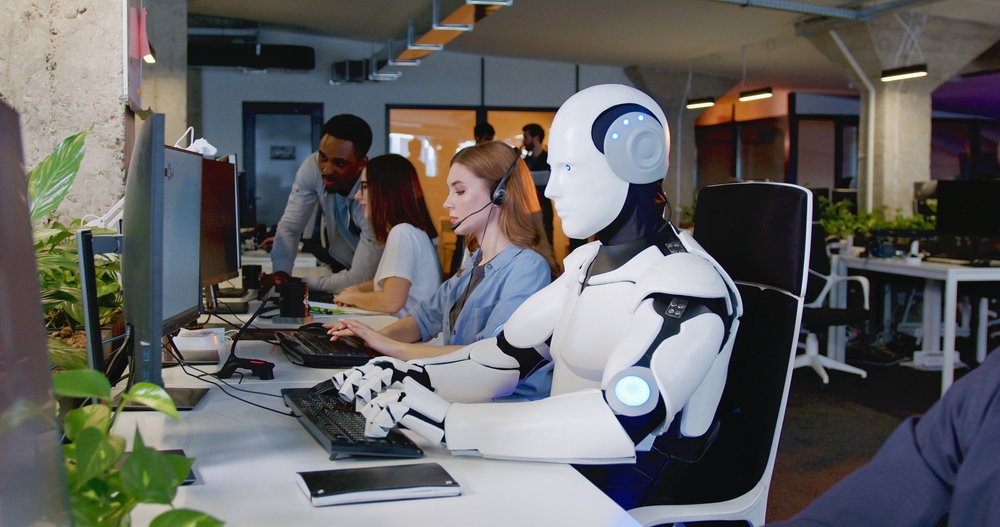
Companies That Chose AI Over People Are Facing a Reality Check
The conversation around artificial intelligence often sounds like history moving at full speed. Every week seems to bring another announcement about smarter systems, larger investments, or companies promising to reinvent the future of work. For many employees, those headlines have carried a quieter message beneath them: human jobs may no longer be safe.
Yet beneath the excitement, something far more complicated is beginning to emerge. A growing body of research suggests that replacing people with AI is not delivering the financial transformation many executives expected. Instead, organizations that rushed to cut staff are discovering that technology alone cannot replace the knowledge, judgment, and relationships that people bring to work every day.
The Race Toward Automation Left Little Room for Reflection
Few technological shifts have spread through boardrooms as quickly as artificial intelligence. After the public release of advanced AI systems, executives across industries found themselves under pressure to prove they were embracing the next major innovation.
For some organizations, that meant investing in software that could draft reports, answer customer questions, analyze data, or automate repetitive administrative work. Others went much further by reducing their workforce in the belief that AI would quickly absorb many of those responsibilities.
The logic appeared straightforward. Fewer employees would reduce labor costs while AI increased productivity. The combination promised healthier profit margins and faster growth.
Investors welcomed ambitious AI announcements. Corporate leaders spoke enthusiastically about digital transformation. Headlines frequently portrayed automation as an inevitable replacement for large sections of the workforce.
Many companies made decisions before there was meaningful evidence that those assumptions would hold true.
Now, some of the first large-scale data examining those decisions suggests the expected financial payoff has been much harder to find.
A Large Survey Paints A Very Different Picture
New research conducted by Gartner examined responses from 350 executives working at companies generating more than $1 billion in annual revenue.
The survey confirmed what many employees had already suspected. Around 80 percent of executives acknowledged reducing staff in order to fund investments in artificial intelligence or autonomous technologies.
That statistic alone illustrates how deeply AI has influenced corporate decision-making. Rather than treating artificial intelligence as another software upgrade, many businesses reshaped their workforce around the expectation that automation would soon shoulder a substantial share of daily work.
The surprising finding came when researchers compared business outcomes.
Companies that reduced their workforce reported essentially the same financial gains as organizations that retained their employees while investing in AI.
In other words, cutting people to finance AI investments did not produce superior returns.
That finding challenges one of the strongest assumptions driving the current wave of automation.
If eliminating jobs does not improve financial performance, companies may have sacrificed experienced employees without receiving the competitive advantage they expected.
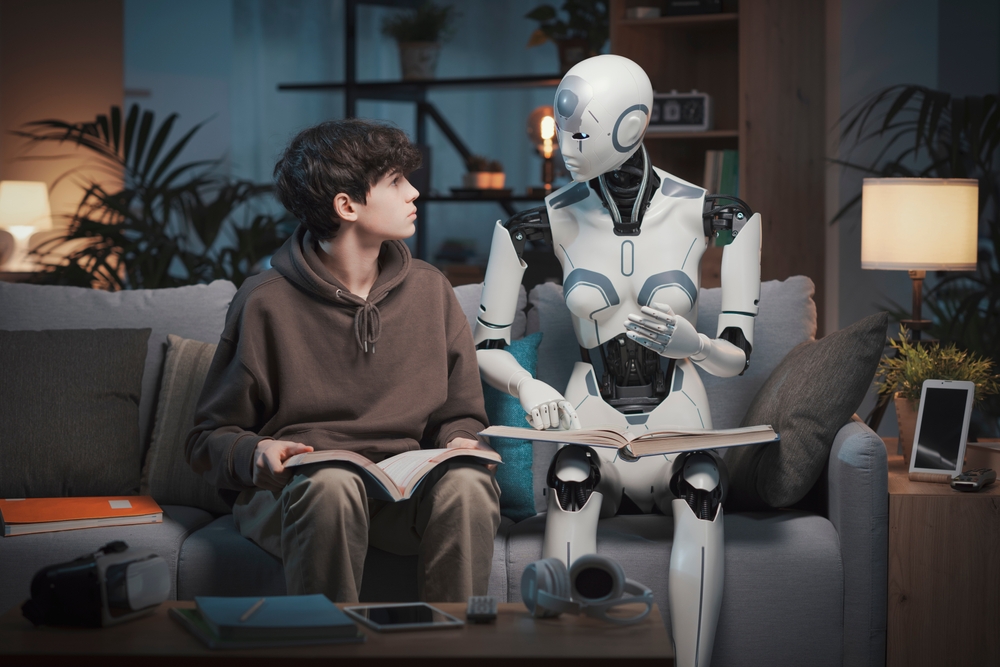
Human Knowledge Is Difficult To Replace
Businesses often measure labor as an expense on financial statements. What rarely appears on those balance sheets is the enormous amount of institutional knowledge employees accumulate over years of experience.
Long-serving staff understand why certain decisions were made years earlier. They recognize unusual customer situations before they become major problems. They know which shortcuts create hidden risks and which processes actually work despite looking inefficient on paper.
Artificial intelligence excels at processing information that already exists.
Experienced employees contribute something different.
They understand context.
That distinction becomes important whenever businesses encounter situations that fall outside predictable patterns.
A customer with an unusual request. A manufacturing issue that has never occurred before. A negotiation requiring empathy rather than calculation. A project that depends on trust between departments rather than technical accuracy.
These situations rarely make headlines, yet they define much of everyday business.
Removing experienced employees often removes the people capable of handling precisely those moments.
Replacing that knowledge takes years.
Software can process information almost instantly, but organizations cannot rebuild lost experience overnight.
Why Cost Savings Alone Rarely Create Better Businesses

Reducing payroll certainly lowers expenses in the short term.
The challenge is that successful businesses depend on far more than reducing costs.
Innovation depends on people sharing ideas.
Customer satisfaction depends on relationships.
Leadership depends on judgment developed through experience.
Culture depends on trust.
When layoffs occur primarily to finance technology investments, companies may unintentionally weaken several of those foundations simultaneously.
Employees who remain often experience increased uncertainty about their own future.
Managers spend more time reorganizing teams.
Departments lose mentors who previously trained younger colleagues.
Projects slow as remaining workers absorb unfamiliar responsibilities.
Even highly capable AI systems cannot immediately compensate for those disruptions.
Technology may automate individual tasks, but rebuilding organizational confidence takes much longer.
For companies hoping AI would accelerate productivity overnight, that adjustment period may explain why financial improvements have proven so difficult to identify.
The Companies Seeing Better Results Took A Different Approach

The Gartner findings did not suggest AI lacks business value.
Instead, they pointed toward a different strategy.
Organizations reporting stronger outcomes tended to use AI as a tool that helped employees perform their work more efficiently rather than replacing those employees altogether.
This approach changes the relationship between people and technology.
Instead of asking whether AI can eliminate a job, companies ask how AI can remove repetitive work while allowing employees to focus on responsibilities requiring creativity, judgment, communication, and strategic thinking.
That distinction may sound subtle.
Its effects can be substantial.
Consider customer service.
AI can summarize previous conversations, retrieve information quickly, and draft possible responses.
Human representatives remain responsible for understanding emotion, resolving unusual situations, and making decisions that require empathy.
The technology accelerates the work rather than replacing the worker.
The same principle applies across many professions.
Engineers spend less time writing repetitive code.
Lawyers organize documents more efficiently.
Doctors review records faster.
Researchers analyze larger datasets.
Teachers create learning materials more quickly.
In each example, AI reduces repetitive effort while leaving people responsible for interpretation, accountability, and final decisions.
That partnership appears to generate stronger business outcomes than replacement alone.
Employees Are Not Automatically Embracing AI

Another challenge has received far less public attention.
Many organizations have purchased sophisticated AI systems only to discover their employees hesitate to use them.
Earlier research found that more than half of employees avoid using workplace AI tools altogether.
Some worry about accuracy.
Others question data privacy.
Many remain uncertain about when AI should be trusted and when human judgment should take priority.
There is also an emotional dimension.
Employees who fear AI could eventually replace them naturally become less enthusiastic about adopting the technology.
The same software intended to improve productivity may instead create anxiety.
That creates an unexpected paradox.
Businesses invest heavily in AI expecting widespread adoption, while employees quietly avoid using the tools because they associate them with job insecurity.
Technology alone cannot resolve that tension.
Trust must be built through leadership, transparency, and clear communication about how AI fits into the future of work.
When employees understand that AI exists to support their expertise rather than eliminate it, adoption becomes far easier.
That may prove to be one of the most important lessons emerging from the first generation of AI transformation.
The greatest value of artificial intelligence may never come from replacing human intelligence. It may come from creating space for people to use it more fully.
Some Companies Are Already Reversing Course

As the first wave of AI-driven restructuring begins to settle, another trend is quietly taking shape. Several companies that reduced staff while expanding their use of artificial intelligence are now bringing people back.
These reversals do not suggest AI has failed. Instead, they reveal how difficult it is to replace human judgment in complex business environments.
Ford offers one of the clearest examples. After relying more heavily on automation, the automaker reportedly began rehiring hundreds of experienced engineers to tackle quality problems that automated systems struggled to solve.
The challenge was not that AI lacked value. Rather, engineers with years of practical experience could recognize subtle manufacturing issues, understand why problems occurred, and develop solutions that software alone could not consistently produce.
The lesson extended beyond the automotive industry.
Australia’s Commonwealth Bank also found itself reassessing its strategy after replacing dozens of customer service employees with an AI voice system. The technology proved less capable than expected of handling the wide variety of customer interactions it encountered. Instead of reducing pressure on support teams, the bank experienced increased call volumes and eventually reversed the layoffs.
The bank later acknowledged it had not fully considered every business factor before making those staffing decisions.
IBM has reached a similar conclusion through a different path.
The company successfully automated much of its routine human resources work with AI. Routine employee questions could be answered efficiently, allowing the technology to handle a large percentage of administrative requests.
Yet the remaining cases proved to be the ones that mattered most.
Ethical concerns, sensitive workplace situations, and complex employee decisions still required experienced people capable of balancing context, empathy, and organizational values.
Recognizing the importance of developing future talent, IBM also announced plans to expand entry-level hiring. Company leaders warned that eliminating early career opportunities would eventually leave organizations without the experienced professionals needed in future leadership roles.
Those examples point toward a growing realization across industries.
Automation may simplify routine work, but businesses still depend on people to manage uncertainty, relationships, and decisions that cannot be reduced to predictable patterns.
Why Human Oversight Continues To Matter

Artificial intelligence is remarkably capable at identifying patterns within enormous amounts of information.
That strength has created understandable excitement.
However, businesses rarely operate in perfectly predictable environments.
Unexpected situations appear every day.
Customers change their minds.
Markets shift.
Regulations evolve.
Equipment fails.
Employees face ethical dilemmas that cannot be solved by selecting the statistically most likely answer.
These moments require judgment.
They require accountability.
Most importantly, they require someone willing to accept responsibility for the outcome.
Several workplace studies suggest that removing too much human oversight may actually introduce new problems instead of eliminating existing ones.
When employees assume AI is responsible for the quality of work, they may pay less attention to reviewing its output carefully. Errors that would have been caught during manual review can instead pass unnoticed because workers assume the technology has already done the difficult thinking.
Researchers have also observed another behavioral shift.
When organizations begin describing AI as digital coworkers or placing AI systems alongside employees on organizational charts, some workers become less likely to feel personally responsible for mistakes involving those systems.
Instead of encouraging accountability, the technology can unintentionally become a convenient target for blame.
That subtle psychological change matters because every successful organization depends on people taking ownership of their work.
Artificial intelligence can assist with producing information.
Only people can remain accountable for how that information is ultimately used.
The Future May Belong To Collaboration Rather Than Competition
For years, discussions about AI have often been framed as a contest between humans and machines.
The question has usually been simple.
Which one performs better?
Increasingly, research suggests that may be the wrong comparison.
Many of today’s strongest business results appear to come from combining the strengths of both.
Artificial intelligence processes enormous volumes of information in seconds.
People contribute experience, creativity, ethical reasoning, emotional intelligence, and adaptability.
Together, those strengths complement one another.
AI can prepare financial analysis before an executive meeting.
Leaders still determine which decisions align with the company’s long-term strategy.
AI can draft marketing content.
Experienced editors ensure it reflects the organization’s voice and values.
AI can identify medical patterns.
Doctors remain responsible for diagnosis, treatment decisions, and conversations with patients whose circumstances rarely fit neatly into statistical models.
The future workplace may therefore become less about replacement and more about redesign.
Rather than asking which jobs disappear, organizations may achieve better results by identifying which individual tasks technology performs best while allowing people to focus on work that benefits from distinctly human capabilities.
That shift also creates opportunities for employees.
As repetitive administrative work becomes increasingly automated, professionals may spend more time solving problems, building relationships, mentoring colleagues, and developing new ideas.
Those responsibilities have always generated much of an organization’s long-term value.
AI simply has the potential to create more room for them.

Building Workplaces That People Want To Be Part Of
Technology alone has never determined the success of an organization.
Leadership, culture, trust, and purpose remain equally important.
Companies introducing AI face a choice that extends beyond software implementation.
Employees notice how these tools are introduced.
If AI arrives alongside waves of layoffs and uncertainty, workers naturally begin associating innovation with personal risk.
That atmosphere can discourage experimentation, reduce trust, and slow adoption of the very technology businesses hope employees will embrace.
The opposite approach creates a different outcome.
When organizations explain how AI will remove repetitive work, invest in training, and help employees build new skills, the technology becomes something people work with rather than something they fear.
This distinction influences more than productivity.
It shapes morale, retention, collaboration, and the willingness of employees to continue learning as technology evolves.
Businesses have spent decades discovering that successful transformations depend as much on people as they do on technology.
Artificial intelligence appears to be reinforcing that lesson rather than replacing it.
A Different Vision Of Progress
The early years of the AI revolution have been filled with dramatic predictions about disappearing professions and fully automated workplaces. Those predictions captured attention because they imagined technology replacing one of society’s oldest economic relationships.
Reality appears to be unfolding in a more nuanced way.
Research increasingly suggests that organizations gain the greatest value when AI expands human capability instead of attempting to eliminate it. Companies that rushed to reduce headcount are beginning to discover that experience, judgment, creativity, and accountability remain difficult assets to automate.
History offers countless examples of technologies that transformed work without eliminating the need for people. Electricity changed factories. Computers reshaped offices. The internet transformed communication. Each innovation altered jobs while also creating entirely new forms of work.
Artificial intelligence is likely to follow a similarly complex path.
The most successful organizations may not be those that replace the greatest number of employees. They may be the ones that understand how to combine technological efficiency with the qualities that have always defined exceptional human work.
For employees, business leaders, and society as a whole, that possibility offers a more balanced way to think about the future. Progress does not have to come at the expense of people. Sometimes the greatest breakthroughs happen when technology strengthens human potential instead of trying to replace it.