

Some acts of love are loud enough to make headlines. Others are almost silent, expressed through choices so personal that they reshape the meaning of family itself. Every so often, a simple gesture reminds us that the strongest forms of support are not spoken at all. They are lived.
That is exactly what happened when a father decided his young daughter should never have to look in the mirror and feel like she was the only one who looked different. What followed became a viral story that resonated across continents, not because of the tattoo itself, but because of the message permanently etched beneath the ink.
A Little Girl Who Never Asked to Be Different
When Charlotte Campbell was born, her parents knew life might include challenges that other families would never have to think about. The New Zealand girl was deaf in one ear and lived with a condition that affected how sound reached her brain. As she grew, technology became part of her everyday life.
By the age of six, Charlotte had already been living with a cochlear implant for two years. The electronic device, surgically placed beneath the skin, bypasses damaged portions of the ear and sends sound signals directly to the auditory nerve. For people with profound hearing loss, it can provide access to sounds that might otherwise remain out of reach.
Charlotte was preparing for another important milestone. Doctors were ready to implant a second cochlear device on her other ear, giving her greater access to the sounds surrounding her each day.
For most children, surgery is frightening enough. Adding the feeling of looking different from everyone else can make the experience even harder to carry.
Her father, Alistair Campbell, quietly wondered if there was something he could do.
Not to change the surgery.
Not to erase the challenges.
Simply to make sure his daughter never carried them by herself.
One Decision That Had Nothing to Do With Fashion
Alistair Campbell had never been interested in tattoos.
At 38 years old, he had gone through life without feeling the need to decorate his body with permanent ink. His wife was not fond of tattoos either. The decision was not spontaneous or driven by trends. It stayed in his mind for a long time before he acted on it.
The day before Charlotte received her second cochlear implant, Campbell shaved part of his head and sat down in a tattoo studio.
Instead of choosing artwork with symbolic meaning or decorative value, he requested something remarkably specific.
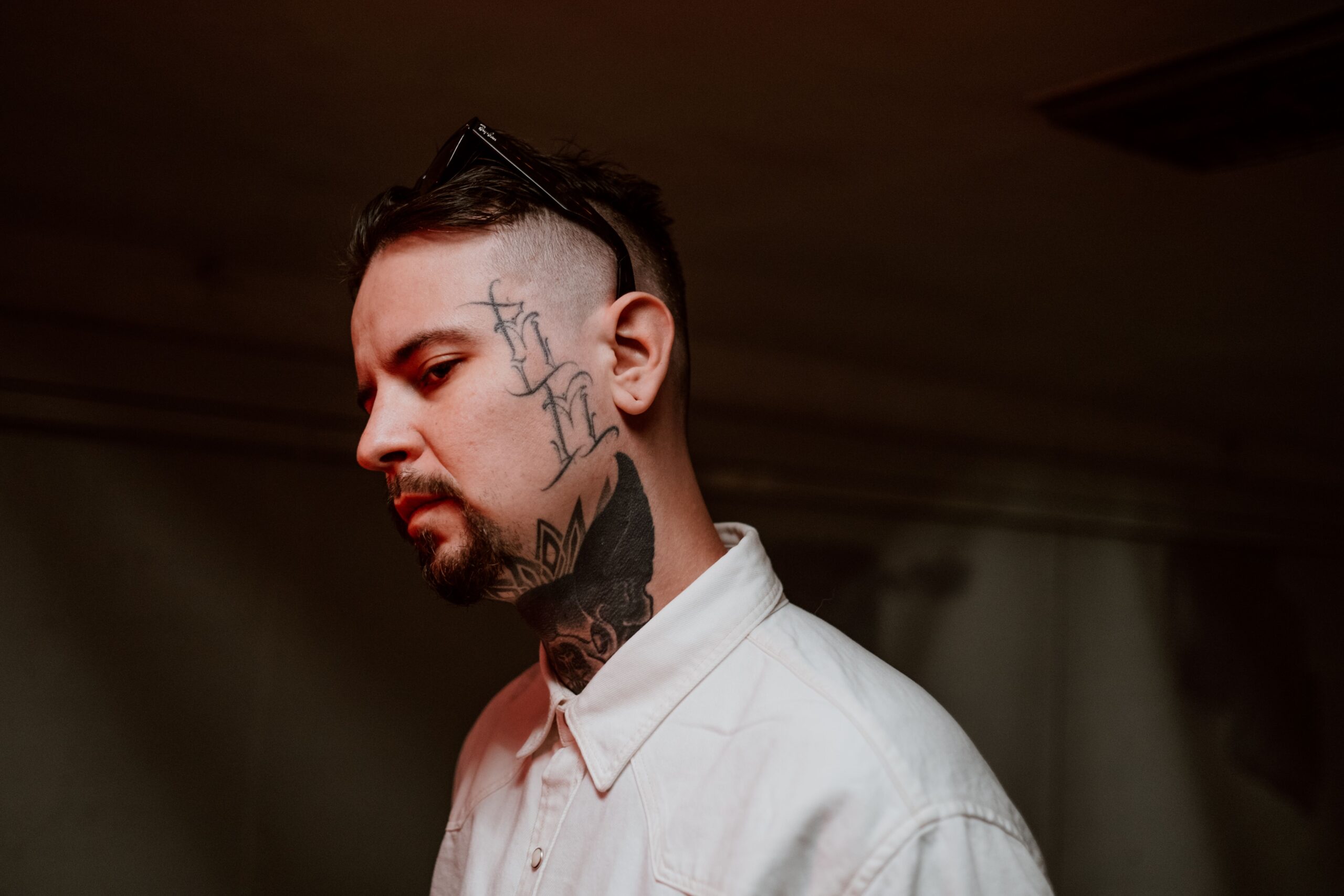
He wanted an exact replica of his daughter’s cochlear implant tattooed above his own left ear.
The tattoo would never help him hear.
It served another purpose entirely.
Speaking with TODAY, Campbell explained the motivation behind his decision.
“I just want to show Charlotte the love. At the moment, she’s not a great understanding of it but as she gets older she will.”
His words carried none of the dramatic language often associated with viral stories. They reflected the quiet thinking of a parent who understood that children remember much more than conversations. They remember how the people they love made them feel.
Campbell admitted the decision came with hesitation.
“It was a personal thing for me. My wife doesn’t like tattoos, and I thought about this for a long time,” he said. “It wasn’t an easy decision, but it was for Charlotte. I wanted to show her, hey, I could go for a little bit of pain, too, even though it’s nothing compared to what she goes through.”
Those few sentences transformed what could have been seen as body art into something far more meaningful.
The tattoo was never about ink.
It was empathy made visible.
The Technology That Helped Open a New World
For many readers, a cochlear implant is something they may have heard about without fully understanding how it works.
Unlike hearing aids, which amplify existing sound, cochlear implants function differently. A hearing aid makes sounds louder for ears that can still process them. A cochlear implant bypasses damaged portions of the inner ear and sends electrical signals directly to the hearing nerve, allowing many people with severe hearing loss to perceive sound in a different way.
The device includes two parts.
One portion is surgically implanted beneath the skin. The external processor sits behind the ear, collecting sounds and transmitting information to the implanted receiver.
Learning to interpret these new sounds often requires therapy, patience, and consistent support from family members. Hearing through a cochlear implant is not identical to natural hearing. For many recipients, it is a gradual journey of learning, adapting, and discovering sounds that others may take for granted.
Charlotte’s family understood that journey well.
She was not the only person in her family connected to hearing technology.
Her older brother wore hearing aids, while her grandmother later received a cochlear implant at the age of 55.
Hearing challenges were already part of the Campbell family’s story.
Rather than defining them through limitation, the family approached them as one chapter in a much larger life.
According to Campbell, Charlotte never allowed her hearing impairment to shape her identity.
“She’s never felt different, just because she’s deaf or she’s got a thing stuck to her head,” he said. “She’s never felt like she didn’t fit in. And she does well at school. She’s got a lot of friends.”
Those words reveal something powerful about childhood.
Children often accept themselves with remarkable ease until the world teaches them otherwise.
The adults around them help determine whether difference becomes a burden or simply another part of who they are.
The Moment Charlotte Saw Her Father’s Tattoo
No parent can fully predict how a child will respond to an act meant purely for them.
Children notice details adults often overlook. Their reactions are honest because they are untouched by expectation.
When Campbell first showed Charlotte the tattoo, she leaned in and examined it carefully.
Rather than speaking immediately, she studied it.
Then her father asked what she thought.
Her answer was wonderfully uncomplicated.
“Cool.”
Moments later, she glanced toward his other ear, almost expecting to find another matching tattoo waiting there as well.
Campbell smiled and gently explained.
“That’s for you, darling.”
There were no dramatic speeches.
No emotional soundtrack.
No carefully prepared lesson.
Just a father telling his daughter that if she had something unique beside her ear, then he would too.
Sometimes children understand love without needing it explained.
The message had already reached her.
A Photograph Shared With Family That Reached the World

Campbell never planned to become an international story.
After getting the tattoo, he simply uploaded a photograph to Facebook so relatives could see what he had done before Charlotte’s surgery.
The audience was supposed to be small.
Friends.
People who already knew Charlotte.
Instead, one friend shared the picture again.
Then another.
Within days, images of the tattoo had spread across news outlets around the world.
Millions of people found themselves looking at a simple photograph of the side of a father’s head.
What they saw was much larger than ink.
Parents recognized sacrifice.
Children saw acceptance.
People living with disabilities saw representation.
Others simply saw a reminder that love sometimes expresses itself through actions that require no explanation.
The image crossed cultures because it spoke a language everyone understands.
The desire to make someone you love feel less alone.
That message became even more powerful because Campbell had not sought attention.
There was no campaign.
No fundraising announcement attached to the original post.
No expectation of praise.
He had acted for one person.
The rest of the world simply happened to notice.
Love That Doesn’t Need Everyone to Understand

As Campbell’s story reached more people, it also reached critics.
Among the many supportive messages were voices from parts of the Deaf community who oppose cochlear implants, believing deafness should not be viewed as something requiring correction. The debate around cochlear implants has existed for decades and reflects a wide range of personal experiences, cultural identities, and perspectives.
Campbell never dismissed those differing opinions, but he remained clear about his own family’s decision.
“I say, forget about the haters and the negative people,” he told TODAY. “I’ve seen some pretty negative (stuff). It doesn’t bother me one little bit. It doesn’t get me down. I just think, well, that’s your opinion. This is my child, and I’ve made the best decision for my child.”
His response was measured rather than confrontational.
He was not trying to convince every family to make the same choice.
He was explaining why this choice was right for his daughter.
That distinction matters.
Every family living with disability, illness, or medical decisions eventually discovers that there are countless opinions waiting online. Parents often carry the responsibility of making deeply personal choices while knowing complete agreement is impossible.
Campbell’s tattoo was never intended to make a statement about cochlear implants themselves.
It was about standing beside his daughter through whatever path their family had chosen.
There is a quiet wisdom in that.
Support does not always require universal approval. Sometimes it simply requires showing up for the person who needs you most.
Another Father, Another Daughter, The Same Promise

Two years after Campbell’s story spread around the world, another father made headlines for almost the same reason.
In Elma, New York, seven-year-old Natalia Kardas faced her own journey with hearing loss.
When she was a toddler, her parents sensed something was wrong.
Her father, Philip Kardas, remembered feeling uneasy when her speech development did not seem typical.
“The doctor was like, ‘Oh, she’s just delayed. It’s nothing.’ And we’re like, ‘No. She’s just talking gibberish. Everything’s all mumbled together.'”
The family’s instincts proved correct.
Natalia had hearing loss in both ears.
For years, hearing aids helped her navigate the world around her. Eventually, doctors told the family her hearing had declined so significantly that she now needed a cochlear implant.
The thought of surgery frightened her.
According to her mother, Tammy, doctors explained that her hearing “had gotten extremely worse where it’s completely almost deaf.”
For a seven-year-old, that is a difficult reality to understand.
Philip looked for a way to make the experience feel less lonely.
He already carried tattoos honoring his wife and all three of his children.
This one, however, carried a different meaning.
He chose to tattoo an exact replica of Natalia’s cochlear implant on the side of his own head.
When people asked why, his answer was simple.
“She was so excited that she didn’t have to be different,” he said. “It’s definitely the most important one, for my little baby girl.”
Those words echo something many parents understand instinctively.
Children rarely ask adults to solve every problem.
Sometimes they only need reassurance that they do not have to face those problems alone.
The Deep Need to Belong

Stories like Charlotte’s and Natalia’s resonate because they touch something much larger than hearing loss.
Human beings are wired for belonging.
Psychologists have long recognized that acceptance during childhood plays a significant role in emotional development, confidence, and resilience. Feeling excluded or visibly different can affect how children see themselves, particularly during their early school years when fitting in often feels enormously important.
Parents cannot remove every obstacle from a child’s life.
They cannot promise that classmates will always be kind.
They cannot guarantee that strangers will never stare or ask uncomfortable questions.
What they can do is shape the story their child tells themselves.
A medical device can become something embarrassing.
Or it can become one small detail in a life filled with friendships, laughter, curiosity, and possibility.
Campbell seemed to understand that distinction better than most.
By placing the image of Charlotte’s implant on his own head, he quietly shifted the conversation.
The implant was no longer something only she carried.
It became something they shared.
Children often measure normal by looking at the people they love most.
If Dad has one too, perhaps there is nothing unusual about it after all.
That lesson reaches far beyond cochlear implants.
It applies to birthmarks, scars, wheelchairs, prosthetic limbs, chronic illnesses, and countless experiences that can make a child wonder whether they belong.
Acceptance begins at home long before it reaches the classroom.
A Viral Photograph With a Lasting Legacy

The internet has no shortage of emotional stories.
Most appear in people’s feeds for a day or two before disappearing beneath the next wave of headlines.
Campbell’s photograph has endured for a different reason.
Years after it first circulated, people continue sharing it whenever conversations arise about parenting, inclusion, disability, or unconditional love.
Its staying power comes from its honesty.
There was no elaborate campaign.
No carefully crafted marketing strategy.
No dramatic speech.
Only a father willing to experience a little discomfort so his daughter might carry a little less of her own.
The story also reminds us that meaningful support is often surprisingly practical.
Many people assume encouragement requires finding the perfect words.
Children usually remember actions more clearly.
They remember who sat beside them before surgery.
Who waited in the hospital room.
Who learned sign language with them.
Who practiced speech exercises after school.
Who celebrated every small milestone instead of focusing on what remained difficult.
Love often lives inside ordinary decisions repeated over time.
The tattoo became famous because it represented thousands of invisible acts of care that parents perform every day without cameras watching.
The Marks We Choose to Carry
Every life leaves marks.
Some arrive through circumstance.
Others are chosen.
Charlotte’s cochlear implants represented a path toward hearing that required courage long before she was old enough to understand everything involved.
Her father’s tattoo represented another kind of courage.
It asked nothing in return except the chance for his daughter to know she was never walking alone.
Perhaps that is why the photograph continues to move people years after it first appeared online.
It captures an idea that reaches across cultures, languages, and generations.
Real love rarely announces itself with grand speeches.
It quietly asks, “How can I make this burden lighter for someone I love?”
Sometimes the answer is surprisingly small.
A hand held before surgery.
An encouraging smile.
A patient conversation after a difficult day.
Or, in one father’s case, a permanent image above his ear that said everything his daughter needed to hear without speaking a single word.
Long after the ink settled beneath his skin, the message remained unchanged.
You do not have to face this by yourself.