


Scientists Found a Surprising Link Between Dancing and Depression Relief
A dance floor might be one of the last places people expect to find a serious conversation about depression. Yet a major review of exercise research produced a striking result: dance ranked ahead of several other forms of exercise, and its effect size was larger than antidepressants alone.
That headline deserves attention. It also needs a giant asterisk.
The dance finding came from just five studies involving 107 people. Researchers behind the review explicitly warned that the evidence is too limited to recommend dance more strongly than other treatments.
The Exercise Review That Put Dance On Top
The research, published in The BMJ in February 2024, pulled together 218 randomized trials involving 14,170 people with depression.
Researchers compared different forms of exercise against standard care and against each other. The results produced a ranking that quickly became the most attention-grabbing part of the study.
Dance recorded an effect size of 0.96 against active control groups. That was higher than walking or jogging, yoga, and strength training.
Antidepressants taken alone recorded an effect size of 0.26 in the analysis.
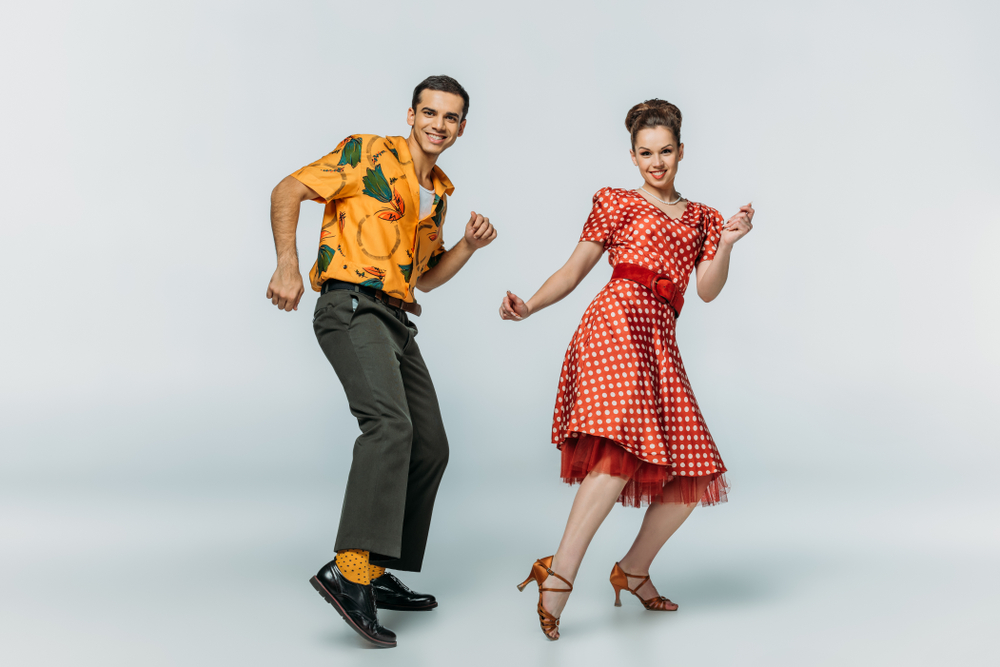
That difference is where the viral headline came from.
Michael Noetel, a psychology researcher at the University of Queensland and one of the researchers involved, said he was surprised dance even had five studies available for analysis.
The research team did not claim that doctors should replace antidepressants with dance classes.
Their findings were much more measured.
Exercise overall was associated with meaningful improvements in depression, with walking or jogging, yoga, and strength training showing particularly strong results when performed at higher intensity.
Five Studies Created The Biggest Headline
Here is the part that can disappear when a research finding goes viral: dance had the highest ranking, but the evidence behind that ranking was unusually small.
Only five trials involving 107 participants contributed to the dance result.
The authors acknowledged the limitation themselves, writing that the “small number of studies, low number of participants, and biases in study designs prohibits us from recommending dance more strongly.”
Jonathan Roiser, professor of neuroscience and mental health at University College London, reached a similar conclusion when commenting on the research.
“The authors report a particularly large effect of dancing, but this should not be taken too seriously owing to the low number of studies included (5) each of which was quite small,” Roiser said.
That distinction changes the story.
A large effect from thousands of participants would be one thing. A large effect emerging from five small studies is much less certain.
A future trial could produce a smaller effect and shift dance down the ranking considerably.
Why Dance Might Have An Extra Advantage
The researchers did have a theory about why dance performed so well.
Michael Noetel suggested that dancing combines several elements that other exercises may separate.
“Between the physical activity, social interaction, and the infusion of music, I’m not surprised that dance performed well,” Noetel said.
That explanation is plausible, but the review did not prove that these ingredients were responsible for the result.
Still, dance does offer a combination that is unusual.
It can involve:
- Physical activity: Moving the body provides the exercise component associated with improvements in depression.
- Music: Music can engage reward and emotional systems in the brain.
- Social interaction: Group classes can create regular contact with other people.
- Expression: Dance allows people to communicate emotions through movement rather than conversation.
Neuroscientist Julia F. Christensen has studied the expressive side of dance.
“Dance is a language of the body,” Christensen said. “You are taking something that makes you you, or feelings that are difficult for you, and you channel all of that out of your system, by expressing it, through the gestures of your arms as you dance.”
That may help explain why dance feels different from simply completing a prescribed number of minutes on a machine.
But it remains a proposed explanation rather than a proven mechanism.
The Research Has Some Serious Weak Spots

The dance result was not the only limitation in the review.
Of the 218 trials included, only one met the Cochrane criteria for low risk of bias. Blinding participants is also extremely difficult in exercise studies because people know whether they are walking, lifting weights, or attending a dance class.
The researchers also found signs of publication bias.
Then there was a correction published by The BMJ in May 2024 concerning the way effect sizes had been standardized.
None of those issues means the research should be dismissed. They mean the ranking needs to be treated as a research finding rather than a prescription.
Michael Bloomfield, who heads the translational psychiatry research group at University College London, put the limitation plainly.
“It is not possible to say at this stage that exercise on its own is better than existing treatments including medication and psychological therapies,” Bloomfield said.
That is a very different claim from saying that dancing has been proven to beat antidepressants.
The Stronger Finding Was About Exercise Overall
Once the dance ranking is stripped away, the broader result is still significant.
The review found that exercise was an effective treatment for depression. Several forms had meaningful effects, particularly when the exercise was performed at higher intensity.
Walking or jogging, yoga, and strength training all had stronger evidence behind them than dance because their results came from larger bodies of research.
The researchers also found evidence that exercise can work alongside medication.
Exercise combined with an SSRI produced an effect size of 0.55, roughly twice the result reported for antidepressants alone in the analysis.
That does not mean exercise automatically doubles the effectiveness of medication for every person.
It does mean the study provides another reason to consider movement as part of depression treatment rather than treating it as an unrelated lifestyle extra.
Noetel offered a practical caution alongside his findings.
“Of course, anyone getting treatment for depression should talk to their doctor before changing what they are doing, but most people can start walking without many barriers,” he said.
A Swedish Trial Shows Why Enjoyment Matters

The idea of using enjoyable movement for mental health also has support from research outside the BMJ review.
Years before the review, physiotherapist and researcher Anna Duberg ran a randomized trial in Sweden involving 112 teenage girls experiencing stress and psychosomatic symptoms.
The intervention involved dance classes twice a week for 75 minutes over eight months.
The instruction was strikingly simple.
“The focus was on the joy of movement, not on performance,” the researchers wrote.
The girls who took part reported better self-rated health than those in the control group at every follow-up. The improvement was still present one year after the classes ended.
Ninety-one percent of the participants described the experience positively.
There is an important limitation here too.
That study measured self-rated health among adolescent girls experiencing stress and psychosomatic symptoms. It was not a trial showing that dance treats major depression in adults.
Still, it offers something the giant ranking cannot provide: a picture of what structured movement can look like in real life.
The intervention was built around enjoyment rather than athletic achievement.
What The Evidence Actually Says About Dancing
The most exciting version of this story is that dancing has been proven to work better than antidepressants.
The evidence does not support that sentence.
What it does support is more interesting because it is harder to dismiss.
Exercise appears to help reduce depression symptoms, and dance produced the largest effect in this particular network analysis. But the dance result came from a tiny evidence base, while other forms of exercise had far more studies behind them.
That leaves several questions open.
Researchers still need larger dance trials, stronger study designs, and more participants before anyone can confidently determine whether dancing has a special advantage over other forms of exercise.
A Finnish trial studying dance movement therapy in depressed adolescents is also expected to complete its final measurements in September 2026, with results expected from 2027.
For now, the sensible takeaway is remarkably simple.
Dancing does not need to defeat antidepressants to be worth doing.
For someone dealing with depression, getting into a room with music, movement, and other people may offer one more option to discuss alongside established treatment.
And unlike a viral headline, that conclusion does not depend on five small studies carrying the entire argument.